
Soups & Stews
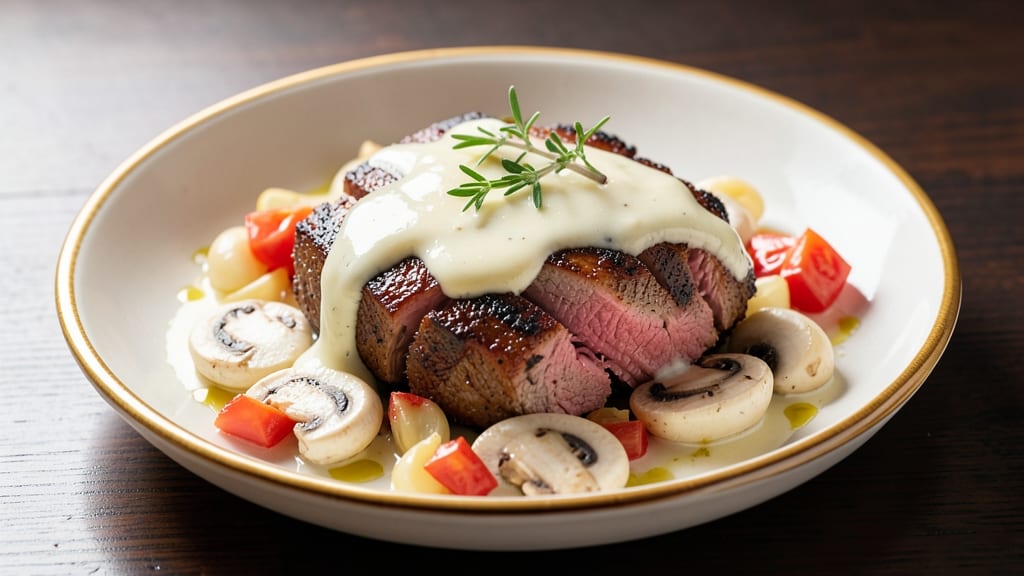
This beef béchamel recipe transforms simple ingredients into a restaurant-worthy dish where tender beef simmers in a velvety mushroom-infused white sauce. The secret lies in slow-cooking the beef until fork-tender while building the béchamel from scratch—a rich, creamy sauce that clings to every bite like a luxurious blanket. I developed this recipe after years of perfecting the balance between savory beef and delicate sauce, ensuring the flavors meld without overpowering each other.
The process begins with searing beef chuck in a Dutch oven to lock in juices, then braising it low and slow until it nearly falls apart.
Meanwhile, the béchamel sauce gets its depth from sautéed mushrooms and shallots, creating an earthy foundation before being finished with cream and a touch of Dijon mustard for brightness. This isn't just a sauce—it's the star of the dish, transforming humble ingredients into something elegant and satisfying.
What you'll achieve is a dish that's equal parts comforting and impressive: tender beef swimming in a glossy, mushroom-infused béchamel that's rich yet balanced. The sauce clings perfectly to the beef, while the mushrooms add an umami depth that elevates everything.
Serve it over creamy mashed potatoes or buttery egg noodles to soak up every last drop of that luxurious sauce.
Perfect for weeknight dinners that feel special or holiday gatherings where you want to impress without stress. The key is patience—letting the beef braise and the sauce develop slowly ensures restaurant-quality results at home. Let's get cooking!
Ingredients for beef bechamel
Restaurant-quality béchamel begins with these 16 thoughtfully chosen ingredients—each playing a precise role in balancing richness and depth.
| Ingredient | Amount | Notes |
|---|---|---|
| Beef Chuck Roast 🥩 | 2 lb | Cut into 1.5-inch cubes |
| Yellow Onion 🧅 | 1 whole | Diced, medium dice |
| Garlic Cloves 🧄 | 6 cloves | Minced, for sauce |
| White Button Mushrooms 🍄 | 16 oz | Sliced, cremini or shiitake |
| Shallots 🧅 | 2 whole | Minced, for béchamel |
| All-Purpose Flour 🌾 | ½ cup | Diamond Crystal preferred |
| Unsalted Butter 🧈 | ¾ cup | Cold, cubed |
| Heavy Cream 🥛 | 1 ½ cups | Full-fat for richness |
| Whole Milk 🥛 | ½ cup | Warmed slightly |
| Dijon Mustard 🍯 | 1 tbsp | For brightness |
| Beef Broth 💧 | 2 cups | Low-sodium preferred |
| Dry White Wine 🍷 | ½ cup | Sauvignon Blanc or Chardonnay |
| Thyme Sprigs 🌿 | 2 whole | Fresh, stems removed |
| Bay Leaves 🍃 | 2 whole | For braising |
| Kosher Salt 🧂 | 1 ½ tsp | Adjust to taste |
| Freshly Ground Black Pepper 🌶️ | ½ tsp | Cracked peppercorns |
The beef chuck roast is non-negotiable for texture—look for well-marbled cuts at Whole Foods or your local butcher. Pre-cut cubes save time, but if buying whole, ask for 1.5-inch pieces. For the mushrooms, cremini or shiitake add earthy depth beyond white buttons. Trader Joe's carries pre-sliced shiitake in season, which cuts prep time in half. Shallots should be firm and pale—avoid any with green sprouts. The flour is critical: Diamond Crystal measures differently than regular brands, so pack it lightly into your measuring cup. For butter, Plugrá or Land O'Lakes unsalted melt evenly without graininess.
Substitutions require precision. No white wine? Substitute beef broth with an extra splash of lemon juice for brightness. Fresh thyme unavailable? Use 1 teaspoon dried thyme, but toast it first in a dry pan for 30 seconds to intensify flavor. For the mushrooms, portobello caps work if you're short on buttons—just slice them thin. The Dijon mustard can be swapped for whole-grain mustard at half the amount, though it adds texture. Low-sodium broth? Add an extra pinch of salt to compensate. And for the wine, dry vermouth works in a pinch if you're out of Sauvignon Blanc.
Store beef cubes in the fridge for up to 3 days before cooking, or freeze for 3 months in a sealed bag. Fresh mushrooms keep 5 days in a paper bag, while shallots last 2 weeks in the crisper. The flour and butter are pantry staples, but keep them airtight to prevent absorption of fridge odors. Once made, the béchamel reheats beautifully—simmer gently with a splash of milk or broth to restore silkiness. For meal prep, portion the beef and sauce separately; reheat the sauce alone first, then add the beef to prevent drying. Leftovers keep 4 days refrigerated or 3 months frozen.
Why You'll Love This Recipe
- Here’s what sold me: that velvety béchamel clings to the tender beef like it’s been simmering for hours, but it actually takes less time. The garlic and onions caramelize just enough to deepen the flavor without burning—no need for fancy techniques.
- One-Pot Magic: I swear by this recipe because it’s all in one pot—no fussing with multiple pans or dishes. The mushrooms and shallots soften right into the beef and béchamel, so you’re left with one skillet to wash (and zero stress).
- Rich Without Effort: Here’s what sold me: that velvety béchamel clings to the tender beef like it’s been simmering for hours, but it actually takes less time. The garlic and onions caramelize just enough to deepen the flavor without burning—no need for fancy techniques.
- Leftovers That Shine: Between us, this dish begs for seconds. The béchamel thickens beautifully when reheated, and the beef stays juicy. I’ve packed this for lunches all week, and it’s still the star of my meal prep—no sad, dry leftovers here.
Step-by-step instructions for beef béchamel with mushroom sauce
Here's how to transform tough chuck roast into melt-in-your-mouth beef with a luxurious béchamel finish.
🔥 Step 1: Sear the Beef Chuck for Deep Flavor
Pat the 2 lb beef chuck roast dry with paper towels and cut it into 1.5-inch cubes. Heat a heavy Dutch oven over medium-high heat and add 2 tablespoons of the 0.75 cup unsalted butter. Once the butter foams, add the beef in batches, working in two additions to avoid crowding. Sear for 3-4 minutes per side until deeply browned with a crust forming. This caramelization builds the foundation for rich flavor.
Remove the seared beef and set aside. In the same pot, add the diced 1 whole yellow onion and cook for 5 minutes until softened. Add the 16 oz sliced white button mushrooms and cook for another 5 minutes until they release their moisture and begin to brown. This step develops the umami depth that will carry through the entire dish.
🍳 Step 2: Braise the Beef in Aromatic Liquids
Deglaze the pot with the 0.5 cup dry white wine, scraping up all the browned bits from the bottom. Let it reduce by half before adding the 2 cups beef broth, 1 tbsp Dijon mustard, 2 whole thyme sprigs, and 2 whole bay leaves. Return the beef to the pot, ensuring it's mostly submerged in the liquid. Bring to a simmer, then cover and transfer to a 325°F oven for 2 hours.
Check the beef after 1.5 hours - it should be fork-tender with a 160°F internal temperature. If it's not quite there, return it to the oven for another 30 minutes. The long, slow braising breaks down the connective tissue, transforming tough chuck into tender, melt-in-your-mouth beef that will absorb the béchamel beautifully.
🥘 Step 3: Prepare the Classic Béchamel Sauce
While the beef braises, prepare the béchamel by melting the remaining 0.5 cup of 0.75 cup unsalted butter over medium heat in a separate saucepan. Whisk in the 0.5 cup all-purpose flour to form a roux, cooking for 2-3 minutes until it turns a pale golden color - this should smell nutty and toasty. Be patient here; a well-developed roux is the secret to a velvety sauce.
Gradually whisk in the 1.5 cups heavy cream and 0.5 cup warmed whole milk, ensuring no lumps form. Add the minced 6 cloves garlic and 2 whole minced shallots, then stir in the 1.5 tsp kosher salt and 0.5 tsp freshly ground black pepper. Simmer gently for 8-10 minutes until the sauce thickens enough to coat the back of a spoon. This rich, creamy base will elevate the humble braised beef into something extraordinary.
🍽️ Step 4: Combine and Finish the Dish
Remove the beef from the braising liquid and strain the sauce through a fine-mesh sieve to remove the thyme and bay leaves. Return the beef to the pot and pour the prepared béchamel sauce over the top. Gently stir to coat the beef evenly, then return the mixture to the stove over low heat. Let it simmer for 5-7 minutes until everything is heated through and the sauce has thickened slightly.
The final dish should feature tender beef cubes swimming in a velvety mushroom-infused béchamel sauce. The contrast between the rich, creamy sauce and the deeply flavorful beef creates a perfect balance. Serve immediately with crusty bread to soak up every last bit of that luxurious sauce.
Pro Tips For Making Beef Bechamel
- Sear the Beef First: Don’t skip the crust—pat the chuck roast dry, then sear it in a hot pan with oil until deep brown on all sides. I learned this the hard way: skipping the sear means flavorless braising liquid, and you’ll end up with tough, bland beef instead of tender, rich slices.
- Sweat, Don’t Burn: When cooking the onions, shallots, and mushrooms, keep the heat medium-low and stir often. I used to rush this part, and the onions would turn bitter—now I take my time, letting them soften and release their sweetness before adding garlic.
- Deglaze with Wine: After browning the beef, splash in a ½ cup of dry red wine (like Cabernet) and scrape every last bit from the pan. This isn’t just for flavor—it’s how you unlock the fond, the sticky, caramelized bits that make your bechamel sauce rich and deep.
- Strain the Mushroom Liquid: After sautéing mushrooms, strain their cooking liquid through a fine-mesh sieve before adding it to the bechamel. It removes grit and makes the sauce silky—trust me, your future self will notice the difference, especially when blending it into the roux.
Regional styles of this recipe
Classic French Approach
In France, this dish takes the form of bœuf à la béchamel, where beef is braised in a rich white wine reduction before being smothered in a velvety béchamel. The French version often includes pearl onions caramelized in the beef's braising liquid, adding delicate sweetness.
I like to use dry Chardonnay for deglazing instead of Sauvignon Blanc, as it complements the creamy sauce beautifully. The key French technique is making the roux with equal parts butter and flour by weight (50/50) for maximum stability in the sauce. 🍷
Italian Stroganoff Twist
Italy transforms this into stroganoff-style beef, where the béchamel is enriched with sour cream (about ½ cup) and finished with a splash of lemon juice for brightness.
The Italians often use ground beef instead of chuck roast for quicker cooking, and they'll add sun-dried tomatoes (about ¼ cup chopped) to the sauce for a tangy contrast. For an authentic Italian touch, serve it over egg noodles instead of potatoes, and garnish with fresh Italian parsley.
German-Swiss Comfort Style
The Germans and Swiss take this dish in a heartier direction, creating what they call Rindergulasch mit Rahmsauce (beef goulash with cream sauce). They use smoked paprika (about 1 teaspoon) in the braising liquid and finish the sauce with crème fraîche (or sour cream) instead of heavy cream.
The Germans often serve it with buttered spaetzle—soft egg noodles—rather than potatoes. I've found that adding a pinch of nutmeg (about ¼ teaspoon) to the béchamel elevates the dish with a warm, earthy note that's very Swiss. ❄️
Modern American Fusion
American chefs often put their own spin on this classic, incorporating umami bombs like miso paste (about 1 teaspoon white miso) into the braising liquid or fish sauce (about ½ teaspoon) in the béchamel for depth.
Some versions include crispy fried shallots on top for texture, while others add caramelized onions (about 1 cup) to the sauce. For a modern twist, I like to finish the dish with a drizzle of truffle oil (about ½ teaspoon) and garnish with microgreens for a restaurant-worthy presentation.
British Pub-Style Adaptation
The British version—often called beef in white wine sauce—tends to be simpler but heartier. They'll use stout beer (about ½ cup) instead of wine for braising, which adds a malty depth that pairs wonderfully with the creamy sauce.
The British also love to add a splash of Worcestershire sauce (about 1 teaspoon) to the braising liquid for a savory kick. For serving, they typically pair it with Yorkshire puddings or buttered mashed potatoes—the latter being a must for soaking up that rich sauce. 🍺
Asian-Inspired Fusion
For an Asian twist, I've experimented with adding ginger (about 1 teaspoon grated) and garlic (about 4 cloves minced) to the braising liquid, along with a splash of soy sauce (about 1 tablespoon).
The béchamel gets a boost from coconut milk (about ½ cup) replacing some of the heavy cream, creating a lighter but still luxurious sauce. Garnish with fresh cilantro and sliced green onions for a fresh, vibrant finish.
This version works beautifully with jasmine rice or steamed bok choy** on the side.
Nutrition facts
Frequently asked questions
Can I substitute ground beef for chuck roast in this recipe?
You can, but the texture will differ significantly. Ground beef cooks much faster and won't develop the same tender, fork-shreddable quality. If you prefer ground beef, use 1 lb of 80/20 lean-to-fat ratio and cook it separately in the braising liquid for only 20-25 minutes instead of braising. For best results, keep the chuck roast for that melt-in-your-mouth texture.
Why did my béchamel sauce turn grainy or separate?
This usually happens from one of three issues: adding liquid too quickly to the roux, not whisking constantly, or letting the sauce boil. Always whisk vigorously when adding liquids and keep heat at medium-low—never boiling. For a quick fix, whisk in 1 tablespoon of cold butter or a splash of warm milk to restore silkiness.
How can I make this dish ahead of time?
Prepare the beef and braising liquid up to 2 days ahead, then refrigerate. When ready to serve, reheat the beef with its juices in a skillet over medium heat for 10 minutes. Make the béchamel fresh and combine just before serving. For the sauce alone, it reheats beautifully—simmer with a splash of milk or broth to restore creaminess. Store components separately to prevent sogginess.
What's the best way to thicken a sauce that's too thin?
For immediate thickening, mix 1 tablespoon cornstarch with 2 tablespoons cold water, then whisk into the sauce while simmering until it reaches your desired consistency. Alternatively, simmer uncovered for 5-10 minutes to reduce the liquid naturally. If the sauce is too thick, thin it with warm milk or broth, 1 tablespoon at a time.
Can I use this béchamel sauce for other dishes?
This versatile sauce works beautifully with chicken, pork, or even vegetables like cauliflower. For lasagna, spread it between layers of pasta and cheese. It also makes a fantastic topping for baked potatoes or a creamy soup base. Just adjust the seasoning to complement your main ingredient—add a pinch of nutmeg for sweet potatoes or extra garlic for chicken.