
Main Courses
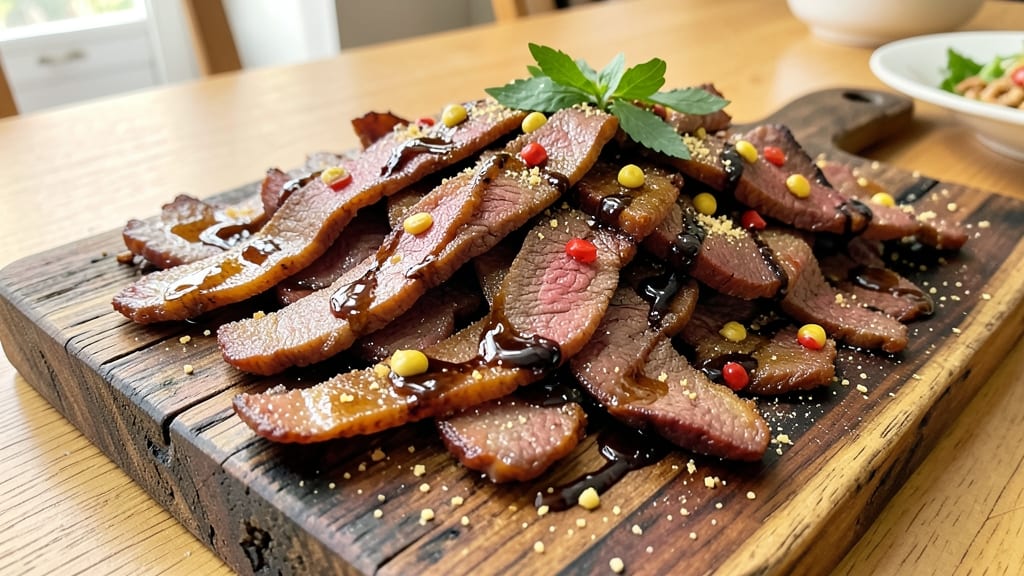
A1 beef jerky transforms tough cuts into ultra-tender, smoky bites that pack serious flavor without the sugar crash. The secret lies in a marinade that tenderizes while infusing that signature tangy-sweet A1 sauce profile—no artificial additives, just real beef and bold seasoning.
This method delivers restaurant-quality texture with home kitchen precision, whether you're stocking up for camping trips or craving a protein-packed snack.
What sets this recipe apart is the two-stage marinating process: first breaking down the meat with salt and acid, then locking in flavor with A1 sauce and spices. The drying method (your choice of oven or dehydrator) ensures that perfect balance between chewy and tender—never rubbery, never dry.
Safety first: we'll cover exact dehydration times and temperatures to guarantee food-safe results every time.
By the final bite, you'll have jerky that's smoky, savory, and irresistibly chewy, with none of the artificial aftertaste found in store-bought versions. The A1 marinade creates that signature tangy depth while keeping sugar levels at zero, making this perfect for keto, low-carb, or anyone watching their sweet intake.
Plus, the leftovers stay fresh for weeks when stored properly—ideal for meal prep or emergency pantry staples.
This isn't just jerky—it's a versatile protein that works as a trail snack, game-day munchie, or even a protein boost in salads and wraps. The technique scales perfectly whether you're making a single batch or prepping for a crowd.
Ready to master the art of homemade jerky that rivals your favorite brand? Let's get started with the ingredients and step-by-step method that delivers professional results.
Ingredients for a1 beef jerky
Fourteen ingredients transform tough beef into ultra-tender, smoky bites with restaurant-quality texture.
| Ingredient | Amount | Notes |
|---|---|---|
| Beef Top Round Roast 🥩 | 2 lb | Tough cut, evenly sliced thin |
| A1 Steak Sauce 🍖 | ½ cup | Original formula preferred |
| Yellow Mustard 🍯 | ¼ cup | Dijon works too |
| Worcestershire Sauce 🍶 | 2 tbsp | Anchovy-free version if needed |
| Liquid Smoke 🔥 | 1 tbsp | For authentic smoky flavor |
| Garlic Powder 🧄 | 2 tsp | Freshly ground preferred |
| Onion Powder 🧅 | 2 tsp | For depth of flavor |
| Black Pepper 🌶️ | 1 tsp | Freshly cracked preferred |
| Kosher Salt 🧂 | 2 tbsp | Diamond Crystal preferred |
| Lemon Juice 🍋 | ¼ cup | Freshly squeezed |
| Granulated Garlic 🧄 | 1 tbsp | For even distribution |
| Cornstarch 🌾 | 1 tbsp | For coating and stability |
| Baking Soda 🧪 | ½ tsp | For tenderizing |
| Cayenne Pepper 🔥 | ½ tsp | Adjust for heat preference |
The beef selection is critical—top round roast delivers that perfect chewy texture without compromising tenderness. Butcher shops often carry pre-sliced jerky cuts, but if you're buying a whole roast, ask for it to be sliced against the grain into ¼-inch thick strips. Look for well-marbled beef with minimal fat—this ensures flavor penetration without greasiness. Costco and Walmart typically stock quality top round roasts in bulk, making them ideal for larger batches. For smaller quantities, local butchers can provide custom cuts tailored to your dehydrator tray size, ensuring even drying every time.
A1 sauce is the heart of this recipe, but substitutions are possible if needed. Worcestershire sauce can replace up to half the A1 for a tangier profile, though the signature tang will be slightly muted. For a smokier depth without liquid smoke, mesquite powder or smoked paprika at ½ teaspoon each works well. The lemon juice is non-negotiable for tenderizing—bottled lemon juice works in a pinch, but fresh yields brighter acidity. If you're avoiding anchovies, check your Worcestershire sauce label—Lee & Perrins is a reliable anchovy-free brand. For the cornstarch coating, arrowroot powder provides a similar light texture without altering flavor.
Prepped jerky strips should be used immediately or stored in an airtight container in the fridge for up to 2 days before dehydrating. The marinade components keep separately for 1 week in the fridge or 3 months frozen. Once dehydrated, properly stored jerky maintains its texture for 2-3 weeks at room temperature or up to 6 months in a vacuum-sealed bag in the freezer. For meal prep, portion into single-serving bags—perfect for lunches or snacks on the go. Always check internal temperature reaches 160°F during dehydration to ensure food safety.
Why You'll Love This Recipe
- No-Fuss Prep: The only slicing you’ll do is cutting that beef into strips—no marinating overnight, no fancy tools. Just toss the slices in A1, mustard, and Worcestershire, then let the smoky magic happen.
- Smoky-Sweet Magic: That liquid smoke and A1 combo? It’s like a campfire in your mouth—deep, tangy, and just a little sweet. Honestly, I’ve never met jerky this addictive.
- Tailgate-Ready Snack: Perfect for game days, road trips, or when you’re just craving something handheld. It’s the kind of thing that disappears fast, so make extra.
- Budget Powerhouse: Top round is cheap, and a pound of beef stretches forever. You’ll have leftovers for days—great for lunches, emergency snacks, or when you’re too tired to cook.
Step-by-step instructions for ultra-tender A1 beef jerky
Master this zero-sugar marinade and dehydration process for jerky that's impossibly tender yet smoky and bold.
Prep and Slice the Beef Top Round Roast
Remove the 2 lb Beef Top Round Roast from the refrigerator and let it sit at room temperature for 30 minutes. This ensures even cooking throughout the thickest slices. Using a sharp boning knife or deli slicer, cut the roast against the grain into ¼-inch thick strips. The grain direction is visible as fine lines running through the meat—cut perpendicular to these lines for maximum tenderness.
Arrange the sliced beef on a clean cutting board and trim any irregular edges. For best results, slice the beef when it's still slightly chilled but not frozen. If the meat feels too cold, let it sit for another 10 minutes before slicing. The slices should be uniform in thickness to ensure even drying and cooking.
Create the Zero-Sugar Marinade
In a large mixing bowl, combine the 0.5 cup A1 Steak Sauce, 0.25 cup Yellow Mustard, 2 tbsp Worcestershire Sauce, 1 tbsp Liquid Smoke, 2 tbsp Kosher Salt, 0.25 cup Lemon Juice, 1 tbsp Granulated Garlic, 1 tbsp Cornstarch, 0.5 tsp Baking Soda, 0.5 tsp Cayenne Pepper, 2 tsp Garlic Powder, and 2 tsp Onion Powder. Whisk vigorously until the baking soda and cornstarch dissolve completely and the mixture reaches a smooth, thick consistency.
Here's the science behind this marinade: The baking soda tenderizes the meat by breaking down proteins, while the cornstarch creates a light coating that helps the marinade adhere. The lemon juice adds brightness that cuts through the richness of the A1 Steak Sauce. Let the marinade sit at room temperature for 15 minutes before using to allow the flavors to meld.
Marinate the Beef for Maximum Tenderness
Transfer the sliced beef to a large resealable plastic bag and pour the marinade over the top. Seal the bag and massage the beef gently to ensure every slice is coated. Place the bag in a shallow dish to catch any spills and refrigerate for 12-24 hours. This extended marinating time is crucial—it allows the marinade to deeply penetrate the meat fibers, transforming tough beef into tender jerky.
For best results, turn the bag occasionally during marinating to ensure even coverage. After 12 hours, check the beef and add a splash of additional marinade if the slices appear dry. The longer you marinate (up to 24 hours), the more tender the final jerky will be. However, don't exceed 24 hours as the acidity in the marinade can start to break down the meat fibers too much.
Dehydrate for Perfect Texture
Preheat your dehydrator to 160°F. Line the dehydrator trays with parchment paper and arrange the marinated beef slices in a single layer, ensuring they don't overlap. Leave at least ¼ inch between each slice for proper air circulation. This spacing prevents uneven drying and ensures each piece develops that satisfying chewy-yet-tender texture.
Dehydrate for 4-6 hours, checking periodically after the first 2 hours. The jerky is done when it's no longer pliable but still holds its shape when bent. You'll know it's ready when it feels firm to the touch and the edges begin to curl slightly. If using an oven instead of a dehydrator, prop the door open 2 inches and bake at 175°F for 3-4 hours, rotating the tray halfway through.
Cool and Store for Maximum Shelf Life
Allow the jerky to cool completely in the dehydrator or oven before handling. Transfer to an airtight container and store in a cool, dark place for up to 2 weeks, or freeze for up to 6 months. The jerky should have a deep, rich color with no pink remaining in the center—a sign of proper dehydration. Each piece should be flexible but not rubbery, with a perfect balance of smoky, savory, and slightly spicy flavors.
For serving, cut the jerky into 1-inch lengths and arrange on a platter. The zero-sugar marinade gives this jerky a unique depth of flavor without the sweetness that often masks the beef's natural taste. Pair with your favorite dips or enjoy on its own for a protein-packed snack that's perfect for hiking, tailgating, or office lunches.
Pro Tips For Making A1 Beef Jerky
- Trim Thin, Not Ragged: Use a sharp boning knife and slice the top round against the grain at a 45-degree angle—about ⅛-inch thick. Thinner strips cook faster and chew better, but don’t get sloppy; uneven edges burn before they’re done.
- Marinate Cold, Not Warm: Mix the A1, mustard, Worcestershire, and liquid smoke in a bowl, then refrigerate the meat in it for at least 12 hours. Warm marinade speeds up bacteria growth—trust me, I learned this after a fridge full of sad, slimy jerky.
- Skip the Crowding: When dehydrating, leave at least 1 inch between strips on the tray. I used to pack them tight, and half the batch came out soggy because the steam couldn’t escape.
- Sauce Last, Not First: Brush on the A1-Worcestershire mix after the jerky’s been drying for 4–6 hours. The initial dehydrating phase locks in the smoky flavor, so the sauce doesn’t just burn off in the first 30 minutes.
Creative variations of these flavors
Spicy Chipotle Twist
For a smoky, fiery kick, blend 1 tbsp adobo sauce from canned chipotle peppers into your marinade. The natural heat from the peppers pairs perfectly with A1's tanginess.
I like to add ½ tsp smoked paprika too for extra depth. This variation works especially well with flank steak instead of top round for added richness. 🌶️
Sweet & Tangy Teriyaki
Swap the A1 sauce for ¼ cup teriyaki sauce (sugar-free if preferred) and add 1 tbsp honey or maple syrup for subtle sweetness. The umami from the teriyaki complements the beef beautifully.
I recommend using ribeye steak for this variation—it handles the marinade's moisture better. Garnish with sesame seeds before dehydrating for extra texture.
Herbed Garlic & Lemon
Create a Mediterranean-inspired version by reducing the A1 sauce to 2 tbsp and adding 1 tbsp fresh rosemary, 1 tbsp fresh thyme, and an extra 1 tbsp lemon zest.
This bright, herbaceous profile works wonderfully with sirloin tips. The lemon zest adds a lovely aroma that pairs perfectly with the smoky notes. 🍋
Buffalo-Style Heat
For a bold, spicy profile, replace half the A1 sauce with 2 tbsp hot sauce (like Frank's RedHot) and add ½ tsp cayenne pepper. This creates a tangy, fiery jerky perfect for game day.
I like to use chuck roast for this version—it stays tender despite the extra moisture from the hot sauce. Serve with cool ranch or blue cheese dip.
Classic Smoked Paprika
Skip the A1 sauce entirely and focus on smoky depth with 1 tbsp smoked paprika, 1 tsp liquid smoke, and 1 tbsp apple cider vinegar. This traditional approach delivers a clean, smoky flavor without any sweetness.
I recommend using top round roast again for the best texture. The vinegar tenderizes the meat while keeping the flavor profile pure and smoky.
Sweet & Smoky BBQ
For a sweet-savory fusion, blend 2 tbsp BBQ sauce (low-sugar preferred) with 1 tbsp brown sugar substitute (like erythritol) into the marinade. The caramelized notes from the BBQ sauce create a delicious contrast with the smoky A1 undertones.
This variation works especially well with flank steak for added tenderness. 🔥
Nutrition facts
Frequently asked questions
Can I use any cut of beef for this A1 jerky recipe?
Top round roast is ideal for its lean texture, but sirloin tip or chuck roast also work well. Avoid fatty cuts like ribeye—the extra fat can make the jerky greasy during dehydration. For extra tenderness, slice against the grain into ¼-inch thick strips regardless of cut.
How do I know when the jerky is fully dehydrated?
Test for doneness by checking if the jerky feels firm to the touch and has no moisture when bent. There should be no pink remaining in the center. Dehydrate at 160°F for 4-6 hours (longer for thicker slices). If using an oven, prop the door open 2 inches to maintain airflow.
Can I make this jerky without a dehydrator?
Use an oven set to 175°F with the door slightly open. Line a baking sheet with parchment paper and dehydrate for 3-4 hours, flipping halfway. For even drying, place a wire rack on top of the sheet. Monitor closely to prevent over-drying.
Why does my jerky turn out rubbery?
Rubbery jerky usually means over-dehydration. Check your temperature—160°F is ideal. Also, ensure slices are ¼-inch thick and arranged with space between them for airflow. If using lean beef, add ½ tsp baking soda to the marinade to tenderize. Never exceed 6 hours at 160°F.
How long does homemade jerky last?
Store in an airtight container at room temperature for 2-3 weeks. For longer storage, vacuum-seal and freeze for up to 6 months. The zero-sugar marinade helps extend shelf life without preservatives. Check for spoilage if jerky develops an off smell or slimy texture.