
Main Courses
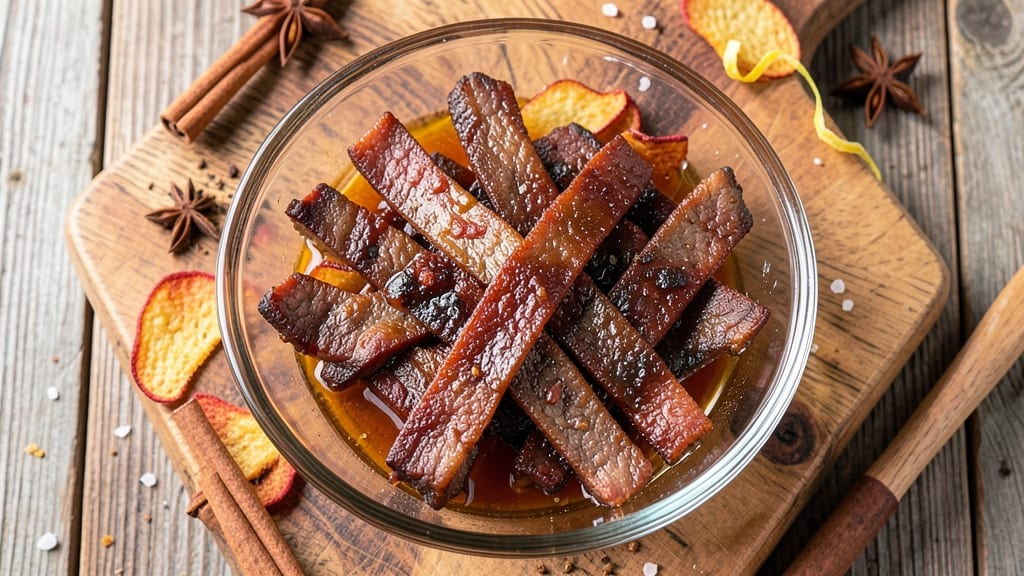
This apple beef jerky recipe transforms tough beef into smoky-sweet chewy bites that taste like fall in every bite. The secret? A marinade of apple cider vinegar, brown sugar, and warm spices that tenderizes the meat while infusing it with natural sweetness and depth.
Unlike traditional jerky, this version balances the savory with a subtle apple tang that makes it irresistible—perfect for snacking, camping trips, or charcuterie boards.
The process is straightforward but requires patience: thinly sliced beef marinated overnight, then dehydrated at 160°F until fully dry and safe to eat.
I’ve tested this method countless times, and the key is maintaining a consistent temperature to avoid overcooking while ensuring the jerky reaches a safe internal temperature of 165°F.
The apple cider vinegar not only tenderizes but also acts as a natural preservative, extending shelf life while keeping the jerky moist and flavorful.
What sets this recipe apart is the apple’s role—its acidity breaks down the meat fibers, while its natural sugars caramelize during dehydration, creating a complex, slightly sticky exterior that contrasts with the chewy interior.
The result is jerky that’s far more nuanced than store-bought versions, with layers of smoky, sweet, and slightly tangy flavors. It’s the kind of snack that disappears quickly and leaves everyone asking for seconds.
Whether you’re using a dehydrator, oven, or even a smoker, this method delivers restaurant-quality jerky at home—just be prepared for compliments (and requests for more). Let’s get started on making jerky that tastes like a gourmet treat, not a quick snack.
Ingredients for apple beef jerky
Sixteen ingredients transform tough beef into restaurant-quality jerky with apple's signature sweet-tart balance.
| Ingredient | Amount | Notes |
|---|---|---|
| Top-Round Roast Beef 🥩 | 1 ½ lb | Thinly sliced against grain (1/8-inch thick) |
| Apple Cider Vinegar 🍎 | ½ cup | Raw, unfiltered preferred for depth |
| Light Brown Sugar 🍚 | ½ cup | Packed, no substitutions |
| Kosher Salt 🧂 | 2 tbsp | Diamond Crystal preferred |
| Ground Black Pepper 🌶️ | 1 tbsp | Freshly cracked preferred |
| Ground Cinnamon 🌿 | 1 tbsp | Ceylon preferred for subtle warmth |
| Ground Ginger 🌶️ | 1 tsp | Freshly ground for potency |
| Ground Cloves 🌿 | ½ tsp | Lightly toasted for aroma |
| Smoked Paprika 🌶️ | 1 tbsp | Spanish paprika preferred |
| Worcestershire Sauce 🍯 | 1 tbsp | Anchovy-free version for clarity |
| Garlic Powder 🧄 | 1 tsp | Freshly ground preferred |
| Onion Powder 🧅 | 1 tsp | No added MSG |
| Lemon Juice 🍋 | 1 tbsp | Freshly squeezed for brightness |
The beef cut matters most here—top-round roast delivers the perfect lean-to-fat ratio for chewy texture without excessive grease. Slice against the grain for maximum tenderness; Costco or Whole Foods carry pre-sliced versions if you're short on time, but slicing yourself ensures even thickness. For spices, Penzeys Spices or bulk bins at specialty stores guarantee freshness—ground spices lose potency within months, so invest in small quantities. The apple cider vinegar should be raw and unfiltered; brands like Bragg or Mott's deliver the deepest flavor profile. If you can't find raw vinegar, pasteurized will work, though the texture may be slightly less tender.
No smoked paprika? Substitute regular paprika plus a pinch of liquid smoke—just don't overdo it, or the jerky will taste like a campfire. Running low on Worcestershire? Replace with 1 tbsp soy sauce plus 1 tsp balsamic vinegar for a similar umami punch. The brown sugar is non-negotiable for caramelization, but if you're avoiding refined sugar, coconut sugar or date sugar work in a 1:1 ratio. For the spices, toasted whole spices ground fresh (like cinnamon and cloves) elevate the flavor, but pre-ground blends are fine for convenience. The lemon juice adds brightness—skip it if you prefer a more neutral profile, but I recommend keeping it for that restaurant-quality tang.
Marinated beef keeps for 3 days in the fridge, but the longer it sits, the deeper the flavor—24 hours minimum is ideal. Dehydrated jerky stores for 3-4 weeks in the fridge or 6 months in the freezer, though vacuum-sealed bags extend shelf life to 1 year. For best texture, remove jerky from the dehydrator while still slightly pliable—it'll firm up as it cools. Portion into resealable bags with oxygen absorbers for maximum freshness. If you're gifting, package in cellophane bags with ribbon—it's a crowd-pleaser that disappears fast.
Why You'll Love This Recipe
- No Slicing Hassle: I slice the beef once—thin strips, no fuss—and let the dehydrator or oven do the rest. That’s it. No knife marathons, no stress.
- Sweet-Savory Magic: The apple cider vinegar tenderizes while the brown sugar caramelizes, giving it that tangy-sweet crunch. It’s like beef jerky’s better, more balanced cousin.
- Lunchbox Legend: Honestly, my kids grab these over store-bought jerky every time. Toss them in a bag with crackers, or pack them for school—no weird aftertaste, just pure protein.
- Budget-Friendly Staple: Top-round roast is cheap, and this recipe stretches it into a mountain of jerky. I freeze half and still have leftovers for snacking all week. Zero waste, all win.
Step-by-step instructions for apple beef jerky
Transform lean top-round beef into chewy, smoky-sweet jerky using this precise 6-hour method.
Prepare the Marinade with Exact Measurements
In a medium bowl, combine the 0.5 cup apple cider vinegar, 0.5 cup light brown sugar, 2 tbsp kosher salt, 1 tbsp ground black pepper, 1 tbsp ground cinnamon, 1 tsp ground ginger, 0.5 tsp ground cloves, 1 tbsp smoked paprika, 1 tbsp Worcestershire sauce, 1 tsp garlic powder, 1 tsp onion powder, and 1 tbsp lemon juice. Whisk vigorously until the brown sugar dissolves completely and the mixture becomes syrupy. This marinade should coat the back of a spoon—if it's too thick, add 1 tablespoon warm water to reach the perfect consistency.
The apple cider vinegar tenderizes while adding brightness, while the brown sugar caramelizes during drying for that signature chewy texture. The spices create a warm, aromatic profile that balances the sweetness. Let the marinade sit at room temperature for 10 minutes to allow the flavors to meld before using.
Slice the Beef Against the Grain
Using a sharp boning knife or meat slicer, cut the 1.5 lb top-round roast beef into strips 1/8-inch thick against the grain. This is critical—cutting with the grain creates tough, chewy jerky. Arrange the slices on a clean cutting board and pat them dry with paper towels to remove any surface moisture, which prevents the marinade from adhering properly.
For even cooking, trim any large fat deposits and discard. The lean nature of top-round means you won't need to worry about excessive fat rendering. Once sliced, immediately place the beef strips in a large resealable plastic bag or glass container. Pour the prepared marinade over the beef, ensuring each strip is fully coated. Seal the bag, then massage the marinade into the meat by hand for 2 minutes to guarantee even distribution.
Marinate for 2 Hours at Room Temperature
Refrigerate the beef with marinade for 2 hours, turning the bag occasionally to ensure all surfaces remain coated. Cold temperatures prevent bacterial growth while allowing the marinade to penetrate deeply. After marinating, remove the beef from the refrigerator and let it sit at room temperature for an additional 30 minutes—this step is crucial for even drying during the dehydrating process.
Do not skip this resting period. The beef needs to reach room temperature to prevent condensation from forming during dehydration, which can lead to soggy jerky. If you're short on time, you can marinate for 4 hours in the refrigerator instead, but the flavor penetration won't be as deep.
Arrange for Even Drying
Preheat your dehydrator to 160°F—this low temperature ensures the jerky dries slowly and retains moisture for chewiness. Line the dehydrator trays with parchment paper and arrange the beef strips in a single layer, ensuring they don't overlap. Overlapping creates steam, which can make the jerky tough rather than chewy.
For optimal airflow, leave 1/4-inch between each strip. If using an oven, place a wire rack on the middle shelf and bake at 160°F with the door propped open slightly to allow moisture to escape. The goal is to dry the jerky, not cook it, so maintaining this precise temperature is essential.
Dehydrate for 4-5 Hours Until Leather-Like
Dehydrate the beef for 4-5 hours, checking periodically after the first 2 hours. The jerky is done when it reaches a leather-like texture and no longer feels moist when touched. To test, gently press a strip between your fingers—it should feel firm but still pliable, not brittle. If it's still slightly sticky, continue drying for 30-minute intervals until fully set.
Resist the urge to rush this step. Properly dried jerky should bend without breaking but shouldn't snap like leather. Once fully dehydrated, remove the jerky from the dehydrator and let it cool completely on a wire rack. This cooling period helps set the texture and prevents the strips from sticking together.
Pro Tips For Making Apple Beef Jerky
- Slice Thin, Not Lazy: I used to grab the knife and hack through the top round like I was chopping firewood—big mistake. For jerky, aim for ¼-inch slices (about as thick as a nickel). Too thick? Chewy, uneven cooking. Too thin? Burns before it’s dry. A sharp meat slicer or steady hand with a very sharp knife makes all the difference—no one likes jerky that fights back.
- Marinate Overnight, No Excuses: The apple cider vinegar and brown sugar need time to work their magic, not 30 minutes while you scroll through memes. At least 12 hours lets the acid tenderize and the sugar caramelize slightly—trust me, your jerky will taste like it came from a smokehouse, not a rushed weekend project. Pro move: Use a resealable bag and massage the meat to distribute the marinade evenly.
- Pat Dry Before Smoking: Wet meat = sad jerky. After marinating, blot every slice with paper towels—yes, even if it feels tedious. Moisture on the surface means you’ll end up with gummy jerky instead of something crisp and shelf-stable. I learned this the hard way after a batch turned out sticky enough to slap on toast. (Not a good look.)
- Use a Meat Thermometer: Jerky’s done at 160°F internal temp, not when it looks dry or smells "done." Relying on time or guesswork leads to either raw spots or overcooked leather. A cheap instant-read thermometer takes 2 seconds per slice and guarantees perfect results—no more undercooked jerky that’ll make you question your life choices. (I’ve been there.)
Regional styles of this dish
Southern Sweet-Smoky
In the South, apple jerky takes on a bold, caramelized twist with the addition of molasses to the marinade. Replace 2 tbsp of the brown sugar with 2 tbsp unsulphured molasses and add ½ tsp cayenne pepper for a subtle heat.
Smoke the jerky over hickory or applewood chips for 15 minutes before dehydrating to deepen the smoky notes. Serve with peanut butter for a classic Southern snack combo. 🔥
Midwest Apple-Cheddar
The Midwest loves its cheesy twists, so try adding ½ cup crumbled sharp cheddar cheese to the marinade and sprinkle extra on the jerky before dehydrating. For a crispy finish, broil for 2 minutes at the end.
Pair with apple slices and crackers for a perfect tailgate snack. This version keeps the apple’s sweetness while adding a cheesy crunch. 🧀
Pacific Northwest Tart-Dry
Out West, they prefer a lighter, tangier profile. Swap half the brown sugar for powdered erythritol and add 1 tsp dried rosemary to the marinade. Dehydrate at 150°F for 5-6 hours to preserve the apple’s crisp acidity.
Serve with local honey and almonds for a balanced, protein-rich snack. The lower temp keeps the jerky chewy without overpowering the tartness. 🍎
Texas BBQ-Style
For a Texas-inspired version, add 2 tbsp chipotle powder and 1 tbsp smoked salt to the marinade, then brush the jerky with ½ cup BBQ sauce (like Starkist) before dehydrating. Finish with a sprinkle of crushed red pepper flakes for heat.
Serve on brisket sandwiches or with pickles and coleslaw for a full BBQ experience. The apple adds unexpected sweetness that cuts through the smoky heat. 🌶️
New England Maple-Apple
Up North, they love maple syrup’s earthy depth. Replace ¼ cup of the apple cider vinegar with ¼ cup pure maple syrup and add ½ tsp ground allspice for warmth. Dehydrate at 155°F for 4-5 hours until fully set.
The maple enhances the apple’s natural sweetness, making this jerky a perfect pairing with warm apple cider or maple-glazed carrots. 🍁
Global Fusion Twist
For a fusion approach, try a Japanese-inspired version by adding 1 tbsp soy sauce, 1 tsp grated ginger, and ½ tsp sesame seeds to the marinade. Dehydrate at 160°F for 4 hours, then brush with a little sesame oil before serving.
Pair with steamed rice and miso soup for a unique, umami-rich snack. The apple’s sweetness balances the savory flavors beautifully. 🌏
Nutrition facts
Frequently asked questions
Why does this jerky recipe use apple cider vinegar instead of regular vinegar?
The apple cider vinegar adds a subtle sweetness and depth that regular vinegar can't match. It tenderizes the beef while infusing the jerky with natural apple flavor, creating that signature smoky-sweet balance. Plus, the acidity helps preserve the jerky longer without artificial additives.
Can I use a different type of apple in the marinade?
No apples are needed—this recipe uses apple cider vinegar, not actual apple pieces. For extra flavor, you could add 1 teaspoon apple cider powder (found in baking sections) to the marinade, but it's optional. The vinegar already delivers the apple's essence without needing fresh fruit.
How do I know when the jerky is fully dehydrated?
The jerky is done when it feels firm but still pliable—like leather. Gently press a strip between your fingers: it should bend without breaking. The edges should be completely dry with no moisture visible. At 160°F, this typically takes 4-5 hours, but check after 2 hours to avoid over-drying.
What's the best way to store homemade apple beef jerky?
Store in an airtight container in the fridge for up to 4 weeks, or freeze for 6 months in resealable bags. For longer shelf life, vacuum-seal with oxygen absorbers. Keep it away from moisture to prevent spoilage—this jerky stays fresh longest when completely dry.
Can I make this jerky without a dehydrator?
Use an oven at 160°F with the door slightly open (propped with a wooden spoon) for airflow. Place strips on a wire rack over a baking sheet and dehydrate for 4-6 hours, checking frequently. A smokehouse or campfire (with proper safety measures) also works for a rustic twist.