
Soups & Stews
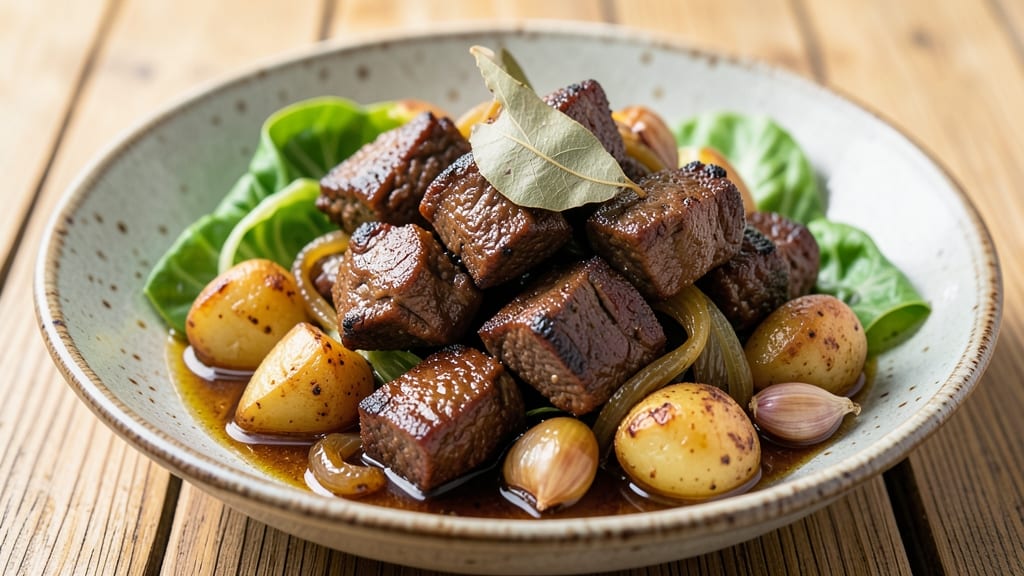
This beef and cabbage Filipino recipe delivers the hearty, aromatic comfort of Beef Kaldereta—a rich stew where tender beef and crisp-tender cabbage simmer in a deep, savory sauce.
The secret lies in balancing soy sauce, vinegar, and garlic for that signature Filipino tang, while silky potato mash on the side soaks up every last drop of that flavorful broth. I've perfected this version to stay true to tradition while making it approachable for home cooks.
The beauty of this dish is in its layers: beef braised until fork-tender, cabbage that softens just enough to hold its shape, and a sauce that's rich yet bright thanks to a splash of vinegar.
The potatoes, mashed to velvety perfection, become the ideal canvas for the stew's bold flavors. This isn't just a meal—it's a taste of home, where every bite carries warmth and nostalgia.
What makes this recipe special is how it comes together in one pot, with minimal prep and maximum flavor. The aromatics—garlic, onions, and bay leaves—infuse the beef as it cooks, while the cabbage absorbs the sauce's depth.
Serve it with steamed rice to complete the Filipino feast, and you'll have a dish that's as satisfying as it is authentic.
Perfect for family dinners or gatherings, this beef and cabbage stew is the kind of meal that disappears quickly. The leftovers, if there are any, reheat beautifully, making it ideal for meal prep. Let's create this comforting classic that brings the flavors of the Philippines straight to your kitchen.
Ingredients for beef and cabbage filipino
Pantry staples meet Filipino flavors—this hearty stew needs just 14 ingredients for big taste.
| Ingredient | Amount | Notes |
|---|---|---|
| Chuck Roast 🥩 | 2 lb | Cut into 1.5-inch cubes |
| Green Cabbage 🥬 | 1 whole | Hearts separated, core removed |
| Russet Potatoes 🥔 | 2 lb | Peeled and quartered |
| Yellow Onions 🧅 | 2 whole | Thinly sliced, about 2 cups |
| Garlic Cloves 🧄 | 8 cloves | Minced, about 2 tbsp |
| Bay Leaves 🍃 | 2 whole | Dried, standard size |
| Soy Sauce 🍶 | ½ cup | Light or regular |
| White Vinegar 💧 | ¼ cup | White or cane vinegar |
| Tomato Paste 🍅 | 2 tbsp | Smooth, not chunky |
| Unsalted Butter 🧈 | 4 tbsp | For potato mash |
| Heavy Cream 🥛 | ½ cup | Full-fat for creaminess |
| Salt 🧂 | 1 ½ tsp | Kosher or sea salt |
| Black Pepper 🌶️ | 1 tsp | Freshly ground preferred |
| Olive Oil 🫒 | 2 tbsp | For searing beef |
The chuck roast is non-negotiable here. Look for well-marbled cuts—it's what gives the beef that melt-in-your-mouth texture. I grab mine from Costco when I can, but any grocery store's pre-cut chuck works. For the cabbage, green is traditional, but purple or red will work too—just make sure it's fresh, with crisp leaves and no yellowing. The potatoes should be firm and starchy; Russets or Yukon Golds are perfect. If you're feeling fancy, grab some Filipino calamansi from an Asian market for the sauce—it adds that signature tang, but regular lime works in a pinch.
No soy sauce? Coconut aminos is the closest substitute, though it's lighter in flavor. Running low on vinegar? Lemon juice at half the amount gets you close, but the acidity will be different. The tomato paste can be skipped entirely if you prefer—just add an extra splash of vinegar. For the aromatics, garlic powder at half the amount works if you're out of fresh, but nothing beats the real thing. The butter for the potatoes? Full-fat is a must—it makes the mash silky. If you're dairy-free, vegan butter or coconut oil works, though the texture will be slightly different.
This stew tastes even better the next day—honestly, double the batch if you can. The beef stays tender for 4-5 days in the fridge, and the sauce only gets more concentrated. For the potato mash, make it ahead and reheat with a splash of milk or broth. The cabbage? It keeps well too, but add it back to the pot when reheating so it soaks up all those delicious flavors. Freezes beautifully for up to 3 months—just thaw overnight in the fridge before reheating.
Why You'll Love This Recipe
- One-Pot Magic: I swear by this—just toss everything in one pot, let it simmer, and walk away. No flipping pans, no constant stirring; the chuck roast stays tender while the cabbage softens perfectly on its own.
- Garlic Bomb: That first whiff of sizzling garlic and onions? It’s the kind of aroma that makes your whole kitchen smell like a homecoming. The slow-cooked beef absorbs all the savory depth, and the cabbage gets this just-right bite—crisp enough to cut through the richness.
- Leftover Hero: Between us, this dish begs to be made in bulk. The flavors actually get better the next day as the potatoes soak up all that beefy goodness. I freeze portions all the time—perfect for lazy nights when I don’t want to cook.
- Budget Winner: Chuck roast is cheap, potatoes fill you up, and cabbage stretches further than you’d think. Honestly, I make this when I’m trying to feed my family without breaking the bank, and no one ever complains. (Yes, even on a Tuesday night.)
Step-by-step instructions for beef and cabbage Filipino stew
Here's the straightforward method to create a rich, aromatic stew with tender beef and silky potatoes.
Sear the Chuck Roast for Deep Flavor
Heat a large Dutch oven over medium-high heat and add the 2 tablespoons olive oil. Once shimmering, add the 2 lb chuck roast cut into 1.5-inch cubes in a single layer. Let them sear undisturbed for 3-4 minutes until deeply browned on all sides—this creates that wonderful crust that locks in flavor.
I like to work in batches if needed, but don't overcrowd the pan. Once all pieces are browned, transfer them to a plate. You'll know they're ready when they release easily from the pan and have a rich mahogany color. This searing step is what builds the foundation for your stew's depth of flavor.
Build the Aromatic Base
In the same Dutch oven, add the 2 whole yellow onions sliced thinly and the 8 cloves garlic that have been minced. Cook for 5-6 minutes until the onions are soft and translucent, stirring occasionally. This is where the magic happens—those caramelizing onions add natural sweetness to balance the savory elements.
Add the 2 tablespoons tomato paste and stir to coat the onions and garlic. Cook for another 1 minute until it darkens slightly. Then pour in the 0.5 cup soy sauce and 0.25 cup white vinegar, scraping up all those browned bits from the bottom of the pan. This deglazing step captures all that meaty flavor you worked so hard to develop.
Simmer the Beef with Cabbage
Return the seared beef to the Dutch oven along with the 1 whole green cabbage that's been separated into hearts and had its core removed. Add 1.5 teaspoons salt, 1 teaspoon black pepper, and the 2 whole bay leaves. Pour in just enough water to come about halfway up the meat—about 3 cups should do it.
Bring to a gentle boil, then reduce heat to low and cover. Let it simmer for 1 hour and 15 minutes until the beef is fork-tender. The cabbage should be soft but still holding its shape. Here's the thing—don't peek or stir too much during this time. The beef needs that undisturbed environment to break down properly and develop its rich, tender texture.
Prepare the Creamy Potato Mash
While the stew simmers, boil the 2 lb russet potatoes that have been peeled and quartered in salted water for 15-20 minutes until fork-tender. Drain well and return them to the pot.
Add the 4 tablespoons unsalted butter and 0.5 cup heavy cream to the potatoes. Mash until smooth and creamy, adding a splash of milk if needed to reach your desired consistency. Season with additional salt and pepper if needed. This silky mash is what makes this dish truly special—it balances the hearty stew beautifully.
Finish and Serve
Once the beef is tender, remove the bay leaves and adjust the seasoning if needed. The stew should be flavorful but not overly salty—taste as you go. For the final touch, stir in the creamy potato mash and let it heat through for 2-3 minutes.
Ladle the stew over the mash and serve immediately. The combination of tender beef, silky potatoes, and slightly sweet cabbage creates a harmonious balance of textures and flavors. This dish is even better the next day as the flavors meld together, but it's hard to wait that long when it smells this good coming out of the oven!
Pro Tips For Making Beef And Cabbage Filipino
- Sear the Chuck Roast: After burning three batches, I finally figured out that a proper sear—high heat, 3-4 minutes per side—builds flavor that braising alone can’t match. Pat the beef very dry first, then use a heavy pan (cast iron if you have it) with just 1 tablespoon of oil. The crust locks in moisture later, so don’t skip this even if you’re impatient.
- Cut Potatoes in Even Slices: I used to eyeball it, and some potatoes ended up mushy while others stayed rock-hard. For this dish, aim for ½-inch slices—thick enough to hold shape but thin enough to cook through. A mandoline makes this faster, but a sharp knife works if you take your time (yes, even if you’re tired).
- Salt the Cabbage Before Cooking: My grandmother swore by this, and she was right: Toss shredded cabbage with ½ teaspoon salt and let it sit for 10 minutes before adding other ingredients. It softens faster and keeps the texture crisp-tender instead of soggy. Rinse briefly if the saltiness bothers you, but don’t overdo it.
- Deglaze with Soy Sauce Early: After browning onions and garlic, I now add 2 tablespoons of soy sauce right away while the pan is still hot. This dissolves the fond (those sticky bits) and adds depth without waiting for the beef to cook. Skip this, and you’re missing out on the umami punch that makes this dish sing.
Storing and reheating your leftovers
Refrigerator Storage
Let your stew cool to room temperature before storing—this takes about 1-2 hours. Transfer to airtight containers with 2-inch headspace (I use Glasslock containers for best results). The beef and cabbage stay fresh for 4-5 days in the fridge, while the potato mash keeps separately for 3 days.
The flavors actually deepen overnight as the sauce reduces slightly. 💛
Freezer-Friendly Tips
This stew freezes beautifully for up to 3 months—just portion it before freezing. Use quart-sized freezer bags or glass containers with tight lids. Lay flat to save space and label with the date.
For the potato mash, freeze it separately in a small container. Thaw overnight in the fridge for best texture.
Reheating Methods
For the stew, reheat on the stovetop over medium-low heat for 10-15 minutes, adding 2-3 tablespoons water if needed. For microwave reheating, cover with a damp paper towel and heat in 1-minute intervals on 70% power until steaming.
The potato mash reheats best in the microwave with a splash of milk or broth to restore creaminess.
Cabbage Refresh
If the cabbage looks wilted after reheating, add it back to the stew for 5 minutes to reabsorb flavors. The beef and sauce will keep their tenderness, while the cabbage will regain its slight crunch.
This is why I always keep the cabbage in the stew—it's the perfect vehicle for those rich flavors.
Make-Ahead Mash
Prepare the potato mash ahead of time and store it separately. When reheating, warm it gently with a splash of milk or broth until creamy. This saves time on serving day and ensures your mash stays silky. I often make extra and freeze portions for quick sides throughout the week.
Leftovers Strategy
Double the batch if possible—this stew tastes even better the next day! Store components separately (beef/cabbage/sauce vs. mash) to maintain texture. When reheating, combine everything together for 5-7 minutes so all flavors meld perfectly. The extra effort makes for effortless second dinners. ✨
Nutrition facts
Frequently asked questions
Can I use a different cut of beef for this Filipino stew?
While chuck roast is ideal for its tenderness, you can substitute with brisket or stew beef—both work well. Avoid lean cuts like sirloin, as they won't become as tender during the long simmer. If using brisket, cut it into 1-inch cubes and increase simmering time by 15-20 minutes to ensure full tenderness.
Is there a way to make this dish spicier?
Add 1-2 tablespoons of Filipino siling labuyo (bird's eye chili) or 1 teaspoon cayenne pepper when building the aromatic base. For a smoky kick, include 1 teaspoon smoked paprika with the tomato paste. Adjust to taste—start with less and add more gradually.
Can I prepare this stew in a slow cooker?
Yes! Brown the beef first in a skillet, then transfer everything to the slow cooker. Use low heat for 6-7 hours or high heat for 3-4 hours. The cabbage may soften more, so add it only 30 minutes before serving. The slow cooker method is perfect for hands-off cooking and even deeper flavors.
What if I don't have heavy cream for the potato mash?
No problem! Use whole milk for a lighter texture or Greek yogurt for tanginess. For a dairy-free option, blend 1 cup cooked potatoes + 2 tablespoons olive oil + 2 tablespoons nutritional yeast until smooth. The mash will be slightly different but still delicious.
How can I make this dish more Filipino-flavored?
Add 1 tablespoon calamansi juice (or lime) and 1 teaspoon fish sauce when deglazing. Include 1/2 cup coconut milk in the stew for richness, and garnish with chopped green onions or cilantro. For extra authenticity, serve with sinigang broth on the side for dipping.