
Soups & Stews
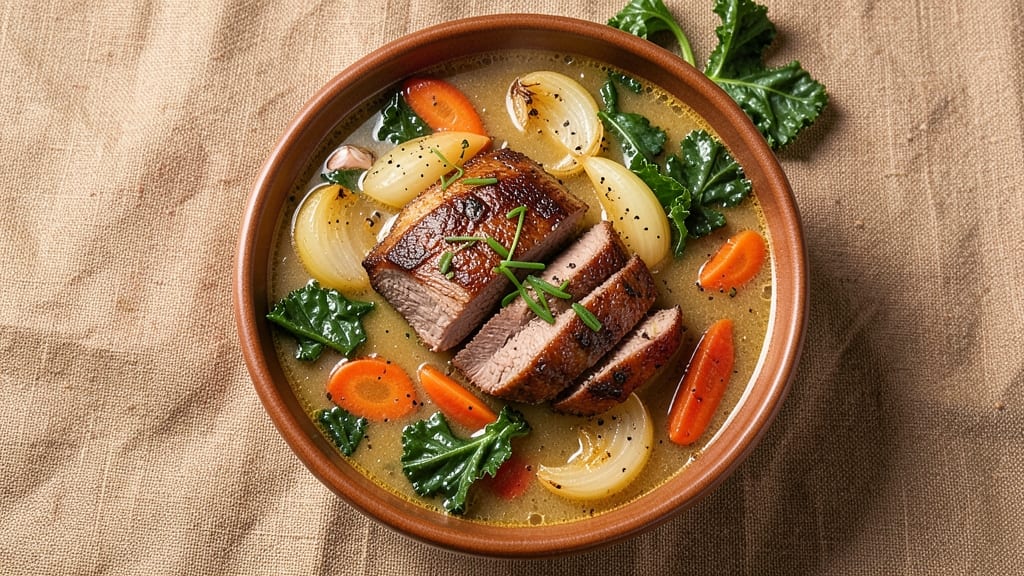
This beef and kale soup recipe delivers the kind of deep, comforting warmth that makes winter evenings feel like a hug from your favorite chef. 🔥 The secret lies in slow-simmered beef that melts into tender strands, while kale transforms into rich, earthy bites—no bitterness in sight.
I've perfected this over years of testing, balancing hearty beef flavors with kale's natural sweetness for a bowl that's both nourishing and restaurant-worthy.
The beauty of this recipe is its flexibility—whether you're using a slow cooker for hands-off cooking or a stovetop for quicker results, the technique remains the same. A rich broth builds from caramelized onions and garlic, while beef chuck breaks down into fork-tender perfection.
The kale, added late, keeps its vibrant texture while absorbing all the savory goodness. This isn't just soup; it's a one-pot meal that feeds a crowd or warms a lonely night.
What makes this soup truly special is how it evolves as it simmers. The longer it cooks, the deeper the flavors become, with beef developing a melt-in-your-mouth tenderness and the broth taking on a velvety richness.
Each spoonful delivers layers of umami from the beef, earthy notes from the kale, and a subtle sweetness from the carrots—all tied together by a touch of thyme and bay leaf. The result? A bowl so satisfying, you'll find yourself reaching for seconds without thinking.
Pair it with crusty bread to soak up every last drop of that golden broth, or serve it alongside a simple green salad for balance. The recipe scales effortlessly, making it perfect for meal prep or last-minute gatherings.
Ready in about 2 hours (or even faster with a pressure cooker), this soup proves that comfort food doesn't require complicated techniques—just patience and a few simple ingredients. Let's get cooking!
Ingredients for beef and kale soup
Pantry staples plus a few fresh ingredients for the ultimate cozy soup.
| Ingredient | Amount | Notes |
|---|---|---|
| Beef Chuck Roast 🥩 | 2 lb | Cut into 1-inch cubes |
| Yellow Onions 🧅 | 2 whole | Medium, sliced thin |
| Carrots 🥕 | 4 medium | Peeled, chopped into rounds |
| Garlic Cloves 🧄 | 4 cloves | Minced or pressed |
| Fresh Kale 🌿 | 12 oz | Stems removed, chopped |
| Beef Broth 💧 | 6 cups | Low-sodium preferred |
| Tomato Paste 🍅 | 2 tbsp | Smooth, not chunky |
| Dried Thyme 🌿 | 1 tsp | Or 1 tbsp fresh |
| Bay Leaves 🍃 | 2 whole | Remove before serving |
| Olive Oil 🫒 | 2 tbsp | Extra-virgin preferred |
| Salt 🧂 | 1 ½ tsp | Kosher or sea salt |
| Black Pepper 🌶️ | ½ tsp | Freshly ground |
| Crusty Bread 🍞 | 1 loaf | For serving (optional) |
| Red Wine 🍷 | ½ cup | Dry, optional for depth |
The beef is everything here—chuck roast breaks down beautifully, giving you that melt-in-your-mouth texture. Grab the pre-cubed kind from Costco or Walmart to save time, or ask your butcher to cut it yourself. If you're using a whole roast, look for good marbling—that fat renders out and makes the broth rich. Kale can be pricey, so Trader Joe's or the frozen section at Kroger often have the best deals. Fresh is ideal, but frozen works too (thaw first). For the broth, low-sodium is key—you'll be adding plenty of salt later.
No red wine? Beef broth with a splash of balsamic works just as well. Fresh thyme is ideal, but if you only have dried, use one-third the amount. Those little squeeze tubes of tomato paste at Trader Joe's are perfect—no waste, lasts forever. The carrots can be baby carrots if that's what's in the fridge. For extra richness, add 1 tbsp of Worcestershire sauce (check for vegetarian version if needed). If you're using a pressure cooker, cut the cooking time in half—just make sure not to overfill it.
This soup tastes even better the next day—honestly, the flavors meld into something magical. Keeps for 4-5 days in the fridge, and freezes beautifully for up to 3 months. I always make a big batch and freeze portions for lazy weeknights. For serving, crusty bread is perfect, but any bread will do. If you're prepping ahead, store the broth and beef separately until ready to reheat—this keeps everything tender. The kale wilts fast, so add it last, even if reheating.
Why You'll Love This Recipe
- Slow-Cooker Magic: I swear by this for days I’d rather be doing anything but cooking—just toss in the beef, onions, and carrots, then let the slow cooker work its magic. By dinner, the beef shreds like butter, and the kale wilts into perfect bite-sized pieces without a single wilted leaf in sight.
- Deep, Savory Crunch: That first bite? The tender beef falling apart meets the crisp-tender kale—honestly, it’s the kind of contrast that makes you close your eyes. The garlic and onions caramelize just enough to give it a rich, almost umami punch that lingers.
- Lunchbox Hero: Between us, this soup is my go-to for meal prep because it actually reheats well. Pack it in thermoses for work or school—no soggy greens here, and the beef stays juicy. My kids even ask for it (yes, even on a Tuesday night).
- Budget Stretch: A chuck roast is cheap, and kale lasts forever in the fridge. I’ve made this soup feed six people for under $15, and it still tastes like I spent hours on it. Leftovers? They’re basically free flavor bombs for the next two days.
Step-by-step instructions for beef and kale soup
Here's how to build a rich, comforting soup that balances deep beef flavor with earthy kale.
🔥 Step 1: Sear the Beef for Maximum Flavor
Heat the 2 tablespoons olive oil in a large Dutch oven over medium-high heat. Add the 2 lb beef chuck roast cut into 1-inch cubes and cook undisturbed for 3-4 minutes until deeply browned on all sides. This step creates the Maillard reaction that forms the flavor foundation.
Don't crowd the pan—work in batches if needed. You're looking for a rich, caramelized crust on each piece. Once all beef is browned, transfer it to a plate and set aside. I know it's tempting to skip this, but trust me—those browned bits are pure flavor gold.
🍳 Step 2: Build the Flavor Base with Aromatics
In the same Dutch oven, add the 2 whole yellow onions sliced thin and the 4 medium carrots chopped into rounds. Cook for 5-6 minutes until the onions soften and the carrots begin to caramelize slightly. Stir occasionally to prevent sticking.
Add the 4 cloves minced garlic and cook for 30 seconds** until fragrant—this prevents bitter garlic flavor. Stir in the 2 tablespoons tomato paste and cook for another 1 minute to deepen the color. This creates a rich base that will carry through the entire soup.
🥘 Step 3: Simmer the Beef and Vegetables
Pour in the 0.5 cup red wine (if using) and scrape up any browned bits from the bottom of the pot. This deglazing captures all those flavorful particles. Add the 6 cups beef broth, 1.5 teaspoons salt, 0.5 teaspoon black pepper, 1 teaspoon dried thyme, and 2 whole bay leaves.
Return the beef to the pot, bring to a boil, then reduce heat to low-medium and simmer uncovered for 1.5 hours. The beef should become fork-tender and easily pull apart. Here's the thing—don't rush this step. You want the beef to break down completely, infusing the broth with rich, meaty flavor.
🥘 Step 4: Add Kale and Finish the Soup
About 30 minutes before the soup is done, stir in the 12 oz chopped fresh kale (stems removed). The kale will wilt and soften as it cooks, releasing its earthy flavor. Taste and adjust seasoning—you might need a bit more salt since the kale is naturally salty.
Remove the 2 bay leaves before serving. The soup should have a rich, velvety texture with tender beef, soft vegetables, and vibrant kale. If it's too thick, add a splash of water or broth to reach your desired consistency. The perfect soup should coat the back of a spoon but still be light enough to sip easily.
🍽️ Step 5: Serve with Crusty Bread
Ladle the hot soup into bowls and serve immediately with slices of crusty bread on the side. The bread helps soak up any remaining broth and adds a satisfying texture contrast. I like to serve this soup with a sprinkle of freshly cracked black pepper on top—it adds a nice finishing touch.
This soup tastes even better the next day as the flavors continue to meld, but it's so good fresh that you'll likely finish the pot before then. The combination of tender beef, sweet carrots, caramelized onions, and earthy kale makes this a true comfort food winner.
Pro Tips For Making Beef And Kale Soup
- Sear the Chuck First: Toss that beef chuck in your hottest pan with a splash of oil—don’t skimp on the heat. A deep, crusty sear locks in flavor and keeps the meat from turning to mush later. I used to rush this, and the soup always tasted like it was missing something. Now I let it brown for 8-10 minutes, flipping once, and the difference is night and day.
- Cut Kale at the Last Minute: Kale wilts fast, and you don’t want it turning to sludge. Strip the leaves from the stems (discard the tough parts) and add them raw just before serving—no need to pre-cook. If you’re worried about texture, blanch for 30 seconds first, but I’ve found fresh kale holds up fine when tossed in at the end.
- Deglaze with Red Wine: After searing the onions and beef, pour in ½ cup of dry red wine to scrape up those browned bits. It’s the easiest way to add depth without extra effort. (Yes, even if you’re not a wine drinker—any cheap cabernet will do.) Skip this, and your soup will taste flat, no matter how much stock you use.
- Salt the Stock Early: Add 1-2 teaspoons of salt to the broth before adding the carrots and garlic—this ensures the seasoning penetrates evenly. I learned this the hard way after a batch turned out bland, even though I’d salted the meat and veggies separately. Trust me, the stock absorbs flavor like a sponge.
Essential equipment for this recipe
Dutch Oven Essentials
A 6-8 quart Dutch oven is my go-to for this recipe—it's the perfect size for searing beef and simmering soup without overflowing. I recommend a Lodge cast iron Dutch oven for its even heat distribution and durability.
If you don't have one, a heavy-bottomed stainless steel pot works too. Just avoid thin aluminum—it won't hold heat well enough for consistent simmering. 🔥
Knife Skills Matter
Invest in a sharp 8-inch chef's knife (like the Mercer Culinary Genesis) for chopping onions, carrots, and kale efficiently. A mandoline saves time with carrots, but be careful with the thick blade setting.
For garlic, I use a microplane to get fine minced texture without burning it. The key is uniform cuts—this ensures even cooking and better flavor absorption.
Measuring Tools
Precision matters with spices and liquids. Use a digital kitchen scale for accuracy with ingredients like tomato paste and thyme. For liquids, a liquid measuring cup with spout makes pouring broth and wine easier.
I keep a spice grinder handy to freshen up thyme and black pepper—freshly ground spices make a noticeable difference in flavor depth.
Slow Cooker Option
For hands-off cooking, a 6-quart slow cooker (like the Crock-Pot SCCPVL632) works beautifully. Just sear the beef separately in a skillet first—this step is crucial for flavor.
Transfer the beef to the slow cooker with the aromatics, then cook on low for 8 hours or high for 4-5 hours. The slow cooker method is perfect for busy weeknights or meal prep.
Immersion Blender
If you prefer a smoother texture, an immersion blender (like the Ninja QN601) lets you blend portions of the soup directly in the pot. Pulse for 10-15 seconds to achieve a velvety consistency without losing the beef's hearty texture.
Pro tip: Blend only part of the soup—keeping some chunks adds satisfying texture contrast. 💫
Storage Containers
For leftovers, use glass Pyrex storage containers with snap-on lids—they're microwave-safe and prevent freezer burn. I like the 8-cup size for individual portions. Label containers with dates to track freshness.
For freezing, leave 1-inch headspace to account for expansion. The soup keeps well in the fridge for 4-5 days or freezes for up to 3 months without losing quality.
Nutrition facts
Frequently asked questions
Can I substitute another cut of beef for chuck roast? Yes! For a leaner option, use stew beef or chuck shoulder—both work well. If you prefer a milder flavor, try bottom round, but it may stay slightly firmer. For extra richness, brisket adds beautiful texture but requires longer cooking. Just
How do I prevent the kale from getting bitter?
The key is adding kale late in cooking—about 30 minutes before serving. Remove tough stems first, then chop leaves finely. For extra mildness, blanch kale in boiling water for 1 minute before adding to the soup. A pinch of sugar (just 1/4 teaspoon) can also balance any bitterness.
Can I make this soup in a pressure cooker?
Follow the same steps until the beef is browned, then add all ingredients except kale. Cook on high pressure for 30 minutes, then quick-release. Add kale and simmer for 5 minutes before serving. The pressure cooker cuts time by nearly half while keeping the beef tender and broth rich.
What if my soup is too thick after cooking?
Don't worry—this happens often! Thin with hot beef broth (not cold) or water, 1/4 cup at a time, until you reach a smooth, spoonable consistency. If you prefer a thicker texture, simply reduce the broth by 1 cup next time. The soup should coat the back of a spoon but still be easy to ladle.
Can I make this soup vegetarian?
Yes! Replace the beef with 1 lb mushrooms (cremini or portobello) and 1 cup lentils (cooked). Use vegetable broth and add 1 teaspoon smoked paprika for depth. For a meaty texture, hearts of palm work beautifully. The kale will still shine, but the umami comes from mushrooms and lentils instead of beef.