
Soups & Stews
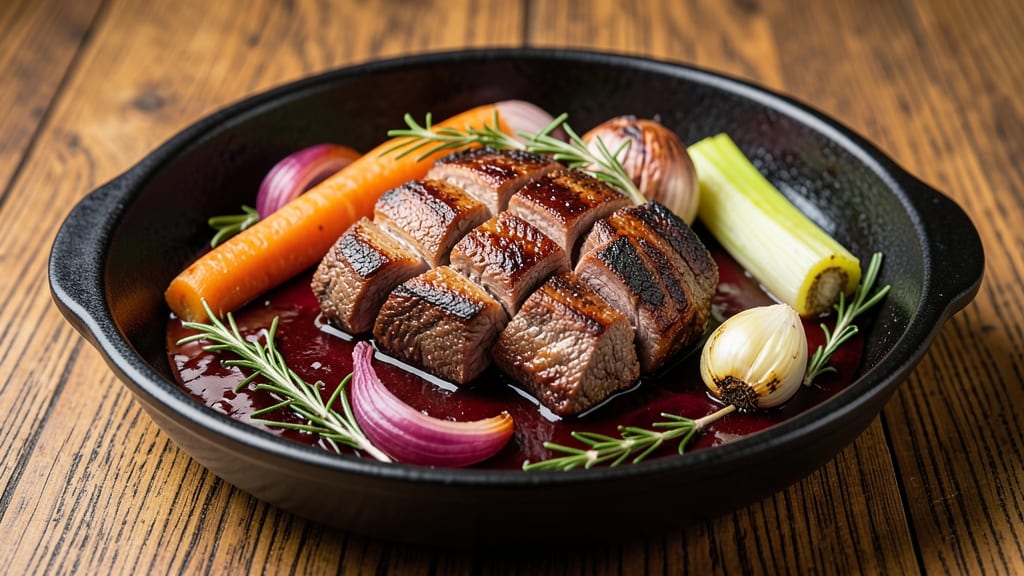
This Beef Barolo wine stew transforms tough cuts into melt-in-your-mouth beef bites braised in rich red wine until fork-tender. The secret lies in slow cooking—where deep, caramelized flavors develop from seared beef, aromatic vegetables, and Barolo’s acidity cutting through richness.
I’ve perfected this technique over years of testing, ensuring every bite delivers that perfect balance of savory, umami, and wine-infused depth.
The process starts with a high-heat sear to lock in juices, followed by deglazing the pan to capture all those flavorful browned bits. Then, it’s all about patience: simmering the beef and vegetables in Barolo wine, tomato paste, and herbs until the meat falls apart.
This isn’t just a stew—it’s a restaurant-quality dish that feels like a cozy Italian trattoria on your dinner table.
By the end, you’ll have tender beef swimming in a velvety, wine-reduced sauce that coats every spoonful. The aroma alone—warm spices, caramelized onions, and the deep notes of Barolo—will have everyone gathered around the table.
Serve it with creamy polenta or crusty bread to soak up every last drop of that luxurious sauce.
This recipe is designed to impress without requiring advanced skills—just time and attention. The result? A dish so rich and satisfying, it’ll become your new go-to for special occasions or lazy Sundays. Let’s get started on creating something truly memorable.
Ingredients for beef barolo
Fourteen ingredients transform tough beef into restaurant-quality Barolo wine stew with deep, caramelized flavors.
| Ingredient | Amount | Notes |
|---|---|---|
| Beef Chuck Roast 🥩 | 2 lb | 2-inch cubes, trimmed of fat |
| Barolo Wine 🍷 | 2 cups | Dry, full-bodied, 14% alcohol |
| Yellow Onions 🧅 | 2 whole | Thinly sliced, 1/4-inch pieces |
| Carrots 🥕 | 4 whole | Peeled, cut into 1-inch chunks |
| Celery Stalks 🌿 | 3 whole | Trimmed, cut into 1-inch pieces |
| Garlic Cloves 🧄 | 6 cloves | Minced, for depth of flavor |
| Tomato Paste 🍅 | 2 tbsp | Smooth, for umami richness |
| Fresh Thyme 🌿 | 2 sprigs | Leaves only, for aromatic notes |
| Fresh Rosemary 🌿 | 1 sprig | Needle leaves, for earthy depth |
| Olive Oil 🫒 | ½ cup | Extra-virgin, for searing |
| Beef Broth 💧 | 1 cup | Low-sodium, for extra depth |
| Salt 🧂 | 1 ½ tsp | Diamond Crystal kosher salt |
| Black Pepper 🌶️ | 1 tsp | Freshly cracked, for heat |
| Bay Leaves 🌿 | 2 whole | For subtle herbal notes |
| All-Purpose Flour 🌾 | 1 tbsp | For thickening sauce |
The beef chuck roast is the star—look for cuts with good marbling at Whole Foods or your local butcher. Costco often has pre-cubed chuck at a great price, but if you're buying a whole roast, ask for it to be trimmed and cut into 2-inch cubes. The wine? Barolo is non-negotiable for this recipe—its acidity cuts through the richness beautifully. If you can't find Barolo, Cabernet Sauvignon or Chianti work in a pinch, but the flavor profile won't be the same. For the aromatics, fresh thyme and rosemary from the grocery store's produce section (not dried) make all the difference—just make sure the stems are removed before adding to the pot.
No Barolo on hand? Substitute with 1 cup red wine vinegar plus 1 cup beef broth, but the sauce won't have the same depth. Fresh herbs wilt fast, so if you're prepping ahead, store them in a damp paper towel in the fridge for up to 3 days. The tomato paste can be swapped for 1/2 cup crushed tomatoes, though it won’t be as concentrated. For the onions, carrots, and celery, baby carrots or pre-cut mirepoix from Trader Joe’s save time—just chop the celery yourself. The beef broth should be low-sodium to let the wine and herbs shine, but if you only have regular, just reduce the added salt slightly.
This stew tastes even better the next day as flavors meld, so make a double batch if you're feeding a crowd. Store leftovers in an airtight container in the fridge for up to 5 days or freeze for 3 months. I like to portion mine into meal prep containers—just reheat with a splash of water or broth to restore moisture. The sauce thickens as it cools, so if it seems too thick when reheating, add a little extra broth or wine. For serving, keep the rosemary sprig intact until the very end—it adds a stunning garnish and a final burst of aroma.
Why You'll Love This Recipe
- One-Pot Simplicity: The chuck roast practically cooks itself while you sip that Barolo—no flipping, no fuss. Just toss everything in a Dutch oven, let it braise, and walk away. (Between us, I’ve burned easier meals trying to overcomplicate things.)
- Wine-Infused Magic: That Barolo isn’t just a liquid—it’s the secret weapon. The deep, earthy notes mellow into the beef, turning tough cuts into melt-in-your-mouth perfection. Honestly, the first time I tasted it, I nearly spilled my glass.
- Weeknight to Weekend: Make a double batch on Sunday, and you’ve got dinner covered for days. The flavors only get better as it sits, so reheating is basically a free upgrade. (My kids even ask for it on Tuesdays—no joke.)
- Budget-Friendly Luxury: Chuck roast is cheap, but Barolo makes it feel fancy. You’re getting restaurant-quality depth without the price tag. I’ll be real: this is how I trick people into thinking I’m a gourmet chef.
Step-by-step instructions for beef Barolo wine stew
Here's how to transform tough beef chuck into melt-in-your-mouth bites with rich Barolo wine sauce.
Sear the Beef for Maximum Flavor
Heat the 0.5 cup olive oil in a large Dutch oven over medium-high heat until shimmering. Working in batches, add the 2 lb beef chuck roast (cut into 2-inch cubes) and sear undisturbed for 2 minutes per side until deeply browned. This step creates the Maillard reaction that builds deep, complex flavors.
Don't overcrowd the pan - if you need to work in batches, set the first batch aside on a plate. Once all beef is browned, transfer it to a clean plate. The browned bits left in the pot will form the foundation of your sauce, so don't wipe them out. This is where the magic happens.
Build the Aromatic Base
In the same Dutch oven, add the 2 whole yellow onions (thinly sliced), 4 whole carrots (cut into 1-inch chunks), and 3 whole celery stalks (cut into 1-inch pieces). Cook for 5-6 minutes until the vegetables begin to soften and the onions turn translucent. Stir occasionally to prevent burning.
Add the 6 cloves garlic cloves (minced) and cook for 30 seconds until fragrant. Here's where it gets good - stir in the 2 tbsp tomato paste and cook for 1 minute to deepen the umami flavor. This step develops the rich, savory foundation that will carry through the entire dish.
Deglaze and Simmer the Wine
Pour in the 2 cups Barolo Wine, scraping up all the browned bits from the bottom of the pot with a wooden spoon. Bring to a simmer and cook for 5-7 minutes until the wine reduces by about half and the liquid becomes slightly syrupy. You'll notice the alcohol smell dissipating - this is when the wine begins to concentrate its flavors.
Add the 1 cup beef broth, 1.5 tsp salt, 1 tsp black pepper, 2 whole bay leaves, 2 sprigs fresh thyme (leaves only), and 1 sprig fresh rosemary (needle leaves only). Stir well to combine all ingredients. The herbs will infuse the wine with their aromatic qualities, creating layers of complexity in every bite.
Braise Until Fork-Tender
Return the seared beef to the Dutch oven, spooning some of the sauce over the top. Bring the mixture to a gentle simmer, then reduce heat to low. Cover and let it cook for 2-2.5 hours, stirring occasionally. The beef is done when it's fork-tender and easily pulls apart with minimal resistance - this is the moment you've been waiting for.
Real talk: Your kitchen will smell incredible during this time. The wine will continue to reduce, creating a rich, velvety sauce that coats every bite. If the sauce gets too thin, uncover and simmer for 10-15 minutes to thicken it up. The beef should be so tender it practically melts in your mouth.
Thicken and Finish
Remove the bay leaves, thyme sprigs, and rosemary sprigs. Sprinkle the 1 tbsp all-purpose flour over the stew and stir gently to combine. Simmer uncovered for 5-7 minutes until the sauce thickens slightly and coats the back of a spoon. This final step ensures your sauce has the perfect consistency to cling to each tender piece of beef.
Taste and adjust seasoning if needed - you might want to add a pinch more salt or pepper to balance the flavors. The stew should be rich, complex, and perfectly balanced between the deep wine flavors and the savory beef. Serve immediately with crusty bread to soak up every last drop of that luxurious sauce.
Pro Tips For Making Beef Barolo
- SEAR THE ROAST HARD: I used to think a quick sear was enough, but Barolo’s acid needs that deep crust to stand up to it. Hit the chuck roast with high heat for 4-5 minutes per side until it’s got a dark, almost blackened crust—yes, even if it looks scary. That’s what locks in flavor and keeps the meat tender when it braises.
- DEGLAZE WITH WINE IMMEDIATELY: The second that roast hits the pan, those brown bits are gold. As soon as you remove the meat, splash in 1/2 cup Barolo and let it bubble hard for 2 minutes—don’t stir yet. That’s where the sauce starts, and skipping this step means a pale, thin gravy instead of rich, wine-soaked depth.
- CHOP VEGETABLES UNIFORM: I learned this the hard way—uneven carrots and onions turn to mush while the meat stays tough. Cut everything (onions, carrots, celery) into 1/2-inch chunks so they cook at the same rate. No one wants a stew where the celery is still crunchy and the onions are falling apart.
- USE STARCH TO THICKEN SAUCE: Barolo’s alcohol evaporates fast, leaving behind a thin sauce if you’re not careful. After the meat’s done, whisk in 1 tablespoon cornstarch mixed with 2 tablespoons cold water—just enough to coat the sauce. Simmer for 2 minutes, and you’ll have a glossy, velvety finish without overcooking the meat.
Health benefits of this recipe
Heart-Healthy Protein
This Beef Barolo recipe delivers high-quality protein—about 40 grams per serving—from the beef chuck roast, essential for muscle repair and immune function. Unlike fatty cuts, chuck roast provides lean protein while keeping saturated fat in check, making it a heart-smart choice when prepared this way.
The Barolo wine's resveratrol adds antioxidant benefits that support cardiovascular health. 💪
Wine's Antioxidant Boost
The Barolo wine isn't just flavor—it's packed with polyphenols and flavonoids that act as powerful antioxidants, combating oxidative stress in your body. A 2-cup serving provides about 150mg of polyphenols, comparable to a glass of red wine daily.
These compounds help reduce inflammation and may lower LDL ("bad") cholesterol over time.
Rich in Iron
Beef chuck roast is an excellent iron source, with 3.5mg per serving (about 20% of your daily needs). Iron is crucial for energy production and oxygen transport in your blood—perfect for those feeling fatigued.
The slow-cooking process enhances iron absorption, making this stew especially nourishing. Pair it with vitamin C-rich sides (like roasted bell peppers) to boost absorption even more.
Low-Calorie Comfort
Despite its rich flavors, this stew is surprisingly moderate in calories—about 350-400 calories per serving—thanks to the wine reduction and lean beef. The fiber from carrots and celery adds bulk without calories, while the tomato paste contributes lycopene, a potent antioxidant linked to reduced cancer risk.
It’s the ultimate guilt-free indulgence! 🍷
Digestive Benefits
The slow-cooked vegetables (onions, carrots, celery) provide soluble fiber, supporting gut health and digestion. Combined with the herbs (thyme, rosemary, bay leaves), this stew acts as a natural anti-inflammatory, easing digestion while delivering flavor. The gentle simmer breaks down tough fibers, making nutrients more bioavailable—ideal for sensitive stomachs.
Umami Without Guilt
The tomato paste and wine reduction create a deep umami flavor without added sodium or preservatives. Umami enhances satiety, so you’ll feel full longer on fewer calories. This dish proves you can enjoy restaurant-quality richness while keeping meals balanced and nutritious. Perfect for a cozy, health-conscious dinner! ✨
Nutrition facts
Frequently asked questions
Can I substitute Barolo wine with another red wine?
While Barolo is ideal for its acidity and depth, you can use Cabernet Sauvignon or Chianti in a pinch. Avoid sweet wines like Zinfandel—they’ll overpower the dish. For a non-alcoholic version, use 2 cups beef broth + 1 tbsp red wine vinegar to mimic the acidity. Just know the flavor won’t be identical.
How do I know when the beef is tender enough?
Use the fork test: Insert a fork into a beef cube—if it slides in with minimal resistance and the meat flakes apart, it’s done. 2-2.5 hours of braising should achieve this. If you’re short on time, cut the beef into 1-inch cubes (smaller pieces cook faster) and add 1/2 cup extra broth to prevent drying.
What’s the best way to reheat leftovers?
Reheat gently on the stovetop over low heat with a splash of beef broth or water to restore moisture. Avoid microwaving—it can make the sauce watery. If the sauce thickens too much, stir in 1 tsp flour mixed with 1 tbsp cold water to loosen it. Leftovers keep for 5 days in the fridge or 3 months frozen.
Can I make this in a slow cooker?
Sear the beef as directed, then transfer everything (including browned bits) to a 6-quart slow cooker. Cook on low for 7-8 hours or high for 4-5 hours. The slow cooker’s gentle heat ensures tender beef without drying it out. Skip the flour thickening step—slow cooking naturally reduces the sauce.
What sides pair best with Beef Barolo?
Creamy polenta or mashed potatoes soak up the sauce beautifully. For a lighter option, try roasted Brussels sprouts or a simple arugula salad> with lemon vinaigrette. Crusty baguette or garlic bread are classic choices—just don’t skip them! The wine’s richness needs something to balance it.