
Soups & Stews
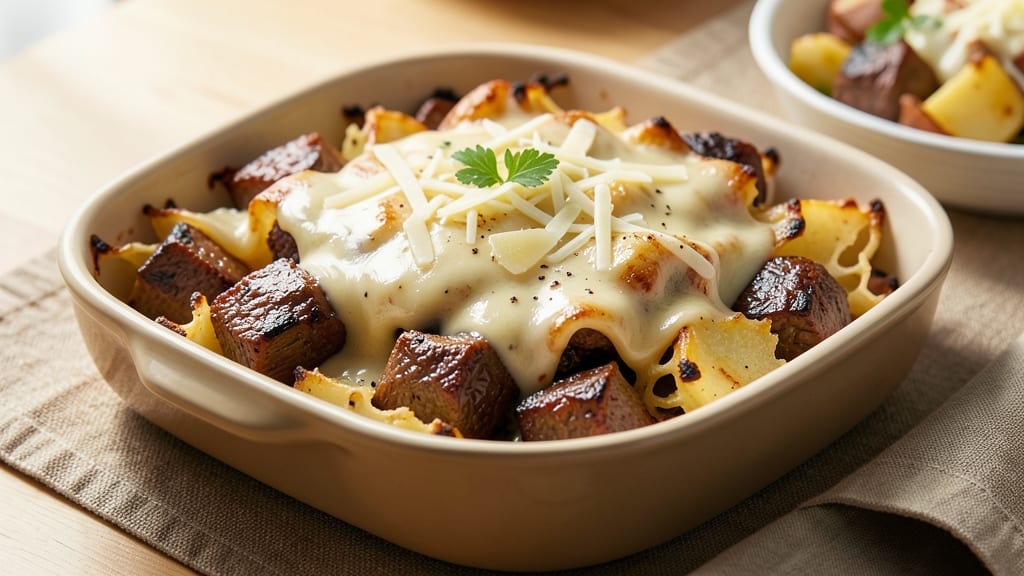
This beef and potato au gratin recipe delivers the ultimate comfort food experience—crispy golden layers atop tender beef and creamy potatoes, all baked to perfection. The French classic combines rich béchamel sauce with perfectly cooked beef and potatoes, creating a dish that's both hearty and elegant.
I've refined this recipe to ensure the top stays gloriously crispy while the interior remains creamy and savory.
The key to success lies in proper layering and baking technique. You'll start by browning the beef for deep flavor, then arrange thinly sliced potatoes and beef in a baking dish before pouring on a velvety cheese sauce.
Baking at 375°F ensures the top develops that signature crispiness while the center stays warm and gooey.
What you'll end up with is a dish that looks as impressive as it tastes—golden, bubbling edges with layers of melted cheese and tender beef peeking through. The aroma alone will have everyone gathered around the table, and each bite delivers a perfect balance of textures and flavors.
This recipe is perfect for family dinners or special occasions when you want to impress.
For extra flavor, consider toasting breadcrumbs on top before baking or adding a sprinkle of fresh herbs for a pop of color. The result is a restaurant-quality dish that's surprisingly simple to make at home. Let's get started on creating this comforting classic!
Ingredients for beef and potato au gratin
Crispy layers, tender beef, and melty cheese—this recipe delivers restaurant-quality comfort food.
| Ingredient | Amount | Notes |
|---|---|---|
| Beef Chuck Roast 🥩 | 2 lb | Cut into 1-inch cubes |
| Russet Potatoes 🥔 | 3 lb | Thinly sliced, peeled |
| Heavy Cream 🥛 | 2 cups | Full-fat for richness |
| Whole Milk 🥛 | 1 cup | For creaminess |
| All-Purpose Flour 🌾 | ½ cup | For roux |
| Sharp White Cheddar Cheese 🧀 | 2 cups | Shredded, block preferred |
| Gruyère Cheese 🧀 | 1 cup | Shredded, nutty flavor |
| Garlic Cloves 🧄 | 4 cloves | Minced for depth |
| Yellow Onion 🧅 | 1 whole | Thinly sliced |
| Unsalted Butter 🧈 | 4 tbsp | For browning beef |
| Salt 🧂 | 2 tsp | Kosher or sea salt |
| Ground Black Pepper 🌶️ | 1 tsp | Freshly ground |
| Fresh Thyme Leaves 🌿 | ¼ cup | Chopped, for garnish |
| Breadcrumbs 🍞 | ½ cup | Panko for extra crunch |
| Nutmeg 🌶️ | ¼ tsp | Freshly grated |
The beef is where the magic starts. Chuck roast gives you that perfect tender bite—sirloin stays tough. Grab it from the butcher counter if possible, or the pre-cubed package at Costco or Walmart works great. For the potatoes, Russets are non-negotiable—they hold up best to slicing and baking. I always peel mine first to save time, but if you're short on energy, leave the skins on for extra texture. The cheese? Block cheddar and Gruyère make all the difference—pre-shredded gets clumpy and lacks flavor. Toast the breadcrumbs in a dry pan for 2 minutes before sprinkling on top—they'll be golden and crispy.
No chuck roast? Chuck steak or even flank steak will work if you cut it into thin strips first. Running short on Gruyère? Parmesan or Emmental add a nice depth. Fresh thyme wilting? Dried thyme at one-third the amount saves the day. The béchamel sauce is the heart of this dish—don't rush the roux. Cook the flour and butter until it's a deep golden color (about 3-4 minutes) or you'll end up with a gluey mess. For extra flavor, add a splash of dry white wine when you deglaze the pan after browning the beef. And if you're feeling fancy, top it with a sprinkle of paprika before baking for a smoky kick.
This dish is all about timing—it reheats beautifully but loses that perfect crispy top. For best results, bake it 15 minutes before serving so it's piping hot. Leftovers? Store in an airtight container for 4-5 days, but honestly, it's so good you'll probably eat it all. Freeze portions for up to 3 months—just thaw overnight in the fridge. Pro tip: Make extra béchamel sauce and freeze it for future gratins or mac and cheese. The breadcrumbs? Keep them in a sealed container in your pantry—they'll stay fresh for 6 months.
Why You'll Love This Recipe
- One-Pan Magic: I swear by this recipe when I’m too tired to scrub pots—just slice the potatoes, brown the beef, and layer it all in one dish. The flour-thickened cream sauce does the heavy lifting while you’re chopping salad or setting the table.
- Deep, Rich Layers: That slow-cooked chuck roast turns fork-tender, while the potatoes soak up the creamy milk until they’re buttery and fluffy. Honestly, the first bite makes me forget it’s just a weeknight dinner—it tastes like a restaurant’s Sunday special.
- Leftovers That Save Me: This dish actually improves the next day. The flavors meld even more, and I can reheat a portion in minutes for lunch. Between us, I’ve taken it to potlucks and had people ask for the recipe—no one suspects how easy it was to make.
- Budget-Friendly Feast: A chuck roast and a few potatoes stretch to feed four (or five, if you’re like my kids). The heavy cream and milk make it feel indulgent without breaking the bank. It’s my go-to when I need to stretch a meal without sacrificing taste.
Step-by-step instructions for beef and potato au gratin
Here's how to build layers of tender beef, creamy potatoes, and golden cheese that'll make your kitchen smell like heaven.
Brown the Beef and Sauté the Aromatics
Cut the 2 lb Beef Chuck Roast into 1-inch cubes and pat dry with paper towels. Heat 2 tablespoons of the unsalted butter in a large skillet over medium-high heat. Working in batches, add the beef and sear until deep golden brown on all sides (about 3-4 minutes per batch). Transfer to a plate and set aside.
In the same skillet, melt the remaining 2 tablespoons butter. Add the thinly sliced yellow onion and cook for 4-5 minutes until softened. Add the minced garlic cloves and cook for 30 seconds until fragrant. Sprinkle with 1 teaspoon salt and ½ teaspoon ground black pepper, then remove from heat. This aromatic base will infuse the entire dish with flavor.
Create the Creamy Sauce Base
Return the skillet to medium heat and add the 0.5 cup all-purpose flour, whisking constantly for 1-2 minutes until the roux turns a light golden color. Slowly pour in the 2 cups heavy cream and 1 cup whole milk, whisking continuously to prevent lumps. Let the mixture simmer for 3-4 minutes until it thickens enough to coat the back of a spoon.
Stir in the 2 cups shredded sharp white cheddar cheese and 1 cup shredded gruyère cheese until completely melted and smooth. Remove from heat and season with the remaining 1 teaspoon salt, ½ teaspoon ground black pepper, and 0.25 teaspoon freshly grated nutmeg. The sauce should be rich and velvety—this is the heart of your au gratin.
Layer the Potatoes and Beef
Preheat your oven to 375°F. In a large baking dish (about 9x13 inches), spread half of the thinly sliced russet potatoes in an even layer. Pour half of the creamy cheese sauce over the potatoes, then add half of the browned beef cubes. Sprinkle with ⅛ cup chopped fresh thyme leaves. Repeat with the remaining potatoes, sauce, and beef, ending with a final layer of potatoes.
Here's the secret: Press down gently on each layer to ensure good contact between the potatoes and sauce. This creates a uniform texture where every bite has that perfect combination of creamy sauce and tender beef. The layers should look like a neat, compact tower—no gaps where sauce could pool.
Top with Crispy Breadcrumbs and Bake
In a small bowl, mix the 0.5 cup breadcrumbs with 1 tablespoon melted butter and 1 teaspoon chopped fresh thyme leaves. Sprinkle this mixture evenly over the top of the baking dish, pressing down lightly to adhere. The breadcrumbs will create that coveted crispy crust we're after.
Bake uncovered for 45-50 minutes until the top is deep golden brown and the potatoes are tender when pierced with a fork. The edges should pull away slightly from the baking dish, and the cheese should be bubbling hot. If the top browns too quickly, tent loosely with aluminum foil for the last 10 minutes of baking.
Rest and Serve with Confidence
Remove from the oven and let the au gratin rest for 10-15 minutes before serving. This resting period allows the layers to set slightly, making it easier to slice and serve without losing those beautiful cheese layers. The dish will continue to release its rich, creamy aroma during this time—resist the temptation to dig in immediately!
Slice into 6 generous portions (about 1½ cups each) and serve with a simple green salad or steamed vegetables. Each bite should deliver tender beef, creamy potatoes, and that perfect crispy breadcrumb topping. The contrast between the crispy top and melty interior is what makes this dish truly special.
Pro Tips For Making Beef And Potato Au Gratin
- SEAR THE ROAST FIRST: That beef chuck needs a deep, caramelized crust before it goes into the au gratin. After patting it dry, hit it with a 425°F pan for 5-6 minutes per side—don’t rush, or you’ll end up with bland, gray beef. The Maillard reaction here is your flavor foundation, and skipping it means your dish will taste like it came from a slow cooker, not a stove.
- PARBOIL POTATOES UNIFORMLY: Cut your Russets into even ¼-inch slices—no thick chunks, no thin edges—and boil them in salted water for exactly 4 minutes. Undercooked slices turn gummy; overcooked ones fall apart. Drain well, then give them a quick cold-water bath to stop cooking. This step guarantees they’ll absorb the cream without turning to mush when baked.
- MAKE THE ROUX THICKER: The flour-and-cream sauce is where the magic happens, but too many recipes skimp. Melt 2 tablespoons butter in a saucepan, whisk in ¼ cup flour, then cook for 2 minutes until it’s a pale golden paste. Slowly add 2 cups heavy cream while stirring constantly—this isn’t the time to let it clump. A proper roux (thin enough to coat a spoon but not watery) makes the difference between a creamy sauce and a sad, thin glaze.
- BAKE COVERED THEN UNCOVERED: Start your au gratin at 375°F with foil draped over the dish for the first 30 minutes. This lets the potatoes soak up the cream without drying out. After that, remove the foil and crank the heat to 400°F for the last 15 minutes. The uncovered finish gives you that golden, bubbly crust—just watch it like a hawk, or you’ll end up with burnt cheese. (Yes, even if you’re impatient like me.)
Troubleshooting perfect results
Sauce Too Thin?
If your béchamel sauce feels too thin after baking, you likely didn't cook the roux long enough. Next time, whisk the butter and flour over medium heat for 3-4 minutes until it reaches a deep golden color—this creates the proper thickening power.
For a quick fix, mix 1 tablespoon cornstarch with 2 tablespoons cold water, stir into the sauce, and simmer for 2-3 minutes until thickened. 🔥
Top Not Crispy?
That perfect golden crust requires attention to the breadcrumb topping. First, toast the breadcrumbs in a dry skillet for 2 minutes before mixing with butter—this ensures maximum crunch. Second, press them firmly onto the sauce with the back of a spoon.
If the top still turns soggy, bake at 400°F for the last 10 minutes with a broiler pan underneath to reflect heat upward.
Potatoes Staying Hard?
Undercooked potatoes usually mean uneven baking. First, slice potatoes paper-thin (about ⅛-inch thick) for even cooking. Second, soak them in cold water for 10 minutes before layering to remove excess starch that can make them gummy.
Finally, poke with a fork—if it slides in easily, the potatoes are done. If not, tent with foil and bake 10-15 minutes longer.
Cheese Not Melting?
Low oven temperature or cold cheese can cause clumping. Always shred cheese freshly (pre-shredded contains anti-caking agents that prevent melting). For extra insurance, melt the cheese separately on the stovetop before pouring over the potatoes, then mix gently.
If you notice unmelted cheese after baking, broil for 1-2 minutes on high to finish melting it.
Beef Too Tough?
Overcooked beef ruins the texture. Sear beef in batches until deep golden brown (about 3-4 minutes per side) but don’t overcrowd the pan—this traps steam and makes it tough.
For extra tenderness, marinate the beef for 30 minutes in 1 tablespoon olive oil, 1 teaspoon salt, and ½ teaspoon black pepper before browning. After baking, let it rest 10 minutes before slicing to retain juices.
Sauce Too Salty?
If your au gratin tastes overly salty, it’s likely from the cheese or broth. To fix it, add 1 tablespoon heavy cream per ½ cup sauce to dilute the saltiness. For prevention, taste the cheese sauce before assembling and adjust salt gradually.
If using store-bought béchamel, check the label—some brands add extra salt. A pinch of sugar (about ½ teaspoon) can also balance saltiness while adding subtle sweetness. ✨
Nutrition facts
Frequently asked questions
Can I use ground beef instead of chuck roast for this recipe?
While chuck roast gives the best texture, you can substitute with 80/20 ground beef for convenience. Brown it thoroughly in batches to develop flavor, then proceed with the recipe. For extra richness, add 1 tablespoon tomato paste to the sauce when making the roux. The result will be heartier but slightly less tender than with cubed beef.
How do I make this dish ahead of time?
You can assemble the au gratin up to 24 hours ahead and refrigerate it uncovered. Before baking, let it sit at room temperature for 30 minutes, then bake at 375°F for 50-60 minutes (the longer bake time accounts for the cold start). For freezing, assemble and bake as directed, then cool completely. Store in an airtight container for up to 3 months—reheat covered at 350°F for 30-40 minutes.
What can I substitute for Gruyère cheese?
Gruyère adds nutty depth, but you can use Parmesan (for sharpness) or Swiss cheese (for mild sweetness) in equal amounts. For a dairy-free option, blend ½ cup nutritional yeast with ½ cup cashew cream** to mimic the umami. If using pre-shredded cheese, pulse it in a food processor to break up anti-caking agents that prevent proper melting.
Why does my au gratin get watery after baking?
This usually happens when potatoes release too much starch. First, soak sliced potatoes in cold water for 10 minutes before layering to remove excess starch. Second, ensure your oven is fully preheated—375°F is critical. If it still happens, bake at 400°F for the first 20 minutes to evaporate moisture, then reduce to 350°F to finish. A sprinkle of cornstarch on the breadcrumb topping can also help absorb excess liquid.
Can I make this in a smaller baking dish?
Yes, but adjust the baking time. For a 9x9-inch dish, reduce quantities by 30% and bake for 40-45 minutes. For 8-inch round dishes, use 50% of the recipe and bake for 35-40 minutes. The key is maintaining the same layer thickness (⅛-inch potato slices)—this ensures even cooking. Smaller dishes require more frequent checking to prevent over-browning.