
Soups & Stews
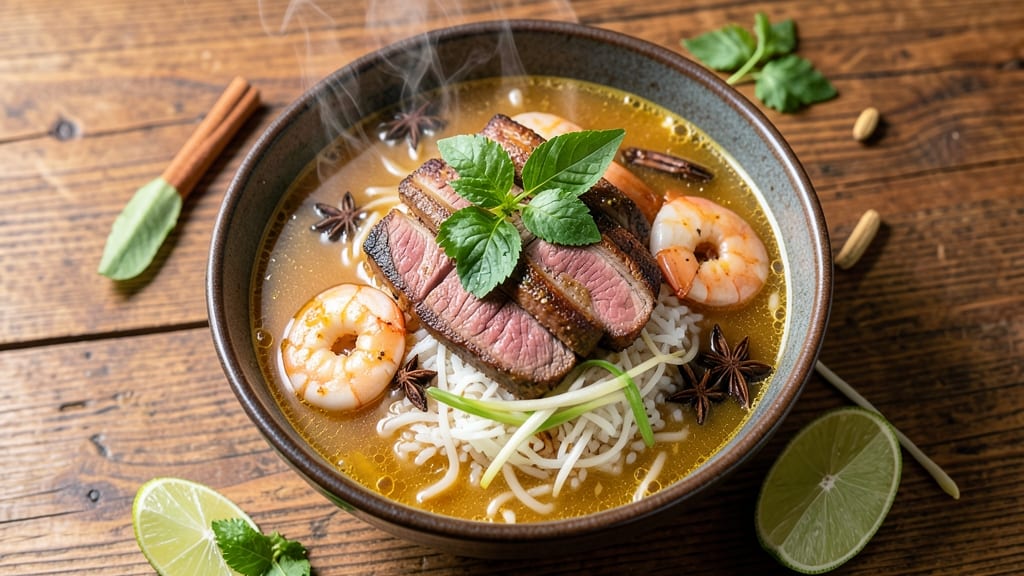
This beef and shrimp pho recipe transforms a weeknight into a taste of Vietnam, where fragrant star anise and cinnamon infuse the broth with depth that lingers long after the last sip.
The secret lies in layering spices—simmering them low and slow to unlock their aromatic magic while tenderizing the beef and shrimp. What starts as a simple pot of water becomes a complex, savory elixir that balances sweet, salty, and umami in every spoonful.
The star of this dish isn’t just the broth—it’s the harmony of textures and flavors. Thinly sliced beef and plump shrimp cook just until tender, while rice noodles soak up the rich broth like a sponge.
Fresh herbs like Thai basil and cilantro add brightness, cutting through the depth of the spices, while lime and bean sprouts introduce a crisp, refreshing contrast. This isn’t just soup; it’s a full experience in a bowl.
What makes this recipe special is the balance between tradition and adaptability. The broth builds flavor over time, but you can adjust spice levels to your taste—more chili for heat, less for subtlety. The shrimp cooks in minutes, ensuring it stays tender, while the beef simmers until fork-tender.
Every element comes together to create a dish that’s both comforting and sophisticated, perfect for a cozy dinner or a gathering with friends.
Whether you’re making it for the first time or the tenth, this pho recipe delivers restaurant-quality results at home. The key is patience—letting the spices and meat work their magic while you prepare the rest.
By the time you’re ready to serve, your kitchen will smell like a bustling Vietnamese street, and your table will be set for a meal that’s as nourishing as it is delicious.
Ingredients for beef and shrimp pho
Fragrant spices, tender beef, and plump shrimp—just 19 ingredients transform water into aromatic pho magic.
| Ingredient | Amount | Notes |
|---|---|---|
| Beef Flank Steak 🥩 | 1 lb | Thinly sliced against grain |
| Large Shrimp 🦐 | 1 lb | Peeled, deveined, tails on |
| Fresh Ginger 🧅 | ½ cup | Julienned or finely grated |
| Star Anise Pods 🌿 | 4 whole | Lightly crushed |
| Cinnamon Sticks 🌿 | 2 whole | 2-inch pieces |
| Cardamom Pods 🌿 | 6 whole | Lightly crushed |
| Onion 🧅 | 1 whole | Yellow, halved lengthwise |
| Garlic Cloves 🧄 | 6 cloves | Smashed, not minced |
| Fish Sauce 🍶 | 3 tbsp | Red Boat preferred |
| Coconut Aminos 🍶 | 2 tbsp | Or soy sauce in pinch |
| Rice Noodles 🍜 | 8 oz | Banh pho or rice vermicelli |
| Thai Basil Leaves 🌿 | ½ cup | Fresh, stems removed |
| Cilantro Leaves 🌿 | ¼ cup | Fresh, chopped |
| Bean Sprouts 🌱 | 1 cup | Fresh or canned drained |
| Lime Wedges 🍋 | 3 whole | For serving |
| Fresh Chili Peppers 🌶️ | 2 whole | Thinly sliced (Thai or serrano) |
| Water 💧 | 6 cups | Filtered preferred |
| Salt 🧂 | 1 tsp | Kosher or sea |
| White Peppercorns 🌶️ | ½ tsp | Lightly crushed |
The spices are where this dish shines. Star anise and cinnamon from the bulk section at Whole Foods or your local Asian market add that signature depth—don't skimp here. The ginger needs to be fresh (the organic ginger at Trader Joe's is perfect) and julienned for maximum surface area. For the beef, flank steak is ideal—ask your butcher to slice it paper-thin against the grain. Shrimp should be large (16/20 count) so they stay plump. Red Boat fish sauce is worth the splurge if you're making this often—its umami punch is unmatched.
No star anise? 1 tsp ground anise seed works in a pinch, but the flavor won't be identical. Cinnamon sticks can be swapped for 1 tsp ground cinnamon**, but you'll lose that beautiful aroma. For the fish sauce, soy sauce plus a pinch of sugar gets you close if you're out. The shrimp can be pre-cooked (just add 30 seconds to the simmer time), but fresh is always better. If you can't find Thai basil, regular basil plus a pinch of anise mimics it decently. The chili peppers? Serranos are my go-to—they're milder than Thai but still pack heat.
This broth tastes even better the next day, so make a double batch and freeze half. Store leftovers in the fridge for 4-5 days or freeze for 3 months**. The noodles? Soak them in hot water for 2-3 minutes before serving—no need to overcook. I always prep the garnishes (herbs, sprouts, lime) in small bowls so everything's ready when the broth is. The lime wedges should be bright green—Mexican limes if you can find them, or regular Key limes. Keep the chili peppers in a sealed container in the fridge for up to 2 weeks**
Why You'll Love This Recipe
- One-Pot Magic: I swear by this recipe because it’s actually one-pot—no juggling multiple bowls or pans. The beef and shrimp simmer together in the same broth, so cleanup is just a quick rinse of one pot. (Yes, even on a Tuesday night when I’d rather be scrolling.)
- Spice Symphony: That combo of star anise and cinnamon sticks? It’s like a warm hug in a bowl—earthy, slightly sweet, with a depth you won’t find in store-bought broth. And the shrimp? They absorb just enough of that aromatic punch without overpowering the tender flank steak.
- Weeknight to Weekend: Make a big batch on Sunday, and you’ve got lunch or dinner covered for days. The broth tastes even better the next day, and the steak holds up perfectly for leftovers. (Between us, my roommates now expect pho every time I cook.)
- Budget-Friendly Luxury: Flank steak and shrimp might sound fancy, but this recipe stretches them far—thinly sliced beef and a handful of shrimp feed four people for under $20. Plus, the spices (like star anise) last forever, so you’re not buying new ones every time. Practical and impressive? That’s my kind of meal.
Step-by-step instructions for beef and shrimp pho
Let's create a fragrant, aromatic broth that forms the heart of this Vietnamese classic.
Prepare the Aromatics and Broth Base
In a large pot, combine the 6 cups water, 1 whole onion (halved lengthwise), 6 cloves garlic cloves (smashed), 0.5 cup fresh ginger (julienned), 4 whole star anise pods (lightly crushed), 2 whole cinnamon sticks (cut into 2-inch pieces), and 6 whole cardamom pods (lightly crushed). Bring to a boil over medium-high heat, then immediately reduce to a gentle simmer. This is where the magic begins—the spices will release their essential oils into the water, creating that unmistakable pho aroma.
Simmer uncovered for 30 minutes, skimming off any foam that rises to the surface. The broth should smell deeply aromatic, like a spice market on a warm day. If the water level drops significantly, add a bit more hot water to maintain the 6 cups volume. This step builds the foundation of your pho—don't rush it, as the spices need time to infuse properly.
Cook the Beef and Season the Broth
Add the 1 lb beef flank steak (thinly sliced against the grain) to the simmering broth. Let it cook for 30 minutes, stirring occasionally to prevent sticking. The beef should become tender and the broth will take on a rich, deep color. After 30 minutes, add the 3 tbsp fish sauce and 2 tbsp coconut aminos, stirring well to combine. These ingredients will balance the broth's flavor—sweet, salty, and umami all in one.
Continue simmering for another 10 minutes, then taste the broth. It should be deeply flavorful but not overly salty. If needed, adjust with a bit more fish sauce or a pinch of salt. The beef is now cooked through and ready to be removed. Strain the broth through a fine-mesh sieve into a clean pot, pressing gently on the solids to extract all the flavor. Discard the solids—you've extracted everything you need.
Cook the Shrimp and Prepare the Noodles
Bring the strained broth back to a gentle simmer. Add the 1 lb large shrimp (peeled, deveined, tails on) and cook for 2-3 minutes until they turn pink and opaque. They should cook just until done—overcooking will make them rubbery. Remove the shrimp with a slotted spoon and set aside. Meanwhile, prepare the 8 oz rice noodles according to package instructions. They should be cooked al dente—soft but still slightly firm to the bite.
Drain the noodles and rinse briefly under cold water to stop the cooking process. Divide the noodles among 4 bowls, then ladle the hot broth over them. The noodles will continue to soften as they absorb the broth's heat. Here's the thing—don't skip the rinsing step. It prevents the noodles from turning mushy in the broth.
Assemble and Garnish the Pho
Arrange the cooked beef slices evenly over the noodles in each bowl. Ladle the hot broth over the beef, filling the bowls about ¾ full. The broth should be steaming gently—this ensures the noodles cook just right as you eat. Now for the toppings: scatter 1 cup bean sprouts, 0.5 cup Thai basil leaves, and 0.25 cup cilantro leaves over each bowl. Add thinly sliced fresh chili peppers and lime wedges on the side for serving.
Here's where it gets personal—everyone assembles their pho differently. Some like to add a splash of fish sauce or a drizzle of coconut aminos to their bowl for extra flavor. The key is balancing the heat from the chili, the freshness of the herbs, and the tang of the lime. Serve immediately while everything is hot and the aromas are at their peak. This dish is all about the experience—steaming bowls, fragrant broth, and the satisfying slurp of noodles.
Pro Tips For Making Beef And Shrimp Pho
- CHAR THE BEEF TWICE: I learned this the hard way—flank steak needs two rounds of searing. First, slice it thin (¼-inch) and sear the first batch until deep brown, then set aside. Repeat with the second batch, but this time add a splash of water to deglaze the pan before adding the shrimp. The extra flavor compounds into the broth.
- PEEL SHRIMP LAST MINUTE: Skip peeling shrimp until you’re ready to cook them—it’s faster and keeps them juicier. If you’re worried about shells in the broth, toss them in a fine-mesh strainer over the pot while the broth simmers. The shells will soften and infuse flavor without clogging the strainer.
- CRUSH SPICES COARSELY: Whole star anise and cinnamon sticks work, but I crush them lightly with a mortar and pestle (or roll them under a glass bottle) before toasting. This releases their oils faster, so the broth gets aromatic in 10 minutes instead of 20. Just don’t grind them into powder—you’ll overpower the dish.
- SALT THE BROTH IN STAGES: Don’t dump all the salt at once. After the initial simmer with spices, taste the broth before adding salt—it’ll need less than you think. Then, when you add the shrimp, sprinkle a pinch of salt directly on them (they absorb it fast). The beef will have already soaked up some salt from the broth, so balance it at the end.
Make-ahead tips for beef and shrimp pho
Broth Prep Ahead
Make the broth 24 hours ahead—it develops deeper flavor as the spices meld. Store it in an airtight container in the fridge. The aromatics (star anise, cinnamon, cardamom) will continue infusing, intensifying that signature pho aroma.
When ready to use, simply reheat over medium-low heat and skim off any congealed fat. 💫
For freezer storage, let the broth cool completely, then transfer to freezer-safe bags (leave 1-inch headspace for expansion). It keeps for up to 3 months. Thaw overnight in the fridge before reheating—never microwave directly from frozen, as it can break down the delicate spices.
Protein Prep
Slice the beef flank steak against the grain and marinate it in 1 tbsp fish sauce and 1 tsp coconut aminos for up to 2 hours ahead. Store in an airtight container in the fridge.
This tenderizes the meat and jumpstarts the flavor. The shrimp can be peeled and deveined 1 day ahead—store in a sealed container with a paper towel to absorb moisture. 🦐
Cook the beef partially (simmer for 20 minutes in broth) ahead, then cool quickly under cold water. Store in the broth (separate container) for up to 2 days. Reheat gently before assembling. The shrimp should always be cooked fresh—never prep ahead—as they lose texture when reheated.
Noodle Prep
Soak the rice noodles in hot water for 2 minutes ahead, then drain and rinse with cold water to stop cooking. Store in a damp paper towel in an airtight container for up to 12 hours.
This keeps them pliable for assembly. When ready to serve, just reheat the noodles in hot broth for 1 minute—they’ll soften perfectly. 🍜
Avoid pre-cooking the noodles completely—they’ll turn mushy when reheated. Instead, keep them al dente and finish cooking in the hot broth at serving time. This ensures the perfect slurpy texture that defines pho.
Garnish Prep
Chop all herbs (Thai basil, cilantro) and bean sprouts ahead, storing in separate airtight containers with paper towels to absorb excess moisture. Slice the chili peppers and store in a sealed container in the fridge for up to 1 week.
Lime wedges should be cut just before serving to prevent browning. 🌿
Arrange garnishes in small bowls on the table for easy access. This lets everyone customize their pho with fresh herbs, lime, and chili. The key is keeping everything chilled until serving—this preserves their vibrant colors and crisp textures.
Nutrition facts
Frequently asked questions
Can I substitute shrimp with another seafood?
Scallops or clams work beautifully—they cook quickly and add a delicate sweetness to the broth. For scallops, sear them first for 1-2 minutes per side before adding to the broth, then finish cooking in the simmering liquid. Mussels or clams should be steamed open first, then added to the broth for 2-3 minutes until fully opened.
How do I adjust the spice level for kids?
Skip the fresh chili peppers entirely and reduce the white peppercorns to ¼ tsp. For extra mildness, strain the broth before serving to remove any residual spice. Serve the chili peppers on the side so kids can add them if they want, and offer a separate bowl of plain noodles with broth for dipping if needed.
Why does my beef turn tough instead of tender?
Most likely, your beef wasn't sliced thinly enough against the grain or wasn't cooked long enough. For best results, ask your butcher to slice the flank steak ⅛-inch thick against the grain. Simmer it for the full 30 minutes—the broth should be just below a gentle simmer to prevent toughening. If using pre-sliced beef, look for "pho beef" at Asian markets.
Can I make this pho without star anise or cinnamon?
Yes, but the flavor will be less complex. Replace 4 star anise pods with 1 tsp ground anise seed or ½ tsp fennel seeds, and swap 2 cinnamon sticks for 1 tsp ground cinnamon. For depth, add ½ tsp ground cloves or 1 bay leaf to compensate. The broth will still be flavorful, just with a different aromatic profile.
How do I make the broth clearer?
Strain the broth through a cheesecloth-lined sieve instead of regular mesh for a smoother texture. For extra clarity, chill the broth overnight in the fridge—the fat will solidify on top and can be skimmed off before reheating. If you prefer a richer mouthfeel, leave some of the strained solids (like ginger and garlic) in for 5 minutes before straining again.