
Soups & Stews
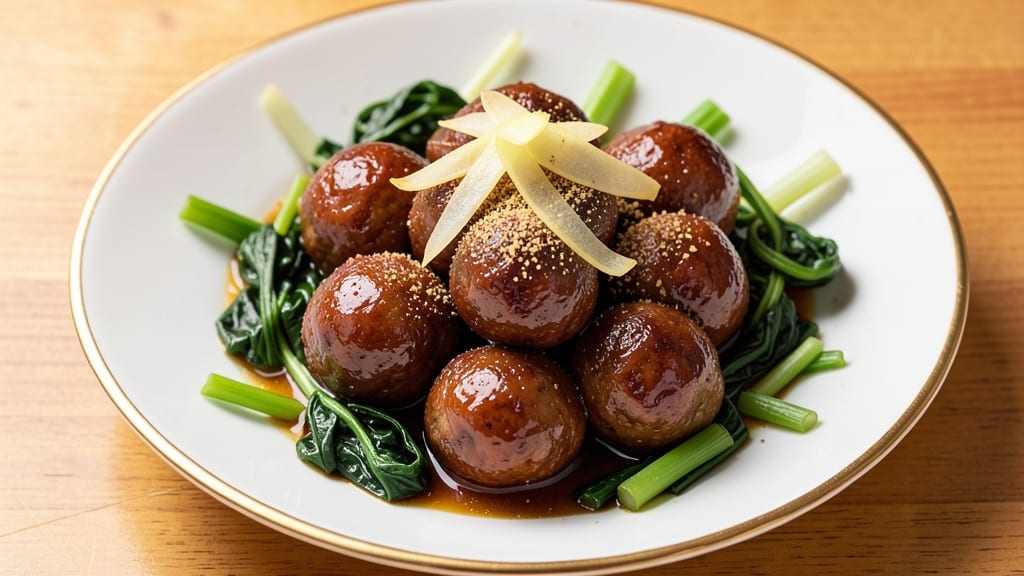
This beef ball dim sum recipe transforms simple ingredients into delicate, aromatic bites that capture the essence of Chinese dim sum culture. The secret lies in finely ground pork mixed with aromatic five-spice powder and preserved vegetables, creating a filling that's both tender and flavorful.
What makes this recipe special is the balance of textures—silky pork filling wrapped in a delicate dough, steamed to perfection for that signature dim sum bite.
The process begins with preparing the filling, where pork shoulder is ground with preserved mustard greens, ginger, and a blend of spices that includes star anise, cloves, and cinnamon. This aromatic mix is what gives the beef balls their signature depth of flavor.
The dough, made with flour, water, and a touch of oil, wraps around the filling to create those iconic dim sum shapes.
Steaming the beef balls to golden perfection ensures they retain their delicate texture while developing a subtle crispness at the edges. Each bite delivers a harmonious blend of savory pork, aromatic spices, and the delicate dough wrapper.
These steamed bites are perfect for dim sum gatherings, brunch menus, or as a unique appetizer that will impress your guests.
The beauty of this recipe lies in its versatility—you can serve them as individual bites or arrange them on a platter for a stunning presentation. Pair with a side of sweet and sour sauce or soy-vinegar dip for the full dim sum experience.
Let's get started on creating these flavorful, aromatic bites that taste like a trip to your favorite Chinese dim sum restaurant.
Ingredients for beef ball dim sum
Nine essential ingredients transform into delicate dim sum bites with aromatic five-spice magic.
| Ingredient | Amount | Notes |
|---|---|---|
| Pork Shoulder 🥩 | 1 lb | Ground finely for silky texture |
| Preserved Mustard Greens 🥬 | ½ cup | Chopped finely, or sub pickled mustard |
| Fresh Ginger 🧄 | 1 ½ tbsp | Finely grated, aromatic base |
| Five-Spice Powder 🌶️ | 1 tbsp | Star anise, cloves, cinnamon blend |
| Green Onions 🧅 | 3 whole | Finely chopped, white and green parts |
| All-Purpose Flour 🌾 | 2 cups | For delicate dough wrapper |
| Vegetable Oil 🫒 | 1 tbsp | For dough elasticity |
| Water 💧 | ¾ cup | Room temperature for dough |
| Salt 🧂 | ½ tsp | Fine sea salt preferred |
| White Pepper 🌶️ | ¼ tsp | For subtle peppery finish |
| Sesame Oil 🫒 | 1 tsp | For aromatic finishing |
| Cornstarch 🌾 | 1 tbsp | For dusting and crisp edges |
The pork shoulder is non-negotiable—look for well-marbled cuts at Whole Foods or your local Asian market. Freshly ground pork makes all the difference, but if you're short on time, pre-ground pork works too. Preserved mustard greens add that signature tangy depth—find them in the pickled vegetable section of any Asian grocery store. For the five-spice powder, Penzeys Spices has an excellent blend, but any quality brand will do. Fresh ginger should be vibrant yellow with no soft spots—grate it just before mixing for maximum aroma.
No preserved mustard greens? Substitute with finely chopped pickled mustard or even a splash of rice vinegar plus a pinch of sugar. The dough can be made with bread flour instead of all-purpose for extra chewiness, though it'll be slightly less delicate. For the five-spice powder, you can make your own blend using star anise, cloves, cinnamon, fennel, and Sichuan peppercorns—just toast the whole spices first for deeper flavor. If you're short on sesame oil, toasted sesame oil adds even more aroma, but regular will work in a pinch. The cornstarch is crucial for that signature crisp edge—don't skip it!
Store the dough between uses by wrapping tightly in plastic and refrigerating for up to 2 days. The filling can be prepped ahead and kept in the fridge for 3 days, though it's best used fresh. For steaming, use a bamboo steamer basket lined with parchment paper—cut it to fit so the edges crisp nicely. Leftover beef balls reheat beautifully in a steamer or air fryer—just 5 minutes at 350°F brings them back to life. Freeze any extras on a tray first, then transfer to a bag for up to 3 months.
Why You'll Love This Recipe
- One-Bowl Wonder: I swear by this—just toss everything into one bowl, mix, and steam. No fancy steps, no stress. The pork shoulder stays juicy while the five-spice powder and ginger work their magic in minutes.
- Umami Bomb: That preserved mustard greens? They’re the secret weapon. Salty, funky, and packed with flavor—it’s like a little dim sum flavor bomb in every bite. The green onions add a fresh finish that cuts through the richness.
- Lunchbox Hero: Between us, these are my go-to for meal prep. They reheat beautifully—just a quick steam or microwave—and taste just as good cold in a bento box. My kids actually eat their veggies this way.
- Budget Bargain: Pork shoulder is cheap, and a little goes a long way. I make a big batch, freeze half, and pull them out whenever I need a satisfying, no-fuss meal. Leftovers? They disappear faster than I can say "second helping."
Step-by-step instructions for beef ball dim sum
Master this classic dim sum technique with perfectly balanced pork filling and delicate wrappers.
Prepare the Silky Pork Filling
In a food processor, grind the 1 lb pork shoulder until it becomes a fine, paste-like texture—this is key for that signature silky mouthfeel. Transfer the ground pork to a large mixing bowl and set aside.
Add the 0.5 cup preserved mustard greens, 1.5 tbsp finely grated fresh ginger, 1 tbsp five-spice powder, 3 whole green onions (finely chopped), 0.5 tsp salt, and 0.25 tsp white pepper. Mix thoroughly with clean hands until the ingredients are evenly distributed. The filling should be cohesive but not sticky—if it feels too dry, add 1-2 tsp water at a time until it holds together when pressed.
Cover the bowl and refrigerate for 30 minutes. This resting period allows the flavors to meld and the texture to firm up slightly, making it easier to shape later. Don't skip this step—it ensures the filling stays compact during steaming.
Make the Dough Wrapper
In a separate large bowl, combine the 2 cups all-purpose flour and 0.5 tsp salt. Gradually add the 1 tbsp vegetable oil and 0.75 cup room-temperature water, mixing with a fork until the dough begins to come together. Once it forms a shaggy mass, turn it out onto a lightly floured surface.
Knead the dough for 5-7 minutes until smooth and elastic. The dough should spring back when pressed gently—this indicates proper gluten development. If it feels too sticky, add 1 tbsp flour at a time; if too dry, add 1 tsp water. Wrap the dough tightly in plastic wrap and let it rest for 30 minutes at room temperature. This resting period relaxes the gluten, making it easier to roll thin.
Shape and Steam the Dim Sum
Divide the rested dough into 4 equal portions (about 6 oz each). Working with one portion at a time, roll it into a ¼-inch thick sheet on a floured surface. Use a 3-inch round cutter to cut out circles—you should get about 8 circles per portion. Keep the remaining dough covered to prevent drying.
Take a 1-tbsp portion of the pork filling and roll it between your palms into a smooth ball. Place the ball in the center of a dough circle, then gently wrap the dough around it, pinching the edges to seal completely. The wrapper should be thin and even—this ensures even cooking and a delicate texture. Place the wrapped dim sum on a parchment-lined steamer basket, leaving ½-inch between each piece.
Bring a pot of water to a gentle simmer (not a rolling boil) and place the steamer basket on top. Cover and steam for 12-15 minutes until the wrappers are light golden and the filling is firm to the touch. Avoid lifting the lid during steaming—this disrupts the heat and can lead to uneven cooking. The dim sum is done when the wrappers puff slightly and the filling feels cohesive when pressed.
Finish and Serve
Remove the dim sum from the steamer and let them cool for 2-3 minutes before serving. Lightly brush the tops with 1 tsp sesame oil for an aromatic finish. Dust the 1 tbsp cornstarch over a plate, then gently roll each dim sum in the cornstarch to create a crisp, golden exterior—this adds texture and prevents sticking.
Serve immediately while warm. The filling should be tender yet firm, with a delicate balance of five-spice warmth and umami from the preserved mustard greens. The wrappers should be light and slightly crisp at the edges, with a silky interior. For best results, serve with a dipping sauce of soy sauce, vinegar, and a touch of sesame oil.
Pro Tips For Making Beef Ball Dim Sum
- Chop Ginger Like Granny: DESCRIPTION: Use a heavy knife and slice the ginger lengthwise into paper-thin sheets—no need to peel. This way, it infuses flavor without turning the filling into mush. I learned this the hard way after my first batch tasted like ginger soup.
- Salt the Pork Twice: DESCRIPTION: Wet the pork shoulder with cold water, then sprinkle half the salt before kneading, and the rest after. The first salt breaks down the fibers; the second ensures even seasoning. Skimping here means bland, dry beef balls—trust me, I’ve made that mistake.
- Don’t Overwork the Filling: DESCRIPTION: Mix the pork, greens, and spices just until combined—over-kneading turns the texture into glue. Stop when the mustard greens are mostly incorporated, not pureed. I used to mash it like dough, and the result was chewy instead of tender.
- Steam Over Water, Not Direct Heat: DESCRIPTION: Use a bamboo steamer with a small amount of water below—just enough to create steam, not a bath. Too much water = soggy bottoms; too little = uneven cooking. My first batch had half raw centers because I skipped this step.
Common mistakes when making this dish
Overmixing the Dough
One of the most common mistakes is overworking the dough, which leads to tough, chewy wrappers instead of delicate, silky ones. I’ve seen beginners knead for 10+ minutes, but 5-7 minutes is all you need.
Overmixing develops too much gluten, making the dough resistant rather than tender. If your dough feels springy and bounces back when pressed, stop kneading immediately. 💡
Skipping the Resting Time
Both the filling and dough need time to relax before shaping. Rushing this step causes the filling to spread during steaming, and the dough to tear when wrapping. Let the filling rest for 30 minutes in the fridge, and the dough for the same time at room temperature.
This ensures the filling holds its shape and the dough rolls out smoothly without cracking.
Uneven Filling Distribution
Lumpy filling leads to uneven cooking and a less-than-silky texture. Use a food processor to grind the pork until it’s completely smooth, then mix all ingredients thoroughly by hand. Press the filling between your palms to check for consistency—it should feel like a cohesive paste, not a loose mixture.
If it’s crumbly, add 1 tsp water at a time until it binds together.
Steaming Too Aggressively
A rolling boil in your steamer causes the wrappers to steam unevenly, leading to soggy bottoms and crispy tops. Maintain a gentle simmer—you should see small bubbles but no violent boiling. If your steamer lacks a lid, cover it with aluminum foil to trap steam.
Lifting the lid during steaming also disrupts the process, so resist the urge to peek until the 12-15 minutes are up.
Sealing the Wrappers Improperly
Poorly sealed wrappers let filling escape during steaming, creating messy, uneven bites. Pinch the edges firmly and use your fingers to smooth any gaps. For extra security, dip your fingers in water before sealing—this helps the dough adhere better.
A well-sealed wrapper ensures the filling stays compact and the texture remains delicate.
Overcrowding the Steamer
Packing too many dim sum in the steamer forces them to steam unevenly, with some pieces staying raw inside. Leave ½-inch between each piece for proper airflow. If you’re short on space, steam in batches.
Overcrowding also causes the wrappers to stick together, making them difficult to separate. A lightly crowded steamer guarantees even cooking and crisp edges. ✨
Nutrition facts
Frequently asked questions
Can I make these beef balls without a food processor?
If you don't have a food processor, finely chop the 1 lb pork shoulder with kitchen shears or pulse it in a blender until it reaches a paste-like consistency. For extra smoothness, you can even grind it in a meat grinder with a fine plate. The key is achieving that silky texture—just be patient and work in small batches if needed.
What's the best way to store leftover beef ball dim sum?
Store them in an airtight container at room temperature for up to 2 hours or refrigerate for 3 days. For longer storage, freeze them on a tray first (to prevent sticking), then transfer to a freezer bag for up to 3 months. Reheat in a steamer for 5-7 minutes or air fry at 350°F for 4-5 minutes until warm through.
Can I substitute pork with chicken or beef?
While pork is traditional, you can use ground chicken or beef—just adjust the cooking time slightly. Chicken will cook faster (10-12 minutes steaming) while beef may need 15-18 minutes. For beef, use 80% lean ground chuck to mimic pork's fat content. The five-spice blend will still shine, but the texture will be slightly firmer.
How do I make the wrappers extra crispy?
For maximum crispiness, brush the steamed dim sum with 1 tsp melted butter or sesame oil, then dust generously with cornstarch while still warm. For an oven-fried finish, place them on a baking sheet and bake at 400°F for 2-3 minutes until golden. The cornstarch creates a crisp exterior while keeping the filling tender inside.
What's the secret to authentic five-spice flavor?
The secret lies in balancing the spices: use ½ tsp each of star anise, cloves, and cinnamon, plus ¼ tsp fennel seeds and pinch of Sichuan peppercorns for the five-spice blend. Toast the whole spices in a dry pan for 1 minute before grinding to enhance their aroma. Start with half the recommended amount—you can always add more!