
Soups & Stews
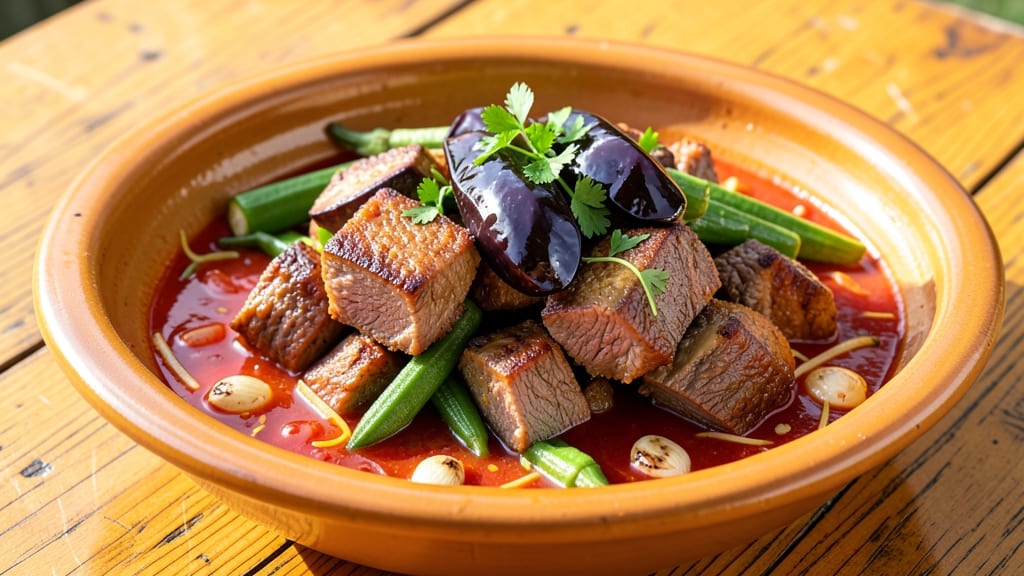
This beef bamia recipe brings the heart of Greek comfort food to your kitchen, where tender beef simmers with okra, eggplant, and aromatic spices until everything melts into a rich, velvety stew.
The dish is a labor of love, blending textures—silky okra, meat that falls apart, and eggplant that soaks up every flavor—into a one-pot wonder that tastes even better the next day.
What makes it special isn’t just the taste, but the tradition: a dish meant to be shared, slow-cooked to perfection over hours.
The magic happens in the slow simmer, where onions caramelize, garlic infuses, and tomatoes deepen into a fragrant base. The beef, cut into bite-sized pieces, becomes fork-tender while absorbing the smoky, earthy notes of cinnamon and allspice—subtle but essential.
Okra and eggplant, often polarizing vegetables, transform here into tender, flavorful components that hold the stew together. This isn’t just a recipe; it’s a celebration of Mediterranean flavors, where simplicity meets depth.
By the time you serve it, you’ll have a dish that’s rich, hearty, and impossible to resist—steaming in a deep pot, garnished with fresh parsley and a drizzle of olive oil.
The aroma alone will have everyone gathering around the table, and the first bite delivers on that promise: tender beef, silky vegetables, and a sauce so flavorful it coats every spoonful.
It’s the kind of meal that turns a weeknight into a feast, all while honoring the slow, intentional cooking that defines Greek home cooking.
Perfect for family dinners or special occasions, this beef bamia adapts beautifully to your schedule—whether you simmer it for hours on low heat or stir-fry it quickly for a weeknight version.
The key is patience; let the flavors develop, and the result will be a stew that tastes like home. Here’s how to make it.
Ingredients for beef bamia
Six ingredients transform into a Mediterranean masterpiece—slow-cooked beef, tender okra, and eggplant bathed in spiced red wine sauce.
| Ingredient | Amount | Notes |
|---|---|---|
| Beef Chuck Roast 🥩 | 2 lb | Cut into 1.5-inch cubes |
| Okra Pods 🌽 | 1 ½ lb | Trimmed, cut into 1-inch pieces |
| Eggplant 🍆 | 2 medium | Peeled, cut into 1-inch cubes |
| Yellow Onions 🧅 | 2 large | Thinly sliced |
| Garlic Cloves 🧄 | 6 cloves | Minced |
| Canned Tomato Sauce 🍅 | 1 can | 28 oz, San Marzano preferred |
| Red Wine 🍷 | 1 cup | Dry, like Cabernet Sauvignon |
| Extra-Virgin Olive Oil 🫒 | ½ cup | For sautéing |
| Ground Cinnamon 🌿 | 1 tsp | Toasted for depth |
| Ground Allspice 🌶️ | ½ tsp | Freshly ground preferred |
| Ground Coriander 🌿 | 1 tsp | For warmth |
| Sea Salt 🧂 | 1 ½ tsp | Diamond Crystal preferred |
| Fresh Parsley 🌿 | ¼ cup | Chopped, for garnish |
| Lemon Juice 🍋 | 1 tbsp | Freshly squeezed |
The beef is non-negotiable—chuck roast gives that melt-in-your-mouth texture. Grab it pre-cubed from Costco or your butcher if you want to save time. Okra and eggplant? Trader Joe's usually has fresh okra year-round, but frozen works in a pinch. For eggplant, pick firm ones with no soft spots—Italian or Japanese varieties hold up best. The onions and garlic? Any yellow onion will do, but red onions add subtle sweetness. Minced garlic is key—don't skip it, even if you're in a hurry.
No red wine? Beef broth with a splash of balsamic works, but you'll miss that depth. Fresh spices make all the difference—toast your cinnamon and coriander in a dry pan for 30 seconds before adding. Short on eggplant? Zucchini at double the amount stretches it, though purists will notice. The tomato sauce can be homemade (San Marzano tomatoes, simmered with garlic), but Rao's jarred sauce is a solid shortcut. And if you're worried about okra sliminess? Don't be—it turns tender and absorbs all the flavors.
This stew tastes even better the next day—double the batch if you can. Keeps for 4-5 days in the fridge, freezes beautifully for 3 months. I like to portion it into containers with a little extra sauce on top—just reheat with a splash of water. The parsley? Toss it in at the end—fresh herbs brighten up the dish. And if you're serving with crusty bread, make extra—this stew soaks up everything.
Why You'll Love This Recipe
- One-Pot Magic: The beef, okra, and eggplant all simmer together—no separate pans, no extra dishes. Just toss everything in one pot, let it work its flavor alchemy, and you’re done. (Yes, even on a Tuesday night when you’d rather be scrolling.)
- Garlic Bomb Flavor: That slow-cooked beef chuck turns ridiculously tender, while the garlic and onions caramelize into this deep, savory base. The okra adds a subtle crunch, and the eggplant soaks up all the richness—like a hug in a bowl, but way more delicious.
- Weeknight to Weekend: Make a big batch on Sunday, and you’ve got lunch or dinner covered all week. It reheats like a dream, and honestly? The flavor gets even better the next day. Perfect for when you’re too tired to cook but still want something that feels special.
- Budget Stretch: Beef chuck roast is affordable, and veggies like okra and eggplant stretch it into a hearty meal without breaking the bank. I’ll be real: this recipe keeps my grocery bill down while making me feel like I’m feeding a crowd. (Leftovers? Always.)
Step-by-step instructions for beef bamia
Here's how to create this rich, spiced braise with tender beef and silky vegetables.
Sear the Beef Chuck Roast
Heat the 0.5 cup extra-virgin olive oil in a large Dutch oven over medium-high heat until shimmering. Add the 2 lb beef chuck roast cut into 1.5-inch cubes and cook in batches to avoid crowding. Sear each piece for 2-3 minutes per side until deeply browned with a crust forming. This step builds deep flavor through the Maillard reaction.
As you work, remove the seared beef and set it aside on a plate. You'll notice the oil will darken and develop a rich aroma—this is your foundation for the braise. Don't rush this step; proper browning is essential for developing the dish's complex flavor profile.
Build the Vegetable Base
In the same Dutch oven, add the 2 large yellow onions sliced thinly and cook for 5 minutes until softened and translucent. Add the 6 cloves minced garlic and cook for 30 seconds until fragrant. Stir in the 1.5 lb okra pods cut into 1-inch pieces and 2 medium eggplant cut into 1-inch cubes, cooking for 4-5 minutes until the okra begins to soften slightly.
Here's the thing—okra releases a slimy texture when cooked too long, so we want it just tender enough to absorb the flavors without becoming mushy. The eggplant will continue cooking in the braising liquid, so don't worry if it doesn't soften completely at this stage.
Develop the Spiced Tomato Sauce
Pour in the 1 cup red wine and scrape up any browned bits from the bottom of the pot. Add the 1 can canned tomato sauce, 1 tsp ground cinnamon, 0.5 tsp ground allspice, 1 tsp ground coriander, and 1.5 tsp sea salt. Stir well to combine all ingredients, then bring the mixture to a gentle simmer.
Let the sauce simmer uncovered for 10 minutes, allowing the alcohol to burn off and the flavors to meld. You'll notice the sauce will thicken slightly as it reduces, developing a rich, aromatic depth. This is where the spices infuse into the base of your braise, creating that signature warm, slightly sweet flavor.
Braise the Beef and Vegetables
Return the seared beef to the Dutch oven and add enough water to just cover the ingredients (about 2 cups). Bring to a gentle simmer, then reduce heat to low, cover, and let it cook for 2.5-3 hours. The beef is done when it's fork-tender and easily pulls apart.
During this time, the vegetables will absorb all the rich flavors from the braising liquid. Check occasionally and add a splash of water if the liquid reduces too much—you want to maintain enough liquid to keep everything moist but not so much that it becomes watery. The dish should have a thick, velvety consistency by the end.
Finish and Serve
Once the beef is tender, stir in the 1 tbsp freshly squeezed lemon juice and 0.25 cup chopped fresh parsley. Taste and adjust seasoning if needed—you might want to add a pinch more salt or a splash of lemon juice to brighten the flavors.
Let the bamia rest for 10 minutes before serving. This resting time allows all the flavors to meld together perfectly. Serve it warm with crusty bread to soak up all that delicious sauce. The beef should be fork-tender with a rich, spiced flavor, and the vegetables should be silky and infused with all the aromatic spices.
Pro Tips For Making Beef Bamia
- Sear the Chuck Roast First: Before slow cooking, hit that beef chuck with a 5-minute sear in a screaming-hot pan—no oil needed, just let the natural fats render. I learned this the hard way when my first batch tasted bland; the crust locks in flavor and keeps the meat from drying out later.
- Slice Eggplant Lengthwise: Cut eggplant into ½-inch thick planks instead of rounds—thinner slices cook faster and soak up the sauce better. Yes, it takes 30 seconds extra, but mushy eggplant ruins everything.
- Salt the Okra Early: Toss okra pods in ½ teaspoon salt right after washing and let them sit for 10 minutes before cooking. This draws out bitterness and keeps them from turning slimy in the pot.
- Deglaze with Onion Water: After browning onions and garlic, splash in ¼ cup of the water you used to soak them—it’s got dissolved flavor you’d otherwise lose. Sounds weird, but it works: the pan sauce tastes deeper instantly.
Regional styles of this recipe
Greek Island Style
The classic version you’ll find on Greek islands like Crete or Lesvos focuses on slow-cooked beef with okra and eggplant as the stars. Here, the beef is often chuck roast or shoulder, cut into large chunks to stay tender during the long braise.
The key difference? Less wine, more tomato—sometimes even a tomato paste base for extra depth. I’ve seen island cooks add a bay leaf and a pinch of cloves for warmth, which gives the dish that earthy, spiced aroma.
The okra is cooked just until tender, never mushy, and the eggplant absorbs all the flavors like a sponge. 🌟
Cypriot Twist
In Cyprus, beef bamia takes on a heartier profile with potatoes added to the mix, creating a stew that’s almost like a Mediterranean beef and vegetable hash.
Cypriot cooks often use lamb shoulder instead of beef, but if you stick with beef, ask your butcher for chuck with a bit more fat—it adds richness to the sauce.
Another Cypriot trick? A splash of vinegar (about 1 tablespoon) at the end to brighten the flavors, balancing the deep, spiced notes. The dish is usually served with crusty bread or flatbread, and they’ll often top it with a drizzle of olive oil right before serving. 🍷
Modern Greek Adaptations
Today’s Greek chefs are putting their own spin on beef bamia, especially in Athens and Thessaloniki. One popular twist? Adding a touch of honey (just ½ teaspoon) to the sauce while simmering—it caramelizes slightly and adds a subtle sweetness that cuts through the richness.
Another modern take? Swapping half the beef for mushrooms, like wild porcini or cremini, to add an umami depth. Some chefs also deglaze with a splash of ouzo instead of red wine for a brighter, herbal note. The result?
A dish that’s still traditional but feels fresh and innovative. 💡
Turkish-Inspired Version
Across the border in Turkey, this dish is often called etli kabak and leans into yogurt-based sauces or spiced tomato gravies. Turkish cooks might sear the beef with cumin and paprika before braising, giving it a smoky edge.
The okra is sometimes blanched first to reduce sliminess, and red bell peppers are added for a touch of sweetness. The spices here are bolder—more allspice, a pinch of cardamom, and sometimes even a dash of sumac for tang.
The dish is often served with warm pita or rice, making it a hearty one-pot meal. 🌶️
Quick Weeknight Version
Not everyone has time for a 3-hour braise, so here’s how to make a faster (but still flavorful) version: Use pre-cut beef chuck (like from Costco) and swap the Dutch oven for a heavy pot.
Sear the beef, then add everything except the lemon juice and simmer for just 1.5 hours on high heat. For extra flavor, deglaze with red wine vinegar instead of wine, and add a pinch of smoked paprika for depth.
The okra and eggplant will still soften, and the beef will be tender—just not as fall-apart as the slow-cooked version. Perfect for busy weeknights! ⏰
Nutrition facts
Frequently asked questions
Why does the recipe call for okra if I don't like its slimy texture?
The okra in this beef bamia is cooked just until tender—never mushy—so it absorbs all the flavors without becoming slimy. If you're still concerned, try blanching the okra for 2 minutes in boiling water before adding it to the stew. This helps reduce sliminess while keeping it tender. For a milder texture, you could also substitute with zucchini cut into similar-sized pieces.
Can I make beef bamia without red wine?
Replace the wine with 2 cups beef broth or a mix of 1 cup broth + 1 tablespoon balsamic vinegar for depth. The key is maintaining the same liquid volume—just omit the alcohol entirely. For extra richness, add a splash of tomato paste to compensate for the wine's acidity and complexity.
How do I know when the beef is fully tender?
The beef should be fork-tender, easily pulling apart with minimal resistance. For best results, use a meat thermometer—it's done at 203°F (95°C) internal temperature. If you don't have one, cut into the largest piece: the juices should run clear, and it should shred effortlessly. The slow 2.5-3 hour braise ensures perfect tenderness without drying out.
What's the best way to reheat leftovers?
Reheat gently on the stovetop over low heat with a splash of water or broth to maintain moisture. For even better results, transfer to an oven-safe dish and warm at 300°F (150°C) for 20-30 minutes until heated through. Never microwave—it makes the okra rubbery and the beef dry. Leftovers taste even better the next day!
Can I use ground beef instead of chuck roast?
While possible, ground beef won't give the same rich, tender texture. If you must, use 80/20 ground chuck (not lean) and brown it thoroughly first. For best results, stick with chuck roast—it's designed for slow cooking and delivers that melt-in-your-mouth quality. The fat content is crucial for flavor development during the long braise.