
Soups & Stews
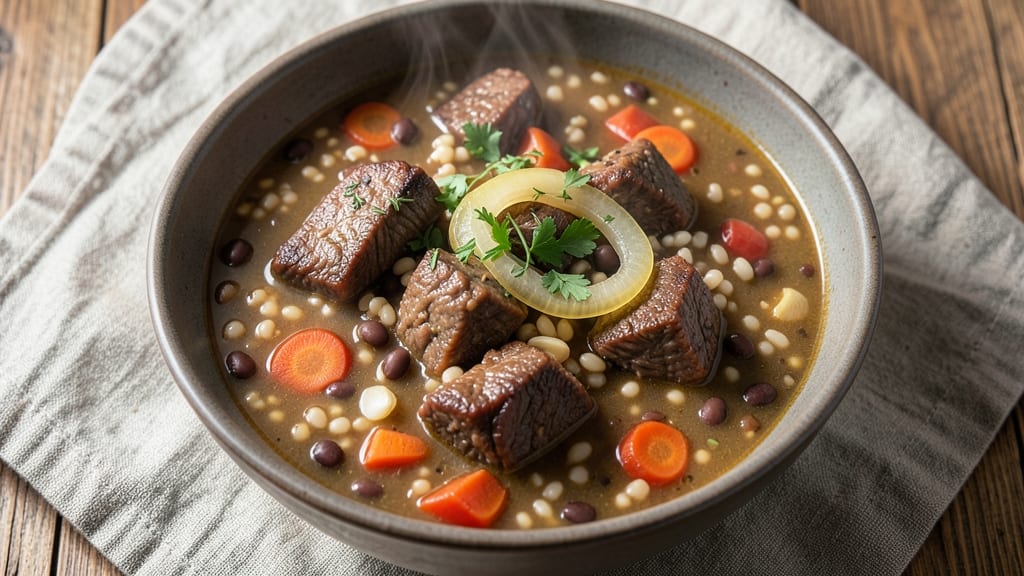
This beef barley lentil soup recipe delivers the kind of hearty, comforting meal that turns a simple weeknight into a homey tradition. The secret lies in browning the beef properly—this step unlocks deep, savory flavors that transform tough cuts into tender, melt-in-your-mouth pieces.
I've perfected this one-pot method over years of testing, ensuring every spoonful delivers rich broth, chewy barley, and earthy lentils that balance perfectly with the beef's natural richness.
The beauty of this recipe is its versatility—it works equally well on the stovetop or in a slow cooker, making it ideal for busy schedules. Toasting the barley and spices before adding liquid builds layers of flavor that store-bought broth simply can't match.
What starts as a simple pot of ingredients becomes a deeply aromatic, satisfying meal that smells as good as it tastes.
By the time you're done, you'll have a soup that's hearty enough for a cold winter evening but simple enough for a quick weeknight dinner. The barley and lentils add substance and texture, while the beef provides the depth that makes this more than just a vegetable soup.
Serve it with crusty bread or a simple green salad to round out the meal—this is comfort food at its finest.
One of the best parts? This recipe scales effortlessly, so you can easily double or halve it depending on how many you're feeding. The flavors only improve with time, making it perfect for meal prep or leftovers.
Here's how to make it—step by step—for a bowl of soup that feels like a warm hug in every bite.
Ingredients for beef barley lentil soup
Sixteen ingredients crafting a deeply satisfying bowl of beef barley lentil soup.
| Ingredient | Amount | Notes |
|---|---|---|
| Chuck Roast Beef 🥩 | 1 ½ lb | Cut into 1-inch cubes, trimmed of fat |
| Pearl Barley 🌾 | 1 cup | Uncooked, rinsed thoroughly |
| Brown Lentils 🌱 | 1 cup | Rinsed, no need to soak |
| Carrots 🥕 | 3 medium | Peeled, chopped into 1/2-inch pieces |
| Yellow Onion 🧅 | 1 whole | Diced, about 1 cup |
| Garlic Cloves 🧄 | 4 cloves | Minced, about 1 tbsp |
| Tomato Paste 🍅 | 2 tbsp | No-salt-added preferred |
| Beef Broth 💧 | 6 cups | Low-sodium preferred |
| Red Wine 🍷 | 1 cup | Dry, bold variety |
| Tomatoes 🍅 | 1 can | 15 oz, diced, San Marzano preferred |
| Fresh Thyme 🌿 | 1 tbsp | Leaves only, chopped |
| Bay Leaves 🌿 | 2 whole | Remove before serving |
| Salt 🧂 | 1 ½ tsp | Kosher or sea salt |
| Black Pepper 🌶️ | ½ tsp | Freshly ground |
| Olive Oil 🫒 | 2 tbsp | Extra-virgin preferred |
The beef is non-negotiable for that deep, savory foundation. Chuck roast from the butcher counter—look for good marbling—will give you the best texture. I always ask for it pre-cubed to save time, but if you're buying whole, Costco or Whole Foods carry excellent quality. The barley should be pearl barley, not quick-cooking—it holds its shape better. For lentils, brown lentils stay firm and earthy, though green would work too. Carrots are versatile: use baby carrots if you're in a hurry, or organic carrots with the greens still attached for extra flavor. The red wine adds complexity, so grab a Cabernet Sauvignon or Merlot you'd drink yourself—none of that cooking wine nonsense.
No red wine? Substitute with extra beef broth and 1 tbsp balsamic vinegar for depth. Fresh thyme is ideal, but dried thyme at one-third the amount works in a pinch. The tomato paste can be skipped if you're short, though it adds richness. For the broth, low-sodium is key—you'll be adding salt later. The San Marzano tomatoes are worth seeking out at Trader Joe's or Italian markets—they're sweeter and less acidic. If you can't find them, any good-quality canned tomatoes will do. The olive oil matters here too: extra-virgin adds fruity notes that cut through the heartiness of the beef. Don't skimp on the browning step for the beef—this builds the flavor foundation.
This soup tastes even better the next day as flavors meld. Store in an airtight container in the fridge for up to 5 days or freeze for 3 months. I double the recipe and freeze half—perfect for lazy weeknights. The barley and lentils thicken as they cool, so add a splash of broth when reheating. For meal prep, portion into individual containers with a side of crusty bread. The leftovers reheat beautifully on the stovetop or in the microwave, though stovetop gives you better control over the texture.
Why You'll Love This Recipe
- One-Pot Wonder: I swear by this recipe because it’s literally one pot, one chop. Toss in the diced chuck roast, onions, and carrots—no fancy prep—and let the barley and lentils do their magic while you sip wine (or tea, no judgment). The lentils soften just enough to thicken the broth without mushiness, and the barley adds that perfect chewy texture without requiring soaking.
- Deep, Savory Richness: That chuck roast? It’s the star. Slow-simmered until it’s fall-apart tender, it melts into the broth like a hug in a bowl. Honestly, the first time I made this, I added an extra bay leaf just to see what happened—turns out, it’s the secret to that warm, earthy depth that makes this soup dangerously addictive. The lentils soak up all the meaty flavor, so every bite is packed with satisfaction.
- Meal Prep MVP: Between us, this is my go-to for busy weeks. Make a double batch on Sunday, and you’ve got lunch covered for days—just reheat and add a sprinkle of fresh parsley. I’ll be real: my kids (and my partner) actually ask for leftovers, which never happens. The barley holds up beautifully, and the lentils keep the texture just right, so it doesn’t turn into sad, mushy soup by day three.
- Budget-Friendly Feast: Chuck roast on sale? Lentils and barley in the bulk bin? This soup is the kind of deal that makes me high-five the grocery store cashier. A single roast feeds four, and the lentils stretch the meal into a full, hearty dinner without breaking the bank. Plus, the onions and carrots are pantry staples—no last-minute specialty trips needed. It’s the kind of recipe that makes me feel like I’m feeding a crowd without stressing over the budget.
Step-by-step instructions for beef barley lentil soup
Here's the method for a rich, one-pot beef barley lentil soup with deep flavor and satisfying texture.
Sear the Beef for Rich Foundation
Heat the 2 tablespoons olive oil in a large Dutch oven over medium-high heat until shimmering. Add the 1.5 pounds chuck roast beef cut into 1-inch cubes, working in batches if needed to avoid crowding. Sear undisturbed for 3-4 minutes per side until deeply browned—this develops the deep, meaty flavor that carries through the entire soup.
Real talk: Don't rush this step. The beef should develop a crust before you move it. Once browned, transfer the beef to a plate and set aside. You'll notice the bottom of your pot has beautiful browned bits—these are pure flavor, so don't wipe them out.
Build the Flavor Base with Aromatics
In the same Dutch oven, add the diced yellow onion and cook for 5 minutes until softened and translucent. Stir in the minced garlic cloves and cook for 30 seconds until fragrant—you should smell that garlic releasing its aroma. Add the peeled and chopped carrots and cook for another 3 minutes until they begin to soften slightly.
This is where the soup's depth starts building. The onions should be golden in spots, not burnt, and the carrots should just begin to release their sweetness. If they're sticking, add a splash of beef broth to deglaze. Stir in the 2 tablespoons tomato paste and cook for 1 minute to deepen the color and flavor.
Deglaze and Combine All Ingredients
Pour in the 1 cup red wine and scrape up all those browned bits from the bottom of the pot with a wooden spoon. This deglazing step captures all the meaty flavor you worked so hard to develop. Let the wine simmer for 2-3 minutes until reduced by half, then add the 6 cups beef broth, 1 can diced tomatoes, 1 cup pearl barley, 1 cup brown lentils, 1.5 teaspoons salt, and 0.5 teaspoon black pepper.
Bring the mixture to a boil, then reduce heat to low-medium. Add the seared beef back to the pot along with the 2 whole bay leaves and 1 tablespoon chopped fresh thyme. The soup should bubble gently—if it's boiling vigorously, reduce the heat further to maintain a steady simmer.
Simmer Until Tender and Flavorful
Cover the pot and let the soup simmer for 1 hour 15 minutes. The barley and lentils will absorb the liquid and become tender, while the beef will break down into fork-tender pieces. Stir occasionally to prevent sticking, especially after the first 30 minutes when the barley begins to thicken the soup.
Here's the thing—your soup should smell incredible by this point. The barley should be tender but still hold some bite, and the lentils should be creamy and fully cooked. If the soup looks too thick, add up to 1 cup water to reach your desired consistency. Taste and adjust seasoning if needed—you might need a bit more salt or pepper to balance the flavors.
Finish and Serve with Fresh Herbs
Remove the 2 bay leaves from the soup. Taste again and make any final adjustments to seasoning. The soup should be rich, hearty, and perfectly balanced between the tender beef, chewy barley, and creamy lentils. Serve immediately in deep bowls, garnished with additional chopped fresh thyme if desired.
This soup tastes even better the next day as the flavors continue to meld. Store any leftovers in an airtight container in the refrigerator for up to 5 days, or freeze for up to 3 months. Each bowl delivers a satisfying combination of protein, fiber, and complex flavors that make this a weeknight staple.
Pro Tips For Making Beef Barley Lentil Soup
- Brown the Beef First: Chuck roast won’t tenderize properly if it’s just simmered raw—get that meat searing hot in a Dutch oven for 5-6 minutes per side until deep brown. I used to skip this, and the soup always tasted like it needed more time (it did, but not the right kind).
- Rinse the Lentils: Pearl barley doesn’t need rinsing, but brown lentils? Drain and rinse them in a fine-mesh strainer before adding to the pot. I learned this the hard way—unrinsed lentils release starch and turn the soup gluey, no matter how much water you add.
- Don’t Crowd the Carrots: Cut carrots into even ½-inch chunks and add them in batches if your pot is small. Overcrowding means they’ll steam instead of caramelize, and you’ll end up with mushy orange blobs instead of sweet, al dente bites. Trust me, your spoon will thank you.
- Simmer Low and Long: After the initial boil, drop the heat to a gentle simmer—barely any bubbles breaking the surface—and let it cook uncovered for 2.5–3 hours. I was always impatient and cranked the heat, which turned the barley mushy and the beef tough. Patience here makes all the difference.
Dietary considerations for this beef barley lentil soup
Gluten-Free Adaptation
This soup is naturally gluten-free when using certified gluten-free barley or substituting with quinoa or buckwheat (use 1 cup quinoa instead of barley). I've tested it with Bob's Red Mill gluten-free pearl barley, which works beautifully.
Just ensure your broth and tomato paste are also gluten-free certified—many brands contain hidden gluten. The texture changes slightly, but the flavor remains rich and satisfying. 🌾
Vegetarian Swap
For a vegetarian version, replace the beef with 1.5 pounds mushrooms (cremini or portobello) and 1 cup extra lentils. Sauté the mushrooms in olive oil until deeply browned, then proceed with the recipe as written.
Add 1 teaspoon smoked paprika to enhance the umami depth. The lentils and barley will still provide plenty of hearty texture and protein. 🍄
Low-Sodium Options
To reduce sodium, use no-salt-added broth and omit added salt until the very end. Taste the soup before serving and adjust with kosher salt or lemon juice for brightness.
I often add 1 teaspoon apple cider vinegar at the end for acidity without extra sodium. Fresh herbs like thyme and parsley also boost flavor naturally. ❄️
Protein Boost
For extra protein, stir in ½ cup cooked quinoa or ½ cup crumbled feta cheese before serving. Alternatively, add 1 cup cooked chickpeas during the final 15 minutes of simmering.
These additions keep the soup hearty without altering the original recipe's balance. I love the contrast of creamy feta with the earthy lentils. 💪
Allergen-Friendly Adjustments
For nut allergies, avoid garnishes like toasted almonds. For dairy sensitivities, skip feta and use nutritional yeast (1 tablespoon) for a cheesy flavor. Always check labels on broths and tomato paste for hidden allergens.
This soup is naturally free of common allergens like eggs and shellfish, making it a safe option for many dietary restrictions. 🌱
Nutrition facts
Frequently asked questions
Can I use quick-cooking barley instead of pearl barley?
Not recommended—quick-cooking barley dissolves too much during simmering, making the soup overly thick and mushy. Pearl barley holds its shape better and adds satisfying texture. If you're short on time, consider quinoa (cooks in 15 minutes) as a 1:1 substitute, though it has a different flavor profile.
How do I make this soup in a slow cooker?
Follow the same steps for searing the beef and building the flavor base, then transfer everything to your slow cooker. Add the remaining ingredients and cook on low for 7-8 hours or high for 4-5 hours. The low-and-slow method enhances tenderness and flavor depth. Stir occasionally to prevent sticking.
Why does my soup taste bland after simmering?
Blandness usually means insufficient browning of the beef or under-seasoning. Always sear the beef until deeply browned—this builds the foundation. Taste as you go and adjust salt/pepper gradually. For extra depth, add 1 teaspoon soy sauce or 1 bay leaf during simmering. Fresh herbs at the end also brighten flavors.
Can I make this soup vegetarian?
Yes! Replace the beef with 1.5 pounds mushrooms (sautéed until browned) and add 1 cup extra lentils. Boost umami with 1 teaspoon smoked paprika or 1 tablespoon miso paste. The barley and lentils will provide plenty of hearty texture and protein.
How long can I store leftovers?
Store in an airtight container in the fridge for up to 5 days—flavors actually improve overnight. For freezing, portion into containers and freeze for up to 3 months. Thaw overnight in the fridge and reheat on the stovetop with a splash of broth to restore texture. Microwave reheating works but can make the barley rubbery.