
Soups & Stews
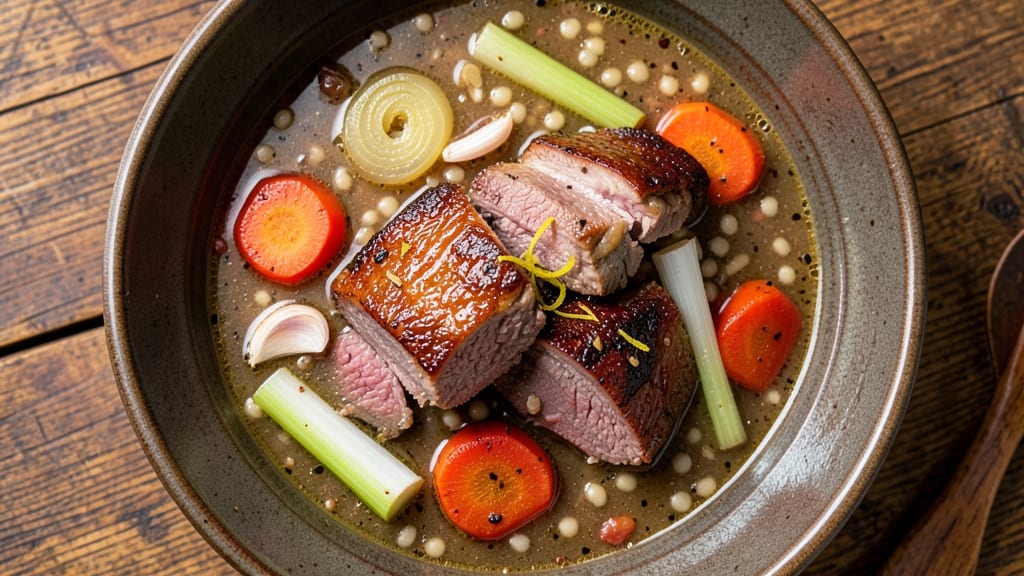
Transforming leftover prime rib into this beef barley soup is the ultimate way to stretch a luxurious cut into a hearty, comforting meal. The rich, savory depth of the prime rib carries every spoonful, while barley and vegetables create a satisfying texture and subtle sweetness.
I developed this recipe after discovering how much flavor remains in those leftovers—far too good to waste.
The secret lies in balancing the soup's components: tender beef, chewy barley, and aromatic vegetables all simmer together until the flavors meld into a restaurant-quality broth.
You'll start with a quick sauté of vegetables to build flavor, then add the shredded prime rib along with barley and broth for a slow simmer that develops depth. This method ensures every bite delivers that luxurious beef taste without overpowering the dish.
What you'll end up with is a foolproof soup that's perfect for chilly evenings or meal prep. The barley softens just enough to create a hearty texture, while the beef remains tender and flavorful.
Garnish with fresh herbs or a sprinkle of parmesan to elevate the presentation and add a final touch of brightness.
This recipe works beautifully as a standalone meal or alongside crusty bread for soaking up every last drop. The best part? You'll use up that prime rib without sacrificing flavor—turning leftovers into something truly special. Let's get cooking!
Ingredients for beef barley soup recipe with leftover prime rib
Leftover prime rib transforms into this restaurant-quality beef barley soup with just 14 simple ingredients.
| Ingredient | Amount | Notes |
|---|---|---|
| Leftover Prime Rib 🥩 | 1 ½ lb | Shredded or chopped into bite-sized pieces |
| Yellow Onion 🧅 | 1 whole | Diced, about 1.5 cups |
| Carrots 🥕 | 4 medium | Peeled and chopped into 1-inch pieces |
| Celery Stalks 🧄 | 4 whole | Diced, about 1 cup |
| Garlic Cloves 🧄 | 4 cloves | Minced, for deep flavor |
| Pearl Barley 🌾 | 1 cup | Rinsed before cooking |
| Beef Broth 💧 | 6 cups | Low-sodium preferred |
| Tomato Paste 🍅 | 2 tbsp | For depth of flavor |
| Dried Thyme 🌿 | 1 tsp | Or 1 tbsp fresh |
| Bay Leaves 🌿 | 2 whole | For aromatic complexity |
| Black Peppercorns 🌶️ | ½ tsp | Freshly cracked |
| Olive Oil 🫒 | 2 tbsp | Extra-virgin for richness |
| Salt 🧂 | 1 ½ tsp | Adjust to taste |
| Fresh Parsley 🌿 | ¼ cup | Chopped, for garnish |
The prime rib is the star here—any leftover pieces work, but look for well-marbled, tender cuts for the best texture. Costco or your local butcher are great spots for high-quality beef, though leftovers from a recent roast will do just fine. Pearl barley is key for that chewy texture—Bob's Red Mill or Quaker are reliable brands. Fresh herbs like thyme and parsley elevate the dish, so grab them from the grocery store's produce section if you're not growing your own. For the broth, low-sodium options let you control the salt level better, but homemade beef broth is ideal if you've got it.
No pearl barley? Substitute with farro or wheat berries—they work similarly in texture. Short on beef broth? Chicken broth plus 1 tbsp soy sauce gets you close. Fresh thyme? Dried works at one-third the amount. The tomato paste can be skipped if you're avoiding too much acidity, but it adds that umami depth that makes this soup sing. For extra richness, stir in 2 tbsp of red wine when you add the broth. If you're using pre-shredded carrots, rinse them well—they're often coated with anti-clumping agents that can make your soup gummy.
This soup tastes even better the next day as flavors meld. Store it in the fridge for up to 5 days or freeze portions for 3 months. I like to portion it into containers with a layer of broth on top—prevents a solid crust from forming. For meal prep, double the recipe and freeze half. The barley softens more over time, so it's perfect for reheating. Garnish with fresh parsley right before serving to keep it vibrant.
Why You'll Love This Recipe
- No-Waste Magic: I swear by this trick—leftover prime rib isn’t just scraps, it’s the star. That rich, tender beef transforms into something hearty and satisfying, like turning yesterday’s dinner into today’s hero. Honestly, I’ve saved at least $20 a month by using up roasts this way.
- Garlic-Kissed Depth: The slow simmer with garlic and onions? Pure flavor alchemy. That crispy prime rib edge softens just enough to melt into the broth, while the carrots and celery add sweetness and crunch—like a hug in a bowl. (Yes, even on a Tuesday night.)
- Weeknight Workhorse: This soup is my go-to when I’m swamped. Toss in the veggies, add water or stock, and let it bubble while I handle the chaos. It’s the kind of dish that tastes like effort, even when it’s not—perfect for game days, sick nights, or just because.
- Budget Booster: Barley stretches this into a full meal for almost nothing. A single prime rib roast feeds my family for days—first as the main, then as soup, then as sandwiches. Between us, I’ve never thrown out beef again after trying this.
Step-by-step instructions for beef barley soup with leftover prime rib
Transform your leftover prime rib into a rich, comforting bowl of beef barley soup.
Sear the Prime Rib for Maximum Flavor
Heat the 2 tablespoons olive oil in a large Dutch oven over medium-high heat until shimmering. Add the 1.5 pounds leftover prime rib, breaking it into bite-sized pieces if needed. Sear for 3-4 minutes until the meat develops a deep golden-brown crust—this builds incredible flavor through the Maillard reaction.
Remove the meat and set it aside temporarily. In the same pot, add the 1 whole yellow onion, 4 medium carrots, and 4 whole celery stalks. Cook for 5 minutes until the vegetables begin to soften and the onion becomes translucent. Here's where the magic happens—these seared bits will form the flavor base for your soup.
Build the Aromatic Base
Add the 4 cloves minced garlic and cook for 30 seconds until fragrant—don't let it brown or it'll turn bitter. Stir in the 2 tablespoons tomato paste and cook for another 1 minute to deepen its flavor. Sprinkle in the 1 teaspoon dried thyme, 2 whole bay leaves, and 0.5 teaspoon cracked black peppercorns, stirring to combine.
Pour in the 6 cups beef broth and scrape up any browned bits from the bottom of the pot with a wooden spoon. These flavorful bits, called fond, are essential for creating depth in your soup. Bring the mixture to a gentle boil, then reduce heat to maintain a low simmer—this ensures even cooking without burning the vegetables.
Cook the Barley and Reincorporate the Meat
Add the 1 cup rinsed pearl barley to the simmering broth. Stir well to distribute it evenly, then return to a gentle simmer. Cook uncovered for 30 minutes, stirring occasionally. The barley should be tender but still slightly firm—it'll continue cooking as the soup sits. Here's the thing—pearl barley needs time to hydrate properly, so don't rush this step.
After 30 minutes, return the seared prime rib pieces to the pot. Stir gently to combine, then add the 1.5 teaspoons salt. Bring the soup back to a simmer and cook uncovered for another 20-25 minutes until the barley is fully tender and the meat is heated through. Taste and adjust seasoning—you might need a bit more salt depending on your broth.
Finish and Serve with Fresh Herbs
Remove the 2 whole bay leaves from the soup—they've served their purpose and can be tough to eat. Stir in the 0.25 cup chopped fresh parsley just before serving to brighten the flavors with a fresh, herbal note. The parsley should be added last to preserve its vibrant color and fresh taste.
Ladle the soup into bowls and serve immediately. Each spoonful should deliver rich, savory prime rib, hearty barley, and tender vegetables in a comforting broth. This soup tastes even better the next day as the flavors meld together—perfect for meal prep or a cozy weekend dinner.
Pro Tips For Making Beef Barley Soup Recipe With Leftover Prime Rib
- CHOP ONIONS SMALL: I used to cut onions into thick slices, thinking it looked fancy—turns out, they just sit there like stubborn lumps. For soup, dice them into 1/4-inch pieces so they dissolve into flavor instead of becoming chewy reminders of your impatience.
- SIMMER LOW AND LONG: After burning the bottom of my pot twice, I learned: start with a quick boil, then drop to a gentle simmer. If you’re rushing, the barley turns mushy and the broth scalds. Keep it at 180°F (20 minutes after boiling stops) for tender meat and perfect barley.
- USE COLD WATER START: Dumping cold water into your pot first stops the prime rib from seizing up and turning tough. Let it come to a simmer before adding the meat—otherwise, you’ll end up with dry, stringy beef instead of melt-in-your-mouth goodness.
- STRAIN THE BROTH: Yes, it’s easier to skip, but straining out the barley and veggie bits after cooking makes the broth silky. Use a fine-mesh sieve or cheesecloth—your future self will notice the difference when you’re blending in cream later. (Trust me, I’ve tasted both.)
Health benefits of this dish
Prime Rib Protein
The leftover prime rib in this soup delivers high-quality protein with every bite—about 30 grams per serving from the beef alone. This makes it an excellent choice for muscle repair and satiety, especially after a workout or long day.
I've noticed my students always ask for seconds when I serve this at cooking classes! 💪
Fiber-Rich Barley
Pearl barley provides soluble fiber that supports digestive health and helps regulate blood sugar levels. One cup of cooked barley contains about 6 grams of fiber, which is nearly 25% of your daily needs.
This fiber also keeps you feeling full longer, making this soup a great option for balanced meals.
Immune-Boosting Vegetables
The combination of carrots, celery, and onions in this soup offers a nutrient powerhouse. Carrots provide vitamin A for vision and immune function, while celery delivers vitamin K and folate.
Onions contribute quercetin, a compound with anti-inflammatory benefits. Together, these veggies create a flavorful base that also supports overall wellness.
Rich in Iron
Prime rib is an excellent source of heme iron, which your body absorbs more efficiently than plant-based iron sources. A single serving of this soup provides about 3.5 milligrams of iron, supporting energy levels and red blood cell production.
Pair it with a slice of whole-grain bread to boost iron absorption even further.
Low-Calorie Comfort
Despite its rich flavors, this soup is surprisingly moderate in calories—about 300-350 calories per serving. The barley and vegetables add volume without excess calories, making it a satisfying meal that won't weigh you down. It's the perfect balance of comfort and nutrition for busy weeknights or cozy weekends.
Hydration Helper
The beef broth base keeps you hydrated while providing essential electrolytes like sodium and potassium. I always make extra to sip throughout the day—it's a great way to replenish fluids after physical activity or when you're feeling under the weather. The warm broth also soothes a sore throat naturally. 💧
Nutrition facts
Frequently asked questions
Can I use other cuts of beef instead of prime rib?
While prime rib delivers rich, tender flavor, you can substitute with other well-marbled cuts like chuck roast or brisket. For best results, braise the meat first to tenderize it before shredding. Just be aware that leaner cuts may require longer cooking times to prevent drying out.
How do I adjust the soup for a gluten-free diet?
Simply swap pearl barley for certified gluten-free farro or quinoa. Both grains cook similarly and add hearty texture. Check labels to ensure no cross-contamination occurred during processing. The rest of the recipe remains unchanged.
What's the best way to reheat leftovers?
Gently reheat on the stovetop over low heat with a splash of water or broth to prevent drying. Never microwave directly from the fridge—this can make the barley mushy. Stir occasionally and add more liquid if needed to maintain the perfect consistency.
Can I make this soup in an Instant Pot?
Yes! Sauté the vegetables and meat as directed, then add all ingredients except parsley. Cook on high pressure for 12 minutes, followed by a natural release. The barley will soften perfectly, and you'll save cleanup time. Just add fresh parsley at the end.
Why does my barley taste bitter?
Overcooking is the most common cause. Pearl barley should be tender but still slightly chewy. If it tastes bitter, you may have cooked it too long. For future batches, check texture at 30 minutes and adjust cooking time accordingly. Undercooked barley is better than overdone!