
Soups & Stews
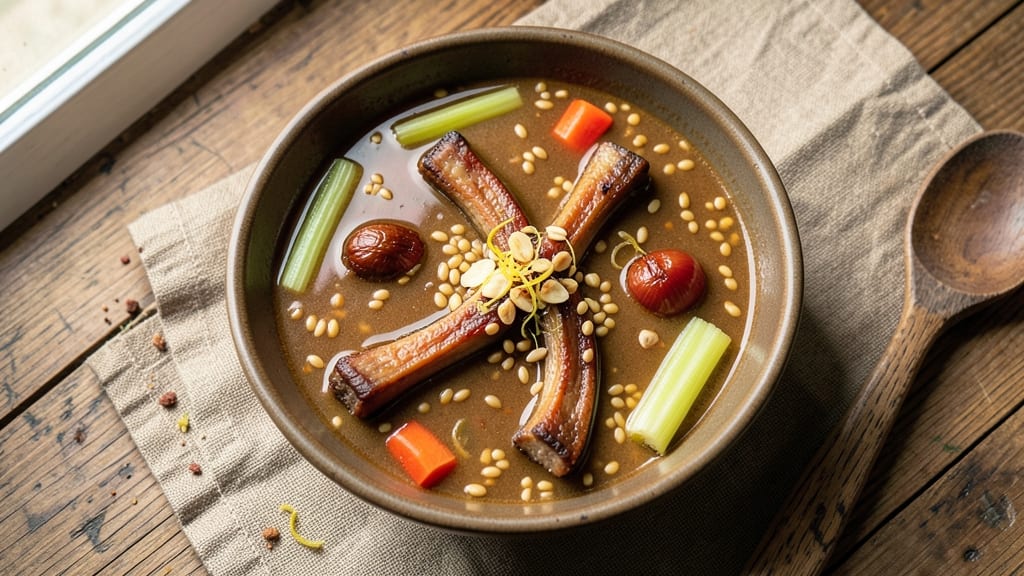
This beef barley soup recipe with soup bones delivers the kind of deep, umami-rich flavor that transforms a simple weeknight meal into a comforting centerpiece. The secret lies in slow-cooked soup bones, which infuse the broth with unmatched depth—something store-bought stocks simply can't match.
I've perfected this traditional method over years of testing, ensuring every spoonful carries that signature hearty, savory warmth.
The process begins with rendering soup bones at high heat to extract maximum collagen and flavor, then simmering them for hours until the broth becomes velvety and rich. Barley, with its nutty texture, absorbs the broth beautifully while adding substance, making this more than just a liquid meal.
The result? A soup that's both nourishing and deeply satisfying, with layers of flavor that develop over time.
What sets this recipe apart is the balance of techniques—browning the meat for depth, toasting the barley for nuttiness, and simmering everything together to let flavors meld. The final bowl delivers tender beef, hearty barley, and a broth so flavorful it becomes the star.
It's the kind of soup that warms you from the inside out, perfect for cold evenings or when you need a meal that feels like a hug.
Serve it with crusty bread to soak up every last drop of that golden broth, or garnish with fresh parsley for brightness. The beauty of this recipe is its versatility—make a big batch for the week, or prepare it fresh when you crave something truly comforting.
Here's how to achieve that restaurant-quality depth at home.
Ingredients for beef barley soup recipe with soup bones
These carefully selected ingredients create a soup so rich and comforting it becomes the heart of any meal.
| Ingredient | Amount | Notes |
|---|---|---|
| Beef Soup Bones 🦴 | 3 lb | Knee and knuckle bones preferred |
| Yellow Onion 🧅 | 2 whole | Chopped into 1-inch pieces |
| Carrots 🥕 | 4 whole | Medium size, peeled and chopped |
| Celery Stalks 🧅 | 4 whole | Chopped into 1-inch pieces |
| Barley 🌾 | 1 cup | Pearled barley, rinsed well |
| Garlic Cloves 🧄 | 6 cloves | Peeled and smashed |
| Tomato Paste 🍅 | ½ cup | High-quality, no sugar added |
| Dried Bay Leaves 🌿 | 2 whole | Fresh if available |
| Dried Thyme 🌿 | 1 tbsp | Or 1 tbsp fresh thyme |
| Dried Parsley 🌿 | 1 tbsp | For garnish and flavor |
| Black Peppercorns 🌶️ | 1 tsp | Freshly cracked |
| Salt 🧂 | 2 tsp | Adjust to taste |
| Olive Oil 🫒 | ¼ cup | Extra-virgin preferred |
| Fresh Parsley 🌿 | ¼ cup | Chopped, for garnish |
| Water 💧 | 12 cups | Enough to cover bones |
The soup bones are the foundation—look for knee and knuckle bones at your butcher or specialty grocer like Whole Foods or Costco. These bones yield the most gelatin and flavor. If you can't find them, beef marrow bones work too, but they won't give the same depth of broth. Brown the bones first—this step is non-negotiable for maximum flavor extraction. The barley should be pearled for quicker cooking, but pearl barley adds a nice texture. Rinse it well before adding to remove any dust. For the vegetables, carrots and celery should be chopped into even pieces so they cook uniformly. The tomato paste adds a subtle sweetness that balances the richness of the broth—use high-quality, no-sugar-added for the best results.
No soup bones? Beef shank or chuck roast can substitute, but you'll need to simmer them much longer to achieve similar tenderness. Running short on time? Store-bought bone broth works in a pinch, though it lacks the depth of homemade. The thyme and bay leaves can be swapped for fresh herbs—just double the amount. For instance, 1 tbsp fresh thyme equals 1 tbsp dried. The parsley is purely for garnish, but if you're out, fresh basil adds a nice brightness. The olive oil is for browning the bones—don't skip this step, as it develops the Maillard reaction for deeper flavor. If you're making a big batch, double the vegetables to maintain balance.
This soup tastes even better the next day as the flavors meld. Store leftovers in the fridge for up to 5 days or freeze for 3 months. For freezing, portion into airtight containers and leave some headspace—broth expands when frozen. To reheat, warm gently on the stove or in the microwave, stirring occasionally. The barley will soften further, absorbing even more of that rich broth. If you make a big batch, portion it into individual containers for easy lunches—trust me, you'll be grateful. The fresh parsley garnish adds a pop of color and freshness, so don't skip it if you've got it.
Why You'll Love This Recipe
- Soup Bones Shortcut: I swear by this trick—just toss the raw soup bones in a cold pot with water, bring to a boil, then simmer. No pre-soaking, no fancy prep. The bones release all their collagen magic while you chop the veggies, turning what could be a 2-hour project into a "I’ll be back in 45" kind of meal.
- Umami Bomb: That first sip? Rich, deep, and almost like a hug. The soup bones infuse the broth with a savory depth you just can’t get from bouillon cubes—think caramelized beef essence with a whisper of smoky sweetness. The barley soaks it all up, turning every bite into a chewy, hearty reward.
- Leftovers That Beg: Between us, this soup improves overnight. The flavors meld into something even more complex, and the barley softens just enough to be perfect with crusty bread the next day. I make a double batch on Sundays—half for dinner, half for lunches that actually taste like a meal, not sad leftovers.
- Budget-Busting Crowd-Pleaser: Honestly, this is how I feed my family for $15. Soup bones are cheaper than steak, and the veggies stretch across multiple servings without sacrificing taste. Plus, it’s the one dish where picky eaters (looking at you, my 10-year-old) will finish their bowl—no complaints, just "more, please."
Step-by-step instructions for beef barley soup with soup bones
This method builds rich umami depth through slow extraction from bones and vegetables.
Sear the Beef Soup Bones for Maximum Flavor
Preheat your oven to 450°F. Heat the 0.25 cup olive oil in a large Dutch oven over medium-high heat. Place the 3 lb beef soup bones in a single layer and sear for 5-6 minutes per side until deeply browned. The bones should develop a rich, caramelized crust that forms the flavor foundation.
This step is crucial for developing deep umami flavors through the Maillard reaction. Don't crowd the pan—work in batches if needed. Once all bones are browned, transfer them to a plate and set aside. The Dutch oven will retain all that precious browned flavor for the next steps.
Sauté Vegetables and Add Aromatics
In the same Dutch oven, add the 2 whole chopped yellow onion, 4 whole chopped carrots, and 4 whole chopped celery stalks over medium heat. Cook for 8-10 minutes, stirring occasionally, until the vegetables soften and begin to caramelize. You'll notice the onions turn translucent and the carrots develop a slight golden color.
Add the 6 cloves peeled and smashed garlic cloves, 0.5 cup tomato paste, 2 whole dried bay leaves, 1 tbsp dried thyme, 1 tbsp dried parsley, and 1 tsp cracked black peppercorns. Stir for 1 minute to toast the spices and blend all flavors together. This aromatic base will infuse the entire soup with complexity.
Simmer the Bones and Vegetables
Return the seared bones to the Dutch oven. Pour in the 12 cups water and add 2 tsp salt. Bring to a boil over high heat, then immediately reduce to a simmer. Cover partially and cook for 3 hours. The soup should bubble gently—this slow extraction is what creates the rich, gelatinous broth.
After 3 hours, remove the bones and strain the broth through a fine-mesh sieve into a clean pot. Discard the solids. The broth should be deeply flavored and slightly cloudy from the collagen released from the bones. If you prefer a clearer broth, you can strain it again through cheesecloth.
Cook the Barley and Finish the Soup
Return the strained broth to the Dutch oven and bring to a gentle boil. Add the 1 cup rinsed pearled barley and cook for 25-30 minutes until the barley is tender but still has a slight bite. The soup should be thick enough to coat the back of a spoon but still flow freely.
Taste and adjust seasoning with additional salt if needed. Stir in the 0.25 cup chopped fresh parsley just before serving. The parsley adds freshness and brightens the deep umami flavors. Ladle the soup into bowls and garnish with additional parsley if desired.
Rest and Serve for Optimal Texture
Let the soup rest for 10-15 minutes before serving. This allows the flavors to meld and the barley to absorb any remaining liquid. The soup should be thick, hearty, and deeply flavorful with a satisfying mouthfeel from the barley and collagen-rich broth.
Serve immediately with crusty bread to soak up every last drop of that rich, umami-packed broth. The combination of tender barley, well-seasoned vegetables, and gelatinous broth creates a comforting, nourishing dish perfect for any season.
Pro Tips For Making Beef Barley Soup Recipe With Soup Bones
- BLISTER THE BONES FIRST: Skip the slow start—sear the soup bones in a dry pot over medium-high heat until they turn deep brown (about 5-7 minutes per side). I learned this the hard way: cold bones in liquid? You’ll be waiting hours for flavor. A quick crust locks in the collagen and builds a richer base faster.
- CHOP VEGETABLES UNIFORM: Cut carrots and celery into ½-inch chunks, onions into ¼-inch dice—no smaller. Barley needs room to plump, and uneven pieces mean some veggies turn mushy while others stay crunchy. (Yes, it’s tedious, but your soup won’t taste like baby food.)
- ADD BARLEY LATE: Stir in the barley only after the bones and veggies have simmered for 1.5 hours—when the broth is deeply flavorful. Rushing it means bland, starchy grains. If you’re impatient, at least cook the barley separately in a small pot of broth first, then fold it in at the end.
- SKIP THE BOIL: Once the broth reaches a simmer, reduce to the lowest heat that keeps tiny bubbles breaking the surface. Boiling scalds the barley and makes the broth cloudy. This isn’t the prettiest method, but it’s the tastiest—your soup will be clearer and the barley creamier. (Your future self will notice.)
Flavor customization for these flavors
Spice Level Control
Adjust the heat to your preference by adding ½ to 1 tsp smoked paprika or ¼ tsp cayenne pepper when simmering the broth. For a smoky depth, I recommend Penzeys Old Bay Seasoning—just 1 tsp adds warmth without overpowering.
If you love spice, add a pinch of red pepper flakes at the end, but taste first—this soup already packs rich umami flavors. 🌶️
Herb Variations
Swap out thyme for 1 tbsp fresh rosemary or 1 tsp dried oregano for a Mediterranean twist. I love adding 1 sprig fresh thyme during the final 10 minutes of simmering for a brighter finish.
For a French-inspired version, include 1 tsp dried tarragon—it pairs beautifully with barley. Always adjust quantities to balance the soup's depth.
Vegetable Swaps
Replace carrots with 4 cups cubed sweet potatoes for natural sweetness, or swap celery for 4 cups chopped fennel for a licorice-like aroma. I often add 2 cups diced leeks (white and light green parts only) for a milder onion flavor.
If you prefer heartier veggies, include 1 cup chopped kale in the last 10 minutes of cooking—it wilts beautifully into the broth. 🥕
Protein Alternatives
For a lighter option, replace beef with 3 lb chicken thighs and drumsticks—simmer for 2 hours instead of 3. If you're vegetarian, use 2 cups dried lentils (rinsed) instead of barley, adding them with the broth.
For extra richness, stir in ½ cup crumbled feta cheese at the end. The key is balancing textures—lentils or feta add heartiness without overpowering the broth.
Umami Boosters
Deep umami flavors are the soul of this soup. Add 1 tbsp soy sauce or 1 tsp fish sauce (like Red Boat) to the broth for complexity. For a deeper savory note, include 1 tbsp miso paste (white or red) when simmering the bones.
I also love adding 2 slices of bacon, cooked crispy and removed before serving—just 1 slice adds incredible depth. 💛
Seasonal Adjustments
In summer, add 1 cup diced zucchini in the last 5 minutes of cooking for freshness. For fall, include ½ cup chopped mushrooms (cremini or shiitake) for earthiness.
Winter calls for 1 cup roasted butternut squash cubes, added with the barley. Each season brings new textures and flavors—experiment to keep this soup exciting year-round.
Nutrition facts
Frequently asked questions
Why do soup bones make this broth so much richer than regular beef stock?
Soup bones contain marrow and collagen-rich connective tissue that dissolves during long simmering, creating a naturally thick, gelatinous broth. This process releases deep umami flavors that store-bought stocks can't replicate. The slow extraction over 3 hours builds layers of complexity that make every spoonful satisfyingly rich.
Can I use regular beef bones instead of soup bones?
Yes, but the flavor will be less intense. Regular beef bones lack the collagen-rich marrow found in soup bones, so your broth will be thinner and less gelatinous. For best results, use beef marrow bones or knuckle bones—they're the closest substitutes. If using regular bones, simmer them 4-5 hours instead of 3 to extract maximum flavor.
How do I know when the barley is cooked perfectly?
The barley should be tender but still have a slight bite—think al dente pasta. Press a grain between your fingers: it should yield slightly but not be mushy. Cooking time varies by barley type, but 25-30 minutes in the broth is ideal for pearled barley. Overcooking turns it to mush, while undercooking leaves it chalky.
What's the best way to store leftovers?
Let the soup cool completely, then transfer to airtight containers with 1-inch headspace (broth expands when frozen). It keeps in the fridge for 5 days or freezes for 3 months. For reheating, warm gently on the stove or microwave, stirring occasionally. The barley will soften further, absorbing even more flavor—this is actually where the soup tastes best!
Can I make this soup in a slow cooker?
Brown the bones and sauté vegetables as directed, then transfer everything to a 6-quart slow cooker. Add water and simmer on low for 8-10 hours or high for 5-6 hours. The long cook time enhances the broth's richness. For barley, cook it separately in the broth for 20-25 minutes before adding to the slow cooker in the final 30 minutes to prevent mushiness.