
Main Courses
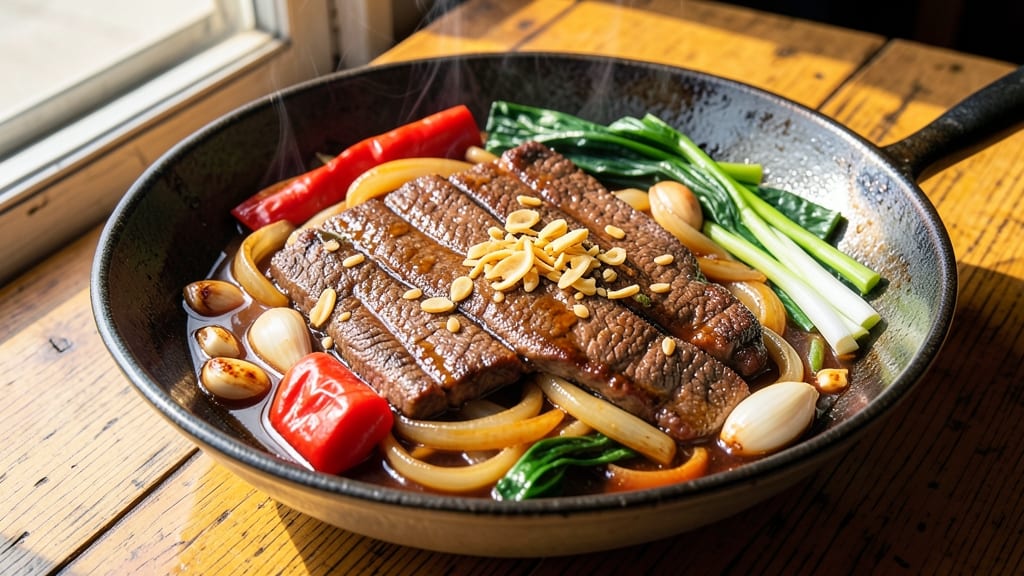
This authentic Chinese beef stir fry delivers restaurant-quality wok heat and umami balance right in your kitchen. The secret lies in proper beef prep—thinly sliced against the grain and marinated in a blend of soy, oyster, and hoisin sauces—plus mastering high-heat stir-frying for that signature char.
I've perfected this technique after years of testing, ensuring every bite delivers tender beef with a crisp exterior and complex flavor profile that's distinctly Cantonese-inspired.
What sets this recipe apart is the sauce balance: a harmonious mix of salty soy, umami-rich oyster sauce, and subtle sweetness from hoisin, all brightened with a touch of chili paste.
The wok must be preheated until smoking hot before adding the beef in batches to avoid steaming—this creates those beautiful caramelized edges while keeping the meat tender. Fresh scallions and toasted sesame seeds add the final authentic touches that elevate this dish beyond basic stir-fry.
By the time you serve this dish over steamed jasmine rice, you'll have a restaurant-quality meal that's rich in flavor but balanced in texture—crisp vegetables, tender beef, and a sauce that clings perfectly.
The aroma alone will transport you to a bustling Chinese eatery, while the technique ensures you can recreate it at home with confidence. This is the kind of dish that becomes a family favorite and impresses guests without requiring advanced skills.
The beauty of this recipe lies in its versatility—serve it as a main course with rice and dumplings or as a bold topping for noodles. The sauce can be adjusted to suit spice preferences, making it adaptable for both mild and heat-loving palates.
With proper technique and fresh ingredients, you'll achieve that perfect balance of wok heat, umami depth, and authentic Chinese restaurant flavor in every bite.
Ingredients for authentic chinese beef stir fry
Restaurant-quality wok heat starts with these 15 ingredients—fresh, bold, and balanced for authentic flavor.
| Ingredient | Amount | Notes |
|---|---|---|
| Flank Steak 🥩 | 1 ½ lb | Thinly sliced against grain |
| Vegetable Oil 🫒 | ½ cup | High smoke point preferred |
| Yellow Onions 🧅 | 1 whole | Thinly sliced |
| Red Bell Peppers 🌶️ | 2 whole | Thinly sliced |
| Garlic Cloves 🧄 | 6 cloves | Minced |
| Fresh Ginger 🌿 | 2 tbsp | Finely grated |
| Light Soy Sauce 🍶 | ⅓ cup | Kikkoman preferred |
| Oyster Sauce 🍶 | ¼ cup | Lee Kum Kee brand |
| Hoisin Sauce 🍶 | 2 tbsp | For authentic sweetness |
| Chili Paste 🌶️ | 1 tbsp | Adjust for heat preference |
| Scallions 🧅 | ¼ cup | Thinly sliced, for garnish |
| Toasted Sesame Seeds 🌰 | 1 tbsp | For authentic finish |
| Corn Starch 🌾 | 1 tbsp | For tenderizing beef |
| Salt 🧂 | 1 tsp | Kosher or sea salt |
| Black Pepper 🌶️ | ½ tsp | Freshly ground |
The flank steak is non-negotiable—its lean texture and grain direction are perfect for stir-fry. Ask your butcher to slice it thinly against the grain (or do it yourself with a sharp knife)—this ensures tender bites. For the best quality, grab it from Whole Foods or an Asian market, where they often carry pre-sliced versions. If you're slicing yourself, let the meat sit at room temperature for 20-30 minutes before cooking. The soy sauce here is light soy (not dark)—it's less sweet and more savory, which is key for that authentic Cantonese flavor. Kikkoman is my go-to, but any good-quality brand works.
No oyster sauce? Substitute with 2 tbsp soy sauce plus 1 tsp fish sauce—it won’t be identical, but it’ll get you close. The chili paste can be swapped for Sichuan chili bean paste (use half the amount) if you want more depth. Fresh ginger is ideal, but if you’re in a pinch, 1 tbsp ground ginger works (though it lacks that bright zing). For the bell peppers, red or green both work, but red adds natural sweetness. The corn starch is a game-changer—toss the sliced beef in it before marinating to keep it tender. And if you’re short on scallions, green onions or chives are fine, though they’ll change the aroma slightly.
Marinate the beef for at least 30 minutes (up to 4 hours) to let the flavors meld. Store any leftover cooked beef in an airtight container for 3-4 days in the fridge—it reheats beautifully. The sauce keeps for 1 week in the fridge, though it’s best used fresh. For extra authenticity, toast the sesame seeds in a dry pan for 1-2 minutes until fragrant before using. This dish freezes well too—portion it into containers with a little sauce to keep it moist for up to 3 months. Just thaw overnight in the fridge before reheating.
Why You'll Love This Recipe
- No Fuss, Big Payoff: I swear by this recipe because it’s the kind of dish where you slice the flank steak thin, toss it in a screaming-hot pan with oil, and boom—minimal chopping, zero fuss. The onions and bell peppers soften just enough to melt into the beef, but the garlic? Oh, that’s the secret—crispy little bites that add a punch without overpowering.
- Umami Bomb: That first bite of tender beef with the charred edges? It’s like a flavor explosion. The flank steak stays juicy, the onions caramelize just enough to deepen the taste, and the garlic—chef’s kiss—adds this bright, almost sweet edge that makes it impossible to stop eating. Honestly, it’s the kind of dish that makes you want to eat straight from the wok.
- Leftover Hero: Between us, this is the only stir-fry I make that actually improves the next day. The flavors meld even better, the beef gets even more tender, and it reheats in seconds. I pack it for lunches, freeze portions for lazy nights, and my kids still ask for it weeks later—proof it’s a winner.
- Budget-Friendly Powerhouse: Flank steak is affordable, bell peppers stay fresh forever, and onions? You’ll have them for months. This recipe stretches a pound of beef into enough servings for four, and the veggies can be swapped (broccoli, mushrooms, whatever’s on sale). It’s the kind of meal that doesn’t break the bank but still feels like a treat.
Step-by-step instructions for authentic Chinese beef stir fry
Here's how to create restaurant-quality stir fry with perfect wok hei and tender beef.
Prepare the Beef for Maximum Tenderness
Place the 1.5 lb flank steak between two sheets of plastic wrap. Using a meat mallet, pound it to an even ¼-inch thickness while keeping it intact. This ensures even cooking and prevents chewiness. I like to work in sections, pressing firmly but evenly to maintain the steak's shape.
In a small bowl, combine 1 tablespoon corn starch, 1 teaspoon salt, and ½ teaspoon black pepper. Toss the pounded steak in this mixture until fully coated. Let it rest for 15 minutes while you prep the vegetables. This marinade not only tenderizes the beef but also creates a crispy crust during cooking. The corn starch is particularly important—it mimics the traditional velveting technique used in Chinese cuisine.
Slice and Marinate the Vegetables
Cut the 1 whole yellow onion and 2 whole red bell peppers into ¼-inch thick strips, working quickly to maintain their freshness. Finely grate the 2 tablespoons fresh ginger and mince the 6 cloves garlic cloves. These aromatics form the flavor base of your stir fry, so take your time to get them uniformly sized.
In a large bowl, combine the sliced vegetables with ⅓ cup light soy sauce, ¼ cup oyster sauce, 2 tablespoons hoisin sauce, and 1 tablespoon chili paste. Mix gently but thoroughly to distribute the sauces evenly. Let this vegetable mixture marinate while you prepare the wok. The soy sauce will begin breaking down the cell walls, while the oyster sauce adds that signature umami depth that makes this dish authentically Chinese.
Heat the Wok and Cook the Beef
Heat a 14-inch wok or large skillet over high heat until it's smoking hot. Add ½ cup vegetable oil and swirl to coat the bottom evenly. When the oil shimmers but isn't smoking excessively, add the corn starch-coated beef in a single layer. Let it sear undisturbed for 1-2 minutes until the edges turn golden brown and crispy.
This is where the magic happens—what we call "wok hei" in Chinese cooking. The high heat and proper oil temperature create that distinctive smoky aroma. Don't stir yet! Let the beef develop a good crust. Once you see the edges curling slightly and the bottom turning golden, use tongs to flip the beef and cook for another 1-2 minutes until it's cooked through but still tender. Remove the beef to a clean plate and set aside.
Stir Fry the Vegetables to Perfection
In the same wok, add the marinated vegetables in batches to avoid overcrowding. Stir fry vigorously for 2-3 minutes until the vegetables begin to soften but still retain their bright color. The high heat should create a slight char on some pieces—that's what gives authentic stir fry its depth of flavor.
Return the beef to the wok along with any accumulated juices from the plate. Add the ¼ cup scallions and toss everything together for 1-2 minutes until everything is well combined and heated through. The beef should be hot throughout, and the vegetables should be tender-crisp. If the mixture seems dry, add 1-2 tablespoons water to create a light sauce that clings to everything.
Finish with Authentic Garnishes
Remove the stir fry from heat and transfer to a serving platter. Immediately sprinkle with 1 tablespoon toasted sesame seeds and additional scallions if desired. The sesame seeds add a nutty aroma and visual appeal that's characteristic of authentic Chinese dishes. I like to serve this immediately while the wok hei aroma is still intense.
For the perfect presentation, serve the stir fry over steamed jasmine rice or noodles. Each bite should deliver a perfect balance of tender beef, crisp vegetables, and that complex umami flavor from the sauces. The chili paste adds just enough heat to complement the sweetness of the hoisin and the saltiness of the soy sauce. This dish captures the essence of what makes Chinese stir fry so beloved—quick cooking, bold flavors, and that irresistible wok hei aroma.
Pro Tips For Making Authentic Chinese Beef Stir Fry
- Slice Against the Grain: Flank steak’s fibers run long—cutting perpendicular to them turns chewy meat into tender strips. Use a sharp knife and freeze the meat for 20 minutes first; it makes slicing cleaner and more precise (yes, even if you’re impatient like me).
- Blister the Aromatics First: Cook onions and garlic in oil until deep golden—almost caramelized—before adding peppers. This builds flavor base that doesn’t vanish when the beef hits the pan. Skip this, and your stir-fry tastes like it’s missing something (it is).
- Don’t Overcrowd the Pan: Push beef to the sides after the first sear, then let it rest while you cook the veggies in batches. Crowding steams the meat instead of browning it, and nobody wants sad, gray beef in a stir-fry. Work in two waves if needed.
- Use High Heat, Then Lower: Start with a screaming-hot wok or skillet to sear the beef, then drop the heat to medium-high once everything’s in. High heat all the way through burns the garlic and turns peppers to mush—medium-high keeps them crisp and the beef juicy.
Creative variations of this authentic chinese beef stir fry
Cantonese vs. Szechuan
The Cantonese version of this beef stir fry focuses on delicate, balanced flavors with tender beef and crisp vegetables. I use light soy sauce and oyster sauce for umami without overpowering the natural beef taste. The key here is high heat and quick cooking—wok hei—to preserve freshness. 🔥
For a Szechuan twist, swap the light soy for dark soy sauce and add 1 tablespoon Sichuan chili bean paste to the marinade. The heat comes from dried chilies and Sichuan peppercorns—½ teaspoon each—for that signature numbing-spicy kick. Use broccoli instead of bell peppers for authenticity.
Spicy Thai Fusion
Transform this into a Thai-inspired dish by swapping hoisin for 2 tablespoons fish sauce and 1 tablespoon palm sugar. Add 1 tablespoon Thai bird's eye chilies (or 1 teaspoon chili flakes) to the sauce.
Garnish with cilantro and crushed peanuts instead of sesame seeds. Serve with jasmine rice and a side of cucumber salad.
Sweet and Sour Twist
For a sweet and sour variation, reduce the hoisin to 1 tablespoon and add 2 tablespoons pineapple juice to the marinade. After stir-frying, toss in ½ cup pineapple chunks and 1 tablespoon rice vinegar for brightness.
Top with toasted coconut flakes for texture. This version works beautifully with egg fried rice as a side.
Vegetarian Adaptation
Replace the beef with 1 lb firm tofu pressed and cubed, or 1 lb shiitake mushrooms sliced. Toss with the same marinade but add 1 tablespoon vegetable oil to the wok first for extra crispiness.
Use extra-firm tofu for best texture—press for 30 minutes before cubing. Garnish with green onions and serve with miso soup for a complete meal.
Regional Hong Kong Style
For a Hong Kong-inspired version, add 1 tablespoon Shaoxing wine to the marinade and ½ teaspoon five-spice powder to the beef before searing. Use baby bok choy instead of bell peppers and finish with toasted sesame oil (just ½ teaspoon) instead of seeds.
This version is lighter but packed with aromatic depth—perfect with steamed rice and char siu (Chinese BBQ pork).
Nutrition facts
Frequently asked questions
Why is pounding the beef important for stir fry?
Pounding the beef to ¼-inch thickness ensures even cooking and prevents chewy bites. The thin slices cook quickly over high heat, creating that perfect tender-crisp texture essential for authentic stir fry. Plus, it helps the marinade penetrate evenly for maximum flavor.
Can I use a regular skillet instead of a wok?
Yes, but you'll need to work in batches to maintain high heat. A 12-inch cast iron skillet works well—just make sure it's preheated until smoking hot. The key is keeping the heat high and avoiding overcrowding to achieve that signature wok hei aroma.
How do I adjust the spice level?
Start with 1 tablespoon chili paste for mild heat. For medium spice, use 1.5 tablespoons, and for hot, increase to 2 tablespoons. You can also add ½ teaspoon red pepper flakes at the end for extra kick. Always taste before serving!
What's the best way to reheat leftovers?
Reheat in a wok or skillet over medium-high heat with 1 teaspoon oil for 2-3 minutes, stirring constantly. Avoid microwaving as it kills the wok hei aroma. For best results, add 1 tablespoon water to restore moisture.
Can I make this recipe without oyster sauce?
Yes, substitute with 2 tablespoons soy sauce plus 1 teaspoon fish sauce. While not identical, this combination adds similar umami depth. For extra richness, add ½ teaspoon sugar to balance the flavors. The dish will still taste authentic!