
Main Courses
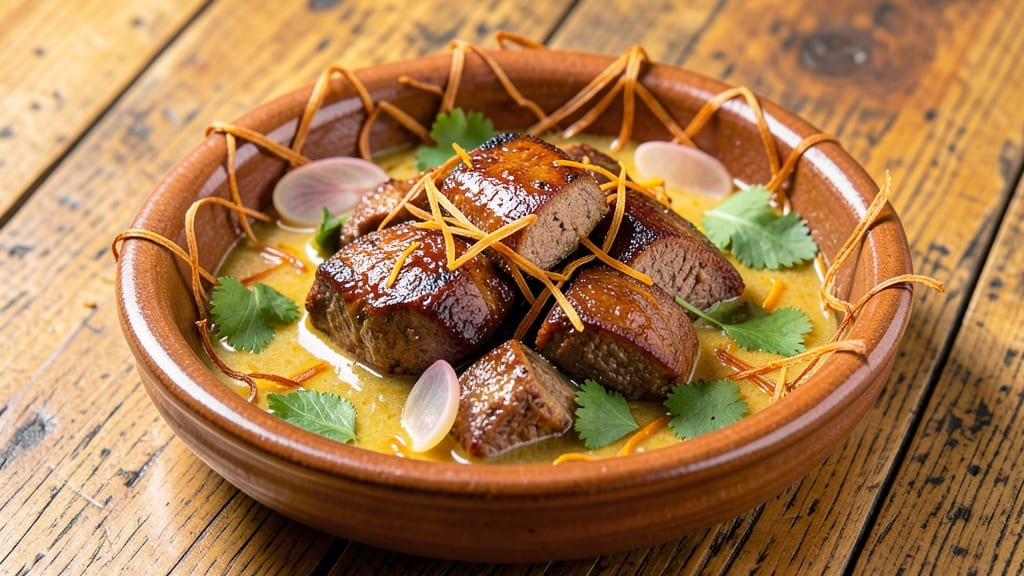
This authentic beef rendang recipe delivers the rich, complex flavors of Indonesia’s most beloved slow-cooked dish—where tender beef melts in your mouth beneath layers of aromatic spices and velvety coconut milk. 🌟 The secret lies in hours of gentle simmering, transforming tough cuts into fork-tender perfection while developing deep, caramelized depth. I’ve perfected this version after years of testing, ensuring every spice—from lemongrass to galangal—plays its part without overpowering the dish.
The process begins with a meticulously ground spice paste, where turmeric, coriander, and cumin create a fragrant foundation. This paste cooks down with coconut milk until thick and fragrant, then envelops the beef in a sauce that becomes richer with each passing hour.
What sets this apart is the patience required: the longer it simmers, the more the flavors meld into a harmonious balance of sweet, spicy, and umami. No shortcuts here—just time-honored technique.
By the final hour, your kitchen will be filled with an intoxicating aroma that’s equal parts smoky and sweet. The beef emerges fork-tender, coated in a glossy, caramelized sauce that clings to every bite. Serve it over steamed jasmine rice, garnished with fresh kaffir lime leaves for an authentic touch.
This isn’t just a meal; it’s an experience that transports you to the streets of Padang with every spoonful.
Pair it with sambal for heat or cucumber salad for freshness, and you’ve got a complete Indonesian feast. The beauty of rendang is its versatility—equally impressive as a weeknight dinner or a showstopping centerpiece for gatherings. Let’s get cooking, and prepare to taste the soul of Indonesia.
Ingredients for authentic beef rendang
Six aromatic spices and tender beef transform into Indonesia's most beloved slow-cooked masterpiece.
| Ingredient | Amount | Notes |
|---|---|---|
| Beef Chuck Roast 🥩 | 3 lb | Cut into 1.5-inch cubes, marbling preferred |
| Full-Fat Coconut Milk 🥥 | 2 cans | 13.5 oz each, unsweetened preferred |
| Fresh Galangal Root 🌿 | 1 piece | 3-inch length, peeled and sliced thin |
| Fresh Turmeric Root 🌿 | 1 piece | 3-inch length, peeled and sliced thin |
| Fresh Lemongrass 🌿 | 4 stalks | Pounded to release oils, outer leaves removed |
| Kaffir Lime Leaves 🍃 | 6 whole | Stems removed, torn into pieces |
| Shallots 🧅 | 1 lb | Peeled and sliced into thin half-moons |
| Ground Coriander Seeds 🌶️ | 2 tbsp | Toasted for deeper flavor |
| Ground Cumin Seeds 🌶️ | 1 ½ tbsp | Toasted for aromatic depth |
| Ground Turmeric Powder 🌶️ | 1 tbsp | Bright yellow, no orange tint |
| Chili Paste 🌶️ | 3 tbsp | Red or green, 1-inch thick |
| Brown Sugar 🍯 | ½ cup | Packed firmly for sweetness |
| Coconut Oil 🫒 | 2 tbsp | For spice paste frying |
| Salt 🧂 | 2 tsp | Diamond Crystal preferred |
| Black Peppercorns 🌶️ | 1 tsp | Freshly cracked for heat |
The beef is non-negotiable—chuck roast with good marbling delivers that melt-in-your-mouth texture. Costco or local butchers are your best bets for quality cuts. Look for pieces with visible fat streaks, which render down into the sauce. If you can't find galangal or turmeric root, substitute with ginger (though it won't be identical). The coconut milk should be full-fat—Thai Kitchen brand is widely available and reliable. For the lemongrass, choose stalks that are firm and pale yellow-green, not dried out or browned.
No galangal? Double the ginger but reduce by half since it's more potent. Running short on kaffir lime leaves? Lime zest plus cilantro mimics the citrusy aroma. The chili paste can be homemade (blend red chilies, shallots, garlic, and lime) or store-bought—Maesri brand is excellent. For the spice toast, use a dry skillet and toast until fragrant (about 2 minutes per spice). The brown sugar helps balance the heat and caramelizes beautifully during the long cook. If you're short on time, prep the spice paste a day ahead—it keeps well in the fridge.
This rendang tastes even better the next day as flavors meld. Store in an airtight container in the fridge for 5-6 days, or freeze portions for up to 3 months. The sauce will thicken further when reheated—add a splash of water or coconut milk if needed. For serving, steam jasmine rice while the rendang simmers. Garnish with fresh cilantro and lime wedges just before serving to brighten the dish. Leftovers reheat beautifully—simmer on low for 10-15 minutes with a splash of water to restore moisture.
Why You'll Love This Recipe
- One-Pot Magic: I swear by this—just sear the beef, toss in the galangal and lemongrass, then let the coconut milk work its slow alchemy. No flipping pans, no mess, no stress. The only real effort is waiting, and honestly? That’s the best part.
- Deep, Slow Love: Between us, the turmeric and galangal give it this earthy warmth that clings to every bite. The beef falls apart like it’s been braising for days, but the real magic is the caramelized coconut sauce—rich, slightly sweet, with a kick that lingers. My husband licks the plate.
- Leftover Gold: This dish begs to be made ahead—it tastes even better the next day, if you can believe it. Freeze half for lazy nights, reheat it with rice, or pack it for work. I’ve sent this to potlucks, and people always ask for the recipe. (They don’t get it, though.)
- Budget Stretch: A chuck roast feeds six for less than takeout, and the spices? You’ll use them again. I’ve made this on a Tuesday for my kids’ soccer team and on a Sunday for my in-laws—same dish, always a hit. The coconut milk might seem pricey, but it’s the star, and a little goes a long way.
Step-by-step instructions for authentic beef rendang
Here's how to create the rich, aromatic balance of traditional Indonesian rendang.
🍳 Step 1: Toast the Spices for Maximum Flavor
Heat the 2 tbsp coconut oil in a heavy-bottomed pot over medium heat. Add the 1 lb shallots and cook for 5-7 minutes until golden brown, stirring frequently to prevent burning. This step develops deep caramelized flavors that form the base of your rendang.
Remove the shallots with a slotted spoon and set aside. In the same pot, add the 2 tbsp ground coriander seeds and 1.5 tbsp ground cumin seeds. Toast for 1-2 minutes until fragrant and slightly darker—this releases their essential oils. Immediately add the 1 tbsp ground turmeric powder and 3 tbsp chili paste, stirring constantly for 30 seconds to blend completely. You'll see the spices transform from dry powders into an aromatic paste.
🍳 Step 2: Build the Spice Paste with Fresh Aromatics
Return the cooked shallots to the pot and add the 1 piece sliced galangal root, 1 piece sliced turmeric root, 4 stalks pounded lemongrass, and 6 torn kaffir lime leaves. Cook for 3-4 minutes until the galangal and turmeric soften and release their vibrant colors into the paste. The mixture should smell intensely aromatic—like a mix of ginger, citrus, and earthy spices.
Gradually whisk in 1 can full-fat coconut milk, scraping up any browned bits from the bottom of the pot. Bring to a gentle simmer and cook for 5 minutes until the mixture thickens slightly. This creates your spice paste—the heart of authentic rendang flavor. If it's too thick, add 2-3 tablespoons water to loosen it.
🔥 Step 3: Slow-Cook the Beef in Coconut Milk
Add the 3 lb beef chuck roast cubes to the pot, along with the remaining 1 can coconut milk, 0.5 cup brown sugar, 2 tsp salt, and 1 tsp cracked black peppercorns. Stir gently to coat the beef evenly in the spice mixture. The beef should be mostly submerged in the coconut milk—add ½ cup water if needed to ensure proper cooking.
Bring to a boil, then immediately reduce heat to low. Cover the pot and let it simmer gently for 1.5 hours, stirring occasionally. After this initial cook, the beef should be tender but still firm to the touch. This slow cooking allows the spices to penetrate deeply while keeping the meat moist. If the liquid reduces too much, add ¼ cup water to maintain the proper consistency.
⏰ Step 4: Simmer Uncovered for Deep Flavor Concentration
Remove the lid and increase heat to medium-low. Continue cooking uncovered for another 1.5-2 hours, stirring frequently to prevent the bottom from burning. This uncovered phase is crucial—it allows the coconut milk to reduce and concentrate, creating that signature thick, caramelized sauce. You'll see the mixture darken and thicken dramatically as it simmers.
When the sauce has reduced to a thick, glossy consistency that coats the back of a spoon, the rendang is nearly done. The beef should be fork-tender with minimal resistance. Taste and adjust seasoning if needed—you might need a bit more salt or sugar to balance the complex flavors. The final sauce should be rich, slightly sweet, and intensely aromatic with layers of spice.
🍽️ Step 5: Rest and Serve with Traditional Accompaniments
Transfer the beef and sauce to a serving dish. Let it rest for 10-15 minutes before serving—this allows the juices to redistribute throughout the meat. The rendang will continue to thicken slightly as it rests, becoming even more concentrated in flavor. Serve with steamed jasmine rice to soak up that incredible sauce, and pair with fresh cucumber slices to cut through the richness.
For an authentic experience, garnish with fresh cilantro and serve with a side of sambal for those who crave extra heat. The beef should be tender enough to pull apart with a fork, with a glossy sauce clinging to every bite. Each spoonful reveals the complex harmony of spices, coconut depth, and sweet caramelized notes that make rendang truly special.
Pro Tips For Making Authentic Beef Rendang
- BLISTER THE GALANGAL FIRST: After burning three batches of galangal, I finally learned to sear the slices in oil for 30 seconds per side until they darken—this unlocks their flavor without turning the whole pot bitter. Skip this, and your rendang will taste like it’s missing something.
- USE TWO COCONUT MILK STAGES: Start with 1 can of coconut milk reduced by half on medium-high heat until it thickens into a paste (this builds depth). Then add the second can later—this prevents the sauce from splitting and gives that signature sticky texture.
- LOW AND SLOW AFTER 2 HOURS: The first two hours should be medium heat to render fat and develop color, but after that, drop to the lowest simmer possible. I used to rush it, and the beef turned tough; now I let it melt for 4+ hours until the sauce clings like syrup.
- GRATE THE TURMERIC FRESH: No, don’t just slice it—grate the turmeric root finely (like ginger) and let it bloom in the oil for 5 minutes before adding anything else. This avoids that "dusty" aftertaste and gives the sauce its golden hue from the start.
Storing and reheating your leftovers
Fridge Storage
Let your rendang cool completely before storing—this prevents condensation that can make the sauce watery. Transfer to airtight glass containers (I love Le Parfait jars) and refrigerate for up to 5 days.
The flavors actually deepen overnight as the spices meld further. When reheating, add 2-3 tablespoons of water to restore moisture—this helps prevent the sauce from becoming too thick and dry. 💫
Freezer Magic
For longer storage, freeze portions in single-serving glass containers or heavy-duty freezer bags. Rendang freezes beautifully for 3 months without losing its rich texture. When ready to eat, thaw overnight in the fridge, then reheat gently on the stovetop with ¼ cup coconut milk to revive the sauce's velvety consistency.
Avoid microwave reheating—it can make the sauce rubbery.
Stovetop Revival
My preferred method is stovetop reheating on low heat for 15-20 minutes, stirring occasionally. Add ¼ cup water or coconut milk if the sauce seems too thick. This gentle approach preserves the sauce's glossy texture and prevents the beef from drying out.
For extra flavor, finish with a splash of lime juice and fresh cilantro just before serving. 🔥
Slow Cooker Option
If you're short on time, transfer the cooled rendang to a slow cooker with ½ cup water or coconut milk. Cook on low for 2-3 hours, stirring once halfway.
This method works especially well for reheating large batches—just monitor the liquid level and add more as needed to maintain the perfect consistency.
Sauce Consistency Tips
The sauce will naturally thicken when reheated, so don't be afraid to add 1-2 tablespoons of water or coconut milk at a time until you reach that perfect glossy, spoonable texture.
If the beef seems dry, add ¼ cup coconut milk and simmer for an additional 5 minutes—this helps restore moisture without diluting the flavors. The key is patience and small adjustments. ✨
Nutrition facts
Frequently asked questions
Can I substitute beef chuck roast with another cut?
While chuck roast is ideal for its marbling and tenderness, you can use brisket or short ribs for similar results. Avoid lean cuts like sirloin—they'll dry out during the long cook. For chicken rendang, use thighs or drumsticks instead, reducing the cooking time to 1 hour covered and 1 hour uncovered.
What makes this rendang more authentic than others?
The key lies in the slow cooking process and fresh aromatics. Traditional rendang uses galangal, turmeric root, and kaffir lime leaves—substitutes like ginger won't capture the same depth. The 3-4 hour simmer allows spices to meld into the beef, creating that signature caramelized sauce. Many shortcut recipes skip these critical steps.
How do I know when the sauce is thick enough?
The sauce should coat the back of a spoon with a glossy, syrupy consistency—it should cling to the beef rather than pool at the bottom. If it's too thin, continue simmering uncovered on medium-low heat for 15-20 minutes more, stirring occasionally. The final texture should be rich but still spoonable, not dry or grainy.
Can I make the spice paste ahead of time?
The spice paste keeps well in the fridge for 3 days or freezes for 3 months. Make it a day ahead to save time—just thaw overnight in the fridge before using. This also lets the flavors develop more fully. Store it in an airtight container with a layer of oil on top to preserve freshness.
Why does my rendang taste too spicy?
Adjust the balance with brown sugar or coconut milk—these naturally sweeten the dish and mellow the heat. Start with 1 tablespoon of sugar and taste, adding more until the spice level is comfortable. For extra depth, add a pinch of salt to enhance all flavors. The sauce should have a sweet-spicy-savory harmony, not just heat.