
Main Courses
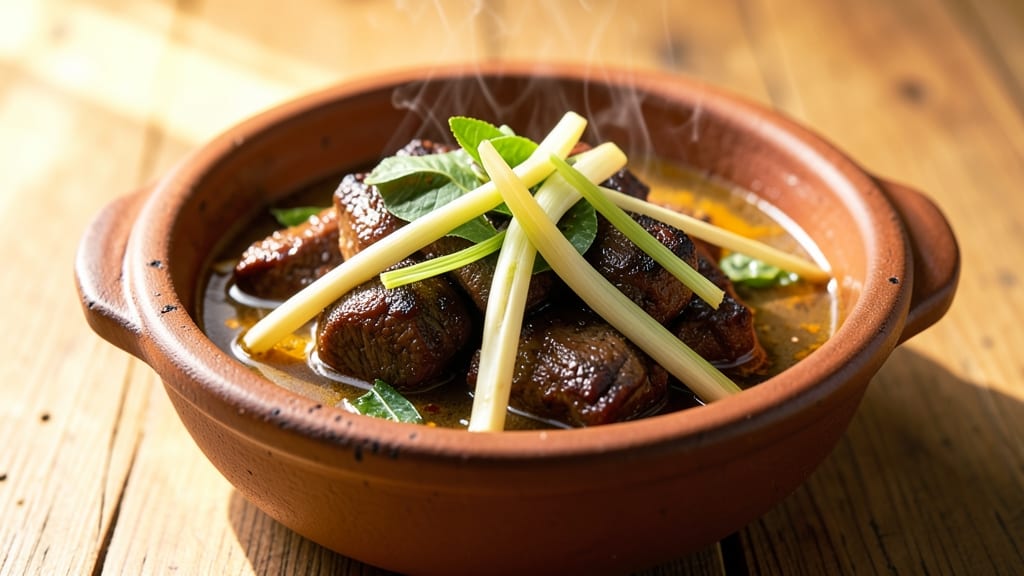
This authentic Malaysian beef rendang delivers the deep, caramelized flavors of West Sumatra’s most celebrated dish—where hours of slow cooking transform tough beef into melt-in-your-mouth tenderness. 🌟 The secret lies in the layered spice pastes (wet and dry blends) and coconut milk reduction, creating that signature rich, slightly sweet sauce with a deep red hue.
Unlike shortcut versions, this recipe follows traditional Minangkabau techniques, ensuring every bite carries the complexity of a festive Malaysian table.
The process begins with a meticulously balanced spice paste—turmeric, galangal, lemongrass, and kaffir lime leaves infuse the coconut milk with aromatic depth. Beef is braised until it practically falls apart, while the sauce reduces to a glossy, caramelized consistency.
What sets this apart is the patience: 4-5 hours of simmering transforms simple ingredients into a dish so flavorful it’s worth every moment. The result? A restaurant-quality rendang that’s rich, tender, and bursting with authentic Malaysian soul.
Serving this rendang properly is key—steamed jasmine rice soaks up every drop of that velvety sauce, while side dishes like sambal or cucumber relish cut through the richness. The deep red color isn’t just visual; it signals the perfect balance of spices and caramelization.
This is the rendang your family will beg to repeat, the one that turns weeknight dinners into a taste of Malaysia’s culinary heart.
Ready to master it? We’ll walk you through the full spice paste preparation, slow-cooking techniques, and tips to achieve that signature texture and color. Let’s bring the flavors of Sumatra to your kitchen.
Ingredients for authentic malaysian beef rendang
Fourteen ingredients. Five hours. One unforgettable dish that tastes like home.
| Ingredient | Amount | Notes |
|---|---|---|
| Beef Chuck Roast 🥩 | 2 ½ lb | Tough cut, marbled for tenderness |
| Coconut Milk 🥥 | 2 cans | Full-fat, 13.5 oz each |
| Turmeric Powder 🌿 | 2 tbsp | Bright yellow, high quality |
| Galangal 🧅 | 1 piece | Fresh, about 3 inches long |
| Lemongrass 🌿 | 3 sticks | Fresh, tough outer layers removed |
| Kaffir Lime Leaves 🍋 | 4 whole | Fresh, leaves only |
| Shallots 🧅 | 6 whole | Peeled, rough chopped |
| Garlic Cloves 🧄 | 8 cloves | Peeled, rough chopped |
| Ginger Root 🧅 | 1 inch | Fresh, peeled, rough chopped |
| Coconut Oil 🫒 | 2 tbsp | Refined or unrefined |
| Coconut Cream 🥥 | 1 cup | Thick, from canned coconut milk |
| Brown Sugar 🍯 | 2 tbsp | Light or dark |
| Salt 🧂 | 1 ½ tsp | Kosher or sea salt |
| Black Peppercorns 🌶️ | 1 tsp | Whole, lightly crushed |
| Cinnamon Sticks 🌿 | 2 whole | For aroma, removed later |
The beef is non-negotiable—chuck roast gives that signature tender texture. Costco or Whole Foods have the best cuts, but any grocery store with a butcher section will work. Look for good marbling. Galangal and kaffir lime leaves? Asian markets are your best bet—fresh is essential for that authentic aroma. If you can't find galangal, ginger with a splash of lime juice gets you close, but it won't be the same. The coconut milk must be full-fat—no light versions here. I always buy two cans to ensure enough cream for the reduction.
No galangal? Ginger plus a pinch of turmeric works in a pinch, but you'll lose that citrusy depth. Short on kaffir lime leaves? Lemon zest plus a bay leaf is a decent swap. The lemongrass can be frozen if you're prepping ahead—just thaw before using. Brown sugar adds caramelization, but coconut sugar works too if you want it more authentic. The cinnamon sticks are for aroma only—remove them before serving. For the spice paste, blend everything until smooth—no lumps, or your rendang will be grainy.
This dish tastes even better the next day—make extra. Store in an airtight container in the fridge for 5-6 days, or freeze for 3 months. The sauce thickens as it cools, so add a splash of water or coconut milk when reheating. For serving, steamed jasmine rice is mandatory. The deep red color? That's your cue it's ready—if it's brown, keep simmering. This rendang freezes beautifully, so double the batch if you're planning ahead.
Why You'll Love This Recipe
- One-Pot Magic: I swear by this—just toss everything into a pot, stir, and let it slow-cook. No chopping mountains of veggies or juggling multiple pans. The beef practically falls apart on its own, and the coconut milk does all the heavy lifting.
- Deep, Warm Spice Bomb: That first bite? Rich, earthy, and just sweet enough from the slow caramelized sauce. The turmeric gives it that golden glow, while the galangal and lemongrass add layers of heat and citrus that stick with you. It’s the kind of flavor that makes you want to eat it straight from the pot.
- Leftovers That Shine: Between us, this tastes better the next day—if you can resist eating it all. I’ve reheated portions for lunches all week, and it’s just as good, if not more so, with the flavors melding together. Freeze half for when you’re too lazy to cook.
- Budget-Friendly Feast: A big cut of beef chuck stretches for a crowd, and the spices cost pennies. You’re getting restaurant-quality depth without the markup. Honestly, I’ve served this at potlucks, and people always ask for the recipe—no one guesses it’s cheap to make.
Step-by-step instructions for authentic Malaysian beef rendang
Here's how to transform tough beef into tender, spice-kissed perfection through slow, aromatic magic.
🔥 Step 1: Parboil and Marinate the Beef
Start by placing the 2.5 lb beef chuck roast in a large pot and covering it with water. Bring to a boil over medium-high heat and cook for 10 minutes—this helps tenderize the tough cut. Drain and let cool slightly before patting completely dry with paper towels.
In a large bowl, combine the cooled beef with 2 tbsp turmeric powder, 1.5 tsp salt, and 1 tsp lightly crushed black peppercorns. Massage the spices into the meat so they adhere evenly. Let it marinate for 30 minutes at room temperature—this ensures deep flavor penetration. I like to cover it loosely with plastic wrap to prevent drying while still allowing some air circulation.
🍳 Step 2: Build the Spice Paste Foundation
Heat 2 tbsp coconut oil in a large Dutch oven over medium heat. Add the 6 whole shallots, 8 cloves garlic, 1-inch ginger root, 1 piece galangal (sliced into ¼-inch pieces), and the 3 sticks lemongrass (bruised and cut into 2-inch pieces). Sauté for 8-10 minutes until the shallots turn golden brown and the aromatics release their oils.
Add the 4 whole kaffir lime leaves and 2 whole cinnamon sticks, stirring for 1 minute to infuse their flavors. Remove from heat and let cool slightly before transferring everything to a food processor. Pulse until you get a thick, wet paste—this is the flavor backbone of your rendang. The texture should be like thick peanut butter, not dry or crumbly.
🥘 Step 3: Slow-Cook with Coconut Milk
Return the Dutch oven to low heat and add the spice paste, stirring constantly for 2 minutes to toast the spices and deepen their flavors. Pour in 1 can of coconut milk (about 13.5 oz) and bring to a gentle simmer. Add the marinated beef, submerging it completely in the sauce. Cover and cook for 2 hours, stirring occasionally to prevent sticking.
After 2 hours, check the beef's tenderness by piercing it with a fork. If it's still slightly resistant, continue cooking uncovered for another 30 minutes—this allows the sauce to reduce and develop its signature caramelized depth. The beef should be fork-tender but not falling apart. Here's the thing—patience is key. Rushing this step results in a watery, flavorless dish.
🔥 Step 4: Reduce and Caramelize the Sauce
Discard the 2 cinnamon sticks (they've served their purpose). Increase heat to medium-low and add the remaining 1 can of coconut milk and 1 cup coconut cream. Stir well to combine, then reduce the heat to low. Let it simmer uncovered for 1.5-2 hours, stirring every 20 minutes to prevent burning and promote even caramelization.
As the sauce reduces, you'll notice it transforms from pale yellow to a rich, deep amber color—this is where the magic happens. The spices will develop complex, toasty notes while the coconut milk concentrates into a thick, glossy sauce. Add 2 tbsp brown sugar during the last 30 minutes of cooking to enhance the caramelization. The sauce should coat the back of a spoon and cling to the beef like syrup.
⏰ Step 5: Rest and Serve with Confidence
Once the sauce reaches your desired consistency (typically 1.5-2 hours of reduction), remove the beef and sauce from heat. Let it rest for 15 minutes before serving—this allows the juices to redistribute, ensuring each bite is moist and flavorful. The beef should be fork-tender with a dark, caramelized glaze clinging to every surface.
Serve the rendang with steamed jasmine rice to soak up that incredible sauce. The dish tastes even better the next day as the flavors deepen and the sauce thickens further. Store leftovers in an airtight container in the refrigerator for up to 4 days, or freeze for 3 months. This is the kind of dish that gets better with time, so don't hesitate to make extra!
Pro Tips For Making Authentic Malaysian Beef Rendang
- Char the Spices First: Toss your turmeric, galangal, lemongrass, and other aromatics in a dry pan over medium-high heat for 2-3 minutes until they darken and smell deep. I used to skip this step—now I know it’s the thing that makes the sauce taste properly complex, not just floral.
- Blend the Paste Properly: Use a food processor to grind your galangal, lemongrass, shallots, and garlic into a thick, sticky paste—not a watery slurry. Too much liquid from over-blending thins out your rendang sauce later, and you’ll end up with a weak, soupy mess instead of rich, glossy layers.
- Simmer Slow and Low: After adding the coconut milk, reduce heat to the lowest setting and let the beef cook uncovered for at least 3 hours, stirring occasionally. The sauce needs time to thicken and develop—rushing it leaves you with a thin, underdeveloped gravy that tastes more like curry than rendang.
- Skim the Scum Early: The first 15 minutes after adding beef and spices will produce a layer of foam—use a spoon to skim it off immediately. Leaving it in makes the sauce bitter, and no one wants their hard work ruined by a few minutes of neglect. (Yes, even if you’re impatient like me.)
Troubleshooting this dish
Sauce Too Thin?
If your rendang sauce isn't thickening enough, the issue is likely insufficient reduction time. The key is low-and-slow simmering—never rush this step. After the initial 2-hour cook, uncover the pot and simmer on medium-low heat for an extra 1-2 hours, stirring every 20 minutes to prevent sticking.
The sauce should coat the back of a spoon like syrup. For extra help, add 1 tbsp cornstarch mixed with 2 tbsp water as a slurry during the final 30 minutes of cooking.
Stir well and let it thicken for 5-10 minutes—this is my go-to trick for emergency thickening. 🔥
Beef Not Tender?
Tough beef usually means the meat wasn't cooked long enough or wasn't properly tenderized first. Always parboil the beef for 10 minutes before marinating—this breaks down collagen and jumpstarts tenderness. After the initial 2-hour simmer, check the beef's texture by piercing it with a fork.
If it's still resistant, continue cooking uncovered on low heat for another 30-60 minutes. The beef should fall apart easily but not disintegrate. For extra insurance, I sometimes add 1 cup beef broth during the final hour to keep it moist while it tenderizes. 💪
Color Too Light?
The signature deep red color comes from caramelization and turmeric development during long cooking. If your rendang looks pale, you likely didn't reduce the sauce enough or didn't use enough turmeric.
For a richer color, add an extra 1 tsp turmeric powder to the marinade and another 1 tsp to the spice paste. During the final 30 minutes of cooking, increase heat slightly to medium-low to encourage caramelization.
The sauce should darken to a deep amber—this is your visual cue that the spices have fully developed. 🌟
Spices Too Overpowering?
Balancing the spice levels is all about proportion and toasting. If your rendang tastes too spicy, you may have over-toasted the spices in the Dutch oven. When sautéing the aromatics, keep the heat at medium—never high—to prevent burning.
For a milder flavor, reduce the galangal and lemongrass by ½ in the spice paste. Always taste the spice paste before adding it to the beef—this is your chance to adjust. A splash of coconut cream at the end also helps mellow the heat while adding richness. 🌶️
Sauce Separating?
Separation usually happens when the coconut milk isn't fully emulsified or the heat is too high. To fix this, never boil the sauce—keep it at a gentle simmer at all times. If separation occurs, whisk in 2 tbsp coconut cream and simmer for an additional 10 minutes to re-emulsify.
For prevention, stir the sauce every 20 minutes during reduction to keep it smooth. I also recommend using full-fat coconut milk—light versions are more prone to separating. 🥥
Flavor Too Mild?
Mild flavor often means the spices weren't toasted enough or the beef didn't marinate long enough. For deeper flavor, toast the spice paste for 3-4 minutes in the Dutch oven before adding coconut milk—this enhances their aromatic compounds.
Let the beef marinate for at least 1 hour (I often do 2 hours for extra depth). If the flavor is still weak, add a pinch of MSG (just ¼ tsp) or a splash of fish sauce (1 tsp) during the final 30 minutes of cooking.
These umami boosters work wonders without overpowering. 💡
Nutrition facts
Frequently asked questions
Can I substitute beef with chicken or lamb?
The traditional rendang uses beef for its rich, tender texture, but you can adapt it! For chicken, use bone-in thighs (not breast) and reduce cooking time to 2-2.5 hours. Lamb works too—opt for shoulder or leg and add 30 extra minutes to the slow cook. The key is choosing a tougher cut that benefits from long braising. Just remember, the texture will differ slightly from classic beef rendang.
How do I make this recipe vegetarian?
Swap the beef for firm tofu or jackfruit (for texture), and replace coconut milk with coconut cream plus 1 cup vegetable broth to prevent separation. Use 1 tbsp soy sauce or ½ tsp miso paste for umami depth. The spice paste remains the same, but reduce the cooking time to 1.5 hours to avoid drying. The result won't be identical, but it captures the aromatic essence!
Why does my rendang look different from what I see in photos?
Authentic rendang varies by region! Minangkabau-style (West Sumatra) has a deep red hue from turmeric caramelization, while Perak-style leans toward amber-brown. The texture should be thick, glossy, and cling to the meat like syrup. If yours is pale, add ½ tsp extra turmeric and simmer longer. The sauce should coat the back of a spoon—if it's watery, reduce uncovered for 30 more minutes.
Can I make this in an Instant Pot?
Yes, but with adjustments! Sauté the aromatics normally, then add the spice paste, beef, and 1 can coconut milk. Seal the lid and cook on Low for 45 minutes, then quick-release. Remove the beef and reduce the sauce on the stove for 30-45 minutes to achieve the signature caramelization. The Instant Pot speeds up the process but can't fully replicate the deep flavor development of traditional stovetop cooking.
What's the best way to reheat leftover rendang?
Reheat gently in a pot with 2 tbsp water or coconut milk over low heat for 10-15 minutes, stirring occasionally. Microwaving can make the sauce separate. For extra richness, add a splash of coconut cream when reheating. Leftover rendang actually improves as the flavors meld further—it's even better the next day! Store in an airtight container for up to 5 days in the fridge.