
Main Courses
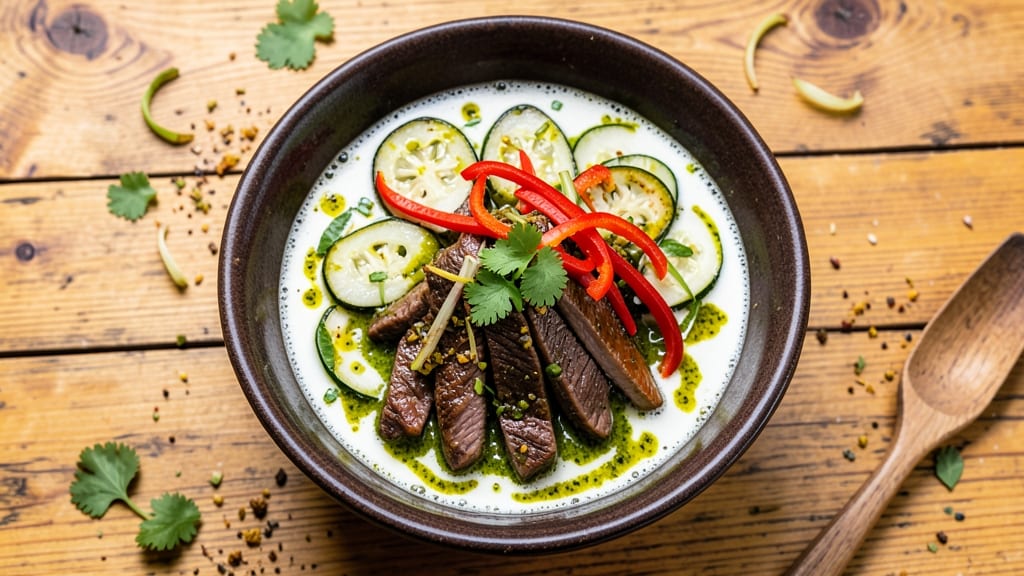
This authentic Thai green beef curry delivers the perfect balance of herbal heat and creamy coconut richness—just like your favorite Bangkok street stall. The secret lies in the green curry paste, where fresh herbs like lemongrass, galangal, and kaffir lime leaf infuse the sauce with bright, aromatic depth.
I've perfected this recipe over years of testing, ensuring every bite captures the soul of Thai cuisine without shortcuts.
The process starts with building the paste from scratch, though store-bought works in a pinch. Simmering it in coconut milk creates a velvety base where sweet, sour, and spicy flavors harmonize—just enough chili heat to linger without overwhelming.
Tender beef strips absorb the fragrant sauce, while Thai eggplants and bell peppers add texture and natural sweetness.
What you'll end up with is a dish that's restaurant-quality at home: vibrant green sauce clinging to perfectly cooked beef, steamed jasmine rice soaking up every drop, and fresh herbs for garnish.
The aroma alone will have everyone gathered around the table, while the first bite delivers that perfect Thai flavor profile—herbal, spicy, and deeply satisfying.
Serve with cucumber salad and lime wedges to balance the richness, or pair it with extra rice for scooping up every last bit of sauce. This curry reheats beautifully, making it ideal for meal prep—just add a splash of water when warming. Let's bring authentic Thai flavors to your kitchen.
Ingredients for authentic thai green beef curry
Authentic Thai flavors start with these fresh ingredients and pantry staples.
| Ingredient | Amount | Notes |
|---|---|---|
| Beef Sirloin 🥩 | 1 ½ lb | Thinly sliced against grain |
| Green Curry Paste 🌶️ | 3 tbsp | Homemade or quality store-bought |
| Coconut Milk 🥥 | 1 can (13.5 oz) | Full-fat for creaminess |
| Thai Eggplant 🍆 | 2 whole | Substitute regular eggplant if unavailable |
| Red Bell Pepper 🌶️ | 1 whole | Sliced into strips |
| Lemongrass 🌿 | 1 whole stalk | Bruised and cut into 2-inch pieces |
| Galangal 🌿 | 1 piece (3-inch) | Substitute ginger if unavailable |
| Kaffir Lime Leaves 🍋 | 4 whole | Bruised for aroma |
| Fish Sauce 🍶 | 2 tbsp | Red Boat brand preferred |
| Palm Sugar 🍯 | 1 tbsp | Substitute brown sugar if unavailable |
| Green Chili Peppers 🌶️ | 2 whole | Adjust for heat preference |
| Jasmine Rice 🍚 | 1 ½ cups | Uncooked, for serving |
| Fresh Thai Basil 🌿 | ¼ cup | For garnish |
| Lime Wedges 🍋 | 2 whole | For serving |
| Salt 🧂 | 1 tsp | Kosher or sea salt |
The green curry paste is where the magic happens—look for Maesri or Thai Kitchen brands if making it from scratch feels overwhelming. Fresh galangal is the secret ingredient (it's like ginger's spicier cousin), but substitute ginger if you can't find it. Lemongrass and kaffir lime leaves are non-negotiable for that authentic aroma—Asian markets usually have them fresh. For the beef, sirloin is ideal—thin slices cook faster and stay tender. If you're feeling adventurous, slice it yourself against the grain for maximum tenderness. The Thai eggplant? It's milder than regular eggplant, but regular eggplant works in a pinch—just expect a slightly different texture.
No fish sauce? Soy sauce works but won't be authentic. Palm sugar unavailable? Brown sugar is fine, though it won't be quite as refined. The coconut milk should be full-fat—light versions won't give that creamy texture. For the chili peppers, Thai bird's eye chilis pack the most heat, but jalapeños or serranos work too. Fresh Thai basil is a must for garnish, but regular basil will do if you're in a bind. The red bell pepper adds a nice crunch—skip it if you prefer a smoother texture. And if you're worried about the galangal substitution, add a pinch of cinnamon to mimic its earthy notes.
This curry reheats beautifully—just add a splash of water or coconut milk to loosen the sauce. Keeps in the fridge for 4-5 days or freeze portions for 3 months. I always double the recipe because it disappears fast. The jasmine rice? Cook it in advance—steamed rice reheats best. And those lime wedges? Don't skip them—they cut through the richness perfectly. The basil and lime should be added fresh at the end, so wait until serving to toss them in.
Why You'll Love This Recipe
- One-Pot Magic: I swear by this recipe—just toss everything into one pot, stir, and walk away. The beef sirloin practically melts into tender perfection while the green curry paste and coconut milk do all the heavy lifting. No chopping chaos, no extra bowls—just pure, satisfying simplicity.
- Herb Bomb Flavor: That first bite? Chef’s kiss. The green curry paste packs a punch with lemongrass, galangal, and kaffir lime—bright, aromatic, and just spicy enough to linger. The Thai eggplant adds a silky texture, while the red bell pepper keeps it fresh. It’s the kind of dish that makes you close your eyes and sigh.
- Weeknight to Dinner Party: Between us, this curry works for everything. Slap it on rice for a lazy Tuesday, or serve it with jasmine rice and lime wedges for guests—it’s equally at home. Honestly, I’ve even used leftover beef to stuff pho bowls the next day. Versatile? Yes. Reliable? Absolutely.
- Leftovers That Don’t Suck: Most curries turn dry or bland after reheating, but not this one. The coconut milk stays creamy, the beef stays juicy, and the flavors only deepen. I make double batches because it’s that good—plus, it’s budget-friendly. A pound of sirloin stretches far, and the veggies keep it light. Win-win.
Step-by-step instructions for authentic Thai green beef curry
Here's how to bring the vibrant flavors of Thailand to your kitchen with this aromatic curry.
Prepare the Aromatics and Protein
Start by slicing the 1.5 lb beef sirloin against the grain into thin strips—about ¼-inch thick. This ensures tender bites that cook quickly in the curry. While you work, prepare the aromatic ingredients: bruise the 1 whole stalk lemongrass and 1 piece (3-inch) galangal by smashing them gently with the side of your knife. Cut the lemongrass into 2-inch pieces and slice the galangal into thin coins. Tear the 4 whole kaffir lime leaves and remove the seeds from the 2 whole green chili peppers, slicing them into rings. These aromatic ingredients will infuse the curry with their signature herbal notes.
Slice the 2 whole Thai eggplant into ½-inch chunks and cut the 1 whole red bell pepper into ½-inch strips. Set all these ingredients aside—they'll be added in stages to balance the dish's flavors. The eggplant and bell pepper add texture while soaking up the rich coconut milk, so don't skip this prep step. Real talk: these aromatics are the soul of the curry, so take your time with this part.
Build the Curry Base
Heat a large, heavy-bottomed pot over medium heat and add 1 tablespoon of oil. Once hot, add the 3 tbsp green curry paste and stir for 1 minute until fragrant—you'll smell the garlic, lemongrass, and coriander blooming. This is where the magic starts. Add the bruised lemongrass, galangal, kaffir lime leaves, and green chili peppers, stirring for another 30 seconds to release their oils. Now add the 1.5 lb sliced beef sirloin and cook for 3-4 minutes, stirring occasionally, until the meat loses its raw color and begins to brown slightly.
Here's the thing—don't rush this step. The beef needs time to develop flavor through browning before the coconut milk comes in. If the paste starts to darken too quickly, reduce the heat slightly to prevent burning. This is the foundation of your curry, so let it develop properly. You'll know it's ready when the beef is no longer pink and the paste has darkened into a rich, aromatic paste.
Simmer with Coconut Milk and Seasonings
Pour in the 1 can (13.5 oz) coconut milk, stirring well to combine with the beef and paste. Add the 1 tbsp palm sugar and 2 tbsp fish sauce, then bring the mixture to a gentle simmer. The curry should bubble softly—if it's too vigorous, reduce the heat. Let it simmer uncovered for 10 minutes, allowing the coconut milk to infuse with the spices and the beef to tenderize.
After 10 minutes, add the 2 whole Thai eggplant and 1 whole red bell pepper. Stir gently to distribute them evenly. The eggplant and bell pepper will absorb the coconut milk and spices, adding a pleasant texture contrast to the creamy curry. Taste the curry at this point—you might need to adjust the seasoning. If it needs more salt, add the 1 tsp salt now. The balance of sweet, salty, and spicy should be harmonious, with the coconut milk providing a velvety backdrop.
Finish and Serve
Continue simmering the curry for another 10-15 minutes, or until the beef is fork-tender and the sauce has thickened slightly. The eggplant should be soft but still hold its shape, and the bell pepper should be tender. If the curry is too thin, simmer uncovered for a few more minutes to reduce it. The consistency should coat the back of a spoon but still be saucy enough to coat the rice.
Remove the pot from heat and stir in the 0.25 cup fresh Thai basil. This adds a bright, herbal finish that cuts through the richness of the coconut milk. Let the curry rest for 5 minutes to allow the flavors to meld. Serve the curry hot over 1.5 cups jasmine rice, garnished with 2 whole lime wedges for a tangy contrast. The lime brightens the dish and balances the creamy, spicy flavors.
This curry is best enjoyed immediately, while the aromas are at their peak. The combination of tender beef, aromatic vegetables, and creamy coconut milk creates a dish that's both comforting and vibrant—a true taste of Thailand. Don't forget to pair it with a cold Thai beer or iced tea for the full experience.
Pro Tips For Making Authentic Thai Green Beef Curry
- Bloom the Paste First: Skip the "add it all at once" move—sauté the green curry paste in oil for 2-3 minutes until it fragrant and slightly darkened. This isn’t just about flavor; it’s how the paste’s oils release properly, so you’re not left with raw, bitter chunks lurking in your curry. (Yes, even if you’re impatient like me.)
- Slice Beef Against Grain: Cut your sirloin into 1-inch strips against the grain—thin enough to cook quickly but thick enough to stay tender. I used to fight this step, but thicker slices turn rubbery while thinner ones overcook in the coconut milk. Aim for ½-inch thickness max.
- Stir in Coconut Milk Slowly: Don’t dump the whole can at once—add coconut milk in two batches, stirring vigorously between each. The first splash will look like it’s separating, but keep going. This breaks up the curry paste properly and prevents a greasy, unbalanced sauce. (Your future self will notice the difference.)
- Char the Eggplant First: Toss Thai eggplant in oil and sear it skin-side down until blackened in spots before adding to the curry. The smoky depth cuts through the coconut milk’s richness, and the texture holds up better than raw slices. (Does it look weird? Yes. Does it work? Every single time.)
Serving suggestions for this authentic thai green beef curry
Rice Pairing Essentials
Jasmine rice is non-negotiable here—its floral aroma and delicate texture soak up the curry's rich sauce perfectly. Cook 1.5 cups uncooked in a rice cooker or pot with 2 cups water for fluffy grains. I like to cook it ahead and keep it warm in a 200°F oven until serving.
For extra authenticity, use Thai-style jasmine rice from brands like Mama's or Koshihikari—these have the ideal balance of stickiness and fragrance. 🍚
Vegetable Sides
A crisp cucumber salad balances the curry's richness with cool, refreshing contrast. Toss 2 cups thinly sliced cucumber with 2 tbsp rice vinegar, 1 tbsp fish sauce, 1 tsp sugar, and 1 minced garlic clove.
For a heartier option, steam bok choy or Chinese broccoli until tender-crisp—these greens add color and a mild bite. Both sides should be served chilled to cut through the creamy sauce.
Garnish Game-Changers
Fresh Thai basil isn't just for looks—it adds a bright, anise-like finish that elevates the dish. Tear ¼ cup leaves by hand and scatter over each serving just before eating. Lime wedges are mandatory for that zesty punch—squeeze them over the curry at the table.
For extra flair, sprinkle with toasted sesame seeds or crushed peanuts (about 2 tbsp) for crunch. The combination of these garnishes turns a good curry into a showstopper.
Beverage Pairings
A cold Thai lager like Singha or Leo cleanses the palate between bites, while Thai iced tea (sweet and creamy) complements the coconut milk beautifully. For non-alcoholic options, try sparkling lime soda or mango lassi—the effervescence cuts through the richness.
Avoid heavy wines; their tannins clash with the curry's herbal notes. The key is something light and refreshing to balance the dish's intensity. 🍺
Presentation Tips
Serve the curry in a wide, shallow bowl to showcase its vibrant green color and aromatic ingredients. Pile the jasmine rice in the center of the plate, then spoon the curry generously over the top.
Arrange garnishes artistically—scatter basil leaves around the edges, place lime wedges on the side, and sprinkle sesame seeds in a circular pattern. The visual appeal makes the dish feel like a restaurant-quality meal, even at home.
Meal Prep Serving
This curry reheats beautifully, but presentation matters even after storage. Warm the curry gently on the stove with 2 tbsp water or coconut milk to restore its sauce consistency. Serve with steamed rice (reheated with a splash of water) and store-bought cucumber salad.
For a quick assembly, keep all components in separate containers—just reheat and plate when ready. The flavors actually improve after resting overnight, so leftovers taste just as good as fresh. ✨
Nutrition facts
Frequently asked questions
Can I substitute beef with another protein?
For a vegetarian version, use tofu or mushrooms (like oyster mushrooms for meaty texture). Chicken works well too—just reduce cooking time to 8-10 minutes after adding coconut milk. Shrimp cooks fastest (3-4 minutes), but add it at the very end to avoid overcooking. The key is tender protein that absorbs the sauce beautifully.
How do I adjust the spice level?
For milder heat, reduce green chili peppers to 1 or remove seeds. For extra spice, add 1-2 extra Thai bird's eye chilis (seeds in) or a pinch of chili flakes. Always taste before serving—you can balance heat with more coconut milk or lime juice. The curry paste already contains chili, so adjustments should be subtle.
Why does my curry taste flat or bland?
This usually happens from undercooking the aromatics or skipping the fish sauce. Let the curry paste bloom for 1 full minute before adding beef, and simmer uncovered to concentrate flavors. If it tastes bland, add ½ tsp more fish sauce or a pinch of salt. Fresh herbs (basil, lime) at the end also brighten flavors dramatically.
Can I make this curry ahead of time?
Yes! The flavors actually improve overnight. Store in an airtight container in the fridge for up to 4 days or freeze for 3 months. When reheating, add 2 tbsp water or coconut milk to restore sauce consistency. The rice should be cooked fresh—never reheat it—so assemble just before serving for the best texture.
What's the best way to store leftover curry?
Cool the curry completely before refrigerating. For long-term storage, freeze in single-serving portions with parchment between layers. When reheating, use low heat and stir occasionally—never microwave directly from frozen. A quick stovetop warm-up with a splash of water preserves the sauce's creamy texture perfectly.