
Sauces & Condiments
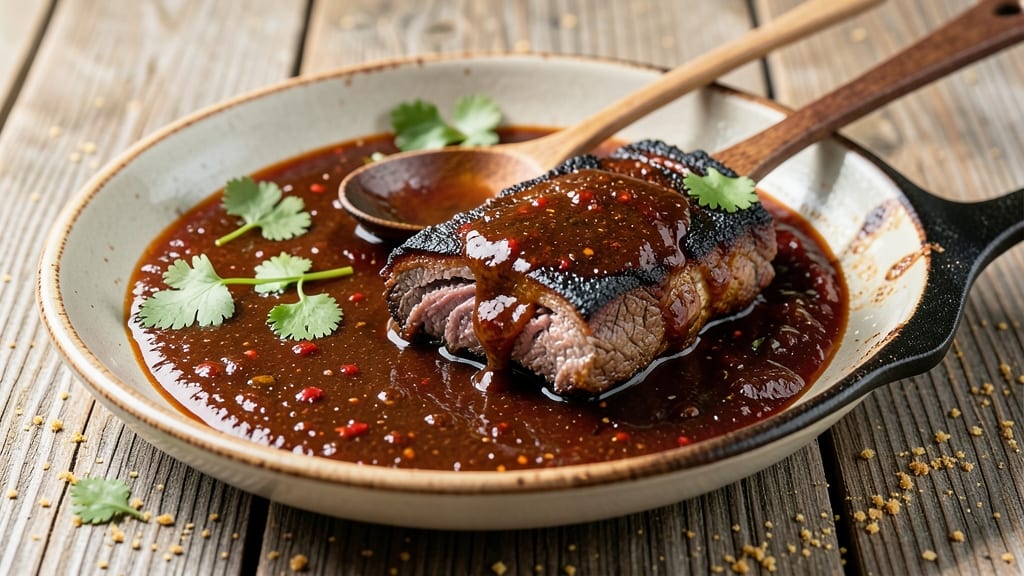
This barbecue sauce recipe for beef ribs transforms your pitmaster game with a smoky-sweet glaze that clings to every rib like a second skin. 🔥 After years of perfecting my rubs and sauces, I developed this sauce specifically for ribs—balancing tangy vinegar, deep molasses richness, and a whisper of cayenne for just the right kick.
The secret lies in slow-simmering the sauce until it thickens to a perfect consistency, ready to lock in flavor during that final smoking phase.
The foundation starts with a classic blend of ketchup, apple cider vinegar, and brown sugar, but it’s the spices that elevate it: smoked paprika for depth, black pepper for heat, and a touch of garlic powder to tie everything together.
I always use molasses instead of corn syrup for that authentic, slightly bitter edge that professional sauces have. This isn’t just any barbecue sauce—it’s the kind that makes ribs fall off the bone while delivering a glaze that’s sticky, glossy, and packed with flavor in every bite.
What makes this sauce truly special is its versatility—it works as a marinade to tenderize ribs before smoking or as a final glaze to caramelize during the last hour.
The slow simmer reduces the sauce to a perfect thickness, ensuring it doesn’t drip off the ribs but instead clings like a sweet, smoky blanket. Once you try this, you’ll never settle for store-bought again.
Store it in the fridge for up to two weeks, or freeze for months—perfect for when you’re craving that deep, smoky-sweet flavor without the fuss. Whether you’re competing in a BBQ contest or just feeding your family, this sauce is the secret weapon that turns good ribs into unforgettable ones.
Ingredients for barbecue sauce recipe for beef ribs
Nine ingredients transform ribs into finger-licking masterpieces—smoky, sweet, and sticky.
| Ingredient | Amount | Notes |
|---|---|---|
| Ketchup 🍅 | 1 ½ cups | High-quality, no artificial additives |
| Apple Cider Vinegar 🍏 | ½ cup | Raw, unfiltered preferred |
| Molasses 🍯 | ½ cup | Unsulphured for authentic flavor |
| Brown Sugar 🍚 | ½ cup | Light or dark, packed |
| Smoked Paprika 🌶️ | 2 tbsp | For that signature smoky depth |
| Garlic Powder 🧄 | 1 tbsp | Freshly ground preferred |
| Black Pepper 🌶️ | 1 tbsp | Freshly cracked for heat |
| Cayenne Pepper 🔥 | ½ tbsp | Adjust for heat preference |
| Onion Powder 🧅 | 1 tbsp | For subtle sweetness |
| Salt 🧂 | 1 ½ tsp | Diamond Crystal preferred |
The ketchup is your flavor base—Heinz or Hunt's are solid, but if you've got a fancy brand, go for it. Apple cider vinegar adds that tangy punch that cuts through the sweetness. I always grab unsulphured molasses from the bulk section at Whole Foods—it gives that authentic, slightly bitter edge that makes this sauce stand out. The smoked paprika? Penzeys or McCormick are my go-tos, but any quality brand works. Pro tip: Toast the spices in a dry pan for 30 seconds before adding—they'll sing with flavor. And don't skimp on the molasses; it's what makes this sauce taste like a pitmaster's secret weapon.
No molasses? Maple syrup or honey in a pinch, but you'll lose that deep, smoky complexity. Short on vinegar? Lemon juice or white vinegar works, but apple cider gives the best balance. The cayenne is where you can play—skip it if you're sensitive to heat, or double it if you want to bring the fire. For the spices, if you've got whole spices like cumin or coriander, toast and grind them fresh—they add a whole new dimension. And if you're feeling fancy, add a dash of liquid smoke (about 1 tsp) for that extra smoky kick without overpowering.
This sauce gets better with time—let it sit for at least 24 hours before using, so the flavors meld. Store it in a glass jar in the fridge for up to 2 weeks, or freeze for 6 months in ice cube trays for easy portioning. I always make a double batch because once you try this, you'll never go back to store-bought. And trust me, the first time you slather this on ribs and see that glossy glaze? Total game-changer.
Why You'll Love This Recipe
- Pantry Magic: I swear by this sauce because it uses stuff I already have—no special shopping needed. That molasses and brown sugar combo? It’s the secret to that deep, caramelized richness without extra effort.
- Sticky-Sweet Perfection: The apple cider vinegar cuts through the sweetness, and the smoked paprika gives it that smoky backbone. Drizzle it on ribs, and you’ve got that glossy, finger-licking glaze that’s ridiculously good.
- Weekend Feast Ready: Make a big batch on Sunday—it’s perfect for ribs, pulled pork, or even grilled chicken. Honestly, I’ve used it for everything from backyard BBQs to lazy Tuesdays when I just want something that tastes like a celebration.
- Budget-Friendly Staple: This sauce costs pennies to make but feels like a splurge. Between us, I’ve stretched one batch over three meals without breaking the bank. Plus, the leftovers? They last forever in the fridge.
Step-by-step instructions for smoky-sweet beef rib sauce
This sauce delivers bold, smoky-sweet depth that clings perfectly to ribs—every step matters for that restaurant-quality finish.
🍳 Step 1: Combine Wet Ingredients for Flavor Foundation
In a medium saucepan, whisk together the 1.5 cups ketchup, 0.5 cup apple cider vinegar, and 0.5 cup molasses over medium-low heat. Bring to a gentle simmer while stirring constantly—this prevents scorching and ensures even blending. The vinegar will sharpen the flavors while the molasses adds that deep, caramel-like richness ribs crave.
Let the mixture simmer uncovered for 5-7 minutes, stirring occasionally, until it thickens slightly. You'll notice the sauce darkening and developing a glossy sheen—this is your signal it's ready for the dry ingredients. I like to taste it now; it should be tangy-sweet with a hint of smokiness from the molasses.
🍳 Step 2: Add Dry Seasonings and Simmer to Perfection
Reduce heat to low and gradually whisk in the 0.5 cup brown sugar, 2 tbsp smoked paprika, 1 tbsp garlic powder, 1 tbsp black pepper, 0.5 tbsp cayenne pepper, 1 tbsp onion powder, and 1.5 tsp salt. Start with a slow stir to dissolve the sugar completely before increasing to medium heat. The smoked paprika is where the magic happens—it infuses that authentic barbecue aroma that makes this sauce unforgettable.
Bring the sauce to a full simmer again, then reduce heat to low-medium and let it bubble gently for 15-20 minutes. Stir occasionally to prevent sticking, and watch for that perfect consistency—it should coat the back of a spoon but still flow smoothly. If it thickens too much, add 1-2 tablespoons of water to maintain balance. The longer it simmers, the deeper the flavors meld.
⏰ Step 3: Cool and Adjust for Ultimate Rib Pairing
Once the sauce reaches your desired thickness (about 15-20 minutes total simmering time), remove it from heat and let it cool for 10 minutes at room temperature. This cooling step is crucial—it allows the flavors to settle and prevents the sauce from being too thin when applied to hot ribs. I always taste it again after cooling; sometimes the heat mellows slightly, so I might add a pinch more salt or cayenne if needed.
For the best results, strain the sauce through a fine-mesh sieve to remove any lumps, then transfer it to a clean jar or container. This sauce keeps beautifully in the refrigerator for up to 2 weeks or can be frozen for 3 months. When ready to use, simply reheat gently over low heat, stirring constantly until warmed through—never boil, or you'll lose that glossy finish.
🔥 Step 4: Apply to Ribs for Maximum Flavor Lock
Brush the sauce generously over ribs during the last 30-45 minutes of cooking, focusing on all surfaces. The high heat of the grill or oven will create that signature caramelized crust while keeping the meat juicy. For extra smokiness, I like to apply a second coat just before serving. The sauce should cling beautifully, creating a glossy, sticky glaze that rivals any store-bought version.
Pro tip: If your ribs are particularly dry after cooking, thin the sauce slightly with 1-2 tablespoons of water before brushing to help rehydrate the meat. This sauce isn't just a topping—it's the finishing touch that transforms good ribs into showstopping centerpieces. Serve with extra sauce on the side for dipping, and you'll have happy guests asking for seconds!
Pro Tips For Making Barbecue Sauce Recipe For Beef Ribs
- Simmer Slow and Low: I learned this the hard way—boiling that sauce too fast makes it taste thin and watery. Keep it at a gentle simmer (small bubbles, barely there) for at least 20 minutes. This lets the molasses and brown sugar caramelize properly, giving you that rich, sticky texture you want on ribs.
- Balance the Vinegar: Apple cider vinegar adds tang, but too much turns your sauce into a mouthful of sour. Start with ¼ cup and taste as you go—you can always add more, but you can’t take it out. If it’s still sharp after simmering, a pinch of brown sugar or a splash of ketchup can mellow it out.
- Skip the Pre-Mixed Ketchup: Store-bought ketchup is fine, but if you’re using it, grab the good stuff—none of that watery, overly sweet junk. Better yet, use crushed tomatoes and a pinch of salt to build your own base. It cuts through the sugar and vinegar, giving your sauce depth instead of just sweetness.
- Strain Out the Grit: Molasses and brown sugar can leave tiny crystals that make your sauce grainy. After simmering, pour it through a fine-mesh strainer or cheesecloth into a clean jar. It’s a little extra work, but your sauce will be silky smooth—no one wants to bite into a gritty glaze on their ribs.
Troubleshooting this recipe
Sauce Too Thin?
If your sauce isn’t thick enough after simmering, don’t panic—this happens when the molasses and vinegar dominate. Reduce heat to low and simmer uncovered for an extra 10-15 minutes, stirring frequently. The moisture will evaporate gradually.
For a quicker fix, mix 1 tablespoon of cornstarch with 1 tablespoon cold water, whisk into the sauce, and simmer for 2-3 minutes until it thickens. I’ve also had success adding 1-2 teaspoons of tomato paste to deepen the flavor while adjusting consistency. 🔥
Sauce Too Thick?
Over-simmering or too much sugar can make your sauce glue-like. Thin it by whisking in 1 tablespoon of water or apple cider vinegar at a time until it reaches a smooth, coatable consistency. For a smoother texture, strain through a fine-mesh sieve to remove any lumps.
Pro tip: If the sauce is too thick when cold, reheat it gently with 1 tablespoon of water—it’ll thin out as it warms. Never force it; patience is key here.
Burnt or Scorched Sauce
Scorching happens when you walk away or use too high heat. Always keep your sauce moving—stir every 1-2 minutes once it starts simmering. If it does burn, remove the pan from heat immediately and scrape off the burnt bits with a rubber spatula.
For a quick fix, whisk in 1 tablespoon of water or vinegar to dilute the burnt flavor, then simmer again. To prevent future burns, use a heavy-bottomed saucepan (like All-Clad) and keep heat at medium-low.
Flavor Too Mild?
If your sauce lacks depth, it might need more acidity or heat. Boost the tang by adding 1 extra tablespoon of apple cider vinegar or a splash of lemon juice. For smokiness, stir in ½ teaspoon of liquid smoke or an extra ½ teaspoon of smoked paprika.
If it’s too sweet, balance it with ¼ teaspoon more cayenne or a pinch of salt. I once rescued a bland batch by adding 1 teaspoon of Worcestershire sauce—it added umami magic. 💡
Sauce Separates or Splits
This usually happens when fats (like from burnt bits) separate from the liquid. Whisk vigorously to re-emulsify, then simmer for 2-3 minutes to blend flavors. For a smoother finish, strain the sauce through a cheesecloth-lined sieve to catch any separated particles.
To prevent separation, avoid boiling the sauce—keep it at a gentle simmer throughout. If all else fails, whisk in 1 teaspoon of honey or molasses to help bind the ingredients.
Ribs Aren’t Sticky Enough
If your sauce isn’t clinging to the ribs, it might be too thin or applied too early. For a glossy glaze, ensure the sauce coats the back of a spoon when cooled. Apply it only in the last 30-45 minutes of cooking when the ribs are hot.
For extra stickiness, brush on a second coat just before serving—the high heat will caramelize it beautifully. If ribs are dry, thin the sauce slightly with water or vinegar before brushing to help rehydrate the meat.
Nutrition facts
Frequently asked questions
Can I use this sauce on other meats besides beef ribs?
This versatile sauce works beautifully on pork ribs, chicken, brisket, and even grilled sausages. The smoky-sweet balance complements rich, fatty meats perfectly. For poultry, reduce the cayenne slightly to avoid overpowering the delicate flavor. I've even used it as a glaze for baked potatoes or drizzled over grilled corn!
How do I adjust the heat level?
Start with the full 0.5 tbsp cayenne pepper for medium heat, then reduce to 0.25 tbsp for mild or increase to 1 tbsp for extra kick. For a smoky heat without spice, add ½ tsp chipotle powder instead. Always taste as you go—you can't overdo it with vinegar or smoked paprika to balance any extra heat.
Can I make this sauce in a slow cooker? Yes! Combine all ingredients in your slow cooker on low heat for 3-4 hours, stirring occasionally. The gentle heat prevents scorching while developing deep flavors. For faster results, use high heat for 2 hours. Just
What's the best way to store leftover sauce?
Transfer cooled sauce to an airtight glass jar and refrigerate for up to 2 weeks. For longer storage, freeze in ice cube trays—perfect for portion control! When reheating, warm gently over low heat with 1 tbsp water to restore glossiness. Never freeze in metal containers as they can react with acidic ingredients over time.
Why does my sauce look different from the photo?
Color variations are normal! Fresh molasses gives a darker hue, while vinegar intensity affects brightness. The perfect sauce should be glossy with a deep reddish-brown color. If yours looks too pale, add 1 tsp tomato paste to deepen it. If too dark, thin with 1 tbsp apple cider vinegar. Remember, flavor matters more than appearance—taste is your best guide!