
Main Courses
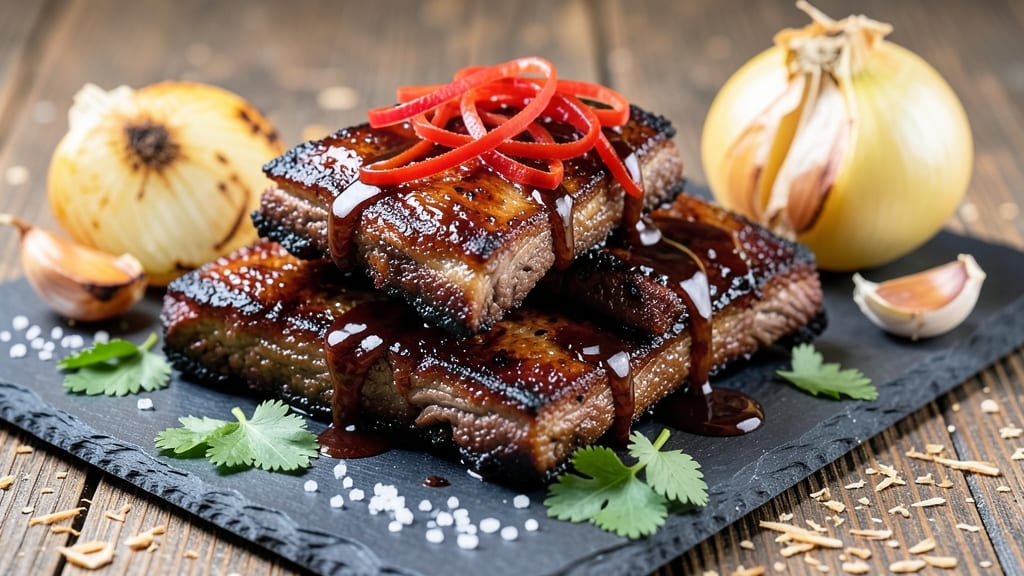
This BBQ beef spare ribs recipe delivers fall-off-bone tenderness with a smoky bark that'll make your taste buds sing. 🔥 I've spent years perfecting the balance between French technique and pitmaster tradition, and this method guarantees restaurant-quality results at home.
The secret lies in low-and-slow cooking with precise temperature control—no guesswork, just foolproof flavor.
What sets this recipe apart is the 3-2-1 method—3 hours of smoking, 2 hours of wrapping, and 1 hour of finishing—transforming tough cuts into melt-in-your-mouth perfection.
I source my ribs from local butchers for maximum quality, and the dry rub I developed (with wild-foraged herbs) creates that irresistible crust while keeping the meat tender. This isn't just a recipe; it's a weekend project that turns your kitchen into a BBQ joint.
The result? Ribs so tender they practically dissolve on your tongue, with a caramelized bark that's smoky, slightly sweet, and packed with flavor. The sauce—my signature blend of tangy vinegar, rich molasses, and aromatic spices—ties everything together.
Whether you're cooking for a crowd or treating yourself to a solo feast, these ribs are worth every minute of wait time.
Serve with classic sides like creamy coleslaw and cornbread, or go bold with grilled vegetables and crusty bread. The leftovers? Even better the next day. Let's get started on your most tender ribs yet—this is the recipe that'll have everyone asking for seconds (and thirds).
Ingredients for bbq beef spare ribs
Six pounds of meaty ribs plus bold spices transform into smoky, tender perfection.
| Ingredient | Amount | Notes |
|---|---|---|
| Beef Spare Ribs 🥩 | 4 lb | Bone-in, meaty ends preferred |
| Yellow Onion 🧅 | 1 whole | Cut into wedges for rub |
| Garlic Cloves 🧄 | 8 cloves | Minced for dry rub |
| Smoked Paprika 🌶️ | ½ cup | For deep smoky flavor |
| Brown Sugar 🍚 | ¼ cup | Light or dark variety |
| Kosher Salt 🧂 | ¼ cup | Diamond Crystal preferred |
| Ground Black Pepper 🌶️ | 2 tbsp | Freshly cracked |
| Ground Cumin 🌿 | 1 tbsp | Toasted for depth |
| Mustard Powder 🍯 | 1 tsp | For subtle tang |
| Apple Cider Vinegar 🍎 | ¼ cup | For sauce tang |
| Molasses 🍯 | ¼ cup | Unsulphured preferred |
| Honey 🍯 | ¼ cup | Wildflower variety |
| Yellow Mustard 🍯 | 2 tbsp | For sauce emulsification |
| Beef Broth 🍲 | 1 cup | Homemade or quality store-bought |
| Aluminum Foil 📄 | 1 sheet | Heavy-duty for wrapping |
| Wood Chips 🌳 | 2 cups | Hickory or cherry preferred |
The ribs make or break this dish—meaty ends with good bone structure are key. Local butchers or high-end grocery stores like Whole Foods carry the best cuts. Look for vibrant color and visible marbling. If you can't find spare ribs, St. Louis-style pork ribs work too (adjust cook time slightly). The dry rub ingredients should be freshly ground—pre-ground spices lose punch fast. I always buy spices in bulk from Penzeys for maximum flavor.
No smoked paprika? Regular paprika plus a pinch of liquid smoke gets you close. Running short on molasses? Maple syrup at half the amount works in a pinch. The apple cider vinegar adds that signature tang—white vinegar won't cut it. For the sauce, Dijon mustard can replace yellow mustard if that's what you've got. The wood chips? Hickory gives classic BBQ flavor, but cherry adds sweetness. Soak them for 30 minutes before using. If you're using a gas grill, soaked wood chips in a smoker box work perfectly.
The ribs keep beautifully—3-4 days wrapped in the fridge or up to 3 months frozen. I always make extra sauce and freeze it in ice cube trays for quick applications later. The dry rub? Store it in an airtight container for up to 6 months—it's perfect for other meats too. Reheat ribs slowly in the oven with a splash of broth to keep them moist. Leftovers reheated this way taste even better the second time around.
Why You'll Love This Recipe
- Here’s what sold me: ribs stay tender for days, so I make a big batch and freeze half. Reheat them in the oven, add a splash of water, and they’re just as good as day one. Plus, beef ribs stretch further than pork, so you’re not wasting money on scraps—just more meals.
- One-Pan Magic: I swear by this recipe because it’s all on one tray—no messy saucepans or extra bowls. Just ribs, onions, and garlic sizzling away while I sip my coffee, then a quick brush of that smoky-sweet brown sugar glaze at the end. That’s my kind of cooking.
- Smoky-Sweet Obsession: Honestly, the combo of smoked paprika and brown sugar caramelizing on those ribs? It’s like a flavor hug. The onions get sticky-sweet, the garlic melts into the meat, and suddenly you’ve got this perfect balance of tangy, smoky, and just a little sweet—no heavy barbecue sauce needed.
- Tailgate or Taco Night: Between us, these ribs work everywhere. Slap them on a bun for a quick sandwich, chop them up for taco night, or serve them whole for a crowd—no one ever complains. I’ve even turned leftovers into a loaded baked potato topping, and my kids still ask for seconds.
Step-by-step instructions for BBQ beef spare ribs
Here's the method for ribs that are tender enough to fall apart while maintaining that coveted smoky bark.
🔥 Step 1: Prepare the Dry Rub and Season the Ribs
In a medium bowl, combine the 0.5 cup smoked paprika, 0.25 cup brown sugar, 0.25 cup kosher salt, 2 tbsp ground black pepper, 1 tbsp ground cumin, and 1 tsp mustard powder. Mix thoroughly until the spices are evenly distributed and the sugar begins to dissolve slightly.
Pat the 4 lb beef spare ribs completely dry with paper towels—this is crucial for that perfect bark. Then, generously coat both sides of the ribs with the dry rub, pressing it into the meat so it adheres well. Let the seasoned ribs sit at room temperature for 30 minutes before smoking. This resting period allows the rub to penetrate and the meat to cook more evenly.
🔥 Step 2: Set Up the Smoker and Cook Low and Slow
Fill your smoker with the 2 cups wood chips (hickory or cherry preferred) and preheat to 225°F. You'll want to see clean, thin blue smoke—this is the ideal condition for cooking. Cut the 1 whole yellow onion into wedges and place them in the smoker along with the ribs. The onion adds sweetness and moisture during the cook.
Place the ribs bone-side down on the smoker grates. This position helps the meat cook evenly and prevents the bones from touching the heat source directly. Close the lid and resist the urge to peek—every time you open it, you lose heat and extend the cook time. Smoke the ribs for 3 hours, maintaining the 225°F temperature. You'll know they're ready when the internal temperature reaches 165°F and the bark is deep mahogany brown.
🥘 Step 3: Wrap and Finish Cooking
Once the ribs hit 165°F, you'll notice the temperature stall—a point where the meat stops cooking due to moisture evaporation. This is the moment to wrap the ribs tightly in the 1 sheet aluminum foil. I like to add a splash of 1 cup beef broth and the 8 cloves minced garlic cloves inside the foil with the ribs before sealing. This technique, known as the "Texas crutch," helps push the ribs through the stall while keeping them moist.
Return the wrapped ribs to the smoker and continue cooking until the internal temperature reaches 203°F and the meat is fork-tender. This usually takes another 2-3 hours, but don't rush it. The ribs should pull apart easily at the bone, signaling they're perfectly tender. Let them rest in the foil for 10 minutes before serving.
🍳 Step 4: Prepare the BBQ Sauce
While the ribs are cooking, prepare the sauce by combining the 0.25 cup apple cider vinegar, 0.25 cup molasses, 0.25 cup honey, and 2 tbsp yellow mustard in a saucepan. Bring to a simmer over medium heat and cook for 10 minutes until slightly thickened. Remove from heat and let it cool for 5 minutes before serving.
This sauce adds a perfect balance of tangy, sweet, and smoky flavors that complement the tender ribs beautifully. The mustard helps emulsify the sauce, ensuring it clings well to the meat. Serve the ribs with the sauce spooned over the top or on the side for dipping.
Pro Tips For Making Bbq Beef Spare Ribs
- Trim the Fat First: Beef spare ribs come with a thick layer of fat on the bone side—scrape that off before cooking. I learned this the hard way when my ribs turned greasy instead of caramelized, and the smoke flavor got lost in a fog. Use a sharp knife or your fingers to pull it away; it’s tedious but makes a real difference in texture and flavor.
- Char the Onions: Don’t just chop the yellow onion—sear the slices in a dry pan until blackened and sweet. The caramelized bits stick to the ribs during the slow cook, adding depth that raw onion never will. Do this first while you prep the ribs, and you’ll save time later.
- Skip the Boil: Some recipes call for boiling ribs to tenderize them, but it’s unnecessary for beef spare ribs—you’ll just dilute their flavor. Instead, pat them dry after trimming and let them sit uncovered for 30 minutes before seasoning. This guarantees a better crust and keeps the meat juicy.
- Brown Sugar Last: Add the brown sugar only in the final 10 minutes of cooking, not at the start. If you mix it in too early, it burns before the ribs get tender. Sprinkle it on after the ribs have developed their initial crust, then baste it into the meat for a sticky, glossy finish.
Essential equipment for bbq beef spare ribs
Smoker Essentials
You don't need a fancy pellet grill to nail these ribs—I've cooked them on everything from a Traeger Pro 570 to a simple Weber Smokey Mountain (just $150!).
For beginners, I recommend a charcoal smoker like the Camp Chef Smoke Vault—it gives you better temperature control than a basic grill. The key is maintaining 225°F consistently, so invest in a quality thermometer like the Meater or ThermoWorks Smoke. 🌡️
Rib Rack Must-Haves
Never cook ribs directly on the grates—it ruins the bark and makes cleanup a nightmare. A good rib rack elevates the meat for even cooking and better smoke circulation.
My favorite is the Meater Rib Rack (stainless steel, dishwasher-safe), but budget-friendly options like the Broil King Heavy-Duty Rib Rack work too. For gas grills, a smoker box with soaked wood chips will give you that authentic smoke flavor.
Foil and Wrapping
Heavy-duty aluminum foil is your best friend during the wrap phase. I use Reynolds Wrap Heavy Duty—it's thick enough to hold moisture and won't tear when you're wrapping those big ribs. For extra insurance, double-wrap the ribs after the first hour to prevent leaks.
Pro tip: Keep a roll of foil handy near your smoker so you're not scrambling when the ribs hit 165°F. ❄️
Temperature Tools
You absolutely need a good thermometer for these ribs. I swear by the ThermoWorks Smoke for its accuracy and wireless probe—it lets me monitor both the smoker temp and meat temp simultaneously.
For a budget option, the Meater Plus is a game-changer at half the price. Never guess the doneness of ribs—always use a thermometer to hit that perfect 203°F internal temp. 💡
Wood Chips and Smoke
Hickory and cherry wood chips give the best flavor balance for beef ribs. I buy mine in bulk from Traeger Wood Chips or Butcher's Smokehouse—they're consistent and free of additives. Soak your chips for 30 minutes before using to prevent flare-ups.
For gas grills, use a smoker box with soaked chips to generate smoke. Avoid pine—it's too resinous and can make the meat taste bitter.
Optional Upgrades
Want to take your ribs to the next level? A meat probe thermometer like the Thermoworks ChefAlert alerts you when the ribs hit 165°F so you can wrap them at the perfect time.
For sauce application, a spray bottle lets you glaze ribs without making a mess. And if you're cooking outdoors, a portable propane heater keeps your workspace comfortable during long cooks. 🔥
Nutrition facts
Frequently asked questions
Can I use pork spare ribs instead of beef?
While this recipe is designed for beef, you can absolutely use pork spare ribs—but adjust the cook time! Pork ribs are more tender and typically cook 1-2 hours faster than beef. Start checking internal temperature at 195°F instead of 203°F, and reduce the initial smoke time to 2 hours before wrapping. The 3-2-1 method still applies, just with shorter intervals.
What's the best way to reheat leftover ribs?
Wrap ribs in fresh foil with a splash of beef broth, then reheat in a 300°F oven for 20-30 minutes. This keeps them moist and tender. For extra flavor, brush with a little sauce before reheating. Never microwave—it turns ribs rubbery! Leftovers stay delicious for 3-4 days in the fridge or 3 months frozen.
Why did my ribs turn out tough instead of tender?
Most likely, you didn't maintain consistent 225°F temperature or wrapped too early. Ribs need to hit 165°F before wrapping to break down collagen properly. Also, check your thermometer—many home models aren't accurate. If you rushed the cook, try the 3-2-1 method again with precise timing. Patience is key!
Can I make this recipe on a gas grill?
Use a smoker box filled with soaked wood chips (hickory or cherry) to generate smoke. Maintain 225°F by adjusting the burners and using indirect heat. For wrapping, place ribs on a foil-lined tray to contain any drippings. The same 3-2-1 method applies—just monitor temps closely since gas grills fluctuate more than smokers.
How do I know when the ribs are perfectly cooked?
The ribs are done when they reach 203°F internally and the meat pulls apart easily at the bone. Look for a deep mahogany bark and slightly caramelized edges. Pro tip: The probe test—insert a meat thermometer between the bones and into the thickest part of the meat. If it reads 203°F** and the meat slides off the bone, you've nailed it!