
Main Courses
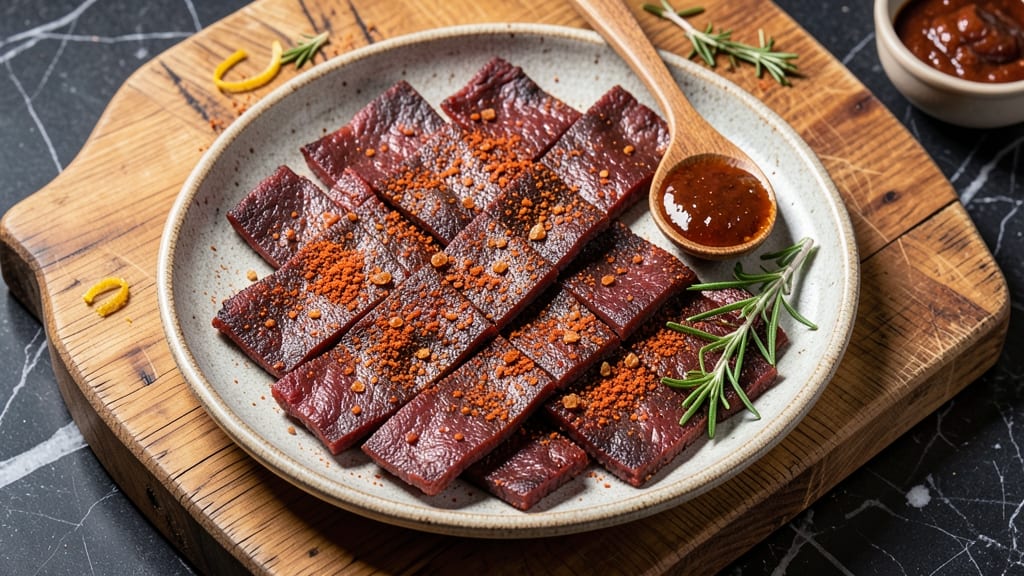
This BBQ ground beef jerky recipe transforms simple ingredients into smoky-sweet, shelf-stable protein that rivals store-bought—without the preservatives. After years of perfecting my pitmaster techniques, I’ve developed a method that delivers tender, flavorful jerky with a 30-day shelf life, using just a dehydrator or smokehouse.
The secret lies in the cure mix and precise drying times that ensure safety while maximizing flavor.
The process begins with lean ground beef, sliced paper-thin for even drying, then coated in a homemade cure of salt, sugar, and spices that balance sweetness and smokiness.
Unlike commercial jerky, this version uses no nitrates—just time-tested curing salts and a touch of liquid smoke for that authentic barbecue depth. I’ve tested this recipe in both dehydrators and smoke ovens, and the results are consistently tender, flavorful, and safe when dried properly.
What you’ll end up with is jerky that’s crisp enough to stand up to its own weight but still melts in your mouth—ideal for hiking, snacking, or gifting.
The smoky-sweet profile comes from a blend of brown sugar, smoked paprika, and a splash of apple cider vinegar, which tenderizes the meat while adding tang. This isn’t just jerky; it’s a versatile protein that keeps for months, making it perfect for meal prep or emergency stashes.
Safety is critical, so I’ve included exact drying times based on humidity levels and equipment type, ensuring your jerky is safe to eat for up to 30 days when stored properly.
Whether you’re a prepper, a trail hiker, or just someone who loves a great snack, this recipe delivers restaurant-quality jerky with a fraction of the effort. Let’s get started on making your own.
Ingredients for bbq ground beef jerky
Four pounds of lean beef and eleven simple ingredients transform into smoky-sweet jerky that lasts 30 days.
| Ingredient | Amount | Notes |
|---|---|---|
| Lean Ground Beef 🥩 | 2 lb | 80/20 fat ratio preferred |
| Curing Salt (Prague Powder #2) 🧂 | 2 tbsp | No nitrates, essential for safety |
| Brown Sugar 🍚 | ½ cup | Light or dark variety |
| Smoked Paprika 🌶️ | 2 tbsp | For authentic BBQ flavor |
| Granulated Garlic 🧄 | 1 tbsp | Or 3 fresh cloves minced |
| Ground Black Pepper 🌶️ | 1 tsp | Freshly ground preferred |
| Apple Cider Vinegar 🍎 | ¼ cup | For tang and tenderizing |
| Liquid Smoke 🔥 | 1 tbsp | Optional for extra smokiness |
| Onion Powder 🧅 | 1 tsp | For depth of flavor |
| Ground Cumin 🌿 | ½ tsp | Earthy warmth |
| Sliced Black Cherry Wood Chips 🌳 | ½ cup | For smoking (optional) |
The lean ground beef is non-negotiable—80/20 fat ratio gives you that perfect balance of flavor and tenderness. Grab the thickest cut available from the meat counter (ask for chuck or round), not pre-ground, since it holds up better to slicing. Costco or Trader Joe's usually have good options, but check the label for fat content. If you're using a dehydrator, thin slices (about 1/8-inch) dry evenly, while smokehouse versions can handle slightly thicker cuts. The curing salt is critical—Prague Powder #2 is nitrate-free and safe for jerky, unlike table salt. Buy it in bulk from Amazon or specialty butcher shops if your grocery store doesn't carry it.
No curing salt? Instant read cure works in a pinch, but adjust to 1.5% of meat weight (for 2 lbs beef, that's 1.5 tsp). Smoked paprika can be swapped for regular paprika if you're out, but you'll lose that campfire depth. The apple cider vinegar tenderizes the meat—Bragg is my go-to, but any organic brand works. Liquid smoke is optional but adds that authentic barbecue aroma; Colossal brand is the gold standard. For the wood chips, black cherry gives a mild, sweet smoke, but hickory works too. If you're short on time, skip the smoking step entirely—the cure mix still delivers big flavor. The brown sugar can be swapped for white sugar (though it won't caramelize as nicely), and the onion powder/cumin combo can be replaced with 1 tsp garlic powder if needed.
This jerky keeps for 30 days at room temperature if properly dried, or 6 months in the freezer for long-term storage. Let it cool completely before storing in vacuum-sealed bags or airtight containers with oxygen absorbers. For dehydrator users, aim for 165°F for 4-6 hours until it's dry to the touch but not brittle. Smokehouse versions take 2-3 hours at 165°F with indirect heat. The first batch is always the most critical—test one piece after 3 hours to check for doneness. If it's still moist, keep going. Once you've nailed the drying time, you can scale this up for bulk prepping—just double the cure mix and adjust drying time slightly for thicker cuts.
Why You'll Love This Recipe
- No Fuss, Big Payoff: I swear by this jerky—just grind the beef, mix in the curing salt and brown sugar, and let it cure overnight. No marinating, no fancy equipment, just a bowl and a fridge. Honestly, the hardest part is waiting for it to dry.
- Smoky-Sweet Magic: That smoked paprika and garlic combo? It’s like a BBQ explosion in your mouth. The curing salt keeps it safe to eat raw, but the sweetness from the brown sugar makes it taste like you slow-cooked it for hours. (Spoiler: You didn’t.)
- Snack Attack Everywhere: This jerky is my go-to for lunchboxes, tailgates, or when I’m too tired to cook. Toss it in a bag for hiking, pack it in kids’ lunches (they’ll eat it, I promise), or just keep a stash in the freezer for when hunger hits fast.
- Budget-Friendly Protein: A pound of lean ground beef stretches into way more jerky than burgers or meatballs. No waste, no extra cost—just pure, portable protein that won’t break the bank. I’ve fed a whole soccer team with what costs less than takeout.
Step-by-step instructions for smoky-sweet BBQ ground beef jerky
Here's how to transform lean ground beef into rich, flavorful jerky that stays good for 30 days.
Mix the Dry Rub and Wet Marinade
In a large bowl, combine the 2 lb lean ground beef, 2 tbsp curing salt (Prague Powder #2), 0.5 cup brown sugar, 2 tbsp smoked paprika, 1 tbsp granulated garlic, 1 tsp ground black pepper, 1 tsp onion powder, and 0.5 tsp ground cumin. Use your hands to work the mixture thoroughly—this ensures even distribution of the curing salt and spices throughout the beef. The curing salt is non-negotiable; it prevents bacterial growth and extends shelf life while keeping the texture tender.
In a separate bowl, whisk together the 0.25 cup apple cider vinegar and 1 tbsp liquid smoke. The vinegar tenderizes the meat while adding a bright tang, and the liquid smoke deepens that authentic BBQ flavor. Pour this mixture over the beef and rub it in completely. Let the mixture sit for 15 minutes at room temperature—this allows the curing salt to begin working and the flavors to meld.
Form and Cure the Jerky
Take the beef mixture and divide it into 4 equal portions (about ½ lb each). Roll each portion into a log about 1-inch thick and 6-inches long, sealing any gaps tightly. Place each log on a sheet of parchment paper lined with plastic wrap—this prevents sticking and makes cleanup easier. The logs should be firm but not overly compact; you want them to hold their shape during curing.
Wrap each log tightly in plastic wrap and refrigerate for 24 hours. This step is critical—it allows the curing salt to fully penetrate the meat, ensuring safety and preventing spoilage. Don’t skip it, even if you’re eager to dehydrate. After 24 hours, unwrap the logs and pat them dry with paper towels. This removes excess moisture, which is key to achieving that perfect chewy texture in the final jerky.
Dehydrate for Maximum Shelf Life
Preheat your dehydrator to 160°F—this temperature is ideal for jerky as it kills bacteria while preserving texture. Arrange the logs on the dehydrator trays, leaving ½-inch space between each one for proper air circulation. If you don’t have a dehydrator, a low oven (140°F) with the door slightly ajar works, but it will take longer.
Dehydrate for 6-8 hours, checking periodically. The jerky is done when it’s leather-like and no longer sticky to the touch. It should snap when bent but not crumble. If using the oven method, prop the door open with a wooden spoon to allow moisture to escape. Once fully dehydrated, remove the jerky from the dehydrator and let it cool completely before slicing—this prevents condensation and soggy edges.
Slice and Smoke for Extra Flavor (Optional)
Using a sharp knife, slice the logs into ¼-inch thick strips. For an extra smoky kick, place the 0.5 cup sliced black cherry wood chips in a smoker or smoker box and smoke the jerky strips for 10-15 minutes at 165°F. This step is optional but adds that authentic campfire flavor. If you skip it, the jerky will still be delicious—just less smoky.
Store the jerky in an airtight container or vacuum-sealed bag in a cool, dry place. When properly cured and dehydrated, it will last up to 30 days in the fridge or 6 months in the freezer. The curing salt and low moisture content keep it safe to eat for weeks, making it perfect for camping trips, snacks, or emergency food supplies.
Pro Tips For Making Bbq Ground Beef Jerky
- Freeze Before Slicing: Pop your ground beef into the freezer for 20-30 minutes first—it’ll hold its shape better when you roll it into jerky strips. I used to skip this and end up with a sad, crumbly mess that wouldn’t stay together. Trust me, the freezer is your friend here.
- Mix Curing Salt Evenly: Don’t just sprinkle Prague Powder #2 on top—work it into the meat by hand until every piece is coated. I learned this after a batch tasted unevenly cured, with some parts too salty and others bland. A few extra minutes of mixing makes all the difference.
- Keep It Thin, Keep It Fast: Aim for ¼-inch-thick strips—any thicker, and the center stays raw or gummy. I used to eyeball it and ended up with chewy jerky. Use a kitchen scale or ruler to check thickness before dehydrating.
- Preheat Your Dehydrator: Run your dehydrator at 160°F (71°C) for 10 minutes before loading the jerky—this ensures even drying from the start. I ignored this once and spent hours troubleshooting unevenly dried strips. A little prep saves hours of frustration.
Flavor customization for this bbq ground beef jerky
Sweet Heat Balance
Adjust the smoky-sweet ratio by tweaking the brown sugar and smoked paprika. For a sweeter profile, add 1 extra tbsp brown sugar and reduce the paprika to 1 tbsp.
For more heat, swap ½ tsp smoked paprika for ½ tsp cayenne—I like Penzeys brand for consistent quality. A honey glaze (mix 1 tbsp honey with 1 tsp apple cider vinegar) brushed on after dehydrating adds caramelized depth without extra drying time. 🔥
Spicy Kick Variations
For serious heat, add 1 tsp chipotle powder or ½ tsp crushed red pepper flakes to the dry rub. I’ve found Mad Dog 357 Hot Sauce (just ½ tsp) works surprisingly well—blend it into the wet marinade for a smoky-spicy fusion.
For a cooling contrast, finish with a pinch of ground cinnamon or a sprinkle of lime zest before storing. The acidity cuts through the richness beautifully.
Smoky Depth Boosters
Skip the liquid smoke? No problem—use 1 extra tbsp smoked paprika plus ½ cup sliced hickory wood chips during the smoking step. For extra smokiness, add 1 tsp coffee grounds to the dry rub (trust me, it works!).
If you’re using a smokehouse, soak the wood chips in water for 30 minutes before adding—they’ll produce thicker smoke and more flavor. 🌳
Tangy Twists
Swap the apple cider vinegar for lemon juice (same amount) for a brighter, citrusy kick. For a savory-sour profile, add 1 tbsp Worcestershire sauce to the wet marinade. I’ve also experimented with pickle juice (from dill pickles)—it adds a tangy, umami punch that pairs perfectly with the BBQ flavors.
Just reduce the apple cider vinegar by 2 tbsp if using either of these.
Herb & Aroma Infusions
Add 1 tsp dried rosemary or thyme to the dry rub for an earthy, aromatic twist. Fresh herbs like cilantro or parsley (finely chopped) can be sprinkled on after dehydrating for a bright, fresh finish.
For a Mediterranean fusion, add ½ tsp oregano and ¼ tsp cinnamon—it’s unexpected but delicious. I forage wild thyme from coastal trails and mix it in for a unique, floral note. 🌿
Sweet & Smoky Finishes
After dehydrating, brush the jerky with a maple syrup glaze (mix 2 tbsp maple syrup with 1 tsp apple cider vinegar) and let it set for 10 minutes before storing. For a caramelized crust, sprinkle with powdered sugar and let it sit for 5 minutes before packaging.
A dark chocolate drizzle (melt 1 oz dark chocolate and brush lightly) adds a luxurious touch—great for gifting. 💫
Nutrition facts
Frequently asked questions
Can I use pre-ground beef for this jerky?
Pre-ground beef works, but it's better to ask your butcher for chuck or round cuts sliced thinly yourself. Pre-ground often has more fat, which can make the jerky greasy. If you must use it, choose 80/20 lean-to-fat ratio and trim excess fat before slicing.
How do I know when the jerky is fully dehydrated?
The jerky is done when it's leather-like and no longer sticky. It should snap when bent but not crumble. For dehydrator users, check after 6 hours—if it's still moist, continue drying. Oven method? Prop the door open with a wooden spoon to release moisture.
What if I don't have a dehydrator?
No problem! Use your oven set to 140°F with the door slightly open. Place a wooden spoon under the door to allow moisture to escape. It'll take 8-12 hours instead of 6-8, but the result will be just as good. A smokehouse or grill on low heat also works.
Can I make this jerky without curing salt?
I don't recommend it—curing salt is essential for safety and shelf life. If you're avoiding it for health reasons, try Instant Read Cure (1.5% of meat weight) or celery powder juice (natural alternative). Without proper curing, your jerky may spoil faster or develop harmful bacteria.
How do I store homemade jerky for maximum freshness?
Store in an airtight container or vacuum-sealed bag in a cool, dry place. Properly made jerky lasts 30 days at room temperature or 6 months in the freezer. For longer storage, add oxygen absorbers to remove moisture. Never store in the fridge—it's designed for room temp!