
Soups & Stews
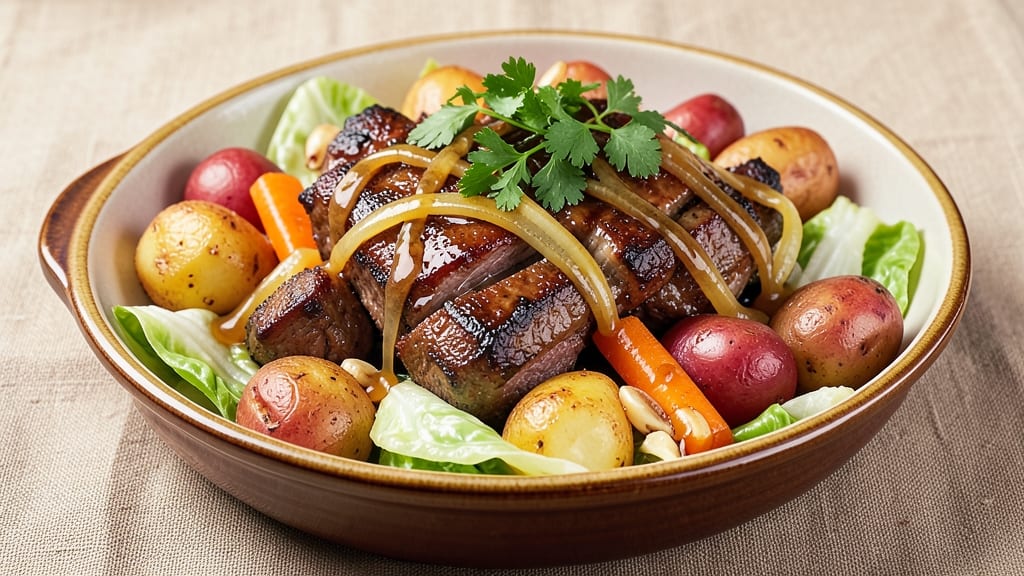
This beef and green cabbage recipe transforms humble ingredients into a hearty, flavorful dish that balances tender beef with crisp, fresh cabbage and golden potatoes. The secret lies in slow-braising the beef until it's fork-tender while keeping the cabbage vibrant and slightly crisp—no mushy texture here.
What starts as a simple combination becomes a restaurant-worthy meal with layers of savory depth and satisfying textures.
I developed this recipe after realizing how often green cabbage gets overlooked in favor of its purple cousin, yet it holds its own with a peppery bite that cuts through rich beef flavors.
The potatoes get crispy tops from a high-heat finish, adding another dimension to each bite. This isn't just a stew—it's a complete dish where every component plays its part.
What makes this recipe work is the balance: beef braised until fall-apart tender, cabbage sautéed just enough to soften without losing its snap, and potatoes that achieve that perfect crispy crust.
The result is a dish that feels both comforting and refined, perfect for weeknight dinners or when you want to impress without fuss.
Whether you're serving a family or hosting guests, this recipe delivers on flavor and texture. The beef absorbs the aromatic braising liquid, the cabbage adds freshness, and the potatoes bring that satisfying crunch.
Ready in about 2 hours with minimal active time, it's the kind of meal that makes cooking worthwhile.
Ingredients for beef and green cabbage
Fork-tender beef, vibrant cabbage, and crispy potatoes—this savory braise brings restaurant flavors home.
| Ingredient | Amount | Notes |
|---|---|---|
| Beef Chuck Roast 🥩 | 1 ½ lb | Cut into 1.5-inch cubes |
| Green Cabbage 🥬 | 1 whole | Core removed, cut into wedges |
| Yukon Gold Potatoes 🥔 | 1 ½ lb | Cut into 1-inch chunks |
| Yellow Onion 🧅 | 1 whole | Chopped, medium dice |
| Garlic Cloves 🧄 | 4 cloves | Minced for depth of flavor |
| Carrots 🥕 | 3 medium | Peeled, cut into chunks |
| Beef Broth 💧 | 2 cups | Low-sodium preferred |
| Red Wine 🍷 | ½ cup | Dry, like Cabernet Sauvignon |
| Tomato Paste 🍅 | 2 tbsp | Smooth, not chunky |
| Olive Oil 🫒 | 2 tbsp | Extra-virgin for richness |
| Fresh Thyme 🌿 | ½ oz | Leaves only, stems removed |
| Bay Leaves 🍃 | 2 whole | Dried, for aromatic depth |
| Salt 🧂 | 1 ½ tsp | Kosher or sea salt |
| Black Pepper 🌶️ | ½ tsp | Freshly ground for heat |
| All-Purpose Flour 🌾 | 1 tbsp | For crispy potato tops |
The beef is the foundation, so chuck roast is non-negotiable—it stays tender while absorbing flavors. Look for good marbling at Costco or Whole Foods for the best texture. Green cabbage should be firm with crisp leaves; avoid any with yellowing or wilted spots. For the potatoes, Yukon Golds are ideal—they caramelize beautifully. If you can't find them, Russets work too, but they'll be less creamy. The carrots can be baby carrots if that's what's in the fridge, but regular carrots add more rustic texture.
No red wine? Substitute beef broth with a splash of balsamic vinegar—it mimics the acidity. Fresh thyme is best, but dried thyme at one-third the amount works in a pinch. If tomato paste feels like overkill, crushed San Marzano tomatoes from a can add natural sweetness. For the potatoes, skip the flour if you're gluten-sensitive—just a sprinkle of salt and a quick sear in olive oil gives great crispiness. The beef broth should be low-sodium to avoid over-salting the dish.
This braise tastes even better the next day as flavors meld. Store in an airtight container in the fridge for up to 5 days. For longer storage, freeze portions for 3 months. I like to reheat individual servings in a skillet with a splash of broth to revive that crispy potato top. The cabbage and carrots can be prepped ahead and stored separately—just toss them into the braising liquid when you're ready to cook. Leftovers reheat beautifully, making this a great make-ahead meal for busy weeknights.
Why You'll Love This Recipe
- One-Pot Magic: I swear by this recipe when I’m too tired to scrub pots—just toss everything in one deep skillet, cover it, and let the beef and cabbage steam into tender perfection. The potatoes soak up all the juices, and the cabbage gets that just-right softness without wilting into mush.
- Garlic-Crusted Goodness: That beef chuck roast? It practically melts when slow-cooked, and the garlic cloves—roasted right in the pan—add a deep, caramelized punch that makes every bite unforgettable. Honestly, the aroma alone is worth the effort.
- Leftovers That Shine: Between us, this dish tastes better the next day. The flavors meld overnight, and I’ve turned last night’s dinner into tomorrow’s lunch with zero extra work—just reheat and serve. My kids even ask for it, and that’s saying something.
- Budget-Friendly Feast: A single chuck roast and a whole cabbage stretch across multiple meals, and the potatoes? They’re the ultimate filler. I’ll be real: this recipe saved me from takeout nights when groceries were tight, and it still feels like a special meal.
Step-by-step instructions for savory beef and green cabbage braise
Here's the method for creating a rich, hearty beef braise with tender cabbage and crisp-topped potatoes.
Sear the Beef Chuck Roast for Deep Flavor
Heat 1 tablespoon of the olive oil in a large Dutch oven over medium-high heat until shimmering. Working in batches to avoid crowding, add the 1.5 lb beef chuck roast cut into 1.5-inch cubes and sear for 2-3 minutes per side until deeply browned. This step is crucial—browning develops the Maillard reaction that creates complex flavors in the braise.
As you sear, sprinkle the beef with 1 teaspoon of the salt and ¼ teaspoon of the black pepper. Once all the beef is browned, transfer it to a plate and set aside. The residual fat in the pot will form the base for your braise, so don't wipe it clean. If needed, add the remaining 1 tablespoon olive oil to the pot.
Build the Aromatic Vegetable Base
Add the chopped yellow onion and peeled carrots cut into chunks to the Dutch oven. Cook over medium heat for 5-6 minutes, stirring occasionally, until the vegetables soften slightly and begin to caramelize. This process deepens their natural sweetness and forms the flavor foundation.
Stir in the minced garlic cloves and cook for 30 seconds until fragrant—don't let it burn, as it will turn bitter. Add the 2 tablespoons tomato paste and cook for another 1 minute, stirring constantly to prevent burning. This creates a rich, concentrated base that will thicken your braise beautifully.
Deglaze and Simmer the Braise
Pour in the ½ cup red wine and scrape up any browned bits from the bottom of the pot with a wooden spoon. This deglazing step captures all the flavor you worked so hard to create. Let the wine simmer for 2-3 minutes until it reduces by half and the alcohol burns off.
Add the 2 cups beef broth, green cabbage wedges, 2 whole bay leaves, and ½ ounce fresh thyme leaves to the pot. Stir well, then return the beef to the Dutch oven. Bring the mixture to a gentle simmer, then reduce heat to low and cover partially. Let it cook for 1 hour 30 minutes to 2 hours, until the beef is fork-tender and the cabbage is tender but still holds its shape.
Prepare the Crisp-Topped Potatoes
While the beef braise simmers, heat 1 tablespoon olive oil in a large oven-safe skillet over medium heat. Add the 1.5 lb Yukon Gold potatoes cut into 1-inch chunks and cook for 10-12 minutes, stirring occasionally, until they begin to brown in spots. This creates the crispy tops we want.
Sprinkle the potatoes with the remaining ½ teaspoon salt and ¼ teaspoon black pepper, then transfer the skillet to a 400°F preheated oven. Bake for 20-25 minutes until the potatoes are fork-tender and the tops are crispy and golden brown. Remove from the oven and keep warm.
Finish and Combine the Dish
Once the beef is tender, remove the bay leaves and thyme stems from the braise. Taste and adjust seasoning with additional salt and pepper if needed. The braise should be rich and flavorful with a slightly thickened consistency. If it's too thin, remove the lid and simmer for another 5-10 minutes to reduce.
To serve, transfer the beef and cabbage to a large platter. Spoon the braising liquid over the top, then arrange the crisp-topped potatoes alongside. The contrast of the tender beef and cabbage with the crispy potatoes creates a satisfying texture combination. Serve immediately while everything is hot.
Pro Tips For Making Beef And Green Cabbage
- SEAR THE ROAST FIRST: That chuck roast won’t self-baste into flavor—get it screaming hot in a dry skillet with 2 tablespoons of oil for 4-5 minutes per side before anything else. I used to skip this and ended up with bland beef that needed sauce to save it. (Yes, even if you’re impatient like me.)
- SHRED THE CABBAGE COARSELY: No tiny matchsticks—cut the green cabbage into 1-inch chunks, then slice those chunks into thick wedges. They’ll soften faster and hold their shape better than shredded cabbage that turns to mush. (Your future self will thank you.)
- ADD POTATOES LATE: Toss them in with the cabbage and onions only in the last 15-20 minutes of cooking. I learned this the hard way—adding them early turns them to glue, and nobody wants that. (Your mashed potatoes side will also be less sad.)
- USE COLD WATER FOR POTATOES: Soak the Yukon Golds in cold water for 30 minutes before cooking to remove excess starch. They’ll absorb flavors better and won’t turn gummy. (This isn’t the prettiest method, but it’s the tastiest.)
Common mistakes when making your beef and green cabbage
Overcooking the Cabbage
Green cabbage is delicate—once it turns mushy, there's no bringing it back. I've ruined this dish more times than I'd like to admit by letting the cabbage simmer too long. Keep an eye on it after 1 hour 15 minutes of braising.
The wedges should be tender but still hold their shape when pierced with a fork. If you're unsure, test one early—better to have slightly firm cabbage than a sad, watery pile. 🥬
Skipping the Sear
That initial beef sear isn't just for show—it's where all the deep, meaty flavor develops through the Maillard reaction. I used to rush this step, and the result was bland beef that just absorbed the braising liquid without adding anything special.
Take your time with 2-3 minutes per side until you see deep golden-brown crusts. Don't crowd the pan, or you'll steam the beef instead of searing it. 🔥
Ignoring the Potato Crisp
The crispy potato tops are what elevate this from a simple stew to a restaurant-worthy dish. I've made the mistake of baking them at too low a temperature or not browning them enough on the stovetop first.
For that perfect crisp, start with medium heat on the stovetop until you see golden spots, then finish in a 400°F oven. If your potatoes look pale after baking, they need more time—don't be afraid to let them crisp up properly. ⚡
Using the Wrong Cut of Beef
Not all beef is created equal for braising. I once tried this recipe with sirloin tips because they were on sale, and ended up with tough, chewy beef. For this dish, chuck roast is non-negotiable—it's packed with connective tissue that breaks down beautifully during slow cooking.
Look for well-marbled pieces at Costco or Whole Foods. If you can't find chuck, short ribs work too, but they'll have a different texture. 🥩
Overcrowding the Pot
One of my biggest mistakes was trying to cook everything at once in the Dutch oven. When I added all the beef, cabbage, and carrots simultaneously, the liquid barely covered the ingredients, and they steamed instead of braised.
For this recipe, the beef should be mostly submerged in liquid—if it's not, add more broth or reduce the quantity of vegetables. The cabbage and carrots can be added later if needed, but the beef needs that liquid bath to tenderize properly. 💧
Not Deglazing Properly
Deglazing might seem like a small step, but it captures all those precious browned bits that add depth to your braise. I've skipped this step when I was in a hurry, and the result was a noticeably less flavorful dish.
After searing the beef, scrape up every bit of those fond with your wooden spoon when you add the wine. Let the wine reduce by half before adding the broth—this concentrates the flavors even more. 🍷
Nutrition facts
Frequently asked questions
Why does green cabbage stay crisp in this recipe?
Unlike purple cabbage, green cabbage has a firmer texture that holds up better during braising. We add it late in the process (1 hour 30 minutes in) and keep the heat low to prevent overcooking. The acidity from red wine also helps maintain its crunch while tenderizing the beef.
Can I substitute red wine with something else?
Yes! Use ½ cup beef broth plus 1 tablespoon balsamic vinegar for similar acidity, or ½ cup apple cider for a sweeter twist. The wine's job is to deglaze and add depth—any acidic liquid works. Just reduce it by half before adding broth to concentrate flavors.
How do I make this dish gluten-free?
Skip the flour on the potatoes—just roast them with 1 tablespoon olive oil, salt, and pepper until crispy. Also verify your beef broth is gluten-free, as many contain wheat. The braise itself is naturally gluten-free with these adjustments.
What's the best way to reheat leftovers?
Reheat in a skillet with 2 tablespoons beef broth over medium heat for 3-4 minutes to revive the crispy potato texture. For microwave reheating, cover with a damp paper towel and heat for 1-2 minutes, then finish with a quick broil for 1 minute to restore crispness.
Can I use purple cabbage instead?
Purple cabbage works beautifully and adds visual contrast. Since it's slightly tougher, add it with the carrots and cook for 5-10 minutes longer to achieve the same tenderness. The color will bleed into the braising liquid, creating a stunning presentation.