
Main Courses
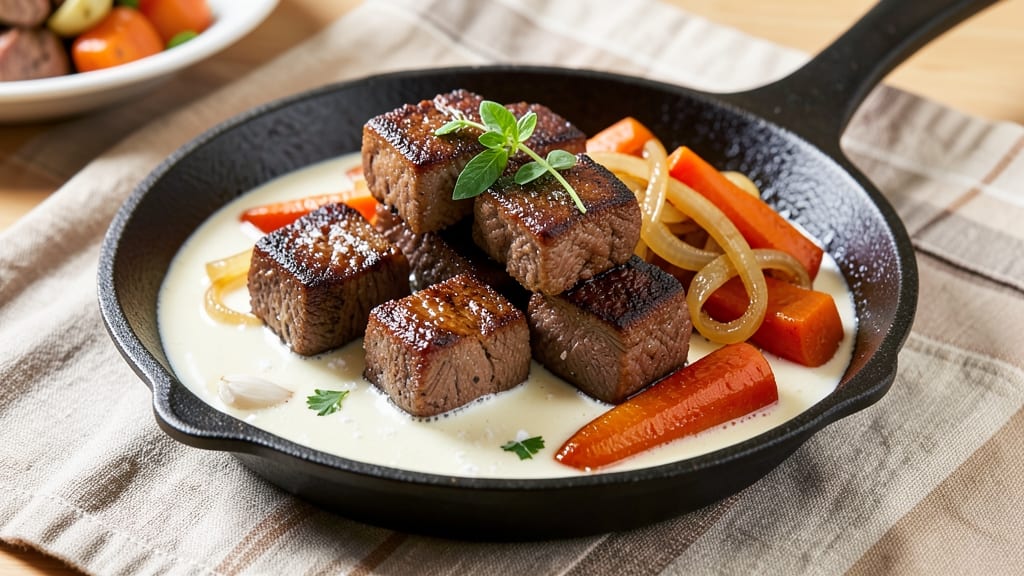
This beef and milk recipe transforms humble ingredients into a velvety stew that balances rich beef with creamy milk for a dish that feels both comforting and sophisticated. The technique—simmering beef until tender before blending with warm milk—creates a silky texture that’s impossible to resist.
What makes it special is how the milk softens the beef’s natural depth while adding a subtle sweetness that rounds out the flavors.
The magic happens in the slow cooking process, where beef absorbs flavors from aromatics like garlic and onions before the milk is incorporated. This method ensures the milk doesn’t curdle and instead becomes part of the stew’s soul, creating a dish that’s hearty yet refined.
The result is a stew with layers of flavor—savory, creamy, and just slightly sweet—that makes every spoonful satisfying.
Perfect for chilly evenings or as a centerpiece for a family meal, this stew delivers restaurant-quality comfort without the fuss. The creamy texture clings to each bite, while the beef remains tender and flavorful. Pair it with crusty bread to soak up every last drop of that luxurious sauce.
This recipe is also incredibly versatile—add a splash of wine for extra depth, or finish with fresh herbs for brightness. The possibilities are endless, but the foundation remains the same: a perfect marriage of beef and milk that feels like a warm hug in a bowl.
Ingredients for beef and milk
Rich beef and velvety milk come together for a comforting stew with restaurant-quality depth.
| Ingredient | Amount | Notes |
|---|---|---|
| Beef Chuck Roast 🥩 | 2 lb | Cut into 1.5-inch cubes |
| Yellow Onion 🧅 | 1 whole | Chopped into half-moons |
| Carrots | 4 medium | Peeled and sliced into rounds |
| Garlic Cloves 🧄 | 4 cloves | Minced for aromatic base |
| Whole Milk 🥛 | 2 cups | Full-fat preferred for creaminess |
| All-Purpose Flour 🌾 | 2 tbsp | For thickening the sauce |
| Beef Broth 💧 | 2 cups | Low-sodium preferred |
| Tomato Paste 🍅 | 2 tbsp | For depth of flavor |
| Bay Leaves 🌿 | 2 whole | For subtle earthy flavor |
| Salt 🧂 | 1 ½ tsp | Kosher or sea salt |
| Black Pepper 🌶️ | ½ tsp | Freshly ground preferred |
| Thyme 🌿 | 1 tsp | Dried leaves preferred |
| Olive Oil 🫒 | 2 tbsp | For searing the beef |
| Fresh Parsley 🌿 | ¼ cup | Chopped for garnish |
The beef is the heart of this dish—chuck roast delivers that melt-in-your-mouth texture you can't get with leaner cuts. Look for well-marbled pieces at Whole Foods or your local butcher shop. If you're buying pre-cut cubes, check for even sizing to ensure consistent cooking. The milk should be whole milk for that luxurious creaminess (skim won't cut it here), and store it in the coldest part of your fridge until ready to use. For the broth, low-sodium options like Swanson or Pacific Foods give you more control over seasoning.
No chuck roast? Short ribs or brisket work beautifully, though they'll need slightly longer cooking. Want to skip the milk entirely? Heavy cream or coconut milk adds richness without the same subtle sweetness. The tomato paste can be swapped for crushed tomatoes if you prefer, though it'll change the texture slightly. For thyme, fresh is ideal but dried works at one-third the amount. If you're using dried, toast it in a dry pan for 30 seconds to deepen the flavor. The carrots can be baby carrots or regular—just adjust the quantity to keep the same volume.
This stew tastes even better the next day as the flavors meld, so make extra if you can. Store leftovers in an airtight container in the fridge for up to 5 days, or freeze for 3 months. For reheating, add a splash of water or broth to prevent drying out. The milk-based sauce thickens as it cools, so you can thin it with a bit of warm water if needed. Fresh parsley wilts fast, so store it in a damp paper towel in a sealed container for up to 5 days in the fridge.
Why You'll Love This Recipe
- One-Pot Magic: I swear by this for lazy nights—just toss the chuck roast, chopped onions, carrots, and garlic into a pot, cover with water, and let it simmer. Then, at the very end, stir in that whole milk for a velvety finish. No fancy techniques, no extra dishes.
- Rich Without Fuss: That whole milk at the end? It transforms the dish. The beef stays tender, the broth gets impossibly smooth, and the carrots melt into sweet, buttery perfection. Honestly, it’s the kind of flavor that makes you pause mid-bite.
- Weeknight to Potluck: Make a big batch on Sunday and eat it all week—it reheats like a dream. Or bring it to a gathering where everyone else is stressing over last-minute sides. This? Just grab a bowl and go.
- Budget Stretch: A chuck roast is cheap, and milk makes it feel luxurious. I’ve fed four people for under $15, and they never question why they’re getting seconds. (Between us, neither do I.)
Step-by-step instructions for silky-smooth beef stew
Here's how to transform tough beef into tender, velvety bites with a rich sauce that surprises even experienced cooks.
Sear the Beef for Maximum Flavor
Heat a large Dutch oven over medium-high heat and add the 2 tablespoons olive oil. Once shimmering, add the 2 lb beef chuck roast cut into 1.5-inch cubes, working in batches if needed. Sear each piece for 2-3 minutes per side until deeply browned—this creates the flavor foundation. Don't overcrowd the pan or the temperature will drop.
As you sear, I like to press down gently on the beef cubes during the first minute—this prevents them from curling and ensures even contact with the pan. Once all beef is browned, transfer it to a plate and set aside. The beef will continue cooking in the sauce later, but this initial sear locks in juices and builds rich, caramelized flavors.
Build the Aromatic Base
In the same Dutch oven, add 1 whole yellow onion chopped into half-moons and 4 medium carrots sliced into rounds. Cook for 5-6 minutes until the onions soften and carrots begin to color. Add 4 cloves garlic minced, 2 tablespoons tomato paste, 1 teaspoon thyme, 1.5 teaspoons salt, and 0.5 teaspoon black pepper. Stir for 1 minute until fragrant.
Here's where the magic happens: the tomato paste and thyme deepen the sauce's complexity, while the onions and carrots form the stew's textural backbone. If the vegetables start sticking, add 1-2 tablespoons beef broth to deglaze—this prevents burning and incorporates those precious browned bits into the sauce.
Create the Velvety Sauce Base
Sprinkle the 2 tablespoons all-purpose flour over the vegetables and stir vigorously for 1-2 minutes until it turns a light golden color. This creates a roux that will thicken the sauce beautifully. Immediately pour in 2 cups beef broth and scrape up any browned bits from the bottom of the pot—this is called deglazing, and it captures all the flavor you've built so far.
Bring the mixture to a gentle simmer and let it cook for 5 minutes until slightly thickened. Then add 2 whole bay leaves and return the seared beef to the pot. The flour acts as a natural thickener, but we're not done yet—this is just the foundation for our silky milk addition that comes next.
Add Milk for Unmatched Creaminess
Pour in the 2 cups whole milk and stir gently to combine. The milk will immediately begin to steam and create a luxurious texture. Bring the stew to a gentle simmer (small bubbles at the edges) and cover partially. Let it cook for 1.5-2 hours until the beef is fork-tender—you'll know it's ready when a knife slides in easily with just slight resistance.
I know it seems counterintuitive to add milk to a beef stew, but this is what creates the signature velvety texture. The milk's natural fats and proteins create a silky sauce while keeping the beef incredibly tender. Keep the heat low—too much agitation or high heat will break the milk's emulsification and create a curdled texture.
Finish and Serve with Fresh Herbs
Once the beef is tender, remove the 2 bay leaves and discard them. Taste the stew and adjust seasoning if needed—you might need a bit more salt since milk can dilute flavors. For serving, ladle the stew into bowls and garnish each portion with 0.25 cup chopped fresh parsley. The parsley adds a bright contrast to the rich, creamy stew and makes it look restaurant-worthy.
This stew tastes even better the next day as the flavors meld further. The milk creates a luxurious mouthfeel while the seared beef provides hearty satisfaction. Serve with crusty bread to soak up every last drop of that velvety sauce—it's worth every minute of the slow cooking process.
Pro Tips For Making Beef And Milk
- Sear the Chuck First: Slap that roast in a screaming-hot pan with oil for 3-4 minutes per side before adding liquids—it builds flavor crust that won’t dissolve in the milk later. I used to skip this and wondered why my beef tasted bland even after hours of simmering.
- Cut Onions in Even Slices: Quarter the onions lengthwise, then slice into ¼-inch strips for consistent cooking—no one wants mushy bits or undercooked edges. My grandmother called this "the lazy chef’s shortcut" because it cooks faster and looks better.
- Simmer Milk Low and Slow: After adding milk, reduce heat to a bare simmer (tiny bubbles, not rolling) or it’ll curdle like cottage cheese. I learned this the hard way when my first batch turned into a grainy mess—now I monitor it like a hawk.
- Deglaze with a Splash of Water: After browning the meat, hit the pan with ¼ cup water before adding milk—it lifts all those stuck-on bits into the sauce. Sounds weird, but it works: the milk gets richer without extra effort. (Yes, even if you’re impatient like me.)
Health benefits of these flavors
Protein Powerhouse
This beef and milk stew delivers a high-protein punch with about 40 grams of protein per serving, thanks to the 2 lb beef chuck roast. Protein is essential for muscle repair, immune function, and keeping you full for hours.
The milk adds an extra 8 grams of protein per serving, making this a complete meal that supports your body's needs. 💪
Creamy Comfort
The whole milk in this recipe provides healthy fats that create a velvety texture while offering 5 grams of fat per serving, including beneficial saturated fats. These fats help your body absorb fat-soluble vitamins like A and D from the beef and vegetables.
The richness also triggers the release of serotonin, which is why this dish feels so comforting.
Bone-Strengthening Nutrients
Beef is a powerhouse of minerals, and this recipe highlights its iron and zinc content. A serving provides about 30% of your daily iron needs, crucial for oxygen transport in your blood, while the zinc supports immune function and wound healing.
The milk contributes calcium and phosphorus, essential for maintaining strong bones and teeth.
Digestive Benefits
The combination of slow-cooked beef and milk creates a dish that's surprisingly gentle on digestion. The long cooking time breaks down tough muscle fibers, making the beef easier to digest.
Meanwhile, the milk provides probiotics (if using cultured milk) and lactose, which may aid in gut health for those who tolerate dairy. The carrots add fiber, promoting healthy digestion.
Energy Boost
This stew is packed with energy-boosting nutrients. The beef provides B vitamins, particularly B12, which is vital for nerve function and energy metabolism. The carrots contribute beta-carotene, which your body converts to vitamin A, supporting vision and immune function.
Together, these nutrients help combat fatigue and keep you energized throughout the day. ✨
Versatile Nutrition
While this recipe uses whole milk for creaminess, you can easily adapt it to your dietary needs. For lower-fat options, substitute with 2% milk or unsweetened almond milk, though the texture will be slightly lighter.
If you're watching sodium, use low-sodium beef broth and reduce added salt to 1 teaspoon total. The recipe remains nutritious while accommodating different preferences.
Nutrition facts
Frequently asked questions
Why does this recipe use milk with beef?
The milk creates a velvety texture while tenderizing the beef—its natural fats and proteins break down collagen during slow cooking for that signature silky mouthfeel. The slight sweetness also balances the savory depth of the beef, making each bite more complex. This technique comes from traditional French and Indian cuisines where dairy softens tough cuts.
Can I substitute the milk with something else?
Yes! For a lighter version, use 2% milk or unsweetened almond milk, though the texture will be thinner. For extra richness, try heavy cream or coconut milk—just reduce to 1.5 cups since it's thicker. Avoid water or broth as they won't create the same velvety consistency. The key is maintaining fat content for proper emulsification.
How do I prevent the milk from curdling?
Never boil the milk—keep the stew at a gentle simmer (small bubbles at edges) and stir occasionally. Add the milk after the beef has already cooked for 1 hour to reduce acidity buildup. If you notice separation, whisk vigorously and add 1 teaspoon cornstarch mixed with water to stabilize the sauce.
What's the best way to reheat leftovers?
Reheat gently on the stovetop over low heat with a splash of beef broth or water to prevent drying. Microwave in 30-second intervals, stirring between each, to avoid breaking the milk's emulsion. Leftovers actually improve as flavors meld—this stew tastes even better the next day!
Can I make this recipe without a Dutch oven?
Use a heavy-bottomed pot or even a slow cooker. For stovetop, choose a pot with a tight-fitting lid. If using a slow cooker, add the milk during the last 30 minutes of cooking on low heat. The key is maintaining consistent low heat to prevent curdling—never bring to a full boil after adding milk.