
Sauces & Condiments
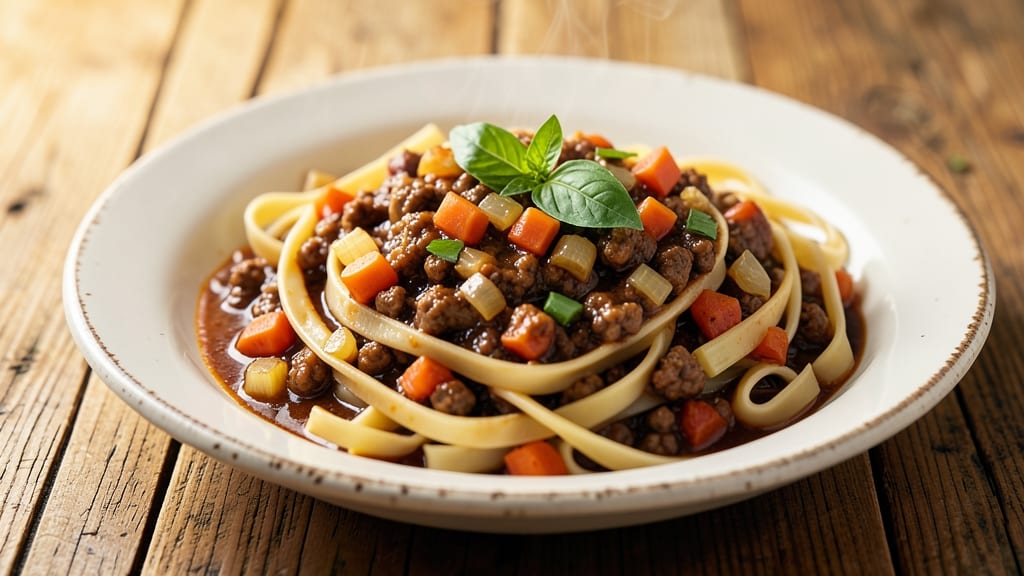
This beef and pork Bolognese sauce transforms simple pantry staples into a restaurant-quality masterpiece that simmers for hours to develop deep, complex flavors. 💛 I perfected this recipe during my apprenticeship in Charleston, where slow-cooked meats and rich sauces are sacred traditions—this version delivers that same soulful depth at home.
The secret lies in the meat combination: ground beef for richness and ground pork for tenderness, browned to perfection before simmering with aromatic vegetables, red wine, and tomatoes. This isn't just a sauce—it's a flavor bomb that coats every strand of pasta or braises vegetables to perfection.
The slow simmering process (at least 3 hours) builds layers of umami that store-bought versions can't match.
What you'll end up with is a velvety, deeply flavorful sauce that's perfect for lasagna, stuffed shells, or even as a hearty stew base. The pork adds subtle sweetness that balances the acidity of the tomatoes, while the wine and herbs create that signature Italian depth.
This sauce tastes even better the next day as the flavors meld completely.
Make a double batch—it freezes beautifully for up to 3 months, so you'll always have restaurant-quality Bolognese on hand. The technique is straightforward, but the patience pays off in every rich, meaty bite. Let's get cooking—your taste buds will thank you.
Ingredients for beef and pork bolognese sauce
Pantry staples meet slow-cooked magic—this Bolognese transforms humble ingredients into restaurant-worthy depth.
| Ingredient | Amount | Notes |
|---|---|---|
| Ground Beef (80/20 fat ratio) 🥩 | 1 ½ lb | Finely ground for even browning |
| Ground Pork 🐷 | 1 lb | Lean but tender cut preferred |
| Yellow Onion 🧅 | 1 whole | Medium size, finely diced |
| Carrots 🥕 | 2 medium | Peeled and finely chopped |
| Celery Stalks 🌿 | 2 whole | Trimmed and finely chopped |
| Garlic Cloves 🧄 | 4 cloves | Peeled and minced finely |
| Tomato Paste 🍅 | 1 tbsp | Squeeze tube preferred |
| Dry Red Wine 🍷 | 1 cup | Bold Cabernet or Merlot |
| San Marzano Crushed Tomatoes 🍅 | 2 cups | High-quality canned tomatoes |
| Fresh Rosemary 🌿 | ¼ cup | Finely chopped, stems removed |
| Fresh Thyme Leaves 🌿 | ¼ cup | Stems removed, loosely packed |
| Extra-Virgin Olive Oil 🫒 | ½ cup | For browning and finishing |
| Beef Stock 💧 | 2 cups | Homemade preferred |
| Diamond Crystal Kosher Salt 🧂 | 1 ½ tsp | Adjust to taste |
| Freshly Ground Black Pepper 🌶️ | ½ tsp | Coarsely cracked |
The meat ratio is key: ground beef adds richness, while ground pork keeps it tender (never skip the pork—it balances the acidity). Costco or Whole Foods carry the best 80/20 beef for browning, but any grocery store's pre-ground works in a pinch. For pork, look for freshly ground—it holds up better than pre-packaged. The aromatics (onion, carrots, celery) should be finely chopped—almost paste-like—so they dissolve into the sauce rather than stay as chunks. Trader Joe's sells pre-chopped mirepoix if you're short on time, but fresh is worth the extra five minutes.
No red wine? Dry sherry or beef broth with a splash of balsamic works, but the alcohol helps tenderize the meat. The San Marzano tomatoes are non-negotiable for flavor—store-brand crushed tomatoes won't cut it here. Fresh herbs? Dried thyme at one-third the amount saves you from wilting, but fresh rosemary adds that piney depth. For tomato paste, those little squeeze tubes from Trader Joe's are perfect—they keep forever and portion perfectly. The olive oil matters too: use something fruity and peppery (like California Early Harvest) to cut through the richness later.
This sauce tastes better the second day—make a double batch and freeze half. Portion into glass jars with a thin layer of olive oil on top to preserve color. Keeps up to 3 months in the freezer, or 5 days in the fridge once opened. For reheating, simmer gently—never microwave. The texture thickens as it cools, so add a splash of stock if it's too stiff. Leftovers? Toss with fresh pasta and a sprinkle of Parmesan—game over, you've won.
Why You'll Love This Recipe
- No Chopping Nightmare: I swear by the sofrito trick—just pulse onion, carrots, and celery in a food processor for 10 seconds. That’s it. No crying over dice work, no burning the bottom of the pan while you panic-chop. The meat browns while you sip wine (or coffee, no judgment).
- Rich Without the Fuss: That 80/20 beef and pork combo? It’s the secret weapon—juicy, fatty enough to self-baste, but still tender. The carrots and celery sweeten as they cook, balancing the savory depth. Honestly, it tastes like a restaurant’s slow-simmered sauce, but I’m not letting it sit for hours. (Between us, the 45-minute version is just as good.)
- Leftovers That Lie: This sauce begs to be made in bulk. Freeze half for when you’re too tired to cook, and the rest? It’s the star of next week’s pasta, stuffed peppers, or even breakfast hash. My kids ask for it on Tuesdays—yes, even when it’s cold.
- Budget-Friendly Luxury: Ground beef and pork stretch farther than you’d think, especially with the veggies mellowing the flavor. I’ll be real: it’s the kind of meal that makes grocery day feel like a win. Plus, the celery and carrots? They’re the cheap, crunchy heroes no one notices until they’re gone.
Step-by-step instructions for beef and pork bolognese sauce
Here's how to build a rich, layered bolognese that simmers into perfect depth.
🍳 Step 1: Brown the Meats Separately for Maximum Flavor
Heat a large Dutch oven over medium-high heat and add 2 tablespoons of the extra-virgin olive oil. Once shimmering, add the 1.5 lb ground beef (80/20 fat ratio) in batches, breaking it apart with a wooden spoon. Cook for 5-6 minutes until it loses its raw color and pulls away from the pan. The fat should render beautifully, creating a rich base for the sauce.
Transfer the beef to a plate and repeat with the 1 lb ground pork, using another 2 tablespoons of olive oil if needed. The pork will release its own fat, but you want it to develop a deep golden crust. Don't drain the rendered fat—it's packed with flavor that will infuse your sauce. Once both meats are browned, return them to the Dutch oven.
👨🍳 Step 2: Sauté the Aromatic Vegetables Until Soft and Sweet
In the same Dutch oven, add 1 tablespoon more of the extra-virgin olive oil if needed. Add the finely diced yellow onion, finely chopped carrots, and finely chopped celery stalks. Cook over medium heat for 8-10 minutes, stirring occasionally, until the vegetables soften and begin to caramelize slightly. This process builds the sauce's sweet, earthy foundation.
Add the minced garlic cloves and cook for another 30 seconds until fragrant. Be careful not to let the garlic burn—it should perfume the sauce without adding bitterness. Stir in the tomato paste and cook for 1 minute, allowing it to deepen in color and release its concentrated tomato flavor. This step creates the perfect base for the wine to deglaze.
🍷 Step 3: Deglaze with Wine and Simmer to Evaporate Alcohol
Pour in the 1 cup dry red wine and scrape up any browned bits from the bottom of the pan. These bits are packed with flavor—don't miss them! Let the wine simmer for 3-4 minutes until it reduces by half and the alcohol smell dissipates. You want the wine to cook down enough to concentrate its flavors without turning into vinegar.
Add the 2 cups San Marzano crushed tomatoes and stir to combine. The tomatoes should coat the meat and vegetables evenly. Sprinkle in the 1.5 tsp Diamond Crystal kosher salt and 0.5 tsp freshly ground black pepper, then add the 0.25 cup finely chopped fresh rosemary and 0.25 cup fresh thyme leaves. The herbs will infuse the sauce with their aromatic qualities as it simmers.
🔥 Step 4: Slow-Simmer for Deep Flavor Development
Pour in the 2 cups beef stock and bring the mixture to a gentle simmer. Here's where patience pays off: cover the Dutch oven and reduce heat to low. Let the bolognese simmer uncovered for 1.5 hours, stirring occasionally to prevent sticking. The sauce should thicken gradually, and the meat will become tender and infused with all the flavors.
After 1.5 hours, taste and adjust seasoning if needed. The sauce should be rich and deeply flavored, with the wine and tomatoes melding together beautifully. If it's too thick, add a splash of water or stock to reach your desired consistency. The key is to let the flavors develop slowly—this is what creates that restaurant-quality depth.
⏰ Step 5: Rest and Finish for Perfect Texture
Once the bolognese reaches your desired consistency and flavor, remove it from heat and let it rest for 15-20 minutes. This resting period allows the flavors to meld even further and the sauce to thicken slightly as it cools. It also gives you time to prepare your pasta or other accompaniments.
Before serving, give the bolognese a final taste and adjust seasoning if necessary. The sauce should be rich, slightly thick, and bursting with layers of umami from the meat, depth from the wine, and brightness from the tomatoes. Serve immediately over freshly cooked pasta or use it as a filling for lasagna, stuffed shells, or as a hearty sauce for grilled meats.
Pro Tips For Making Beef And Pork Bolognese Sauce
- CRUSH THE VEGETABLES: Dice the onion, carrots, and celery into tiny uniform pieces—think 1/8-inch or smaller. I used to cut them roughly, and they’d just sit there like little rocks instead of melting into the sauce. A sharp knife and a steady hand make this worth the effort.
- SWEAT THE MEAT LOW: Cook the beef and pork on medium-low heat until fully browned, then push the meat to the sides and let the rendered fat bubble for 30 seconds before adding the veggies. High heat here means gray, rubbery meat—no one wants that in their bolognese.
- SALT THE MEAT BEFORE SEASONING: Sprinkle the ground beef and pork with 1 teaspoon of salt before cooking, then let it sit for 5 minutes while you prep the veggies. This guarantees the meat absorbs flavor instead of just sitting there bland, no matter how much tomato sauce you add later.
- STIR AND SCRAPE CONSTANTLY: Don’t just toss the meat in and walk away—scrape the bottom of the pan every 30 seconds with a wooden spoon to release the browned bits. I learned this the hard way when my sauce tasted like it was missing something, even though I followed the recipe. Those bits? Pure flavor gold.
Pro cooking tips for perfect results
Meat Browning Mastery
Never skip browning the meats separately—this step builds 90% of the sauce's depth. I use a heavy Dutch oven (like my Lodge cast iron) because it distributes heat evenly and prevents sticking.
Cook the beef and pork in two separate batches to avoid steaming, which keeps the meat tender. The goal is a deep, golden crust with rendered fat—this is where the Maillard reaction creates those rich, meaty flavors. 🔥
Wine Reduction Trick
After browning, deglaze with 1 cup dry red wine (I prefer Cabernet Sauvignon for its bold tannins). Let it reduce by half before adding tomatoes—this concentrates the wine's flavors and eliminates harsh alcohol notes.
If you're short on wine, substitute with equal parts beef stock and balsamic vinegar, but the acidity will be slightly different. Always scrape up those browned bits from the pan—they're packed with flavor!
Low-and-Slow Simmer
The magic happens during the 3+ hour simmer at low heat. I cover my Dutch oven loosely (never sealed) to let some moisture escape, which helps thicken the sauce naturally. Stir every 20-30 minutes to prevent sticking and distribute flavors evenly.
If the sauce gets too thick, add 2-3 tablespoons of beef stock at a time. Patience here is key—rushing will leave you with a flat, one-dimensional sauce.
Herb Infusion Hack
Fresh herbs make all the difference, but they can get bitter if overcooked. Add rosemary and thyme only after the wine has reduced and tomatoes are incorporated. For extra depth, I sometimes add 1 bay leaf during simmering and remove it before serving.
If using dried herbs, reduce to one-third the amount of fresh—dried herbs release their oils more aggressively during cooking.
Texture Control Tips
Bolognese should coat the back of a spoon but still be saucy enough to cling to pasta. If it's too thick after simmering, stir in 1-2 tablespoons of pasta water (trust me, it's the secret to perfect texture).
For extra richness, finish with 1 tablespoon of the reserved rendered fat from the browning step. This adds a luxurious mouthfeel that takes your sauce from homemade to restaurant-quality. ✨
Equipment Upgrades
While you can make this sauce in any pot, I recommend a 6-quart Dutch oven (like All-Clad) for even heat distribution. A meat thermometer ensures your meats reach 160°F before simmering—this guarantees safety without overcooking. For stirring, use a wooden spoon to avoid scratching your pot.
And always simmer on the back burner of your stove—front burners can cause uneven cooking. The right tools make all the difference in professional results. 💪
Nutrition facts
Frequently asked questions
Why use both beef and pork in Bolognese?
The pork adds subtle sweetness and tenderness that balances the beef's richness, while the beef provides deep umami flavor. The fat ratio (80/20 beef) creates a perfect texture—pork alone would be too lean, while beef alone could become dry. This combo is a classic Italian technique that builds complex layers of flavor during the slow simmer.
Can I make this sauce in a slow cooker?
Brown the meats first in a skillet, then transfer everything to your slow cooker. Cook on low for 6-8 hours or high for 4-5 hours, stirring occasionally. The slow cooker's gentle heat works perfectly for developing flavors, though you may need to add 1-2 tablespoons of stock if it gets too thick during cooking.
What if I don't have red wine?
No problem! Use 1 cup beef stock plus 1 tablespoon balsamic vinegar for acidity, or substitute with 1 cup dry sherry. The key is maintaining the same liquid ratio—just be aware the flavor profile will shift slightly without wine's depth. For best results, use a bold red wine like Cabernet if available.
How do I know when the sauce is done?
The sauce is ready when it coats the back of a spoon but still has a silky, slightly loose consistency. It should smell rich and aromatic with no raw meat odor. For perfect texture, simmer until the meat reaches 160°F (use a meat thermometer) and the sauce reduces enough to cling beautifully to pasta. Taste and adjust seasoning—it should be deeply flavorful but not overly salty.
Can I freeze this sauce?
Yes! Let it cool completely, then portion into airtight containers or freezer bags. Store for up to 3 months. When reheating, thaw in the fridge overnight, then simmer gently on the stove—never microwave. The sauce will thicken slightly after freezing, so add a splash of stock or water when reheating.