
Soups & Stews
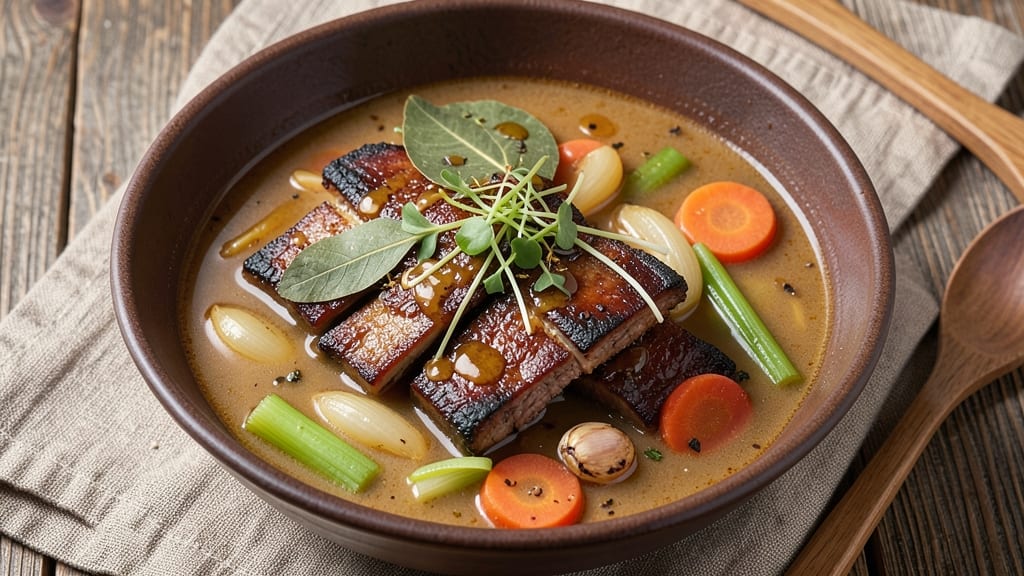
This beef back ribs soup recipe transforms tough ribs into melt-in-your-mouth tenderness through slow simmering—creating a rich, aromatic broth that clings to every bite. The secret lies in low-and-slow cooking, where collagen dissolves into velvety depth while the meat falls effortlessly from the bone.
What starts as a simple pot of ingredients becomes a hearty, satisfying meal that tastes even better the next day as flavors meld together.
The process begins with a flavorful base of onions, carrots, and celery that form the aromatic foundation, while garlic and bay leaves add complexity. The ribs themselves—cooked until fork-tender—infuse the broth with unmatched depth, creating a soup that’s both comforting and deeply flavorful.
This method delivers restaurant-quality results without requiring specialized equipment, just patience and a few hours of simmering time.
By the final spoonful, you’ll experience perfectly tender ribs swimming in a rich, savory broth that’s packed with umami from slow-cooked vegetables and meat. The aroma alone will draw everyone to the table, while the texture—tender meat and silky broth—makes every bite irresistible.
Serve with crusty bread to soak up every last drop of that flavorful liquid gold.
Whether you’re feeding a crowd or meal prepping for the week, this recipe scales beautifully while maintaining its rich, hearty character. The slow-cooked method ensures maximum tenderness and flavor extraction, making it worth the wait for a truly satisfying soup experience.
Ingredients for beef back ribs soup
Sixteen ingredients transform tough ribs into velvety broth through slow-simmered patience and aromatic depth.
| Ingredient | Amount | Notes |
|---|---|---|
| Beef Back Ribs 🥩 | 3 lb | Bone-in, meaty sections preferred |
| Yellow Onions 🧅 | 2 whole | Medium size, diced finely |
| Carrots 🥕 | 4 whole | Medium size, cut into chunks |
| Celery Stalks 🧄 | 4 whole | Cut into 1-inch pieces |
| Garlic Cloves 🧄 | 6 cloves | Peeled, smashed lightly |
| Fresh Bay Leaves 🍃 | 2 whole | Dried works at half amount |
| Black Peppercorns 🌶️ | 1 tbsp | Coarsely cracked, not ground |
| Salt 🧂 | 2 tsp | Diamond Crystal kosher salt |
| Tomato Paste 🍅 | 2 tbsp | High-quality, no sugar added |
| Dry Red Wine 🍷 | 1 cup | Bold Cabernet Sauvignon preferred |
| Beef Broth 💧 | 6 cups | Homemade or high-quality store-bought |
| Fresh Thyme 🌿 | 2 sprigs | Or 1 tsp dried thyme |
| Fresh Parsley 🌿 | ¼ cup | Chopped, for garnish only |
| Olive Oil 🫒 | ½ cup | Extra-virgin for richness |
The ribs are the heart of this dish—look for meaty sections with good marbling at your butcher counter or grocery store meat department. Costco or Whole Foods typically carry high-quality cuts, but any reputable grocery store should have suitable options. If you can't find beef back ribs, pork back ribs work in a pinch, though the flavor profile differs slightly. For the vegetables, organic carrots and celery have superior flavor, but conventional is perfectly fine. The key is to avoid any rubbery or discolored spots—freshness matters most here. Bay leaves should be vibrant green, not dried out or brittle, and thyme sprigs should smell intensely herbal.
No red wine? Substitute with extra beef broth—just add 2 tablespoons of balsamic vinegar for depth. Fresh thyme unavailable? Dried thyme works at one-third the amount, but toast it lightly in a dry pan first to intensify the flavor. For tomato paste, Trader Joe's or San Marzano brands are excellent choices, but any high-quality paste will do. The broth is non-negotiable—homemade is ideal, but even Swanson or Kettle & Fire brands deliver solid results. If you're using pre-cut vegetables, rinse them thoroughly to remove any excess dirt or preservatives that could cloud the broth. For a richer finish, consider adding a 1-ounce piece of beef bouillon along with the broth.
This soup tastes even better the next day as flavors meld—plan ahead if you're feeding a crowd. Store in an airtight container in the fridge for up to 5 days, or freeze portions for 3 months for meal prep convenience. The ribs will continue to tenderize in the fridge, so reheat gently on low to avoid breaking them apart. For serving, garnish with fresh parsley and a drizzle of olive oil—the aroma alone will draw everyone to the table. If making ahead for a party, keep the ribs separate from the broth until reheating to maintain their texture. The broth can be reheated and served separately with crusty bread for dipping.
Why You'll Love This Recipe
- No Chopping Chaos: I swear by the "mirepoix hack" here—just dice onions, carrots, and celery roughly (no fancy knife skills needed). The ribs practically melt into flavor while you sip your coffee, and honestly? The soup tastes better for the lazy prep.
- Rich Without the Fuss: That first sip of broth—oh man. The ribs simmer until they’re fall-off-the-bone tender, but the real magic is the garlic and onions caramelizing at the bottom. It’s the kind of depth you’d pay extra for at a restaurant, but here? It’s just simmering time.
- Leftovers That Beg for More: This soup actually improves the next day. The flavors meld into something heartier, and I’ve reheated portions for lunch without a single complaint. My kids even ask for it—(yes, even on a Tuesday night)—because it’s that good.
- Budget Beef That Feeds: A whole pack of beef back ribs costs less than a single steak, yet it stretches into multiple servings. I make this when I’m feeding a crowd or just want to stretch my grocery money—no guilt, all satisfaction. The carrots and celery stretch the broth too, so you’re not drowning in meat.
Step-by-step instructions for slow-simmered beef back ribs soup
Transform tough beef back ribs into melt-in-your-mouth tenderness through careful technique and patience.
🍳 Step 1: Sear the Ribs for Deep Flavor
Heat 0.5 cup olive oil in a large Dutch oven over medium-high heat until shimmering. Pat the 3 lb beef back ribs completely dry with paper towels—this ensures maximum browning. Working in batches if needed, sear the ribs for 4-5 minutes per side until deeply browned and caramelized.
The key here is patience—don't rush the searing. You're building flavor through the Maillard reaction. Once all pieces are browned, transfer them to a plate and set aside. The ribs will continue cooking in the soup, but this initial sear creates the foundation for rich, complex taste.
👨🍳 Step 2: Build the Aromatic Base
In the same Dutch oven, reduce heat to medium and add the 2 whole yellow onions, 4 whole carrots, and 4 whole celery stalks. Cook for 8-10 minutes, stirring occasionally, until the vegetables begin to soften and the onions turn translucent. Add the 6 cloves garlic cloves and cook for 30 seconds until fragrant.
This step develops the fundamental flavors of your soup. The vegetables should be tender but not mushy—you'll be simmering them further, but we want them to break down gradually. If the vegetables stick to the bottom, add a splash of beef broth to deglaze and scrape up those flavorful browned bits.
🍳 Step 3: Develop the Sauce Foundation
Stir in the 2 tbsp tomato paste, 1 cup dry red wine, and 6 cups beef broth. Bring to a gentle simmer over medium heat, then add the 2 whole fresh bay leaves, 1 tbsp black peppercorns, 2 tsp salt, and 2 sprigs fresh thyme. Return the seared ribs to the pot, ensuring they're mostly submerged in the liquid.
The wine will initially bubble vigorously—let it reduce by about half before adding the broth. This concentration intensifies the flavor. The broth should just cover the ribs; if it's too shallow, add a bit more liquid. The ribs will release moisture as they cook, so don't worry about complete submersion at this stage.
⏰ Step 4: Slow-Simmer for Fall-Off-Bone Tenderness
Cover the Dutch oven and transfer to a 300°F oven. Simmer for 3-4 hours, checking periodically to ensure there's always enough liquid. If needed, add ½ cup beef broth at a time to maintain adequate liquid. The ribs are done when they easily pull away from the bone and the meat is fork-tender.
This long, slow cook is essential. The collagen in the bones and connective tissue breaks down into gelatin, creating a rich, velvety texture. The ribs should be so tender that a wooden spoon slips between the meat and bone with minimal resistance. If the soup reduces too much, uncover it for the last 30 minutes to allow some evaporation.
🥘 Step 5: Finish and Serve
Remove the ribs from the pot and let them rest on a cutting board for 10 minutes. Skim any excess fat from the soup surface, then adjust seasoning with additional salt if needed. Using two forks, shred the meat from the bones and return it to the pot, discarding the bones. Stir in the 0.25 cup fresh parsley just before serving.
Serve the soup immediately in deep bowls, garnished with additional parsley. The broth should be rich and flavorful, with the meat falling apart at the first bite. The vegetables should be tender but still hold their shape, contributing to the soup's hearty texture. Pair with crusty bread to soak up every last drop of this luxurious, comforting dish.
Pro Tips For Making Beef Back Ribs Soup
- Brown the Ribs First: Don’t skip the sear—pat those ribs dry and get them golden in a hot pot before adding liquid. I used to toss them in raw, and the soup always tasted like it missed something. Two minutes per side with a little oil makes all the difference.
- Chop Celery Small: Tiny dice, not rough chunks—celery should disappear into the soup, not just sit there looking like it’s judging your cooking. Sounds weird, but it works: ¼-inch pieces blend into flavor instead of texture.
- Simmer Slow and Low: Ribs need time to fall apart, not boil into shreds. Keep the heat at a gentle simmer (tiny bubbles, not rolling) for at least 2 hours. I learned this the hard way—rushed batches left me with chewy, sad meat.
- Strain the Broth: After cooking the ribs, strain out the meat and veggies, then shred the ribs separately. Recombining them at the end gives you rich, clear broth and tender meat—no one wants to slurp through a vegetable stew.
Wine and beer pairings for this beef back ribs soup
Red Wine Pairings
A bold Cabernet Sauvignon from Napa Valley is my go-to choice—its rich dark fruit and firm tannins stand up beautifully to the deep, savory notes of the ribs. Look for a 2018 vintage with 14-15% ABV to match the soup's intensity.
The wine's acidity cuts through the richness while its dark berry flavors complement the slow-cooked meat. 🍷
For a lighter but equally delicious option, try a Malbec from Argentina. Its velvety texture and black cherry notes harmonize perfectly with the soup's umami depth. I prefer a 13.5% ABV example that's been aged for at least 12 months in oak barrels to add complexity.
Beer Complements
A robust Belgian Dubbel like Westmalle Dubbel brings malty sweetness and caramel notes that enhance the soup's rich flavors. The beer's 6% ABV and spiced character provide a delightful contrast to the meaty broth. I keep a few bottles chilled in the fridge for this exact pairing.
For beer lovers, a dark lager such as Samuel Adams Black Lager (with 6.5% ABV) offers a smooth, slightly sweet profile that balances the soup's heartiness. The roasted malt flavors complement the caramelized onions and ribs beautifully.
Unexpected Pairings
Don't overlook a Portuguese Vinho Verde—its crisp acidity and citrus notes refresh your palate between rich spoonfuls. The 9-10% ABV white wine provides a surprising but perfect contrast to the soup's depth. I've found Quinta da Piedade to be consistently excellent.
For a non-alcoholic option, try a sparkling hibiscus tea infused with 1 tsp cinnamon and a splash of lime. The tartness and effervescence cleanse your palate while complementing the soup's savory profile. 💫
Nutrition facts
Frequently asked questions
How long can I store leftover beef back ribs soup?
This rich soup keeps beautifully in the fridge for 4-5 days in an airtight container. For longer storage, freeze portions for up to 3 months—just thaw overnight in the refrigerator before reheating. The flavors actually deepen over time, making it perfect for meal prep!
Can I use a slow cooker instead of oven?
Transfer the seared ribs and liquid to a 6-quart slow cooker and cook on low for 8-10 hours or high for 5-6 hours. The ribs will become just as tender, though the broth may be slightly thinner. Add ½ cup broth at the 4-hour mark if needed.
What if my ribs aren't tender after cooking?
If the ribs still have resistance, return them to the pot with ½ cup additional broth and cook 1 more hour covered. For extra tenderness, simmer uncovered for the last 30 minutes to reduce the liquid slightly—this concentrates the flavors. If they're still tough, check your oven temperature with an oven thermometer.
Can I make this soup without wine?
Yes! Replace the 1 cup red wine with 1 cup beef broth plus 2 tbsp balsamic vinegar for depth. The acidity helps tenderize the meat and balances the flavors. For extra richness, add 1 tsp Worcestershire sauce along with the broth.
How do I adjust the recipe for a crowd?
Double the ingredients and use a 10-12 quart stockpot or large Dutch oven. Increase cooking time to 4-5 hours to ensure even tenderness. For serving, use a chafing dish or slow cooker to keep the soup warm. This recipe scales perfectly for 12-15 servings while maintaining rich flavor.