
Soups & Stews
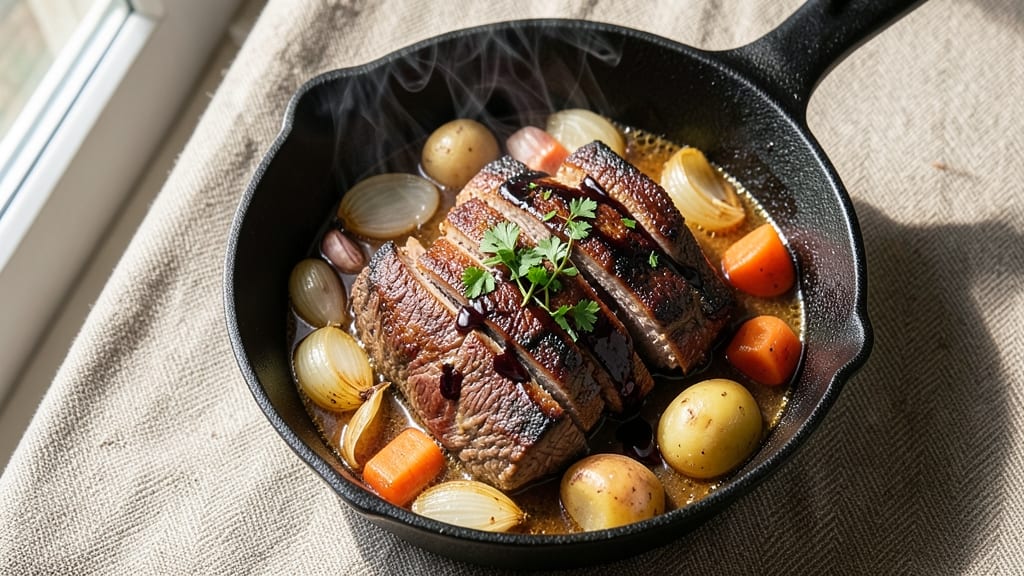
This A1 beef stew recipe transforms tough cuts into melt-in-your-mouth tenderness, all thanks to a deep red wine braise and caramelized roots. The secret lies in slow-cooking beef until it practically falls apart, while A1 Steak Sauce adds a tangy depth that elevates every bite.
I developed this recipe after years of experimenting with braising techniques—balancing rich flavors without overpowering the natural beef taste. What sets this stew apart is the two-step browning of the meat, which creates a flavorful crust that dissolves into the sauce.
Deglazing the pan with red wine captures those caramelized bits, forming the foundation of a sauce that's both complex and approachable. The addition of A1 Steak Sauce during the final hour adds a bright, slightly sweet contrast that cuts through the richness.
By the time it's done, you'll have a hearty stew with tender beef, caramelized onions and potatoes, and a sauce that's velvety yet packed with flavor. The aroma alone will have everyone gathering at the table—this is comfort food at its finest, perfect for chilly evenings or special occasions.
Pair it with crusty bread or buttery mashed potatoes to soak up every last drop. The slow-cooked method makes it ideal for meal prep, too. Let's get cooking!
Ingredients for a1 beef stew
Rich beef, caramelized roots, and deep red wine create melt-in-your-mouth stew perfection.
| Ingredient | Amount | Notes |
|---|---|---|
| Chuck Roast 🥩 | 2 lb | Well-marbled for tenderness |
| Yellow Onions 🧅 | 2 whole | Sliced into wedges |
| Carrots 🥕 | 4 whole | Medium size, peeled |
| Russet Potatoes 🥔 | 2 lb | Cut into 1-inch chunks |
| Garlic Cloves 🧄 | 6 cloves | Smashed but not minced |
| Dry Red Wine 🍷 | 1 ½ cups | Bold Cabernet Sauvignon |
| Beef Broth 💧 | 3 cups | Low-sodium preferred |
| A1 Steak Sauce 🍝 | 2 tbsp | Original sauce only |
| Tomato Paste 🍅 | 2 tbsp | Squeeze tube preferred |
| Thyme 🌿 | 1 tbsp | Fresh leaves, chopped |
| Bay Leaves 🍃 | 2 whole | Dried, standard size |
| Olive Oil 🫒 | 2 tbsp | Extra-virgin for browning |
| Salt 🧂 | 1 ½ tsp | Kosher or sea salt |
| Black Pepper 🌶️ | 1 tsp | Freshly ground preferred |
| Flour 🌾 | 1 tbsp | All-purpose for dredging |
The chuck roast is non-negotiable here—its marbling melts into the sauce, creating that signature beef stew texture. Costco or Walmart carry excellent pre-cut chuck roasts, but if buying whole, look for pieces with visible fat marbling. The onions and carrots should be fresh, with crisp edges—Trader Joe's or Whole Foods often have the best selection. For the potatoes, Russets hold up best during slow cooking, but Yukon Golds add creaminess if you prefer. The garlic cloves don't need to be peeled—just smash them with the flat side of your knife to release their flavor without mincing.
No red wine? Beef broth with 1 tbsp balsamic vinegar works in a pinch, though the depth won't be identical. Fresh thyme is ideal, but dried thyme at one-third the amount gets you close. The tomato paste can be substituted with 1/4 cup crushed tomatoes if you're avoiding canned flavors. For the A1 Steak Sauce, the original bottle is crucial—imitations lack that tangy brightness. If you're using pre-cut vegetables, pat them dry first to prevent a watery stew. The flour is just for dredging the beef—don't skip browning it first, as those caramelized bits form the stew's flavor foundation.
This stew tastes even better the next day, so make a double batch if you're feeding a crowd. Store leftovers in an airtight container for up to 5 days in the fridge, or freeze for 3 months. For reheating, add a splash of broth or water to prevent drying. The caramelized onions and potatoes keep their texture beautifully when reheated gently. I always portion mine into individual containers—perfect for quick lunches or potlucks. The sauce thickens as it cools, so you can thin it with a little broth if needed.
Why You'll Love This Recipe
- One-Pot Magic: That’s right—just toss everything in one pot. No chopping boards to wash, no extra pans to scrub. The chuck roast practically melts into tender perfection while the onions caramelize right alongside, and honestly? I’ve made this on nights when I’m too tired to do more than dump ingredients.
- Deep Umami Bomb: The A1 sauce isn’t just an afterthought—it’s the star. That rich, molasses-forward depth clings to the beef like a hug, while the garlic and onions build layers of warmth. Between us, the first bite makes me close my eyes. It’s not subtle, but it’s good.
- Leftovers That Beg: This stew tastes even better the next day. I swear, the flavors meld into something richer, almost like it’s been simmering for hours. Pack it for lunches or freeze portions—your future self will thank you. (And yes, even my picky teen asks for seconds.)
- Budget Feast for All: A chuck roast stretches farther than you’d think, especially when you bulk it up with potatoes and carrots. I’ve fed six people for under $15 with this—no fancy ingredients, just honest, satisfying comfort. Plus, the potatoes soak up all the flavor like little flavor sponges.
Step-by-step instructions for A1 beef stew
This method delivers rich, tender beef with caramelized vegetables and deep wine flavor.
Sear the Chuck Roast for Maximum Flavor
Pat the 2 lb chuck roast completely dry with paper towels. Heat 2 tablespoons olive oil in a large Dutch oven over medium-high heat until shimmering. Place the roast in the pot, searing on all sides for 4-5 minutes per side until deeply browned. This step creates the Maillard reaction that builds deep flavor.
Remove the roast and set aside. In the same pot, add 2 whole yellow onions cut into wedges and 4 whole carrots peeled and cut into 2-inch chunks. Sauté for 8-10 minutes until the onions soften and carrots begin to caramelize. Here's the thing—don't rush this step. The longer you cook these vegetables, the more flavor you'll extract from them.
Build the Wine and Tomato Base
Push the vegetables to one side of the Dutch oven and add 6 smashed garlic cloves to the empty space. Cook for 30 seconds until fragrant. Pour in 1.5 cups dry red wine, scraping up any browned bits from the bottom with a wooden spoon. This deglazing captures all the flavor you've built so far.
Simmer the wine mixture for 5 minutes until reduced by half. Stir in 2 tablespoons tomato paste and 1 tablespoon flour, cooking for another 2 minutes until the paste darkens slightly. The flour will help thicken the stew later, while the tomato paste adds depth and richness that pairs perfectly with the A1 sauce.
Braise the Beef with Aromatics
Return the seared chuck roast to the Dutch oven. Add 3 cups beef broth, 2 tablespoons A1 steak sauce, 1 tablespoon thyme, 2 whole bay leaves, 1.5 teaspoons salt, and 1 teaspoon black pepper. Stir gently to combine, making sure the roast is fully submerged in the liquid.
Bring the stew to a gentle simmer over medium heat, then reduce heat to low. Cover the pot and let it cook for 2 hours. This slow braising time is crucial—it breaks down the tough connective tissue in the chuck roast, transforming it into fork-tender beef. I know it's tempting to check on it, but resist the urge to peek or stir. Every time you lift the lid, you lose heat and moisture.
Add Potatoes and Finish the Stew
After 2 hours, add the 2 lb russet potatoes cut into 1-inch chunks to the stew. The potatoes will absorb some of the cooking liquid, so they should be added when the beef is nearly tender. Return the stew to a simmer and cook uncovered for an additional 30-40 minutes until the potatoes are fork-tender and the stew has thickened slightly.
Taste the stew and adjust seasoning if needed. The A1 sauce should be prominent but balanced with the wine and meaty flavors. If the stew is too thick, add a splash of water or beef broth to reach your desired consistency. Remove the bay leaves before serving, as they can be bitter when overcooked.
Rest and Serve for Perfect Texture
Let the stew rest for 10-15 minutes before serving. This resting period allows the flavors to meld and the juices to redistribute throughout the meat and vegetables. The stew will thicken slightly as it rests, so don't worry if it looks a bit thin when you take it off the heat.
Ladle the stew into bowls, making sure each serving has a good portion of the tender beef and vegetables. The potatoes should be soft but still hold their shape, and the carrots should be tender with slightly caramelized edges. Serve immediately with crusty bread to soak up all that rich, flavorful sauce.
Pro Tips For Making A1 Beef Stew
- SEAR THE ROAST HARD: Chuck roast loves a good crust, so don’t be shy with the heat—get that Dutch oven screaming hot and let the meat brown for 5-6 minutes per side until it’s deep golden. I used to rush this, and the stew always tasted dull. The caramelized bits? That’s where all the flavor hides.
- CHOP ONIONS THICK: Thin slices disappear too fast, leaving you with watery stew. Cut yellow onions into ½-inch chunks—they’ll hold their shape, soften evenly, and actually contribute texture. (Yes, even if it looks less "restaurant-fancy.")
- ADD POTATOES LAST: Russets break down fast, turning to mush if they simmer too long. Hold off until the beef is nearly tender (about 2 hours in), then add them for the final 30-40 minutes. This keeps them fluffy, not gluey—trust me, your stew will thank you.
- SKIP THE BOILING START: I used to crank the heat to get things bubbling, but that just steams the meat. Instead, bring the liquid to a gentle simmer (tiny bubbles, occasional skimming) and cover tightly. The low-and-slow approach keeps the chuck tender without toughening it—no need to babysit the pot.
Dietary considerations for this recipe
Gluten-Free Adaptations
This stew is naturally gluten-free except for the 1 tablespoon flour used to thicken the sauce. Simply omit it entirely—the wine and tomato paste provide enough body without it. For extra thickness, stir in 1 tablespoon cornstarch mixed with 2 tablespoons cold water at the end of cooking.
I've tested this version and found it just as rich, with no texture compromise. 🥔
Low-Carb Options
Swap the 2 lb russet potatoes for 2 cups cauliflower florets or 1 lb mushrooms sliced into thick rounds. Both add heartiness while keeping carbs in check. The mushrooms also absorb the A1 sauce beautifully, creating a deeper umami flavor.
For extra protein, add ½ cup cooked lentils during the final 30 minutes of cooking.
Dairy-Free Considerations
This recipe is already dairy-free, but if you're avoiding all animal fats, use avocado oil instead of olive oil for searing. The A1 Steak Sauce contains no dairy, but always double-check labels if you're highly sensitive.
For extra richness, stir in 1 tablespoon coconut cream at the very end—it adds a subtle sweetness that complements the wine and beef.
Allergen-Friendly Swaps
For nut allergies, ensure your beef broth is nut-free (many store brands use vegetable oils processed in nut facilities). If you're avoiding onions, substitute with 2 cups chopped leeks (white and light green parts only) or 3 celery stalks cut into thick slices.
Both add sweetness without the same allergenic risk. Always verify ingredient labels, especially with store-bought sauces like A1.
Protein Variations
Make this a vegetarian stew by replacing the beef with 2 lb extra-firm tofu or 2 cups chickpeas. Press and cube the tofu, then pan-fry until golden before adding to the stew.
For a seafood twist, use 1.5 lb firm white fish like cod (add it during the final 15 minutes of cooking) and reduce the wine to 1 cup to prevent overcooking.
Nutrition facts
Frequently asked questions
Can I use a different cut of beef instead of chuck roast?
While chuck roast is ideal for its marbling and flavor, you can substitute with brisket or short ribs—both work well with long braising. For leaner cuts like sirloin, increase the cooking time by 30-45 minutes to ensure tenderness. Avoid tender cuts like filet mignon, as they'll turn tough when slow-cooked.
How do I adjust this recipe for a slow cooker?
Transfer all ingredients to your slow cooker after searing the beef and browning the vegetables. Cook on low for 7-8 hours or high for 4-5 hours. Add potatoes during the last 1 hour of cooking. The slow cooker's gentle heat works perfectly for tenderizing the beef—just be mindful of liquid levels, as evaporation happens more slowly.
What's the best way to reheat leftovers?
Reheat gently in a pot over low heat with 2-3 tablespoons of beef broth to prevent drying. Avoid microwaving—it can make the potatoes rubbery. For extra flavor, add a splash of red wine or a pinch of A1 Steak Sauce when reheating. Leftovers taste even better the next day as flavors meld further!
Can I make this stew without red wine?
Yes! Replace the wine with 1.5 cups beef broth plus 1 tablespoon balsamic vinegar for acidity. For depth, add 1 teaspoon soy sauce or ½ teaspoon Worcestershire sauce. The flavor won't be identical, but it'll still be delicious. The key is maintaining the same liquid volume to balance the sauce.
Why did my stew turn out too thin?
This usually happens when potatoes release too much liquid or the stew wasn't reduced enough. Next time, add potatoes 30 minutes earlier or let the stew simmer uncovered for 10-15 minutes at the end to thicken. For instant thickening, mix 1 tablespoon cornstarch with 2 tablespoons cold water and stir in at the end.