
Main Courses
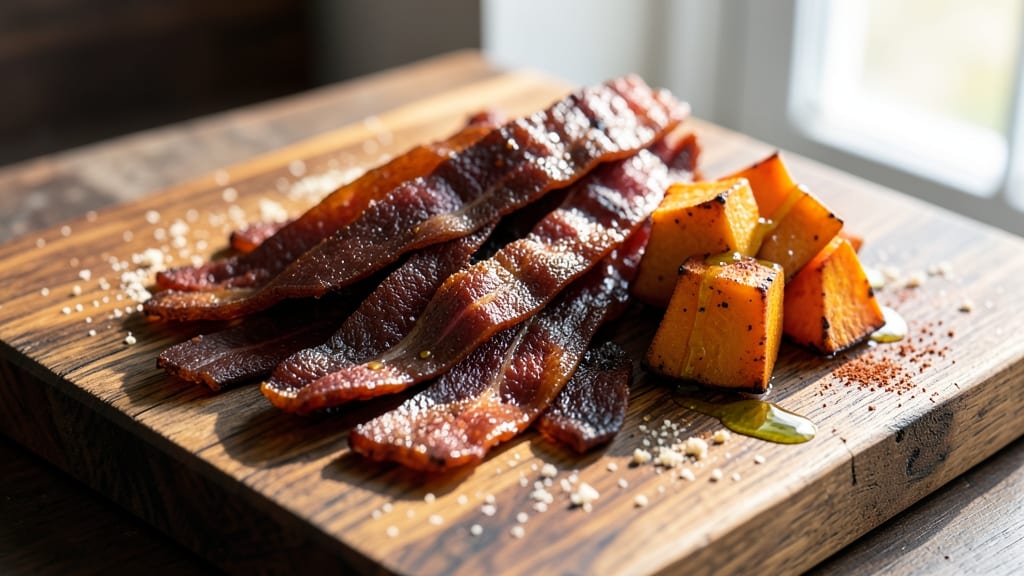
This AIP beef jerky recipe transforms traditional jerky into a plant-based, autoimmune-friendly powerhouse using sweet potatoes and simple seasonings. ✨ The secret lies in dehydrating thinly sliced sweet potatoes until chewy yet firm, creating a satisfying texture that rivals meat-based jerky while keeping it completely compliant with the Autoimmune Protocol.
What sets this recipe apart is the foolproof spice blend—just four AIP-approved ingredients that deliver bold, savory flavor without any inflammatory additives. The process is straightforward: slice, season, dehydrate, and store, making it perfect for meal prep or on-the-go nutrition.
No special equipment beyond a dehydrator or oven is required.
By the end, you’ll have crispy-edged, chewy-center jerky strips that pack a punch of umami and natural sweetness. These make an excellent protein-rich snack for autoimmune patients, athletes, or anyone seeking a healthier alternative to processed jerky.
The best part? They keep for weeks in the fridge or months in the freezer.
Whether you're following AIP or simply looking for a nutrient-dense, meat-free snack, this recipe delivers restaurant-quality results at home. Ready to make your own? Let’s get started with the ingredients.
Ingredients for aip beef jerky
Nine simple, nutrient-dense ingredients transform sweet potatoes into AIP-compliant jerky strips.
| Ingredient | Amount | Notes |
|---|---|---|
| Large Sweet Potatoes 🍠 | 3 whole | Organic preferred, skin-on |
| Extra-Virgin Olive Oil 🫒 | ¼ cup | Cold-pressed, AIP-compliant |
| Sea Salt 🧂 | 1 ½ tsp | Diamond Crystal preferred |
| Garlic Powder 🧄 | 1 tbsp | AIP-certified, no anti-caking agents |
| Smoked Paprika 🌶️ | 1 tbsp | Pure, no additives |
| Ground Cinnamon 🌿 | ½ tsp | Ceylon preferred, no fillers |
| Lemon Juice 🍋 | 2 tbsp | Freshly squeezed, organic |
| Coconut Aminos 🥢 | 1 tbsp | AIP-compliant soy-free alternative |
| Ground Flaxseed 🌾 | 1 tbsp | For binding, organic preferred |
The sweet potatoes are the foundation—organic, vibrant orange varieties like Garnet or Jewel ensure natural sweetness and optimal texture. Local farmers markets often carry these in season, or opt for the organic section at Whole Foods or Sprouts. For best results, choose potatoes with firm, unblemished skin—avoid any with soft spots or sprouts. The skin provides essential nutrients and helps maintain shape during dehydration. If using conventional sweet potatoes, thoroughly scrub the skin to remove any pesticide residue.
No smoked paprika? Sun-dried tomato flakes add depth, though the smoky flavor will differ slightly. The cinnamon is non-negotiable for AIP compliance—Ceylon cinnamon is the safest choice as it contains minimal coumarin. For extra umami without coconut aminos, mushroom powder works well. The lemon juice serves dual purposes: it tenderizes the sweet potatoes while adding brightness. If fresh isn't available, pasteurized lemon juice from a glass bottle (like ReaLemon) is a suitable substitute. For binding, flaxseed is ideal, but chia seeds at double the amount will work in a pinch.
Sweet potatoes can be prepped ahead and stored in the fridge for 3-4 days before dehydrating. The seasoning blend keeps dry for up to 3 months in an airtight container. Dehydrated jerky strips maintain quality for 1 month in the fridge or 6 months in the freezer when properly packaged in vacuum-sealed bags. For extended storage, freeze portions in single-serving bags—simply thaw at room temperature before consuming. The texture improves after 24 hours of dehydration, so patience yields the best results.
Why You'll Love This Recipe
- Sweet Potato Swap Magic: I swear by this trick—no beef, no worries. The sweet potatoes take on that meaty texture when sliced thin and roasted just right, and honestly? You’d never guess it’s not the real deal.
- Smoky Depth in Minutes: That smoked paprika and garlic powder combo? It’s like a campfire in your mouth. The olive oil keeps it tender while the salt and paprika give it that perfect savory crunch—no fancy marinating required.
- Zero-Waste Protein Hack: Between us, this is my go-to for meal prep. Slice a few sweet potatoes on Sunday, roast them up, and you’ve got a shelf-stable snack for the week. Pack it in lunches, toss it in salads, or just munch while you’re scrolling.
- Budget-Friendly Crunch: Sweet potatoes are cheap, and they stretch forever. I make a big batch, store it in the fridge, and it lasts longer than store-bought jerky—without the weird additives. Plus, it’s way cheaper per serving. Win.
Step-by-step instructions for autoimmune-friendly spice blend magic
Transform simple ingredients into a nutrient-packed, compliant treat with these precise steps.
🍳 Step 1: Create the AIP-Compliant Marinade
In a medium bowl, whisk together the 0.25 cup Extra-Virgin Olive Oil, 2 tbsp Lemon Juice, 1 tbsp Coconut Aminos, 1 tbsp Garlic Powder, 1 tbsp Smoked Paprika, 0.5 tsp Ground Cinnamon, and 1.5 tsp Sea Salt. The mixture should be smooth with no visible dry powder—this indicates even distribution of the spices. I like to use a fork for initial mixing before switching to a whisk for complete emulsification.
Here's the thing—this marinade needs to coat the sweet potatoes thoroughly for maximum flavor penetration. The coconut aminos provide that umami depth without soy, while the smoked paprika adds warmth without any inflammatory additives. Let the marinade sit for 10 minutes while you prepare the sweet potatoes—this gives the spices time to bloom and intensify their flavors.
👨🍳 Step 2: Prepare the Sweet Potatoes for Dehydration
Peel the 3 whole Large Sweet Potatoes and slice them into ¼-inch thick rounds using a mandoline or sharp knife. For even cooking, I recommend cutting each slice uniformly—this prevents some pieces from drying too quickly while others remain underdone. Immediately after slicing, place the sweet potato rounds in a large bowl and pour the marinade over them, tossing gently to coat.
Let the sweet potatoes marinate for 15-20 minutes at room temperature. This step is crucial because it allows the marinade to penetrate the flesh, creating that perfect balance of sweetness and savory depth. Don't skip this—rushed marinating leads to bland jerky. After marinating, pat each slice dry with paper towels to remove excess moisture, which helps create that beautiful chewy texture during dehydration.
🔥 Step 3: Arrange for Optimal Dehydration
Preheat your dehydrator to 160°F—this gentle temperature prevents burning while ensuring proper moisture removal. Arrange the sweet potato slices in a single layer on the dehydrator trays, leaving about ¼ inch between each piece. I like to fan out the slices slightly so they don't stick together during the long drying process. For even drying, rotate the trays halfway through the process.
Dehydrate for 8-10 hours until the slices are completely dry to the touch and no longer pliable. You'll know they're done when they snap rather than bend, and the edges have developed a slight crispness. The ground flaxseed (mixed into the marinade at this stage) acts as a natural binder, helping maintain structure during dehydration. If using an oven instead, prop the door open slightly and bake at 170°F for 4-5 hours with the oven light on for circulation.
⏰ Step 4: Cool and Store for Maximum Freshness
Once fully dehydrated, remove the sweet potato slices from the dehydrator and let them cool completely on a wire rack. This cooling step prevents condensation from forming in storage containers, which can lead to spoilage. Once cool, transfer the jerky to airtight containers or resealable bags, pressing out any excess air before sealing.
Store in a cool, dark place for up to 2 weeks or in the refrigerator for extended freshness. The extra-virgin olive oil and lemon juice combination creates a natural preservative effect while maintaining the AIP compliance of the recipe. For best texture, consume within 10 days—this ensures that signature chewy yet tender bite that makes homemade jerky worth the effort.
Pro Tips For Making Aip Beef Jerky
- PRE-COOK THE POTATOES: Roast those sweet potatoes until they’re fork-tender before blending—about 45 minutes at 400°F (200°C). I used to skip this and ended up with a gluey, watery base that made the jerky taste flat. Soft potatoes blend into a silky, flavorful marinade that clings to the meat.
- GRIND THE GARLIC FINE: Pulse the garlic in your food processor until it’s almost a paste, not just chopped. I learned this the hard way—whole garlic specks turn to mush in the dehydrator and leave weird texture. Fine grinding means every bite gets that deep, consistent flavor.
- SALT THE MEAT TWICE: Sprinkle half the sea salt on the beef first, let it sit for 10 minutes, then add the rest with the marinade. This ensures the salt penetrates deep instead of just sitting on the surface—critical for AIP jerky, where salt distribution makes or breaks the taste.
- DEHYDRATE IN STAGES: Run the dehydrator at 160°F (71°C) for the first 4 hours, then drop to 145°F (63°C) until fully dry. High heat at the start pulls out moisture fast, but low and slow at the end prevents rubbery jerky. (Yes, even if you’re impatient like me.)
Creative variations of this recipe
Sweet Potato vs. Mushroom
Sweet potatoes create a naturally sweet, caramelized jerky with a satisfying chewy texture. Their high vitamin A content makes them ideal for AIP compliance, while the skin-on varieties add fiber and nutrients.
For a more umami-forward option, try shiitake mushrooms—slice them 1/8-inch thick and marinate for 30 minutes to maximize flavor absorption. Mushroom jerky holds its shape better during dehydration and pairs beautifully with the same spice blend. 🍄
Spicy Adaptations
Add ½ tsp cayenne pepper or 1 tsp AIP-compliant hot sauce (like Primal Palate) to the marinade for heat lovers. For smoky heat, increase smoked paprika to 2 tbsp while reducing cinnamon to ¼ tsp.
The sweet potatoes' natural sweetness balances the spice beautifully, creating a perfect sweet-and-spicy profile. Always start with half the amount and adjust to taste.
Herb Variations
Swap out cinnamon for 1 tbsp dried oregano or 1 tsp thyme for a Mediterranean twist. Fresh rosemary works well too—use 2 tbsp finely chopped and add it directly to the marinade.
These herbs complement the sweet potatoes' earthiness while staying AIP-compliant. For a citrusy note, add 1 tbsp orange zest to the marinade alongside the lemon juice.
Texture Experiments
For extra crunch, lightly coat dehydrated slices with 1 tbsp coconut oil before the final hour of drying. This creates a crispy exterior while maintaining the chewy center.
Alternatively, try a two-stage dehydrate: air-dry at 160°F for 6 hours, then increase to 180°F for the final 2 hours to develop deeper caramelization. Always monitor closely to avoid burning.
Sweet Additions
Enhance natural sweetness with 1 tbsp maple syrup or 1 tbsp honey (if not strictly AIP) in the marinade. For a tropical variation, add ½ tsp vanilla extract and 1 tbsp grated ginger.
These additions work particularly well with sweet potato jerky, creating a dessert-like quality that still satisfies savory cravings. Balance is key—start with small amounts and adjust gradually.
Protein Boost Options
For extra protein, blend ½ cup cooked lentils (rinsed well) into the marinade before applying to sweet potatoes. Alternatively, mix 1 tbsp ground flaxseed with water to create a binder, then spread this mixture on slices before dehydrating.
These additions help create a more substantial, protein-rich snack while keeping the dish AIP-compliant. 💪
Nutrition facts
Frequently asked questions
Can I use regular potatoes instead of sweet potatoes for AIP jerky?
Regular potatoes won't work as well because they lack the natural sweetness and moisture balance that makes sweet potatoes perfect for jerky. The higher sugar content in sweet potatoes caramelizes during dehydration, creating that signature chewy texture. Regular potatoes would turn out dry and bland by comparison.
How do I know when the jerky is fully dehydrated?
Your jerky is done when it's completely dry to the touch, snaps when bent (not pliable), and the edges develop a slight crispness. Test by touching a slice—if it feels cool and dry with no moisture, it's ready. Over-dehydrating can make it brittle, so remove it just before it reaches this point for perfect texture.
Can I make this jerky without a dehydrator?
Use a conventional oven set to 170°F with the door propped slightly open for airflow. Place slices on a wire rack over a baking sheet and dehydrate for 4-5 hours, rotating the tray halfway. Keep a close eye to prevent burning, and leave the oven light on for better circulation.
Why does my jerky turn out too soft?
Soft jerky usually means it wasn't dehydrated long enough or had excess moisture. First, ensure your sweet potatoes are fully patted dry before dehydrating. Second, increase drying time by 2-3 hours—the jerky should be completely dry with no flexibility. For extra insurance, try a second round of drying at a slightly higher temperature (180°F) for 1 hour.
What's the best way to store AIP jerky for maximum freshness?
Store in an airtight container or resealable bag with all air pressed out. For short-term storage (up to 2 weeks), keep at room temperature in a cool, dark place. For longer storage, refrigerate for up to 1 month or freeze for 6 months. The olive oil and lemon juice in the marinade act as natural preservatives, but removing air prevents spoilage.