
Main Courses
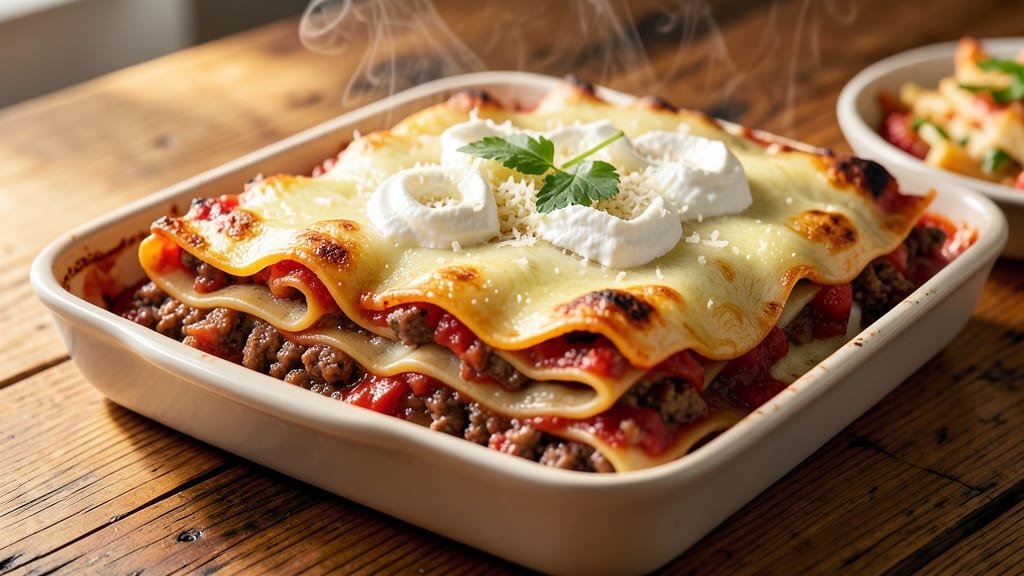
This all-beef lasagna recipe delivers restaurant-quality layers without a single soggy bite—thanks to a foolproof technique that keeps everything perfectly tender. The secret lies in pre-cooking the noodles and building layers that bake up with a crispy top crust and rich, meaty filling.
I've perfected this version after years of testing, ensuring every forkful delivers that perfect balance of tender beef, creamy ricotta, and melted cheese. What sets this recipe apart is the all-beef ground meat base, slow-cooked with tomatoes and herbs until deeply flavorful.
Between each layer of lasagna noodles, we alternate between ricotta-cheese mixtures and meat sauce, finishing with a golden blanket of mozzarella. The result? A lasagna so rich and satisfying that it becomes the star of any dinner table.
By baking at 375°F for 45 minutes, the lasagna develops that signature crispy edge while staying moist and flavorful inside. The aroma alone—tomato, garlic, and melted cheese—will have everyone gathering around the table before the timer even goes off.
This isn't just lasagna; it's a weeknight masterpiece that feels like a celebration. Serve with a simple garlic bread and side salad for the full Italian experience. Ready in under an hour, this recipe proves homemade lasagna can be both restaurant-quality and stress-free. Let’s get started!
Ingredients for all beef lasagna
Sixteen ingredients for restaurant-quality lasagna that stays perfectly layered and tender.
| Ingredient | Amount | Notes |
|---|---|---|
| Ground Beef (80/20 Lean/Fat Ratio) 🥩 | 2 ½ lb | Finely ground for even cooking |
| Lasagna Noodles (No-Boil) 🍝 | 12 pieces | 9-inch x 13-inch pan size |
| Ricotta Cheese (Whole Milk) 🧀 | 24 oz | Part-skim works but less creamy |
| Mozzarella Cheese (Low-Moisture) 🧀 | 3 cups | Shredded by hand for best texture |
| Parmesan Cheese (Freshly Grated) 🧀 | 1 cup | Block form only—no pre-shredded |
| Tomato Sauce (San Marzano Canned) 🍅 | 3 cups | High-quality, no added sugar |
| Onion (Yellow, Medium) 🧅 | 1 whole | Finely diced, ~1 cup total |
| Garlic Cloves 🧄 | 6 cloves | Minced, not pressed |
| Olive Oil (Extra-Virgin) 🫒 | ¼ cup | For sautéing aromatics |
| Eggs (Large) 🥚 | 2 whole | Room temperature for ricotta blend |
| Dried Basil 🌿 | 1 tbsp | Or 0.25 cup fresh basil |
| Dried Oregano 🌿 | 1 tsp | Mexican oregano preferred |
| Salt 🧂 | 1 ½ tsp | Diamond Crystal kosher salt |
| Black Pepper (Freshly Ground) 🌶️ | ½ tsp | Cracked peppercorns preferred |
| Red Pepper Flakes (Optional) 🌶️ | ½ tsp | For subtle heat |
The beef is non-negotiable—80/20 lean-to-fat ratio ensures juicy, flavorful layers. Costco or Whole Foods carry finely ground beef perfect for this; avoid pre-ground store brands that can be coarse. For the ricotta, whole milk delivers the creamiest texture, while part-skim works but lacks richness. The mozzarella must be low-moisture—shred it yourself for maximum melt. Pre-shredded contains anti-caking agents that prevent proper melting. Barilla or De Cecco lasagna noodles are ideal, but any no-boil variety works. The key to tender layers is pre-cooking the noodles al dente—they'll finish baking in the oven.
No San Marzano tomatoes? High-quality crushed tomatoes like Mutti or Rao's are excellent substitutes. For the ricotta blend, egg whites alone work if you prefer lighter layers, but whole eggs create that signature richness. Short on fresh basil? Dried basil at one-third the amount suffices, though fresh yields brighter flavor. The garlic should be minced, not pressed—this prevents bitterness. For a quicker prep, pre-minced garlic from a jar (like Garlic & Co) works in a pinch, though fresh is superior. The tomato sauce can be homemade or store-bought; if using jarred, heat and reduce it to intensify flavors before layering.
Prep ahead to save time: The meat sauce keeps 3 days in the fridge or 3 months frozen. The ricotta-cheese mixture can be mixed 24 hours ahead and stored covered. Assemble the lasagna 4 hours before baking—cover tightly with foil and refrigerate. This ensures layers stay intact during baking. Leftovers reheat beautifully: cover with foil and warm at 350°F for 20-25 minutes. For make-ahead meals, freeze the assembled lasagna (unbaked) for up to 2 months—bake straight from frozen, adding 15 minutes to the cooking time.
Why You'll Love This Recipe
- No-Boil Magic: I swear by those no-boil noodles—just layer, bake, and forget. No pre-soaking, no waiting, no stress. The secret’s in the timing: let the noodles soften in the oven while the beef browns, and you’ve got a hands-off masterpiece.
- Rich, Meaty Layers: That 80/20 ground beef? It’s the star. Crumbly, juicy, and packed with flavor from garlic and herbs, it doesn’t need sauce to shine. The ricotta stretches like a dream, and the low-moisture mozzarella? It melts into that perfect stretch—no soggy mess here.
- Weeknight to Party: Same recipe, different vibes. Feed your family on a Tuesday or impress guests on Sunday—it’s that versatile. Double the batch, freeze half, and you’ve got a stress-free dinner for another night. Honestly, I’ve served it cold with a salad, and no one complained.
- Budget-Friendly Feast: Ground beef and ricotta stretch farther than you’d think, and that freshly grated Parmesan adds luxury without breaking the bank. Leftovers? Even better the next day—if there are any. Between us, I’ve reheated this lasagna three times, and it’s still the best thing on my plate.
Step-by-step instructions for all-beef lasagna
Here's how to assemble a lasagna with rich, meaty layers and perfect texture—no soggy bites in sight.
Brown the Ground Beef and Sauté Aromatics
Heat the 0.25 cup olive oil in a large skillet over medium-high heat. Add the 2.5 lb ground beef (80/20 ratio) and break it apart with a wooden spoon. Cook for 8-10 minutes, stirring occasionally, until the beef is deep brown and fully cooked through. The fat should render out, leaving you with crispy edges and juicy meat.
Push the beef to one side of the pan and add the finely diced onion. Cook for 3-4 minutes until softened and translucent. Stir in the 6 cloves minced garlic and cook for 30 seconds until fragrant—don't let it brown. Add the 1 tbsp dried basil, 1 tsp dried oregano, 1.5 tsp salt, 0.5 tsp black pepper, and 0.5 tsp red pepper flakes (if using). Stir everything together and cook for 1 minute to meld the flavors. Remove from heat and transfer to a bowl.
Prepare the Ricotta Cheese Mixture
In a separate bowl, combine the 24 oz whole milk ricotta cheese, 2 whole eggs (room temperature), 1 cup freshly grated Parmesan cheese, 0.5 tsp salt, and 0.25 tsp black pepper. Use a fork or whisk to mix until smooth and fully combined. The mixture should be creamy but not runny—if it's too thick, add 1 tablespoon of milk to loosen it. This step ensures your lasagna layers stay cohesive and rich.
Set the ricotta mixture aside while you preheat your oven to 375°F. The ricotta will thicken slightly as it sits, which helps prevent a watery lasagna. I like to press the mixture through a fine-mesh sieve to remove any lumps, but this is optional if you prefer a rustic texture.
Assemble the Lasagna Layers
Spread 1 cup of the tomato sauce evenly on the bottom of a 9-inch x 13-inch baking dish. This creates a flavorful base and prevents the noodles from sticking. Place 4 lasagna noodles (no-boil) on top, slightly overlapping them if needed to cover the bottom completely. Spread 1/3 of the ricotta mixture evenly over the noodles, followed by 1/3 of the browned beef mixture and 1 cup of the mozzarella cheese. Repeat this layering process twice more, ending with a final layer of noodles, remaining beef mixture, and the last cup of mozzarella.
Here's the key: press down gently on each layer as you go. This ensures the noodles stay submerged in the sauce and prevents air pockets that could lead to dry spots. The final layer should be topped with the remaining 1 cup tomato sauce to protect the cheese from browning too quickly.
Bake Until Bubbly and Golden
Cover the lasagna tightly with aluminum foil and bake for 30 minutes. This initial covered bake allows the layers to set and the cheese to begin melting without over-browning. After 30 minutes, remove the foil and bake for another 15-20 minutes until the top is golden brown and bubbly. The edges should be slightly crispy, and the cheese should be fully melted with a beautiful caramelized crust.
To test for doneness, insert a knife into the center. It should come out clean, and the lasagna should feel firm to the touch. If the top isn't brown enough, return it to the oven uncovered for 5-10 minutes until it reaches your desired color. Let the lasagna rest for 10-15 minutes before slicing—this allows the layers to set and makes it easier to serve without falling apart.
Serve and Enjoy
Use a sharp knife or pizza cutter to slice the lasagna into 6 equal portions. The layers should be distinct but cohesive, with tender beef, creamy ricotta, and melted cheese in every bite. Serve immediately with a side of garlic bread and a simple green salad to balance the richness. The lasagna will continue to steam slightly as it cools, so enjoy it while it's hot for the best texture and flavor.
Pro Tips For Making All Beef Lasagna
- BROWN THE BEEF RIGHT: I learned this the hard way—skipping the high-heat sear means your lasagna sauce will taste flat and one-dimensional. Use a heavy pan (cast iron if you have it) and cook the 80/20 ground beef until it’s deeply browned in spots, not just pink. The fat renders faster, and that crusty bit? It’s where all the flavor hides.
- GRATE THAT PARMESAN FRESH: Pre-shredded Parmesan is packed with anti-caking agents that turn your lasagna into a gummy mess. Grab a microplane or box grater and shred your own—just before assembling, so it doesn’t dry out. A handful (about ¼ cup) sprinkled between layers is enough; don’t overdo it or you’ll end up with a salty brick.
- LAYER LIKE A PROTEIN SANDWICH: Don’t just dump everything in and hope for the best. Start with a thin even layer of meat sauce on the bottom, then noodles, then ricotta mixed with egg (1 egg per 15 oz ricotta) to hold it together. Repeat, finishing with mozzarella and Parmesan. If you skip the egg, your ricotta will turn into a sad, soupy puddle.
- BAKE COVERED THEN UNCOVERED: Cover the lasagna tightly with foil for the first 30 minutes—this traps steam and cooks the noodles evenly without drying them out. After that, uncover and bake another 15-20 minutes until the top is bubbly and golden. Resist peeking; every time you lift that foil, you’re letting heat escape and wasting time.
Common mistakes when making perfect results
Skipping Noodle Pre-Cook
One of the most common mistakes is using no-boil lasagna noodles straight from the package without pre-cooking them. These noodles are designed to soften during baking, but they often stay too firm or absorb too much moisture, leading to a dry lasagna.
Always boil them for 1-2 minutes less than package instructions (until al dente) before layering. This ensures they finish cooking perfectly in the oven. 🌡️
Overloading Cheese
While it might seem like more cheese equals better lasagna, overloading can create a greasy, soupy mess. Stick to the 3 cups of mozzarella and 1 cup of Parmesan as called for. The ricotta mixture already provides creaminess, so extra cheese just melts into a slick layer.
For a crispy top, use low-moisture mozzarella and sprinkle Parmesan lightly on the final layer instead of dumping it all at once.
Uneven Layering
Uneven distribution of sauce, ricotta, and beef leads to dry spots or soggy bottoms. Always spread each layer evenly and press down gently with a spatula to eliminate air pockets.
I like to use a measuring cup to portion the ricotta and sauce precisely. Skipping this step means some slices will have too much cheese while others feel barely cooked.
Baking Without Foil
Baking lasagna uncovered from the start causes the top to brown too quickly while the interior stays undercooked. The 30-minute covered bake is crucial—it allows the cheese to melt evenly and the layers to set before the final crisp.
If you remove the foil too early, you’ll end up with a burnt crust and undercooked center. Trust the process!
Not Resting Before Slicing
Cutting into lasagna immediately after baking causes the layers to slide apart and the cheese to run everywhere. The 10-15 minute rest lets the lasagna firm up and redistributes juices.
I’ve seen even experienced cooks skip this step—don’t be one of them! Use this time to set the table or warm up garlic bread. 🕒
Using Pre-Shredded Cheese
Pre-shredded mozzarella contains anti-caking agents that prevent proper melting, leaving your lasagna with a gritty texture. Always shred your own cheese using a box grater or food processor with a grating blade.
For Parmesan, freshly grate it over a microplane to release its full flavor. This small effort makes a huge difference in texture and taste.
Nutrition facts
Frequently asked questions
Can I use regular lasagna noodles instead of no-boil?
Yes, but you'll need to pre-cook them al dente (1-2 minutes less than package instructions) and drain well. The key is to finish cooking them in the oven—this prevents a mushy texture. Regular noodles work great if you follow this step!
How do I make this lasagna ahead of time?
Assemble the lasagna up to 24 hours ahead, cover tightly with foil, and refrigerate. Bake straight from the fridge, adding 10-15 extra minutes to the cooking time. For freezing, assemble but don't bake—wrap tightly and freeze for up to 2 months. Bake from frozen, adding 20-25 minutes to the total time.
What's the best way to reheat leftovers?
Cover with foil and reheat at 350°F for 20-25 minutes until heated through. Avoid microwaving—it creates a rubbery texture. For a crispy top, broil for 2-3 minutes at the end. Leftovers keep well for 3-4 days in the fridge.
Can I substitute ground turkey for beef?
You can try, but ground beef (especially 80/20 ratio) gives the richest flavor and juiciest texture. If using turkey, add 1 tbsp olive oil to the pan to prevent dryness and consider mixing with 10% beef for better results. The fat content in beef is key for that classic lasagna taste!
Why does my lasagna get watery?
This usually happens from overloading cheese or not draining noodles properly. Stick to the 3 cups mozzarella and 1 cup Parmesan amounts, and always drain pre-cooked noodles well. Also ensure your ricotta mixture isn't too runny—it should hold its shape when spooned.