
Soups & Stews
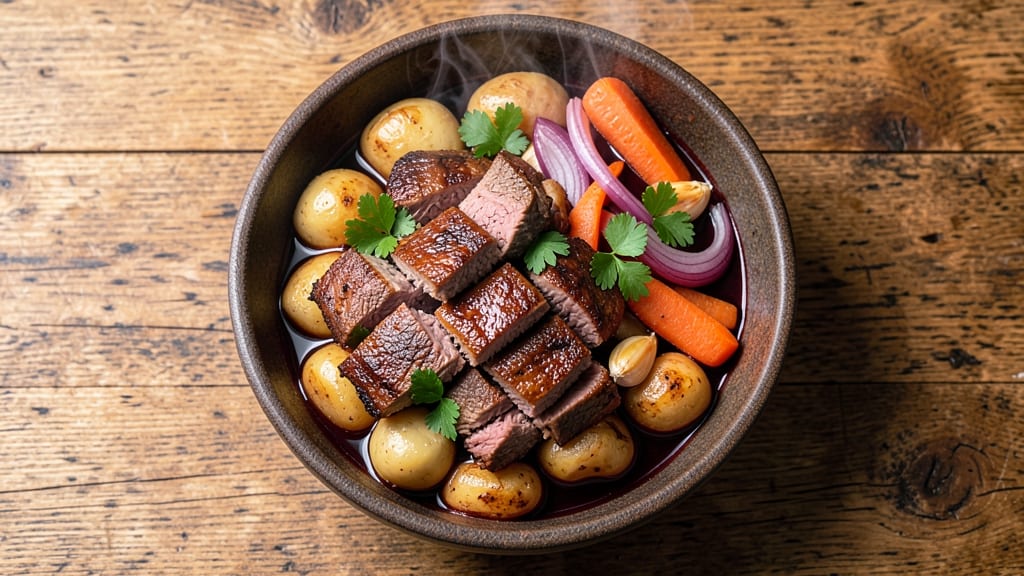
This American beef stew recipe delivers the hearty, comforting meal your family has been craving—rich with deep red wine flavors and melt-in-your-mouth tender beef. 🔥 The secret lies in slow-braising tough cuts until they fall apart, while potatoes and carrots soak up all that savory goodness.
I’ve perfected this version over years of testing, balancing traditional techniques with modern shortcuts for foolproof results every time.
What sets this stew apart is the wine braise, which adds complexity without overpowering the beef. You’ll start with a deep brown sear to develop rich, caramelized flavors, then let everything simmer for hours until the meat is fork-tender.
The potatoes absorb the broth, turning into fluffy, flavorful bites that make this stew a true comfort food classic.
By the time you serve this, you’ll have a steaming pot of restaurant-quality beef stew—deep in color, rich in flavor, and packed with tender beef and vegetables. It’s the kind of dish that tastes even better the next day, making it perfect for meal prep or feeding a crowd.
The aroma alone will have everyone gathering at the table.
Serve with crusty bread to soak up every last drop of that velvety broth, or pair it with roasted vegetables for a complete meal. This stew is hearty enough for winter nights but simple enough for any occasion. Let’s get cooking!
Ingredients for american beef stew
Six hearty ingredients make this stew unforgettable—tender beef, rich wine, and comforting veggies.
| Ingredient | Amount | Notes |
|---|---|---|
| Chuck Roast 🥩 | 3 lb | Tough cut for braising, trimmed of fat |
| Yellow Onions 🧅 | 2 whole | Medium size, peeled and halved |
| Carrots 🥕 | 4 whole | Medium size, peeled and halved lengthwise |
| Russet Potatoes 🥔 | 2 lb | Peeled and cut into 2-inch chunks |
| Garlic Cloves 🧄 | 6 cloves | Peeled, smashed for deeper flavor |
| Dry Red Wine 🍷 | 1 ½ cups | Bold variety like Cabernet Sauvignon |
| Beef Broth 💧 | 4 cups | Low-sodium preferred, homemade or quality store-bought |
| Tomato Paste 🍅 | 2 tbsp | Squeeze tube or canned, no sugar added |
| All-Purpose Flour 🌾 | 2 tbsp | For thickening the stew base |
| Olive Oil 🫒 | 2 tbsp | Extra-virgin for searing and finishing |
| Fresh Thyme 🌿 | 2 sprigs | Or 1 tsp dried thyme if fresh unavailable |
| Fresh Bay Leaves 🌿 | 2 whole | Remove before serving |
| Salt 🧂 | 2 tsp | Kosher or sea salt, adjust to taste |
| Black Pepper 🌶️ | 1 tsp | Freshly ground for best flavor |
| Worcestershire Sauce 🍶 | 2 tbsp | Vegetarian version if needed |
The beef is non-negotiable here. Chuck roast is your best bet—it's tough enough to braise beautifully, unlike sirloin which stays chewy. Grab it from the butcher section at Whole Foods or your local grocery store's meat counter. Look for good marbling (those white streaks of fat) because that's what melts into flavor. If you're short on time, Costco sells pre-cut chuck roast in huge chunks that save prep work. For the potatoes, Russet is ideal—they hold up to long cooking and absorb all that delicious broth. Carrots? Any color works, but orange carrots have the best natural sweetness that caramelizes perfectly in the stew.
No red wine? Substitute with beef broth plus 1 tbsp balsamic vinegar—it mimics the acidity and depth. Fresh thyme is ideal, but dried thyme at one-third the amount works in a pinch. The tomato paste can be skipped if you're sensitive to acidity, but it adds that restaurant-quality richness. Worcestershire sauce gives it that umami punch—Lea & Perrins is the classic choice, but any brand works. For the flour, King Arthur or Gold Medal are reliable, but honestly, any all-purpose will do. The broth matters too—low-sodium is key so you can control the seasoning. Homemade is best, but Swanson or Pacific Foods are solid store-bought options.
This stew tastes even better the next day—honestly, it's one of those dishes that improves with time as flavors meld. Store leftovers in an airtight container in the fridge for up to 5 days, or freeze for 3 months. I always make a double batch because it reheats beautifully for lunches. The broth thickens as it cools, so add a splash of water or beef broth when reheating. For serving, crusty bread is a must—it's like a flavor sponge for all that rich sauce. Garnish with fresh parsley if you're feeling fancy, but it's not required.
Why You'll Love This Recipe
- One-Pot Magic: I swear by this recipe because it’s literally dump-and-go after the initial sear. Chuck roast browns in the pan while I chop onions—no fancy techniques, just a cast iron and 10 minutes of my time. The potatoes soften right in the broth, so no peeling or pre-boiling fuss.
- Garlic Bomb Flavor: That first bite of tender beef with the garlic cloves caramelizing into the onions? Chef’s kiss. The slow simmer lets the flavors meld into something rich and deep—like a hug in a bowl. Honestly, I’ve tried fancier stews, but this one’s the one my family begs for.
- Leftovers for Days: This stew tastes even better the next day. I make a double batch on Sundays, freeze half, and pull it out for lazy nights or when unexpected guests show up. The potatoes stay creamy, the beef stays juicy—it’s my secret weapon for effortless meals.
- Budget-Friendly Feast: Chuck roast is cheap, but it transforms into something restaurant-worthy. A single roast feeds my family of four for two meals, and the veggies stretch the flavor without breaking the bank. Between us, this is the kind of recipe that makes grocery day feel like a win.
Step-by-step instructions for American beef stew
Here's how to create a rich, tender beef stew with deep red wine flavor.
🍳 Step 1: Sear the Chuck Roast for Deep Flavor
Heat a large Dutch oven over medium-high heat and add 2 tablespoons olive oil. Pat the 3 lb chuck roast completely dry with paper towels—this ensures maximum browning. Place the roast in the pot and sear for 5-6 minutes per side until deeply browned. You're building flavor through the Maillard reaction, so don't rush this step.
Remove the roast and set it aside. In the same pot, add 2 whole yellow onions and 4 whole carrots cut into chunks. Sear them for 8-10 minutes until they begin to soften and caramelize. This step develops their natural sweetness and adds another layer of depth to your stew.
👨🍳 Step 2: Build the Flavor Base with Aromatics
Reduce heat to medium and add 6 cloves garlic (smashed), 2 tablespoons tomato paste, 2 tablespoons all-purpose flour, 2 sprigs fresh thyme, and 2 whole bay leaves. Stir everything together for 2 minutes to toast the flour and garlic, which enhances their flavors. This creates a beautiful roux that will thicken your stew beautifully.
Pour in the 1.5 cups dry red wine and scrape up all the browned bits from the bottom of the pot. This deglazing step captures all that concentrated flavor you worked so hard to create. Let the wine simmer for 3-4 minutes until it reduces by half and the alcohol cooks off.
🥘 Step 3: Braise the Meat with Vegetables
Return the seared chuck roast to the pot. Add 4 cups beef broth, 2 teaspoons salt, and 1 teaspoon black pepper, along with the 2 lb russet potatoes cut into 2-inch chunks. Stir everything together gently to combine, being careful not to break up the meat too much.
Bring the stew to a gentle simmer, then reduce heat to low. Cover the pot and let it cook for 2 hours. Here's the thing—you want the stew to bubble gently but not boil vigorously. This slow cooking is what transforms tough chuck roast into fork-tender meat. Check occasionally and add a splash of water if it gets too dry.
⏰ Step 4: Finish with Worcestershire and Rest
After 2 hours, stir in the 2 tablespoons Worcestershire sauce. This adds a deep, savory umami note that ties everything together. Taste the stew and adjust seasoning if needed—you might need a bit more salt or pepper depending on your broth.
Continue cooking uncovered for another 30-45 minutes until the potatoes are tender and the sauce has thickened slightly. The stew should be rich and glossy, with the meat falling apart easily. Remove the bay leaves before serving, as they can be quite bitter if eaten.
🍽️ Step 5: Serve with Crusty Bread
Ladle the stew into bowls and serve immediately with warm crusty bread. The potatoes should be fork-tender, the carrots and onions soft but still holding their shape, and the meat should be so tender it practically melts in your mouth. Each spoonful should deliver that perfect balance of rich red wine flavor, tender meat, and hearty vegetables.
Real talk: this stew tastes even better the next day as the flavors continue to meld. Store any leftovers in the refrigerator for up to 4 days or freeze for 3 months. The longer it sits, the more complex and delicious it becomes.
Pro Tips For Making American Beef Stew
- Brown the Chuck Roast: Don’t just sear it—cut the roast into 1.5-inch chunks first, then brown them in batches. I used to rush this and end up with pale, flavorless beef. High heat for 3-4 minutes per side until deep brown, not just pink. That crust carries the whole dish.
- Cut Potatoes Last: Add whole russet potatoes to the stew first, then remove them after 45 minutes of simmering. Slice them into 1-inch chunks right before serving—this keeps them from turning mushy while letting them soak up the rich broth.
- Don’t Overcrowd the Pot: I learned this the hard way—adding all the veggies at once just steams them instead of caramelizing. Sauté onions and garlic first, then add carrots in one layer. Let them brown for 5 minutes before adding the beef and liquid.
- Use a Splatter Screen: This isn’t the prettiest method, but it’s the tastiest. When browning the beef, place a wire rack over the pot to catch drippings. Deglaze with beef broth later—you’ll get twice the flavor without burning your stove. (Yes, even if you’re impatient like me.)
Wine and beer pairings for this recipe
Red Wine Classics
A bold Cabernet Sauvignon from Napa Valley or a rich Syrah from Washington State mirrors the stew's depth. The tannins in these wines complement the beef's richness while cutting through the fat. I always reach for a 2018 vintage—it's aged enough to be smooth but still vibrant. 🍷
Medium-Bodied Reds
For a lighter option, try a Merlot or Pinot Noir from Oregon. Their fruit-forward profiles balance the stew's heartiness without overwhelming it. A 2019 Merlot with notes of black cherry pairs beautifully with the wine-braised beef and caramelized onions.
Look for wines with 13-14% alcohol to avoid clashing with the dish.
Beer Pairings
A malty amber ale like Fat Tire or a brown ale such as Samuel Adams Nut Brown stands up to the stew's depth. The caramel and toasty notes in these beers enhance the beef's natural sweetness.
For a stronger option, a Belgian dubbel adds a fruity contrast that brightens the dish. 🍺
White Wine Surprise
Don't overlook Chardonnay—specifically an unoaked version from Sonoma Coast. Its crisp acidity and citrus notes cleanse your palate between bites. A 2020 Chardonnay with subtle vanilla undertones works surprisingly well, especially if you prefer a lighter pairing. The wine's brightness balances the stew's richness without competing.
Non-Alcoholic Options
For a mocktail, mix sparkling apple cider with a splash of ginger beer and a cinnamon stick. The effervescence cuts through the stew's richness, while the spice echoes the thyme and bay leaves. Serve chilled for a refreshing contrast to the warm dish. 💛
Pro Tips for Pairing
Always serve wine slightly cooler than room temperature—55-60°F for reds, 45-50°F for whites. Decant bold reds for 30 minutes to soften tannins. For beer, pour at 45°F to preserve carbonation. Taste the stew first—adjust your pairing based on its specific seasoning and richness. 💡
Nutrition facts
Frequently asked questions
Can I use a different cut of beef instead of chuck roast?
While chuck roast is ideal for its marbling and flavor, you can substitute with brisket or stew meat (like short ribs). Avoid tender cuts like sirloin—they'll turn tough. For best results, choose a cut with good fat content to keep the stew juicy.
How do I make this stew in a slow cooker?
Brown the beef and veggies in a skillet first, then transfer everything to the slow cooker. Add all remaining ingredients and cook on low for 7-8 hours or high for 4-5 hours. The slow cooker's gentle heat mimics the braising process perfectly. Just add 1/2 cup water if the stew gets too thick.
Why does my stew taste too salty?
If using low-sodium broth, you might need to add extra salt gradually. Start with 1 teaspoon and taste as you go. For high-sodium broth, reduce other salty ingredients (like Worcestershire sauce) by half. Remember, you can always add more salt, but you can't remove it.
Can I make this stew vegetarian?
Swap the beef for mushrooms (like portobello or cremini) or hearty lentils. Use vegetable broth instead of beef broth and add 1 tablespoon soy sauce for umami depth. The wine and tomato paste will still create that rich, comforting flavor profile.
How do I reheat leftovers without drying them out?
Add 2-3 tablespoons of water or broth to the pot and heat on low heat until steaming. Stir occasionally to prevent sticking. For microwave reheating, cover with a damp paper towel and heat in 30-second intervals until hot. This keeps the stew moist and flavorful.