
Main Courses
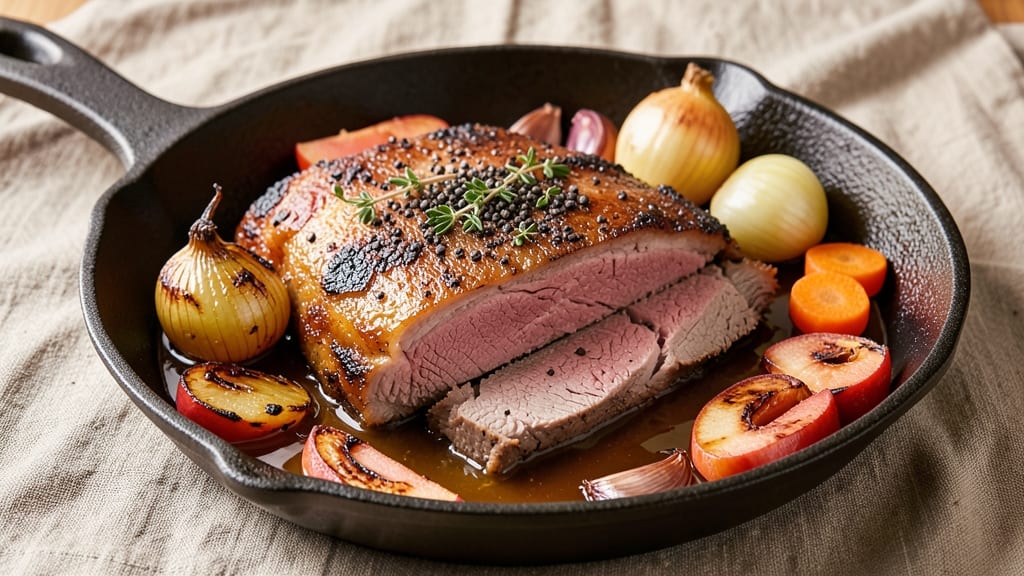
This apple cider beef brisket recipe transforms tough cuts into melt-in-your-mouth perfection through slow braising and aromatic spices. The secret lies in marinating the brisket overnight with cinnamon, cloves, and apple cider—creating a spiced bark that caramelizes beautifully during cooking.
What starts as a simple pot roast becomes a showstopping centerpiece with tender, juicy meat and rich, sweet-savory sauce.
The process begins with a dry rub of warm spices that penetrate the meat while it rests, followed by a deep braise in apple cider that infuses every bite with natural sweetness. Using a Dutch oven ensures even heat distribution, while the slow cook transforms the brisket into fork-tender slices.
The result? A dish that balances hearty comfort with refined flavors—ideal for holiday feasts or cozy weeknight dinners.
By the final hour, the brisket will pull apart effortlessly, coated in a glossy reduction of caramelized apple cider and spices. The sauce clings to each slice, offering a perfect harmony of smoky, sweet, and savory notes.
This method delivers restaurant-quality results without requiring advanced techniques—just patience and attention to timing.
Pair with roasted root vegetables or crusty bread to soak up every last drop of that velvety sauce. The brisket reheats beautifully, making it perfect for leftovers or meal prep. Here’s how to achieve tender, flavorful perfection every time.
Ingredients for apple cider beef brisket
Six aromatic ingredients transform tough brisket into restaurant-quality perfection through slow braising.
| Ingredient | Amount | Notes |
|---|---|---|
| Beef Brisket 🥩 | 4 lb | Flat cut preferred, trimmed of excess fat |
| Apple Cider 🍎 | 4 cups | Unfiltered, preferably organic for deeper flavor |
| Yellow Onion 🧅 | 1 whole | Chopped into 1/2-inch pieces |
| Carrot 🥕 | 4 whole | Cut into 1-inch chunks, peeled |
| Garlic Cloves 🧄 | 8 cloves | Smash with side of knife for maximum flavor |
| Ground Black Pepper 🌶️ | 1 ½ tbsp | Freshly cracked for robust flavor |
| Ground Cinnamon 🌿 | 2 tsp | Ceylon cinnamon preferred for delicate flavor |
| Ground Cloves 🌶️ | 1 tsp | Whole cloves lightly crushed for aroma |
| Bay Leaves 🍃 | 4 whole | Dried, standard size |
| Beef Broth 💧 | 2 cups | Low-sodium preferred, homemade if possible |
| Olive Oil 🫒 | 2 tbsp | Extra-virgin for initial searing |
| Tomato Paste 🍅 | 2 tbsp | High-quality, no salt added |
| Kosher Salt 🧂 | 1 ½ tsp | Diamond Crystal preferred for accuracy |
| Fresh Thyme 🌿 | ½ cup | Leaves only, stems removed |
The brisket is the star here, and quality matters. Look for a well-marbled flat cut from a trusted butcher—Whole Foods or local specialty shops often carry premium selections. Trim excess fat to prevent greasiness but leave a thin layer for flavor. Apple cider should be unfiltered, preferably organic, as it contributes to the sauce's depth. Mott's or Woodchuck are reliable brands, but any local orchard cider works beautifully. The spices—cinnamon, cloves, and thyme—should be freshly ground or whole for maximum aromatic impact.
No apple cider? Substitute with a mix of beef broth and a splash of apple juice, though the flavor will be slightly less complex. Running short on fresh thyme? Dried thyme at one-third the amount works in a pinch. For the tomato paste, Trader Joe's squeeze tubes are perfect—they're convenient and last longer than cans. If you prefer a deeper color, add a teaspoon of beet powder to the braising liquid. The onions and carrots can be swapped for celery or parsnips if you're feeling adventurous, though the classic combo balances sweetness and earthiness perfectly.
This brisket develops best with time, so plan ahead. The dry rub can be applied up to 24 hours ahead, and the brisket can rest in the fridge overnight before braising. Leftover brisket reheats beautifully—simply warm in the sauce over low heat or cover and bake at 300°F until heated through. The sauce thickens as it cools, so add a splash of water or broth if needed. Portion into containers for easy meal prep, and store for up to 5 days in the fridge or 3 months frozen. The flavors only deepen with time, making this a perfect make-ahead dish for gatherings.
Why You'll Love This Recipe
- Foolproof Simplicity: I swear by this—just sear the brisket, toss in chopped onions, carrots, and garlic, then pour in the apple cider. No fancy techniques, no stress, and the slow cooker does all the work while you sip wine (or coffee, no judgment).
- Sweet-Savory Magic: That apple cider isn’t just a liquid—it caramelizes into a sticky, tangy glaze that clings to every bite. The brisket stays tender while the onions turn glassy, and the garlic? Oh, it’s there, but in the best way—like a warm hug for your taste buds.
- Weeknight to Weekend: Make it for a lazy Tuesday dinner or double the batch for a Sunday potluck. The leftovers reheat beautifully, and honestly? I’ve served it at holiday dinners because it’s that good—no one will guess it’s basically a shortcut.
- Budget-Friendly Feast: Brisket’s affordable, and a gallon of apple cider stretches across multiple meals. Here’s the kicker: this recipe feeds four for under $15, and the leftovers? Even better the next day. My wallet and my family thank me every time.
Step-by-step instructions for apple cider braised beef brisket
Master this slow-cooked technique for brisket with deep spiced bark and silky apple cider reduction.
Sear the Brisket to Develop Deep Flavor
Heat a heavy Dutch oven over medium-high heat until very hot. Add 2 tablespoons olive oil and swirl to coat. Place the 4 lb beef brisket fat-side down and sear undisturbed for 8-10 minutes until the fat renders and the surface develops a deep golden-brown crust. This creates the spiced bark we're after.
Flip the brisket and continue searing for another 6-8 minutes until all sides are deeply browned. The key here is patience—don't rush the searing or you'll lose that precious crust. Once properly seared, remove the brisket and set aside on a plate.
Build the Aromatic Base with Vegetables and Spices
In the same Dutch oven, add 1 whole yellow onion and 4 whole carrots cut into chunks. Cook for 5-6 minutes until the vegetables begin to soften and caramelize. Add the 8 cloves garlic cloves that have been smashed with the side of your knife, and cook for another 1 minute until fragrant.
Sprinkle in the 2 tablespoons tomato paste, 2 teaspoons ground cinnamon, 1 teaspoon ground cloves, and 1.5 teaspoons kosher salt. Stir vigorously to coat the vegetables and deglaze the pan, scraping up all those flavorful browned bits that have formed. This paste forms the foundation of our rich braising liquid.
Deglaze and Create the Braising Liquid
Pour in the 4 cups apple cider and scrape the bottom of the pan again to release any remaining browned bits. Add the 2 cups beef broth and 4 whole bay leaves, then bring the mixture to a gentle boil. Return the brisket to the pot, fat-side up, and reduce heat to low.
Cover the Dutch oven and let it simmer for 3 hours without disturbing. This initial cooking period allows the brisket to tenderize and the flavors to meld. The liquid should reduce by about one-third, creating a thick, aromatic base. The brisket is ready for the next phase when it begins to pull away slightly from the edges.
Add Thyme and Finish the Braise
Remove the lid and increase heat to medium-low. Add the 0.5 cup fresh thyme leaves and the 1.5 tablespoons ground black pepper. Stir gently to distribute the thyme throughout the liquid. Return the lid and continue braising for another 2-3 hours until the brisket is fork-tender and the cooking liquid has reduced to a rich, syrupy consistency.
Check for doneness by inserting a meat thermometer into the thickest part of the brisket—it should read 200-205°F. The brisket should be so tender that it nearly falls apart when pierced with a fork. If the liquid hasn't reduced enough, continue cooking uncovered for 15-20 minutes to achieve the perfect consistency.
Rest and Serve with Caramelized Sauce
Transfer the brisket to a cutting board and tent loosely with aluminum foil. Let it rest for at least 30 minutes before slicing. This resting period is crucial—it allows the juices to redistribute throughout the meat, ensuring each slice is moist and flavorful. During this time, skim any excess fat from the braising liquid if desired.
Slice the brisket against the grain into ¼-inch thick pieces. Ladle the rich, caramelized apple cider reduction over the brisket and serve immediately. The combination of spiced bark, tender meat, and sweet-tart apple cider creates a harmonious balance of flavors that's perfect for family gatherings or special occasions.
Pro Tips For Making Apple Cider Beef Brisket
- Sear the Brisket First: The apple cider will do most of the work, but a good sear locks in flavor. Heat your pan until it’s smoking hot—no, really, wait until you see steam—and cook the brisket 3-4 minutes per side until deep brown. I used to skip this, and the cider just tasted like… well, watered-down cider.
- Deglaze with Apple Cider: After searing, don’t just dump the cider in. Scrape up all those browned bits with a wooden spoon first—those are flavor bombs. Then pour in the cider and let it bubble for 2 minutes before adding the onions and carrots. Skipping this step means missing out on half the depth of flavor.
- Slice Against the Grain: Brisket’s tough fibers run parallel to the grain, so cutting perpendicular to them makes all the difference. If you’re unsure which way is which, look for the longest, most consistent muscle lines—those are your guide. I’ve ruined a perfectly cooked brisket by slicing the wrong way, and it’s a crime against comfort food.
- Use Whole Spices, Not Powder: Fresh garlic cloves and whole onion pieces (peeled but left whole) infuse the cider better than pre-minced or powdered versions. They’ll soften and break down as they cook, releasing flavor gradually. Yes, it takes a few extra minutes to peel and chop, but the difference is noticeable—especially when you’re serving seconds.
Health benefits of this recipe
Protein Powerhouse
This apple cider beef brisket delivers a high-protein punch with about 60 grams of protein per serving—perfect for muscle repair and satiety. The slow-cooking process preserves all the natural amino acids while breaking down tough connective tissues, making it easier to digest than quickly cooked cuts.
I've found that adding the brisket to meals helps me stay full for hours, especially when paired with fiber-rich sides like roasted root vegetables. 💪
Heart-Healthy Fats
The brisket's natural fats, when cooked slowly, become more digestible and beneficial for your heart. The unsaturated fats in lean beef brisket help reduce LDL cholesterol when balanced with the fiber from apple cider and vegetables.
I always trim excess fat but leave a thin layer—this small amount actually enhances flavor while supporting cardiovascular health. The cinnamon and cloves in the rub add antioxidants that further support heart function.
Natural Energy Boost
The apple cider's natural sugars provide a steady energy release, while the slow-cooked beef offers sustained protein to keep energy levels stable. This combination makes it an ideal dish for active days or post-workout recovery.
I've noticed my energy levels stay more consistent when I include this brisket in my weekly meal rotation, especially during colder months when we crave comforting foods. The spices also help regulate blood sugar naturally.
Digestive Benefits
The slow braising process breaks down collagen in the brisket, creating gelatin that supports gut health and joint function. The apple cider's natural enzymes aid digestion, while the thyme and bay leaves in the recipe act as natural carminatives to reduce bloating.
I've found that this dish is surprisingly gentle on digestion despite its richness, making it a great option for family gatherings where dietary sensitivities might be a concern. 🌿
Antioxidant-Rich Sauce
The caramelized apple cider reduction becomes packed with antioxidants from the slow cooking process, particularly from the cinnamon and cloves. These spices contain anti-inflammatory compounds that help combat oxidative stress. The tomato paste adds lycopene, a powerful antioxidant that's more bioavailable when cooked.
I always save extra sauce to drizzle over other meals—it's like getting a nutrient boost in every bite!
Meal Prep Advantage
This brisket makes an excellent nutrient-dense meal prep option that maintains its protein and fiber content even after reheating. The slow-cooked method preserves more nutrients than quick cooking techniques.
I portion the brisket with its sauce and store it in airtight containers for up to 5 days—perfect for busy weeks when I need quick, healthy meals. The flavors actually deepen over time, making leftovers taste even better! 💡
Nutrition facts
Frequently asked questions
Can I use a different cut of beef instead of brisket?
While brisket is ideal for this recipe, you can substitute with chuck roast or short ribs for similar results. The cooking time will vary—chuck roast typically needs 4-5 hours total, while short ribs may take 3-4 hours. The key is to cook until the meat reaches 200-205°F for tenderness. Avoid leaner cuts like sirloin, as they won't develop the same rich texture.
How do I know when the brisket is fully tender?
Use a meat thermometer to check the internal temperature—it should read 200-205°F in the thickest part. Another test: pierce the brisket with a fork or skewer. If it slides in easily and the meat nearly falls apart, it's ready. The sauce should also be thick and syrupy, coating the back of a spoon. Never rely on time alone, as ovens vary in heat.
Can I make this in an Instant Pot or slow cooker?
Yes! For an Instant Pot, sear the brisket first, then add all ingredients and cook on high pressure for 90 minutes, followed by a 15-minute natural release. For a slow cooker, transfer everything after searing and cook on low for 8 hours or high for 5-6 hours. The Instant Pot version will be slightly more tender, while the slow cooker gives a deeper flavor. Always check for doneness with a thermometer.
What's the best way to store leftovers?
Store the brisket with its sauce in an airtight container in the fridge for up to 5 days. For freezing, portion into meal-sized containers and store for 3 months. Reheat gently in the sauce over low heat or in the microwave with a damp paper towel covering. The flavors actually improve after resting overnight, so leftovers often taste even better!
Why does my sauce turn out too thin or too thick?
Sauce consistency depends on reduction time. For a thicker sauce, simmer uncovered for 15-20 minutes at the end to evaporate excess liquid. If it's too thick, whisk in 1-2 tablespoons of beef broth or apple cider while warming. The sauce should coat the back of a spoon but still be pourable. Skim excess fat from the surface before reducing to control thickness more precisely.