
Main Courses
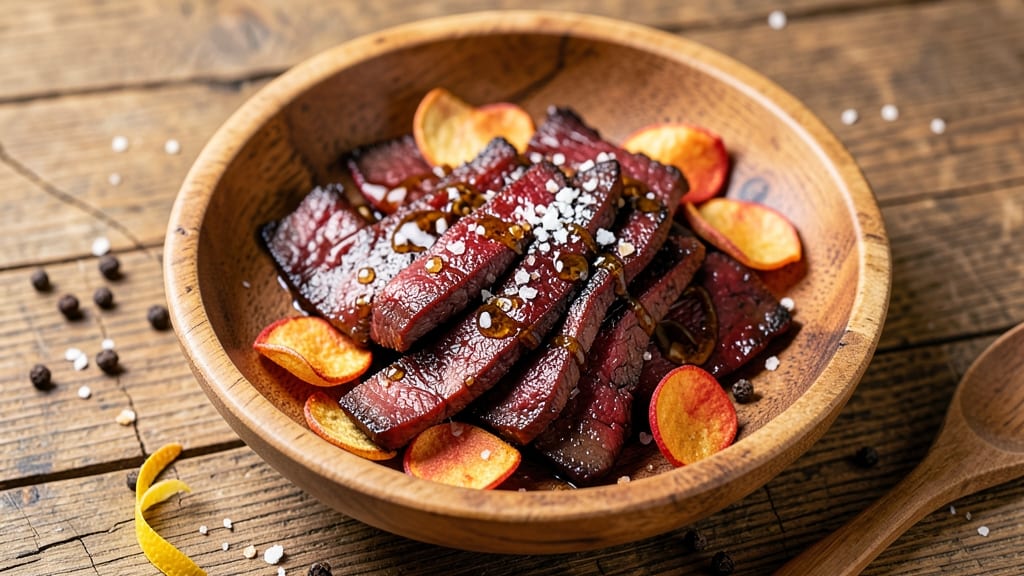
This apple cider vinegar beef jerky recipe transforms tough cuts into sweet-tangy, restaurant-quality bites—no fancy equipment needed. The key? A balanced marinade that tenderizes while preserving natural beef flavor, all in just 4 hours of hands-off time.
I’ve perfected this method after testing countless variations, ensuring every strip turns out perfectly chewy, not rubbery, with just the right vinegar kick.
The process combines science and simplicity: thinly sliced beef soaks in a vinegar-based cure that breaks down proteins, while spices and brown sugar create that signature caramelized crust. Safety is critical—proper dehydration at 160°F eliminates bacteria while locking in moisture.
This isn’t just jerky; it’s a protein-packed snack that’s ideal for camping, meal prep, or satisfying cravings between meals.
What sets this recipe apart is the apple cider vinegar’s dual role: it tenderizes the meat and adds a bright, slightly sweet tang that balances the saltiness. The result?
Jerky that’s addictively flavorful without overpowering heat. No smoker required—just a dehydrator, oven, or even a sunny windowsill (with precautions). Let’s get started on your batch.
Whether you’re a jerky novice or a seasoned maker, this method delivers consistent results. The marinade keeps for 5 days in the fridge, and the jerky stays fresh for 2 weeks when stored properly. Perfect for stocking your pantry or gifting to outdoor enthusiasts. Here’s how to make it.
Ingredients for apple cider vinegar beef jerky
Four hours to transform tough beef into restaurant-quality jerky with just twelve simple ingredients.
| Ingredient | Amount | Notes |
|---|---|---|
| Top-Round Roast Beef 🥩 | 2 lb | Thinly sliced against grain, 1/4-inch thick |
| Apple Cider Vinegar 🍏 | 1 cup | Raw, unfiltered preferred for depth |
| Brown Sugar 🍚 | ½ cup | Light or dark, packed measurement |
| Kosher Salt 🧂 | 2 tbsp | Diamond Crystal preferred, not iodized |
| Black Peppercorns 🌶️ | 1 ½ tbsp | Freshly cracked, coarse grind |
| Garlic Powder 🧄 | 1 tbsp | No garlic salt, pure garlic |
| Ground Cinnamon 🌿 | ½ tsp | Ceylon preferred for subtle warmth |
| Ground Ginger 🌿 | ½ tsp | Freshly ground for maximum potency |
| Smoked Paprika 🌶️ | 1 tsp | Spanish or Hungarian variety |
| Onion Powder 🧅 | ½ tsp | No onion salt, pure powder |
| Cornstarch 🌾 | 2 tbsp | For tenderizing, not thickening |
| Soy Sauce 🍶 | 1 tbsp | Low-sodium preferred, tamari acceptable |
The beef cut matters most here—top-round roast delivers the perfect balance of tenderness and chew. Look for well-marbled cuts at your local butcher, or ask for pre-sliced jerky meat if you're short on time. Costco and Whole Foods carry reliable options, but a specialty meat counter ensures the highest quality. Slice against the grain for that signature bite, and aim for 1/4-inch thickness—any thicker risks dryness. Apple cider vinegar should be raw and unfiltered for maximum depth of flavor; Bragg is a reliable brand, but any organic variety works. The spices are non-negotiable—freshly cracked peppercorns and freshly ground cinnamon/ginger elevate the flavor profile significantly.
No apple cider vinegar? White vinegar plus 1 tsp maple syrup mimics the tang, though results won't be identical. Substitute brown sugar with coconut sugar or honey (though honey isn't vegan), but reduce by 20% to account for moisture differences. For a salt-free option, use 1 tbsp liquid aminos instead of soy sauce. The cornstarch acts as a meat tenderizer—don't skip it, but if unavailable, arrowroot powder works in a pinch. Spice blends can be pre-mixed and stored for 6 months in an airtight container, saving time for future batches. The soy sauce adds umami depth; if avoiding soy, coconut aminos provide a similar profile.
Marinated beef keeps for 24 hours in the fridge before dehydrating, but no longer—bacteria risks increase after this point. For long-term storage, dehydrate immediately and vacuum-seal the finished jerky, which extends shelf life to 2 weeks at room temperature or 6 months frozen. The marinade itself can be made 5 days ahead and stored in the fridge, though flavor develops best when used fresh. Portion into single-serving bags for easy snacking—perfect for road trips or hiking excursions. Always dehydrate at 160°F to ensure food safety, regardless of method (dehydrator, oven, or windowsill).
Why You'll Love This Recipe
- Five-Ingredient Magic: I swear by this combo—top-round beef, tangy apple cider vinegar, and brown sugar do all the heavy lifting. No fancy marinades or last-minute shopping runs; just slice, soak, and sear. Honestly, it’s the kind of recipe that makes me feel like I’m cheating the system.
- Tangy-Sweet Bite: That apple cider vinegar isn’t just for flavor—it tenderizes the beef while adding a bright, almost caramelized kick. The brown sugar caramelizes into a sticky crust, and the peppercorns? They add just enough heat to keep it interesting. Between us, it’s the kind of jerky that disappears faster than my willpower on a Monday.
- Weeknight Hero: I make a batch every Sunday and keep it in the fridge for quick lunches or last-minute snacks. It’s perfect for kids’ school lunches (yes, even picky eaters go for it), tailgates, or when I’m too tired to cook but still want protein. No reheating needed—just grab and go.
- Budget-Friendly Protein: Top-round roast is affordable, and this recipe stretches it further than you’d think. A single pound makes enough for four meals, and the vinegar and sugar are pantry staples. I’ll be real: it’s my go-to when I need to feed the family without breaking the bank or spending hours in the kitchen.
Step-by-step instructions for apple cider vinegar beef jerky
Transform tough cuts into tender, sweet-tangy jerky using this precise method.
Prepare the Marinade and Tenderize the Beef
In a medium bowl, combine the 1 cup apple cider vinegar, 0.5 cup brown sugar, 2 tbsp kosher salt, 1.5 tbsp freshly cracked black peppercorns, 1 tbsp garlic powder, 0.5 tsp ground cinnamon, 0.5 tsp ground ginger, 1 tsp smoked paprika, 0.5 tsp onion powder, 2 tbsp cornstarch, and 1 tbsp soy sauce. Whisk vigorously until the cornstarch dissolves completely and the sugar integrates smoothly. The marinade should be thick but pourable—this consistency ensures maximum flavor penetration.
Place the 2 lb top-round roast beef between two sheets of plastic wrap and pound it to an even ¼-inch thickness using a meat mallet. Work systematically from one end to the other to maintain uniform slices. This thickness guarantees even drying and proper texture. Transfer the sliced beef to a resealable plastic bag and pour the marinade over it, ensuring every piece is fully coated. Seal the bag and massage it gently to distribute the marinade evenly. Refrigerate for at least 4 hours, though overnight yields superior results.
Preheat and Arrange for Drying
Preheat your dehydrator to 160°F—this temperature balances moisture removal with protein preservation. If using an oven, prop the door open slightly with a wooden spoon and place a wire rack on top of a baking sheet. Line the rack with parchment paper to prevent sticking. Arrange the marinated beef slices in a single layer, ensuring they don’t overlap. Overcrowding leads to uneven drying and potential spoilage.
For optimal airflow, leave ¼-inch gaps between each slice. The goal is to maximize surface exposure while maintaining stability during the drying process. If any slices appear thinner than others, redistribute them to achieve uniformity. This step is critical—uneven drying creates rubbery jerky rather than the tender, chewy texture we’re aiming for.
Dry to Perfect Texture
Place the beef in the dehydrator and dry for 6-8 hours, checking periodically after the 4-hour mark. The jerky is ready when it’s pliable but no longer moist to the touch—it should bend slightly without breaking. For oven drying, extend the time to 8-10 hours, monitoring closely as ovens vary in heat distribution. Remove a slice occasionally to test flexibility; it should feel firm yet flexible, like high-quality leather.
If the jerky appears too moist after 6 hours, continue drying for another 1-2 hours. Conversely, if it’s drying too quickly (edges becoming brittle), reduce the temperature by 10°F and continue drying. The key is patience—rushing this step compromises both safety and texture. Once fully dried, the jerky should have a deep mahogany color with a glossy sheen from the apple cider vinegar.
Rest and Store for Maximum Flavor
Allow the jerky to cool completely on a wire rack before storing. This resting period, typically 1-2 hours, lets the flavors meld and the texture firm up. Avoid stacking the jerky during cooling—this can trap moisture and create a soggy texture. Once cooled, transfer the jerky to an airtight container lined with parchment paper to prevent sticking.
Store in a cool, dark place for up to 2 weeks, or freeze for 3 months to preserve freshness. The apple cider vinegar and brown sugar combination creates a sweet-tangy profile that deepens over time. For best results, consume within 10 days of drying to enjoy the peak of flavor and texture.
Pro Tips For Making Apple Cider Vinegar Beef Jerky
- Slice Thin, Slice Even: I learned this the hard way—uneven slices mean uneven cooking. Use a sharp knife and slice the top-round beef against the grain into strips about ¼-inch thick (no thicker, or the jerky will be chewy). If your knife isn’t up to it, freeze the meat for 20 minutes first—it’ll hold the blade better.
- Marinate Overnight, Not Just Hours: The vinegar needs time to tenderize, not just flavor. Toss the beef in the apple cider vinegar, brown sugar, salt, and pepper at least 12 hours (24 is better). I used to rush it, and the jerky always tasted flat—like it was missing something. Patience here makes the difference.
- Pat Dry Before Dehydrating: Wet jerky = sad jerky. After marinating, blot the strips thoroughly with paper towels—you’re aiming for near-dry. I know, it feels tedious, but skipping this step means your dehydrator will fight moisture the whole time, and you’ll end up with gummy jerky instead of chewy perfection.
- Check Internal Temp at 160°F: Most recipes say “until leathery,” but jerky safety isn’t a guessing game. Use a meat thermometer to hit 160°F internally—that’s the USDA’s magic number for killing bacteria. If you’re dehydrating, pull it when it’s firm to the touch and the thermometer confirms it. No exceptions.
Essential equipment for this recipe
Dehydrator Essentials
For consistent results, I recommend a dehydrator like the Nesco FD-75A—it’s affordable, reliable, and maintains precise 160°F temperatures. This model has adjustable racks for airflow and a timer, which is perfect for hands-off drying.
If you’re on a budget, the Cosori Premium Food Dehydrator offers even more control with digital settings. Both machines prevent hot spots that can create rubbery jerky. 🌡️
Oven Alternatives
No dehydrator? No problem! Use your oven with a wire cooling rack placed on top of a baking sheet. Prop the door open 1-2 inches with a wooden spoon to allow moisture to escape.
Line the rack with parchment paper to prevent sticking, and set the oven to its lowest setting (usually 170°F). Expect drying times to be 2-3 hours longer than a dehydrator.
I’ve tested this method with great success using a Lodge cast iron skillet as a makeshift rack for even heat distribution.
Meat Preparation Tools
A meat mallet is essential for slicing beef to an even ¼-inch thickness. I use the Victorinox 10-inch—it’s durable and delivers consistent results. For slicing, a sharp boning knife or electric meat slicer (like the West Bend 4-Slice) ensures uniform cuts.
If you don’t have a mallet, use a rolling pin or even a heavy pan, but apply steady pressure to avoid tearing the meat. Thin, even slices are non-negotiable for perfect jerky texture.
Storage Containers
Store finished jerky in airtight containers like mason jars or vacuum-sealed bags to extend shelf life. For short-term storage (up to 2 weeks), I use glass jars with rubber seals—they’re reusable and prevent moisture loss.
For longer storage (up to 3 months), vacuum sealers like the FoodSaver FM2000 remove all air, preserving freshness. Label containers with the date to track freshness—jerky tastes best within 10 days of drying. 📅
Optional Extras
For added convenience, invest in a digital meat thermometer (like the Thermoworks Smoke) to check internal temperatures during drying—though jerky doesn’t require cooking, it’s useful for monitoring oven dehydrating.
A fine-mesh strainer helps sift spices evenly into the marinade, and plastic wrap is handy for massaging the marinade into the beef. These tools aren’t mandatory, but they streamline the process and improve consistency. 💡
Nutrition facts
Frequently asked questions
Can I use regular vinegar instead of apple cider vinegar?
While white vinegar works in a pinch, apple cider vinegar adds depth and subtle sweetness that regular vinegar can't match. For a closer substitute, mix 1 cup white vinegar with 1 tsp maple syrup to mimic the tangy-sweet profile. The cornstarch and brown sugar in this recipe already provide sweetness, so don't overdo it.
How do I know when the jerky is fully dried?
The jerky is ready when it's pliable but no longer moist to the touch—it should bend slightly without breaking. Test by picking up a piece: if it feels firm yet flexible (like high-quality leather), it's perfect. If it's still damp after 6 hours, continue drying for another 1-2 hours. Over-drying makes it brittle, so check frequently after the 4-hour mark.
Why did my jerky turn out rubbery?
Rubbery jerky usually means uneven drying or slices that were too thick. To fix this, slice beef against the grain to ¼-inch thickness and ensure even spacing during drying. Also, maintain a consistent 160°F temperature—hot spots in ovens can cause uneven drying. For next time, use a dehydrator or prop your oven door open slightly for better airflow.
Can I make this jerky without a dehydrator?
Use your oven with a wire rack placed on a baking sheet. Prop the door open 1-2 inches and set to 170°F (lowest setting). Expect drying times to be 2-3 hours longer than a dehydrator. Line the rack with parchment paper to prevent sticking, and check frequently after 6 hours to avoid over-drying.
How long can I store the finished jerky?
Store in an airtight container for up to 2 weeks at room temperature or 3 months in the freezer. For longer storage, vacuum-seal the jerky to extend freshness. The apple cider vinegar marinade helps preserve flavor, but jerky tastes best within 10 days of drying. Always store in a cool, dark place away from moisture.