
Main Courses
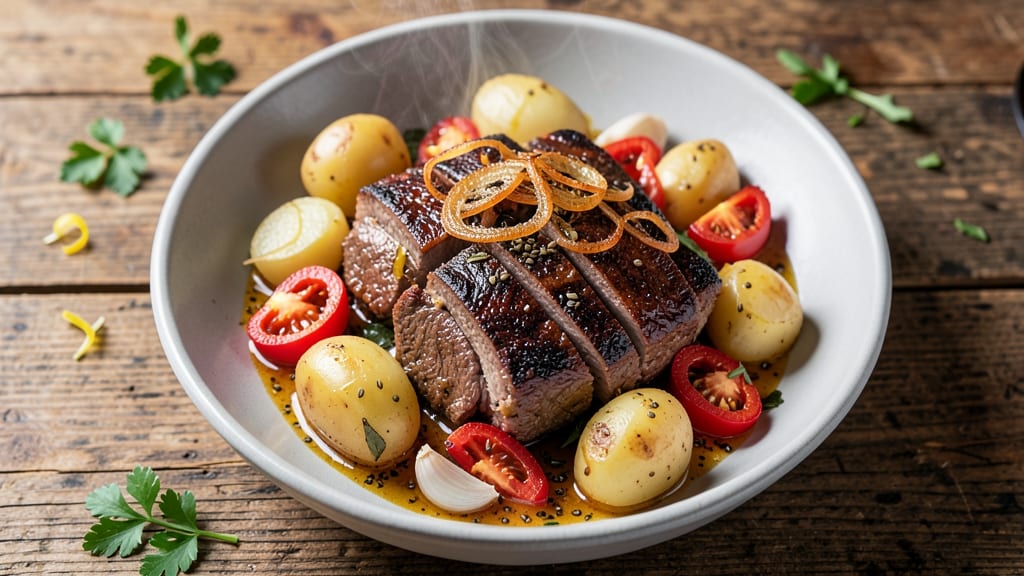
Austrian boiled beef delivers the kind of deep, savory richness that transforms ordinary meals into hearty traditions. This recipe captures the essence of Austrian cuisine—tender beef marinated in herbs and mustard, then slow-simmered until fork-tender, creating layers of flavor that linger long after the last bite.
The secret lies in the marinade, where caraway seeds, bay leaves, and a touch of mustard work together to infuse the beef with authentic character.
What sets this dish apart is its balance of simplicity and depth. You'll start with a 24-hour marinade that tenderizes the beef while building complex flavors, followed by a gentle simmer that ensures the meat stays juicy and flavorful.
The result is a dish that's equally at home on a rustic Austrian table or a modern dinner menu, with the option to adapt it for slow cookers or pressure cookers for convenience.
Pairing the beef with traditional sides like horseradish sauce, buttered potatoes, or red cabbage completes the experience, creating a meal that feels both comforting and celebratory. The slow-cooked beef develops a meltingly tender texture with just enough bite, while the marinade's spices add warmth and depth.
This is the kind of recipe that rewards patience and delivers restaurant-quality results at home.
Whether you're serving a family gathering or a special occasion, this Austrian boiled beef brings a taste of tradition to your kitchen. The method is straightforward, but the flavors are unforgettable—perfect for those who appreciate dishes that tell a story with every bite.
Ingredients for austrian boiled beef
Six pounds of beef, twelve spices, and a 24-hour marinade—this is Austrian comfort at its finest.
| Ingredient | Amount | Notes |
|---|---|---|
| Beef Chuck Roast 🥩 | 4 lb | Center-cut for even cooking |
| Yellow Mustard 🍯 | ¼ cup | Dijon preferred for depth |
| Extra-Virgin Olive Oil 🫒 | ½ cup | For rich marinade base |
| Caraway Seeds 🌿 | 2 tsp | Lightly toasted for aroma |
| Bay Leaves 🍃 | 4 whole | Fresh for maximum flavor |
| Garlic Cloves 🧄 | 6 cloves | Smash slightly for infusion |
| Fresh Thyme 🌿 | ¼ cup | Stems removed, chopped |
| Fresh Parsley 🌿 | ¼ cup | Finely chopped for brightness |
| Beef Broth 💧 | 3 cups | Low-sodium preferred |
| Red Wine Vinegar 🍷 | ¼ cup | For tangy balance |
| Onions 🧅 | 2 whole | Yellow, peeled and halved |
| Carrots 🥕 | 4 whole | Large, peeled and cut |
| Celery Stalks 🥬 | 4 whole | Trimmed and cut |
| Salt 🧂 | 1 ½ tsp | Diamond Crystal preferred |
| Black Peppercorns 🌶️ | 1 tsp | Freshly cracked |
| Allspice Berries 🌶️ | ½ tsp | Crushed for warmth |
The beef is non-negotiable: center-cut chuck roast delivers the perfect balance of tenderness and flavor. Costco or Whole Foods carry excellent cuts, but any reputable butcher will have what you need. Look for good marbling—those white fat streaks are what keep the meat juicy during slow cooking. If you can't find chuck, top round works in a pinch, though it'll be slightly leaner. The marinade ingredients are all pantry staples, but fresh thyme and parsley make a noticeable difference. Toast the caraway seeds lightly in a dry pan first—they release their essential oils and add a subtle anise-like warmth that's characteristic of Austrian cuisine.
No caraway seeds? Fennel seeds at half the amount offer a similar earthy note. Short on red wine vinegar? White wine vinegar or apple cider vinegar both work, though the flavor profile shifts slightly. The beef broth should be low-sodium—you'll be adding plenty of salt during cooking. For the aromatics, frozen herbs work in a bind, but fresh are ideal. If you're prepping ahead, make the marinade up to 48 hours early—the flavors deepen with time. The onions, carrots, and celery form the base for the simmering liquid, so don't skimp on quality. Organic produce has fewer pesticides, which matters when you're cooking them down to a rich broth.
This dish tastes even better the next day, so make it ahead if possible. Store the cooked beef in its broth in the fridge for up to 5 days or freeze for 3 months. The broth alone is worth saving—strain it and reduce it by half for a rich gravy. For serving, keep the beef warm in the broth while you reheat the vegetables separately. The traditional sides—horseradish cream, buttered potatoes, or braised red cabbage—all pair beautifully. If you're using a slow cooker, transfer everything to it after the initial sear and cook on low for 8 hours, adding extra broth as needed.
Why You'll Love This Recipe
- No-Fuss Simmer: I swear by this recipe on days when I’d rather not stand at the stove. Toss the chuck roast in olive oil and caraway seeds—no fancy searing, no flipping—just a slow boil with bay leaves. The mustard ties it all together while I’m doing laundry or watching a movie.
- Umami Bomb: That yellow mustard isn’t just for dipping—it’s the secret weapon here. The caraway seeds add a warm, earthy kick, while the beef melts into tender, juicy perfection. Honestly, the first time I tasted it, I thought, “Why didn’t I do this sooner?”
- Leftover Goldmine: This recipe makes way more than you’ll eat in one sitting—and that’s a good thing. The beef stays tender for days, so I repurpose it into sandwiches, salads, or even a quick stroganoff. (Yes, even on a Tuesday night.)
- Budget Stretch: A chuck roast is cheap, and this method turns it into a meal that feeds a crowd without breaking the bank. I’ll be real: my grocery bill stays happy, and my family stays full. Plus, the leftovers mean fewer takeout nights. Win-win.
Step-by-step instructions for Austrian boiled beef
Transform a simple chuck roast into tender, aromatic beef with a deep marinade and slow simmer.
Prepare the Mustard Marinade
In a large mixing bowl, combine the 0.25 cup yellow mustard, 0.5 cup extra-virgin olive oil, 0.25 cup red wine vinegar, 1.5 tsp salt, 1 tsp cracked black peppercorns, and 0.5 tsp crushed allspice berries. This marinade forms the flavor foundation—Dijon mustard adds depth while the vinegar brightens the richness.
Whisk until fully emulsified, then add the 6 smashed garlic cloves, 0.25 cup chopped fresh thyme, and 0.25 cup chopped fresh parsley. Let the marinade sit for 10 minutes to allow the aromatics to infuse. The mixture should be thick but pourable—this ensures even coating of the beef.
Coat and Sear the Beef
Pat the 4 lb beef chuck roast dry with paper towels—this prevents steam from forming between the meat and marinade. Place the roast in a shallow dish and pour the marinade over it, turning to coat all sides completely. Let it marinate uncovered in the refrigerator for at least 4 hours (overnight is ideal) for maximum flavor penetration.
Heat a heavy Dutch oven over medium-high heat and add the roast. Sear on all sides for 3-4 minutes per side until deeply browned. This step develops the Maillard reaction, creating complex flavors that carry through the simmering process. Remove the roast and set aside temporarily.
Build the Vegetable Base
In the same Dutch oven, add 2 halved onions, 4 cut carrots, and 4 cut celery stalks (this classic trio is called mirepoix). Sauté for 5 minutes until the vegetables soften slightly and release their natural sweetness. Add the 2 tsp toasted caraway seeds and 4 whole bay leaves, stirring for 30 seconds to toast the spices gently.
Pour in the 3 cups beef broth, scraping up any browned bits from the bottom of the pot. Bring to a gentle boil, then reduce heat to maintain a low simmer—this prevents toughening the beef. The broth should just bubble softly, not vigorously.
Simmer Until Fork-Tender
Return the seared beef to the pot, placing it on top of the vegetables. Cover and simmer for 3 hours at a steady low heat. The beef is ready when it reaches 203°F internally and a fork slides in with minimal resistance. This slow cooking breaks down connective tissue, transforming tough chuck into melt-in-your-mouth perfection.
During the last 30 minutes, check the liquid level periodically. If it reduces too much, add hot water as needed to keep the beef moist. The vegetables should be tender but still hold their shape—overcooking them turns them mushy.
Rest and Serve
Transfer the beef to a cutting board and tent loosely with foil. Let it rest for 15 minutes before slicing against the grain into ½-inch thick portions. This resting period allows juices to redistribute, ensuring each bite remains succulent. The finished beef should have a rich, mustard-infused flavor with subtle notes of caraway and allspice.
Serve the beef with the strained cooking liquid (reduced slightly for gravy consistency) and the tender vegetables. For presentation, garnish with additional chopped fresh parsley and serve with crusty bread or buttered potatoes to soak up the flavorful juices.
Pro Tips For Making Austrian Boiled Beef
- Trim the Fat First: That thick layer of silver skin on beef chuck? It’s not just for looks—it’s a flavor trap that turns your broth murky. Use a sharp knife to slice through it before boiling, then scrape it off. I learned this the hard way when my first batch tasted like it had been simmered in grease.
- Toast the Caraway: Caraway seeds are tiny but mighty—toss them in a dry pan for 30 seconds until fragrant before adding them to the pot. This wakes up their flavor, so they don’t just sit there like wallflowers. (Yes, even if you’re impatient like me.)
- Don’t Rush the Mustard: Stir in that yellow mustard after the beef is tender, not at the start. If you add it too early, it’ll turn bitter and cling like glue. A splash at the end brightens the broth without overpowering it—trust the process.
- Simmer Low and Slow: This isn’t a race. Keep the heat at a bare simmer—gentle bubbles, not rolling—so the beef stays fork-tender, not tough. I used to crank the heat, and the meat came out chewy. (Your future self will thank you.)
Health benefits of this dish
Protein Powerhouse
Austrian boiled beef delivers high-quality protein with 40 grams per 6-ounce serving, making it an excellent choice for muscle repair and satiety. The slow-cooking process preserves protein integrity while breaking down tough fibers, making it easier to digest than many other beef preparations.
I find this dish keeps me full for hours—perfect for hearty meals. 💪
Heart-Healthy Fats
The marbling in chuck roast provides monounsaturated fats, which support cardiovascular health when consumed in moderation. The mustard marinade adds omega-3s from olive oil, while the caraway seeds contribute antioxidant properties.
This combination creates a flavorful dish that’s also nutrient-dense for your heart. The slow simmer helps retain these beneficial fats without excessive oil.
Digestive Benefits
The caraway seeds in the marinade are known to aid digestion and reduce bloating—something I’ve noticed personally after eating this dish. The gentle cooking method preserves natural enzymes in the beef, making it easier on the stomach compared to grilled or fried preparations.
For those with sensitive digestion, this method is particularly gentle while still delivering deep flavor.
Low-Calorie Comfort
Despite its rich taste, this dish is surprisingly moderate in calories when prepared correctly. A 6-ounce serving contains about 300 calories, with 20 grams of protein and only 15 grams of fat—mostly from the healthy fats in the beef and olive oil.
The broth-based cooking method keeps calories in check while maximizing flavor. I often serve it with steamed vegetables to balance the meal further.
Iron and Zinc Boost
Beef is one of the best natural sources of heme iron (the most easily absorbed form), with this recipe providing 3.5mg per serving—about 20% of your daily needs. The zinc content also supports immune function, while the allspice and thyme in the marinade add antimicrobial properties.
This makes the dish not just delicious but also nutritionally robust for overall health.
Meal Prep Advantage
The leftovers maintain their nutritional benefits for up to 5 days in the fridge, making this an ideal meal prep dish. The slow-cooked beef retains its protein and mineral content better than quickly cooked cuts, while the broth can be repurposed into gravy or soups for additional meals.
I always double the recipe to have ready-to-eat portions for busy weeks. ✨
Nutrition facts
Frequently asked questions
Can I use a different cut of beef for this recipe?
While chuck roast is ideal for its marbling and tenderness, you can substitute with top round (leaner but still flavorful) or bottom round (more tender). Avoid tough cuts like flank steak—they won't become fork-tender with this method. If using round, increase simmering time by 30-45 minutes to ensure full tenderness.
How do I make this dish in a slow cooker?
Transfer the seared beef and marinade to your slow cooker, then add the sautéed vegetables, broth, and spices. Cook on low for 8 hours or high for 5-6 hours. Add ½ cup hot water if the liquid reduces too much. The slow cooker maintains gentle heat without risk of overcooking—perfect for hands-off preparation.
What's the best way to reheat leftovers?
Slice the beef and reheat in the broth over low heat for 10-15 minutes—never microwave directly. For vegetables, warm them separately in a pan with butter. The broth can be reduced into gravy by simmering uncovered for 10 minutes. Leftovers keep 5 days refrigerated or 3 months frozen in airtight containers.
Why does my beef turn out tough?
Overcooking is the #1 cause—beef should reach 203°F internally, not boil vigorously. Use a meat thermometer to avoid guesswork. Also, skip the marinade? The acid in mustard and vinegar tenderizes the meat. If using leaner cuts, increase simmering time by 30 minutes and add 1 cup extra broth to prevent drying.
What traditional sides pair best with this dish?
Classic Austrian pairings include horseradish cream sauce, buttered potatoes, or braised red cabbage. For a lighter option, try steamed green beans with almonds. The mustard-infused beef balances well with crusty rye bread to soak up the juices. Don't forget a crisp green salad with apple slices for freshness.