
Main Courses
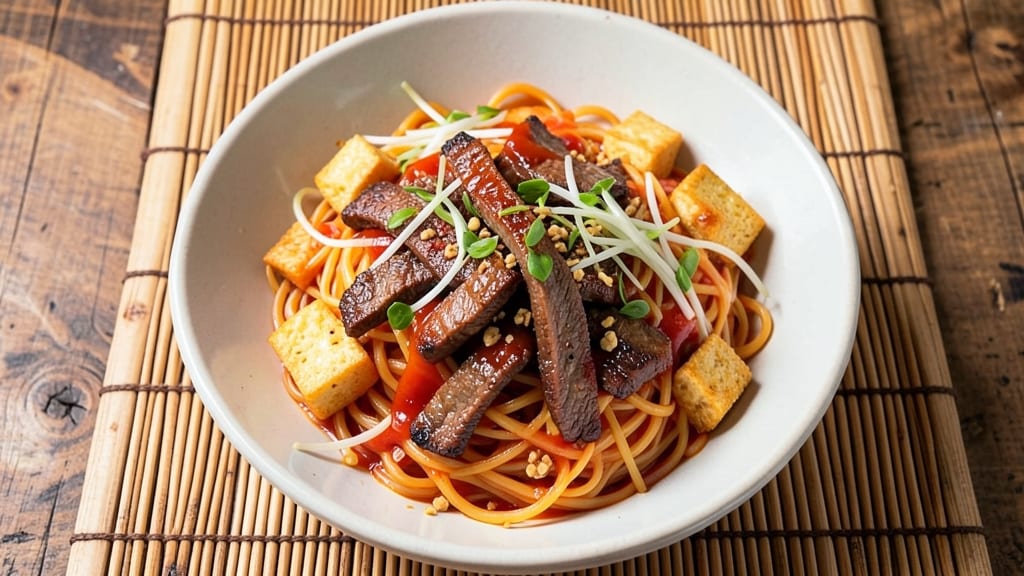
This authentic beef pad thai recipe delivers the perfect balance of tangy, sweet, and savory flavors that define Thailand's most beloved street food. The secret lies in tamarind paste and palm sugar, which create that signature sweet-sour sauce while wok hei—the smoky breath of the wok—adds depth to every bite.
I've perfected this recipe after years of testing, ensuring the rice noodles stay chewy, the beef is tender yet crispy, and the tofu bites add satisfying texture.
The foundation of great pad thai is the sauce: tamarind paste, fish sauce, and palm sugar combine to create a complex, umami-rich base that coats every ingredient. Stir-frying the beef and tofu in small batches ensures they develop that signature wok char without overcooking.
Traditional techniques like tossing the noodles in the wok after cooking prevent them from turning mushy, while bean sprouts and crushed peanuts add freshness and crunch.
What sets this recipe apart is the attention to detail—from the crisp-tender tofu bites to the perfectly balanced sauce, every element comes together in harmony. The result is a dish that's vibrant, flavorful, and restaurant-quality, with the right mix of textures and aromas to transport you to Bangkok.
Garnish with fresh cilantro, lime wedges, and chili flakes to elevate each bite.
This recipe serves four and takes about 30 minutes to prepare, making it ideal for a weeknight dinner or a special occasion. The flavors develop as you eat, so don't be afraid to adjust the sweetness or spice to your taste.
Once you try this authentic version, store-bought pad thai will never compare again.
Ingredients for authentic beef pad thai
Pantry staples meet Thai street food magic—just 15 ingredients for bold, restaurant-style pad thai.
| Ingredient | Amount | Notes |
|---|---|---|
| Rice Noodles 🍜 | 8 oz | Flat, medium-width, dried |
| Extra-Firm Tofu 🍱 | 14 oz | Pressed, cubed, crispy-fried |
| Thinly Sliced Beef 🥩 | 12 oz | Flank or sirloin, thinly sliced |
| Tamarind Paste 🍓 | ¼ cup | Unsweetened, thick consistency |
| Palm Sugar 🍯 | ¼ cup | Finely ground, golden brown |
| Fish Sauce 🐟 | ⅛ cup | Red Boat brand preferred |
| Vegetable Oil 🫒 | ½ cup | High smoke point for wok |
| Garlic Cloves 🧄 | 6 cloves | Minced, aromatic |
| Bean Sprouts 🌱 | 2 cups | Fresh, crisp |
| Crushed Peanuts 🥜 | ¼ cup | Roasted, unsalted |
| Fresh Cilantro 🌿 | ¼ cup | Chopped, bright green |
| Lime Wedges 🍋 | 2 whole | Fresh, for serving |
| Chili Flakes 🌶️ | 1 tsp | Adjust to taste |
| Salt 🧂 | 1 tsp | Kosher or sea salt |
| White Pepper 🌶️ | ½ tsp | Freshly ground |
The tamarind paste is non-negotiable here—Thai Kitchen brand is my go-to, but any unsweetened version works. Palm sugar gives that authentic caramelized sweetness (don't swap for regular sugar—it won't dissolve right). For the beef, flank steak or sirloin slices thinly against the grain—Costco sells pre-sliced packs that save time. The tofu? Press it hard for 30 minutes first—extra-firm holds up best. Bean sprouts should be crisp, so soak them in ice water 10 minutes before using.
No tamarind paste? Substitute lime juice plus 1 tbsp brown sugar (not ideal, but works). Ran out of palm sugar? Honey or agave at half the amount—just know it won't be identical. Fish sauce is essential for umami, but if you're avoiding it, soy sauce plus a pinch of sugar gets you close. The crushed peanuts can be swapped for cashews or almonds, though they'll be pricier. For the wok hei, a cast-iron skillet on high heat mimics the effect—just keep it moving!
Store prepped ingredients smart: Cooked noodles keep 2 days in the fridge, but they're better fresh. The sauce mix (tamarind, sugar, fish sauce) lasts 1 week in a sealed jar. Tofu and beef can be marinated separately for up to 24 hours—I always do this ahead. Lime wedges? Keep them in a sealed container with a paper towel to stay fresh longer. Double the recipe and freeze portions—3 months in airtight containers. Just reheat with a splash of water.
Why You'll Love This Recipe
- I’ll be real: most takeout pad thai turns into sad, dry noodles the next day. Not this. The tamarind and sugar keep it moist, and I’ve reheated portions in a pan with a splash of water—still crispy on the edges, still packed with flavor. Budget-friendly? Absolutely. Waste-free? Even better.
- No-Fuss Noodles: I swear by this recipe because it’s the only pad thai where the noodles stay just al dente—no soggy mess. Soak the rice noodles for 15 minutes, drain, and toss them in while the beef sizzles. That’s it. No overcooking, no guessing.
- Tamarind Magic: Honestly, I didn’t believe how much a spoonful of tamarind paste would change everything—until I tried it. It’s that bright, tangy backbone that cuts through the richness of the beef and tofu, making every bite balanced and ridiculously addictive.
- Weeknight Crowd-Pleaser: Between us, this is my go-to when friends drop by unannounced. The beef slices fast, the tofu soaks up flavor like a sponge, and the palm sugar adds just enough sweetness to keep everyone happy. Plus, it’s the one dish where vegetarians and meat lovers don’t fight over the plate.
Step-by-step instructions for tamarind-kissed noodles with crispy tofu bites
Here's how to make this restaurant-quality beef pad Thai with that perfect balance of tangy, sweet, and savory.
Soak and Prepare the Rice Noodles
Fill a large bowl with warm water and add the 8 oz rice noodles. Let them soak for exactly 15-20 minutes until pliable but still slightly firm to the touch. They should double in size but not turn mushy. Drain and set aside, leaving them slightly wet—this prevents them from drying out when stir-fried.
Don't skip soaking! Dried rice noodles need hydration to cook properly. If you soak them too long, they'll turn to mush. If they feel stiff after 20 minutes, add a splash of warm water and let them sit for another 5 minutes. Trust your fingers—they should feel soft but still hold their shape when pinched.
Create the Tamarind-Palm Sugar Sauce
In a small bowl, whisk together the 0.25 cup tamarind paste, 0.25 cup palm sugar, and 0.125 cup fish sauce until completely smooth. This is your flavor foundation—don't skip the whisking or you'll get grainy bits in your sauce. The mixture should be thick but pourable, with a deep reddish-brown color from the tamarind.
Taste and adjust: if it's too tart, add a pinch more palm sugar; if it's too sweet, add a splash of fish sauce. The sauce should balance all three flavors—tangy, sweet, and salty—right from the start. This is the soul of your pad Thai, so take your time getting it right.
Cook the Crispy Tofu Bites
Heat 0.25 cup vegetable oil in a large wok or skillet over medium-high heat until shimmering. Add the 14 oz cubed extra-firm tofu in a single layer and cook for 4-5 minutes until golden brown on all sides. You want them crispy outside but still tender inside—press a piece gently with tongs to check.
Don't crowd the pan or the tofu will steam instead of crisp. If needed, work in batches. Once done, transfer to a paper towel-lined plate to drain excess oil. These crispy tofu cubes add the perfect textural contrast to the soft noodles and beef.
Stir-Fry the Beef and Aromatics
In the same wok, add 0.25 cup vegetable oil and swirl to coat the bottom. Increase heat to high and add the 12 oz thinly sliced beef. Stir-fry for 1-2 minutes until the beef is just cooked through but still tender. Remove and set aside.
In the same pan, add the 6 cloves minced garlic and cook for 30 seconds until fragrant. Then add the 1 tsp chili flakes and 1 tsp salt, stirring constantly for 10 seconds until the chili flakes darken slightly. This quick cooking preserves their heat without burning them.
Combine Everything for the Perfect Pad Thai
Return the beef to the wok and add the drained rice noodles. Pour in the tamarind-palm sugar sauce and toss everything together for 2-3 minutes over medium-high heat until the noodles are evenly coated and heated through. The sauce should cling to the noodles without making them soggy.
Stir in the 2 cups bean sprouts and 0.5 tsp white pepper, tossing for another 30 seconds until the sprouts are bright green and just wilted. Taste and adjust seasoning—you might need a splash more fish sauce or a pinch of sugar at this point. The final dish should sing with all those flavors.
Finish and Serve
Divide the pad Thai among plates and top each serving with 0.25 cup crushed peanuts and 0.25 cup chopped fresh cilantro. Serve immediately with the 2 lime wedges on the side. The peanuts add crunch, the cilantro brings freshness, and the lime lets everyone adjust the tanginess to their taste.
This is where the magic happens—each bite should deliver that perfect balance of crispy tofu, tender beef, chewy noodles, and a sauce that's both sweet and savory. Serve with extra chili flakes if you like it spicier, or more peanuts for crunch lovers.
Pro Tips For Making Authentic Beef Pad Thai
- Cook Noodles Until Just Tender: I learned this the hard way—overcooked rice noodles turn to mush and soak up sauce like a sponge. Blanch them in boiling water for 30 seconds less than the package says, then drain and rinse with cold water immediately. They’ll finish cooking in the wok, and that slight bite is what keeps pad thai from being a soggy mess.
- Press Tamarind Paste for Smoothness: Store-bought tamarind paste is often grainy, and that texture ruins the sauce’s silky balance. Before mixing, press it through a fine-mesh sieve or blend it with a splash of warm water until completely smooth. No sieve? Rub it between your palms until it’s a paste—yes, it’s messy, but it makes a real difference in the final tang.
- Sear Beef in Batches: Crowding the wok causes steam instead of sear marks, and that means flavorless beef. Cook the thinly sliced beef in two batches over high heat for 30 seconds per side—just until it’s still slightly pink. Reserve the drippings; they’re packed with umami that disappears if you let the beef sit in its own juices.
- Upgrade with Toasted Rice Powder: Skip the instant rice powder and toast your own: dry-fry a tablespoon of uncooked rice in a pan until golden and nutty, then grind it. Sprinkle it over the noodles at the end—it adds a subtle crunch and depth that store-bought versions miss. (I know, it’s an extra step, but your future self will notice the difference.)
Perfect pairings for this authentic beef pad thai
Side Dish Harmony
Start with a simple Thai cucumber salad—toss 2 cups sliced cucumber with 1 tbsp rice vinegar, ½ tsp sugar, and a pinch of salt. The cool crunch balances the rich pad thai perfectly.
I also love steamed jasmine rice on the side for soaking up extra sauce—just cook 1 cup uncooked rice with 1.25 cups water for 15 minutes. 🥗
Drink Pairings
For a refreshing match, serve with Thai iced tea—steep 2 black tea bags in 2 cups hot water for 5 minutes, then mix with ¼ cup sugar and 1 cup cold water.
The sweet, floral notes complement the tamarind sauce beautifully. A light lager like Singha also works, cutting through the richness without overpowering the flavors. 🍹
Garnish Upgrades
Boost presentation with quick-pickled radishes—slice ½ cup radishes thin, toss with 1 tbsp rice vinegar and ½ tsp sugar, and let sit for 10 minutes.
Their bright crunch adds freshness. For heat lovers, sprinkle Thai bird's eye chili slices (not flakes) on top—they pack more punch and look stunning. 🌶️
Dessert Follow-Up
End the meal with mango sticky rice—simmer ½ cup glutinous rice with 1 cup coconut milk and 2 tbsp sugar for 20 minutes, then top with fresh mango slices.
The tropical sweetness contrasts perfectly with the savory pad thai. For a quicker option, serve lychee jelly from Asian markets—it’s light and refreshing. 🍈
Protein Swaps
If you prefer vegetarian, replace the beef with crispy fried shallots—sauté ½ cup sliced shallots in oil until golden. For extra protein, add shrimp sautéed with 1 tsp soy sauce and ½ tsp black pepper for 2 minutes. Both keep the dish vibrant and satisfying. 🍤
Nutrition facts
Frequently asked questions
Why does authentic pad Thai use tamarind paste instead of lime juice?
The deep, complex tang of tamarind paste creates that signature sweet-sour balance that lime juice can't replicate. Tamarind adds subtle earthy notes and a longer-lasting sourness that brightens every bite. While lime works in a pinch, tamarind's unique flavor profile is essential for authentic pad Thai.
How do I get the rice noodles perfectly chewy instead of mushy?
Soak the noodles for exactly 15-20 minutes in warm water until pliable but still firm to the touch. Drain well and toss them in the wok for just 1-2 minutes after adding the sauce—overcooking turns them mushy. Keep the heat high and stir constantly to prevent sticking.
Can I make the tamarind sauce ahead of time?
The sauce keeps well in an airtight container in the fridge for up to 1 week. Whisk it again before using to restore smoothness. For longer storage, freeze it for up to 3 months. Just thaw it in the fridge overnight before using in your pad Thai.
What's the best way to make crispy tofu without it getting soggy?
Press the tofu for at least 30 minutes before cutting into cubes, then pat it completely dry with paper towels. Use a high smoke-point oil and cook in a single layer over medium-high heat for 4-5 minutes until golden. Work in batches if needed, and drain on a wire rack to keep it crispy.
How do I adjust the spice level for picky eaters?
Start by reducing the chili flakes to ½ teaspoon or omitting them entirely. For heat lovers, add fresh Thai bird's eye chili slices on top—just one slice packs serious heat! You can also serve extra chili flakes on the side so everyone can adjust to their taste.