
Soups & Stews
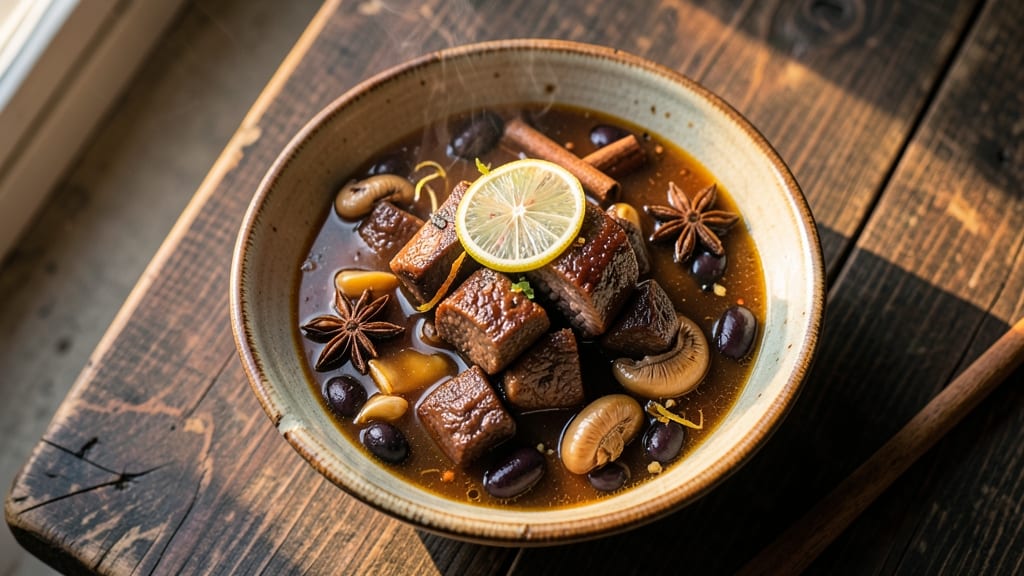
This authentic Chinese beef stew recipe delivers the deep, aromatic richness of a Cantonese-style braised dish—where tender beef simmers for hours in a fragrant broth infused with star anise, soy sauce, and slow-cooked aromatics.
The secret lies in layering flavors: first stir-frying ginger, garlic, and scallions to build a fragrant base, then letting the beef and vegetables melt into a velvety, caramelized sauce.
I’ve perfected this recipe over years of testing, ensuring every bite carries that signature balance of sweet, salty, and umami that defines Chinese home cooking.
The beauty of this dish is in its patience—slow-braising transforms tough cuts of beef into fork-tender pieces while developing layers of complexity in the broth. Unlike quick stews, this recipe demands time (about 2 hours), but the result is a restaurant-quality dish that tastes even better the next day.
The star anise and cinnamon stick add warmth and depth, while fermented black beans and dried shiitake mushrooms contribute earthy, savory notes that elevate the sauce beyond ordinary beef stews.
What you’ll end up with is a steaming bowl of authentic Chinese beef stew—rich, fragrant, and deeply satisfying—where every spoonful delivers melty beef, tender vegetables, and a sauce so flavorful it clings to each bite.
The aroma alone will have everyone at the table asking for seconds, and the leftovers reheat beautifully for days. This is comfort food at its finest, straight from a Cantonese kitchen to yours.
Serve it with steamed jasmine rice and quick-pickled vegetables to balance the richness, or enjoy it as-is with crusty bread to soak up every last drop of that caramelized sauce.
The instructions walk you through every step—from marinating the beef to slow-cooking the broth—so you can achieve the same depth of flavor as a home cook in China. Let’s get started.
Ingredients for authentic chinese beef stew
Pantry staples plus a few specialty finds for that signature Cantonese depth.
| Ingredient | Amount | Notes |
|---|---|---|
| Beef Chuck Roast 🥩 | 2 lb | Cut into 1.5-inch cubes |
| Star Anise 🌿 | 2 whole | For deep aromatic flavor |
| Cinnamon Stick 🌿 | 1 whole | Adds warmth to broth |
| Dried Shiitake Mushrooms 🍄 | 6 whole | Rehydrated for umami depth |
| Fermented Black Beans 🥫 | ½ cup | Rinsed before using |
| Fresh Ginger 🧄 | 2 tbsp | Grated, aromatic base |
| Garlic Cloves 🧄 | 6 cloves | Minced for fragrant base |
| Scallions 🧅 | 1 whole | Sliced, adds freshness |
| Light Soy Sauce 🥫 | ½ cup | Kikkoman preferred |
| Dark Soy Sauce 🥫 | 2 tbsp | For color and depth |
| Shaoxing Wine 🍷 | ¼ cup | Adds complexity |
| Rock Sugar 🍯 | 2 tbsp | Or brown sugar |
| Carrots 🥕 | 2 whole | Cut into thick rounds |
| Daikon Radish 🥕 | 1 lb | Cut into chunks |
| Sesame Oil 🫒 | 1 tbsp | For finishing |
The beef is non-negotiable—chuck roast gives you that melt-in-your-mouth texture no other cut can match. Look for well-marbled pieces at your local Asian market or butcher shop; the extra fat keeps it tender. Star anise and cinnamon sticks are the secret weapons here—Whole Foods or Peninsula carry them in the spice aisle. Dried shiitake mushrooms should be plump, not shriveled, and fermented black beans? H Mart or 99 Ranch have the best selection. If you can't find Shaoxing wine, dry sherry works in a pinch—just don't tell anyone.
No star anise? 1 tsp ground anise seed is a decent swap, though it lacks the same complexity. Running short on fermented black beans? 2 tbsp soy sauce plus 1 tsp molasses mimics some of that funky depth. The mushrooms? Fresh shiitakes work too—just slice them thin and add them later. Shaoxing wine unavailable? Dry white wine or extra soy sauce gets you close. And if rock sugar isn't in your pantry, brown sugar or even honey (though it's not traditional) will do. The carrots and daikon can be swapped for potatoes if needed—just adjust cooking time.
This stew gets better with time, so make a double batch if you can. Store in airtight containers in the fridge for 4-5 days—the flavors deepen overnight. Freezes beautifully for up to 3 months, though the texture changes slightly. I always reheat gently on the stove with a splash of water to restore that silky sauce. Leftovers? Perfect for rice bowls or stuffed into bao buns the next day—just don't skip the sesame oil finish, that's where the magic happens.
Why You'll Love This Recipe
- One-Pot Magic: I swear by this—just dump everything in a heavy pot, cover it, and walk away. The star anise and cinnamon work their magic while you sip tea or scroll through your phone. No stirring, no stress, just pure hands-off satisfaction.
- Deep Umami Bomb: That fermented black bean paste? It’s the secret weapon. The mushrooms soak up all the rich beef juices, and the spices layer in warmth that lingers like a hug. Honestly, the first bite makes me close my eyes—it’s that good.
- Leftover Goldmine: This stew actually improves the next day. The flavors meld even deeper, and reheating it is a crime if you don’t. I portion it into containers on Sunday so I can grab a jar for lunches all week—no sad desk salads here.
- Budget-Friendly Feast: A chuck roast stretches across meals, and the dried shiitakes add texture without breaking the bank. Between us, this is how I feed my family for under $15 while still feeling fancy. The spices cost pennies but taste like a restaurant.
Step-by-step instructions for authentic Chinese beef stew
Here's how to create a deeply flavorful Chinese beef stew with authentic depth and texture.
Prepare the Beef and Aromatics
Cut the 2 lb beef chuck roast into 1.5-inch cubes for even cooking. Pat them dry with paper towels—this helps the meat brown better and develop that rich crust. In a large bowl, combine the beef with the 0.5 cup fermented black beans, 2 tbsp grated fresh ginger, 6 minced garlic cloves, and 1 whole sliced scallion. Toss gently to coat the beef evenly with the aromatics.
This step is where the foundation of flavor begins. The ginger and garlic will infuse the beef as it cooks, while the fermented black beans add their signature funky depth. Don't skip the tossing—every piece should get equal exposure to these flavor carriers.
Sear the Beef for Deep Flavor
Heat a Dutch oven or heavy pot over medium-high heat. Add just enough oil to coat the bottom lightly (about 1 tablespoon). Working in batches if needed, sear the beef cubes until they're deeply browned on all sides, about 3-4 minutes per batch. Remove the beef and set aside.
This searing step is crucial for building that rich, caramelized flavor that forms the base of the stew. The browned bits (fond) will dissolve into the broth later, creating layers of complexity. If your pan gets too crowded, work in batches—rushing this step leads to steaming instead of searing.
Build the Aromatic Base
In the same pot, add a splash of water to deglaze and scrape up the browned bits. Then add the 2 whole star anise, 1 whole cinnamon stick, 6 rehydrated dried shiitake mushrooms (trimmed), 0.5 cup light soy sauce, 2 tbsp dark soy sauce, 0.25 cup shaoxing wine, and 2 tbsp rock sugar. Stir and let it simmer for 5 minutes until the alcohol smell dissipates.
The star anise and cinnamon will infuse the broth with their warm, aromatic qualities, while the dark soy sauce adds that signature deep color. The shaoxing wine contributes complexity, and the sugar helps balance the acidity. This aromatic base is what makes the stew authentically Chinese—don't skip this step, even if it seems like just simmering.
Simmer the Stew to Tender Perfection
Return the seared beef to the pot along with 2 thick carrot rounds and 1 lb daikon radish cut into chunks. Add enough water to just cover the ingredients (about 3 cups). Bring to a gentle boil, then reduce heat to low, cover, and simmer for 2 hours. Check occasionally and add water if needed to keep the beef covered.
Patience is key here—this long simmering time breaks down the connective tissue in the beef, turning it into fork-tender perfection. The vegetables will absorb the rich flavors of the broth, creating a harmonious balance. You'll know it's ready when the beef easily pulls apart with a fork and the broth has thickened slightly.
Finish with Sesame Oil and Serve
Once the beef is tender, remove the star anise and cinnamon stick. Stir in 1 tbsp sesame oil and taste, adjusting seasoning with additional soy sauce if needed. Let the stew sit uncovered for 5 minutes to thicken slightly before serving. Garnish each bowl with extra sliced scallions if desired.
The sesame oil adds that final aromatic punch that elevates the dish from good to exceptional. This is where all the flavors come together—rich, savory, slightly sweet, with that unmistakable Chinese depth. Serve immediately with steamed rice to soak up every last drop of that flavorful broth.
Pro Tips For Making Authentic Chinese Beef Stew
- BLANCH THE BEANS FIRST: Toss those fermented black beans in boiling water for 30 seconds before adding them to the stew—this cuts through their funky, salty bite and lets their umami shine. I used to skip this, and the flavor always felt muddled until I realized the beans needed a quick wake-up call.
- SEAR THE CHUCK ROAST HOT: Crank your pan to medium-high and let it scream for 3-4 minutes per side until deep brown crust forms. That’s where the depth of flavor starts—rushing this step means ending up with bland, gray beef. (Yes, even if you’re impatient like me.)
- SOAK MUSHROOMS IN HOT WATER: Rehydrate dried shiitakes in near-boiling water for 20 minutes instead of cold, then use that liquid in the stew. Cold water leaves them tough and watery; hot water keeps them tender and infuses the broth with earthy richness. No excuses for limp mushrooms here.
- LOW AND SLOW WINS: After the initial sear, drop the heat to a simmer—no peeking, no stirring—and let it cook uncovered for at least 2.5 hours. The beef needs time to melt, not boil. I learned this the hard way when my stew turned into shredded beef soup. Patience pays off.
Make-ahead tips for this authentic chinese beef stew
Prep Ahead for Flavor
Start by marinating the beef overnight in a ziplock bag with 2 tbsp soy sauce, 1 tbsp Shaoxing wine, and 1 tsp grated ginger. This jumpstarts the flavor infusion, giving you tender beef with deeper taste. I always do this—it’s a game-changer for busy weeknights. 🌟
Broth Base Prep
Make the aromatic broth base the day before and store it in an airtight container in the fridge. Simmer all the spices (star anise, cinnamon, mushrooms, soy sauces, wine, and sugar) in 3 cups water for 30 minutes, then cool completely.
This concentrated flavor will elevate your stew without extra effort.
Vegetable Pre-Cutting
Cut all vegetables (carrots, daikon, scallions) and store them in separate sealed containers in the fridge. This saves time on cooking day and keeps everything fresh. I like to portion them into quart-sized bags with a damp paper towel to prevent drying out.
Slow-Cooker Option
For hands-off cooking, use a 6-quart slow cooker on low for 6-8 hours after searing the beef. Add all ingredients (including prepped broth base) and cook until beef is fork-tender. This method is perfect for meal prep—just reheat gently on the stove with a splash of water.
Freezer-Friendly
This stew freezes beautifully for up to 3 months. Portion into single-serving containers with a splash of broth to prevent freezer burn. Thaw overnight in the fridge, then reheat on the stove over medium-low heat for 10-15 minutes, adding water as needed to restore the sauce.
Reheating Like a Pro
Never microwave this stew—it ruins the texture. Instead, reheat on the stovetop over medium-low heat for 10-15 minutes, stirring occasionally. Add 1-2 tbsp water if the sauce thickens too much. The gentle heat preserves the tender beef and rich flavors perfectly. 🔥
Nutrition facts
Frequently asked questions
Can I use a different cut of beef for this recipe?
While chuck roast is ideal for its marbling and tenderness, you can substitute with brisket or short ribs. Avoid lean cuts like sirloin—they won't become tender enough during the 2-hour simmer. If using ribs, reduce cooking time to 1.5 hours to prevent overcooking.
What if I can't find fermented black beans or star anise?
Fermented black beans can be replaced with 2 tbsp soy sauce + 1 tsp molasses for depth. For star anise, use 1 tsp ground anise seed (though it lacks the same aromatic complexity). Skip the cinnamon stick if needed—it's more about warmth than necessity. The dish will still be delicious!
How do I make this stew less salty?
Reduce the soy sauce by 1-2 tablespoons (use 0.35 cup light soy sauce instead of 0.5 cup). Add extra rock sugar or a splash of Shaoxing wine to balance flavors. Taste as you go—you can always add more water later to dilute the broth slightly.
Can I make this in an Instant Pot?
Yes! Sear the beef first, then add all ingredients and cook on High Pressure for 45 minutes, followed by a 10-minute natural release. The pressure cooker cuts time significantly while keeping the beef tender. Just add 1 cup water instead of 3 cups for the Instant Pot's smaller capacity.
Why does my stew taste bland after reheating?
Reheating on high heat or microwaving can break down flavors. Always reheat on medium-low heat for 10-15 minutes, stirring occasionally. Add 1-2 tbsp water if needed to restore the sauce. For extra depth, finish with a drizzle of sesame oil and fresh scallions.