
Main Courses
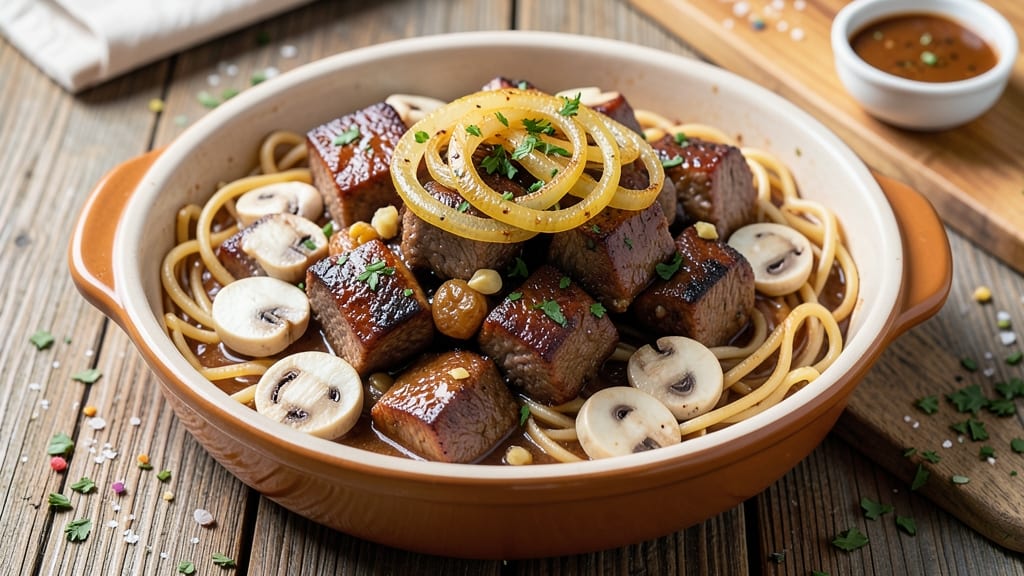
This authentic German beef stroganoff transforms a classic dish with deep, savory flavors rooted in traditional German techniques. The secret lies in a rich, velvety sauce—where beer and mustard replace heavy sour cream, creating a balance of tangy and umami notes that feel distinctly European.
Unlike its Russian cousin, this version relies on tender, pan-seared beef and earthy mushrooms for a dish that’s both comforting and sophisticated.
What sets this recipe apart is the slow-cooked beef, simmered until fork-tender in a sauce reduced with dark beer and a touch of smoked paprika. The mushrooms absorb the flavors beautifully, adding a meaty depth that pairs perfectly with the creamy (but not overpowering) sour cream finish.
The result? A dish that’s hearty enough for a family dinner but refined enough for a weeknight meal you’ll want to repeat.
Serve it over egg noodles or fluffy spaetzle for the full German experience—each bite delivers layers of texture and flavor. The sauce clings to the noodles, while the beef remains juicy and the mushrooms add a satisfying bite.
This isn’t just stroganoff; it’s a taste of Germany’s home cooking, brought to your table with minimal fuss but maximum authenticity.
The key to success? Patience and precision—searing the beef properly, reducing the sauce slowly, and balancing the flavors just right. Trust the process, and you’ll end up with a dish that feels like a hug from a German grandmother. Ready to make it?
Ingredients for authentic german beef stroganoff
Nine essential ingredients transform simple pantry staples into a German grandmother's velvety stroganoff.
| Ingredient | Amount | Notes |
|---|---|---|
| Beef Chuck Roast 🥩 | 1 ½ lb | Cut into 1-inch cubes, trimmed of fat |
| Egg Noodles 🍝 | 8 oz | Fresh or dried, medium width |
| Fresh White Mushrooms 🍄 | 16 oz | Sliced into even strips |
| Yellow Onion 🧅 | 1 whole | Medium, thinly sliced |
| Garlic Cloves 🧄 | 4 cloves | Minced for aromatic base |
| Dark Lager Beer 🍺 | 1 cup | German-style, like Paulaner or Beck's |
| Dijon Mustard 🌶️ | 1 tbsp | For tangy depth |
| Smoked Paprika 🌶️ | 1 tsp | For subtle smokiness |
| Sour Cream 🧀 | ½ cup | Full-fat for richness |
| Unsalted Butter 🧈 | 2 tbsp | For searing beef |
| Vegetable Oil 🫒 | 1 tbsp | For even cooking |
| Diamond Crystal Kosher Salt 🧂 | 1 ½ tsp | Adjust to taste |
| Freshly Ground Black Pepper 🌶️ | ½ tsp | For finishing |
| Fresh Parsley 🌿 | ¼ cup | Chopped, for garnish |
The beef is non-negotiable here—chuck roast delivers the best texture, breaking down into tender chunks during slow cooking. Look for well-marbled cuts at your butcher or the meat department, and ask for it pre-cubed to save time. German butcher shops or specialty grocers like Edeka often carry high-quality chuck, but the regular supermarket section works too. If you're buying a whole roast, cube it yourself—it makes all the difference in even cooking. For the mushrooms, cremini or baby bella add extra depth, but white mushrooms work perfectly fine (just slice them thinner).
No dark lager? Substitute with beef broth plus 1 tbsp apple cider vinegar—it mimics the tangy depth. Fresh parsley wilting? Dried parsley at one-third the amount keeps the color and flavor. The Dijon mustard is key—French varieties like Maille have the best balance of tang and richness. If you can't find it, whole-grain mustard thinned with water works in a pinch. For extra umami, add 1 tsp soy sauce to the sauce (trust me, it blends right in). The egg noodles? Fresh is ideal, but dried works if you cook them al dente and toss with a little butter after serving.
This sauce gets better the next day—make extra and refrigerate for leftovers. Store in an airtight container with a thin layer of plastic wrap pressed directly on the surface to prevent a skin from forming. Keeps for 4-5 days in the fridge or 3 months frozen. For serving, reheat gently on low heat, stirring occasionally, and add a splash of water or broth if it thickens too much. The beef and mushrooms reheat beautifully, so don't hesitate to make a big batch—it's perfect for meal prep.
Why You'll Love This Recipe
- One-Pot Magic: I swear by this recipe because it’s actually one-pan—no extra dishes, no stress. Sear the beef chuck with onions and garlic, then let the mushrooms melt into the sauce while everything simmers together. Honestly, my counter stays cleaner than my last attempt at baking.
- Deep Umami Bomb: That beef chuck, slow-cooked until tender, paired with earthy mushrooms and a splash of white wine? It’s the kind of rich, savory flavor that makes you pause mid-bite. The egg noodles soak up the sauce like a dream—no dry, sad pasta here.
- Leftover Goldmine: Between us, this dish begs to be made in bulk. The sauce thickens beautifully when reheated, and the noodles stay al dente if you store them separately. I’ve fed my family for days with just one big batch—no sad, soggy leftovers in sight.
- Budget-Friendly Powerhouse: Beef chuck is affordable, mushrooms stretch the filling factor, and a few cloves of garlic elevate everything. It’s the kind of meal that makes grocery day feel like a win, especially when you’re stretching a roast into three hearty servings. (Yes, even on a Tuesday night.)
Step-by-step instructions for authentic German beef stroganoff
Here's how to craft a rich, velvety stroganoff that stays true to German roots.
Prepare the Beef for Perfect Browning
Pat the 1.5 lb beef chuck roast completely dry with paper towels—this is crucial for that deep, caramelized crust. Cut it into 1-inch cubes, trimming any excess fat as you go. Season generously with 1.5 tsp Diamond Crystal kosher salt and 0.5 tsp freshly ground black pepper, pressing the seasoning into each piece so it clings.
Heat 1 tbsp vegetable oil in a large, heavy skillet over medium-high heat until shimmering. Working in batches (don't overcrowd), add the beef cubes and let them sear undisturbed for 3-4 minutes until a deep golden-brown crust forms. This isn't just about color—it's building flavor. Once browned on one side, flip and repeat until all sides are beautifully seared. Transfer the beef to a plate and set aside.
Build the Mushroom-Onion Base
In the same skillet (no need to wipe it clean—those browned bits are pure flavor), melt the 2 tbsp unsalted butter over medium heat. Add the 1 whole yellow onion, sliced into even strips, and cook for 5 minutes until softened and translucent. Stir in the 16 oz fresh white mushrooms, sliced into strips, and cook for another 6-7 minutes until they release their moisture and begin to brown.
Add the 4 minced garlic cloves and 1 tsp smoked paprika, stirring constantly for 30 seconds until fragrant. Here's the thing—don't let the garlic burn. It should perfume the room but remain golden, not bitter. If the mushrooms release too much liquid, let it evaporate completely before moving forward. This base should be rich, dark, and deeply savory.
Deglaze with Beer for Depth
Pour in the 1 cup dark lager beer, scraping up all those delicious browned bits from the bottom of the pan with a wooden spoon. This deglazing step captures all the meaty, umami flavor you've built. Let the beer simmer for 4-5 minutes until reduced by about half, until it coats the back of a spoon and the alcohol smell has cooked off.
Stir in the 1 tbsp Dijon mustard and cook for another 1 minute, stirring constantly. The mustard will mellow out as it cooks, adding just the right amount of tangy depth. Taste the sauce at this point—it should be rich, slightly tangy, and full of umami. If it needs more salt, add a pinch now. This is your flavor foundation.
Finish with Sour Cream and Noodles
Reduce the heat to low and gently stir in the 0.5 cup sour cream, mixing just until combined. The heat should be low enough that the sour cream doesn't curdle—it should warm through but remain silky. Return the seared beef to the skillet and spoon the sauce over it, letting everything meld together for 2-3 minutes. The beef will finish cooking in this sauce, absorbing all those rich flavors.
In a separate pot, cook the 8 oz egg noodles in salted boiling water until al dente (about 8-10 minutes for fresh noodles, 10-12 minutes for dried). Drain, reserving ½ cup pasta water, then toss the noodles with the stroganoff. If the sauce is too thick, add a splash of the reserved pasta water to loosen it to your desired consistency. The noodles should be coated in that velvety, mushroom-infused sauce.
Garnish and Serve with Confidence
Transfer the stroganoff to serving plates and garnish with the 0.25 cup chopped fresh parsley. The parsley adds a bright, fresh contrast to the rich, creamy sauce. Serve immediately while the noodles are still warm and the sauce is silky. Each bite should deliver tender beef, earthy mushrooms, and that perfect balance of tangy, creamy richness that defines authentic German stroganoff.
Pro tip: If you're feeling fancy, sprinkle a little extra smoked paprika on top before serving. It adds a subtle smokiness that ties everything together beautifully.
Pro Tips For Making Authentic German Beef Stroganoff
- SEAR THE CHUCK ROAST: Don’t just brown it—cut the chuck roast into 1-inch chunks first, then sear them in batches over high heat until deep golden, not just pink. I learned this the hard way: skipping this step leaves your stroganoff tasting like it was simmered in water instead of beef.
- SOFTEN ONIONS LOW AND SLOW: Slice the yellow onion into thin half-moons and cook them on medium-low heat for 8-10 minutes before adding mushrooms. They’ll melt into the sauce instead of staying crunchy, and you won’t end up with a bitter, overcooked mess.
- DON’T DROWN THE MUSHROOMS: After searing the beef, push it aside and cook the mushrooms in the same pan until they release their juices—about 5 minutes. Only then add the onions and garlic. Dumping everything in at once turns your mushrooms into a soggy, flavorless afterthought.
- REST THE BEFORE SLICING: Let the cooked beef rest for 5-10 minutes under foil before slicing it against the grain. I was skeptical until I tried it—this keeps the meat tender and makes serving it over noodles a breeze, instead of a mushy disaster.
Best sauces and condiments for this dish
Beer Reduction Magic
The secret to this German stroganoff's depth lies in the beer reduction—it's not just a liquid, it's a flavor amplifier. Use a dark lager like Paulaner or Beck's for that malty richness, but if you're out, a beef broth with 1 tbsp apple cider vinegar works in a pinch.
The beer should reduce by half, intensifying its flavor and cutting through the richness of the sour cream. 🍺
For extra complexity, try a mixed beer approach: start with ½ cup dark lager, reduce it, then add ½ cup wheat beer (like Weihenstephaner) at the end. The wheat beer adds a subtle citrus note that brightens the dish. Just don't overdo it—this isn't a beer stew!
Mustard's Tangy Role
The Dijon mustard is non-negotiable here—it's what gives this stroganoff its signature tang. I swear by Maille for its smooth, balanced flavor, but whole-grain mustard thinned with water works if you're in a bind.
Add it after the beer reduces but before the sour cream goes in. This ensures the mustard's heat mellows out while still contributing that bright, slightly sharp note that cuts through the richness. 🌶️
For a spicier kick, add ½ tsp ground mustard seeds to the sauce while it simmers. They'll toast slightly and add a nutty depth that pairs perfectly with the beer.
If you prefer sweet heat, a pinch of honey (about ½ tsp) at the end balances the tang beautifully.
Sour Cream Balance
The sour cream is what makes stroganoff creamy, but it's easy to overdo it. Use full-fat for the best texture, and always stir it in off the heat or on lowest possible heat to prevent curdling.
I like to temper it first by mixing a spoonful into the hot sauce, then adding the rest gradually while stirring constantly. 🧀
For a lighter version, replace half the sour cream with crème fraîche—it's tangier and won't overpower the other flavors. If you're avoiding dairy, a cashew cream (blend ½ cup soaked cashews with ¼ cup water) works surprisingly well, though the texture will be slightly thinner.
Umami Boosters
To take your stroganoff to the next level, add 1 tsp soy sauce or 1 tbsp Worcestershire sauce to the beer reduction. Both add umami depth without altering the dish's authentic German profile.
For a smoky twist, swap the smoked paprika for ½ tsp liquid smoke (just a drop!) or add 1 tsp caramelized onion powder. 💡
Don't underestimate the power of browned butter—after cooking the onions and mushrooms, remove 1 tbsp butter from the pan, swirl it in a separate small saucepan until nutty brown, then whisk it back into the sauce. It adds a toasted, caramelized note that's pure comfort food.
Garnish Game Changers
The right garnish can elevate your stroganoff from good to showstopping. Fresh parsley is a must for brightness, but try chives or dill for a different herbal note. For a German touch, sprinkle crispy fried onions (store-bought or homemade) on top—they add a crunchy contrast that's irresistible. 🌿
For a pop of color and crunch, add toasted breadcrumbs (mix 2 tbsp panko with 1 tsp butter, toast in a dry pan until golden) or crushed potato chips (trust me, it works!). A drizzle of truffle oil (just ½ tsp) adds luxury without overpowering the dish.
Nutrition facts
Frequently asked questions
Why does this recipe use beer instead of cream?
German stroganoff relies on beer for depth and acidity that balances the richness. The dark lager adds malty sweetness and reduces to create a concentrated, flavorful base. Unlike traditional Russian versions, this approach avoids heavy cream dominance while still delivering that velvety texture through sour cream added later.
Can I substitute chuck roast with another beef cut?
Yes, but choose wisely! Chuck roast is ideal because it's well-marbled and tenderizes beautifully. Sirloin or ribeye work in a pinch (cut into smaller pieces), but they may stay slightly firmer. For best results, always sear the beef properly and cook it until fork-tender. Avoid lean cuts like flank steak—they won't break down as nicely.
How do I make this dish ahead of time?
This stroganoff actually tastes better the next day! Cook the beef and sauce completely, then refrigerate in an airtight container. Reheat gently on low heat with a splash of water or broth to restore creaminess. The noodles should be cooked fresh before serving to prevent mushiness. For make-ahead convenience, store just the sauce and beef separately, then assemble with fresh noodles when ready.
What's the best way to reheat leftovers?
Reheat leftovers on low heat in a saucepan with a splash of water or beef broth to prevent drying out. For extra richness, stir in 1 tbsp butter while warming. If the sauce separates, whisk vigorously until smooth. Microwaving can cause the sour cream to curdle, so oven reheating at 300°F for 15 minutes is gentler. Always cover with a damp paper towel to retain moisture.
Can I make this stroganoff without alcohol?
Replace the beer with 1 cup beef broth plus 1 tbsp apple cider vinegar for the same tangy depth. For extra richness, add 1 tbsp tomato paste to the reduction. The key is maintaining that balance of acidity and umami—just adjust seasoning to taste after cooking.