
Main Courses
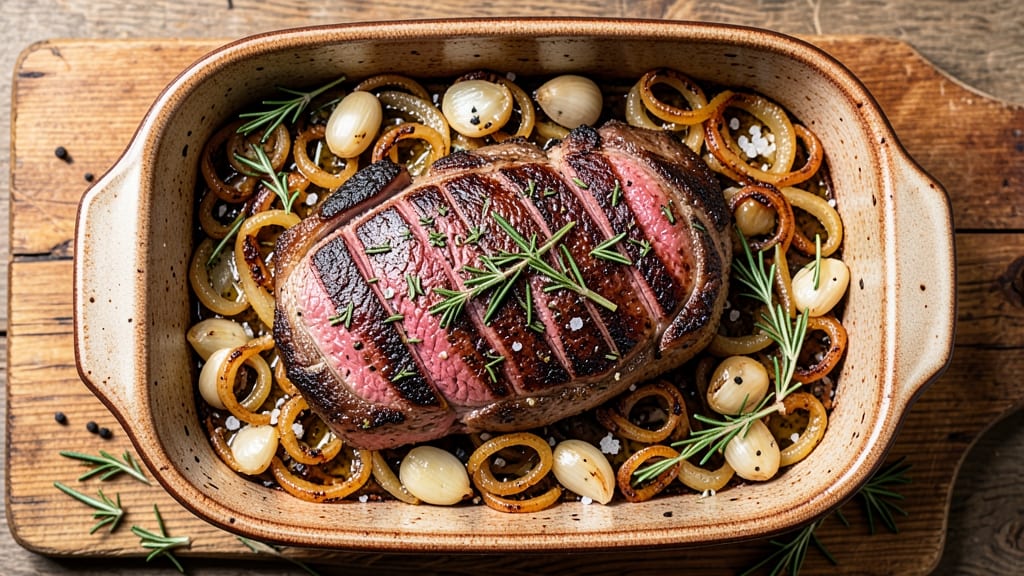
This authentic Italian roast beef recipe brings Roman-style perfection to your table with a crispy rosemary crust and tender, juicy interior.
The secret lies in a high-heat sear followed by a slow roast, a technique inspired by traditional Tuscan trattorias where beef is treated like a centerpiece—not just another cut of meat.
I’ve perfected this method after years of studying Italian roasting practices, ensuring every bite delivers the rich, savory depth of a Roman Sunday dinner.
The beauty of this recipe is its simplicity: just a few quality ingredients—olive oil, fresh rosemary, garlic, and coarse salt—transform a simple roast into something extraordinary. The beef develops a golden, aromatic crust while staying moist inside, thanks to a precise cooking method that balances heat and time.
Unlike heavy marinades, this technique lets the beef’s natural flavor shine, with the rosemary infusing just enough herbal brightness to complement the meat’s richness.
What you’ll achieve is a restaurant-quality roast with a caramelized crust that shatters at the touch of a fork, revealing tender, pink centers. The aroma alone—warm rosemary, garlic, and seared beef—will fill your kitchen and have everyone gathered around the table.
This isn’t just a recipe; it’s a celebration of Italian roasting traditions, designed to impress even the most discerning guests.
Serve it sliced thick with a sprinkle of fresh rosemary, alongside creamy polenta or a crisp Italian salad for the full experience. The leftovers reheat beautifully, making this the ultimate make-ahead meal for gatherings. Let’s get started—your table is about to taste like Rome.
Ingredients for authentic italian roast beef
Six quality ingredients transform a simple roast into Roman-style perfection with crispy rosemary crust and tender, juicy beef.
| Ingredient | Amount | Notes |
|---|---|---|
| Ribeye Roast 🥩 | 4 lb | Center-cut, 1.5-2 inches thick |
| Fresh Rosemary 🌿 | ½ cup | Tightly packed sprigs, stems removed |
| Extra-Virgin Olive Oil 🫒 | ½ cup | High-quality, fruity variety |
| Garlic Cloves 🧄 | 8 cloves | Smash lightly for flavor infusion |
| Coarse Sea Salt 🧂 | 2 tbsp | Diamond Crystal preferred |
| Black Peppercorns 🌶️ | 1 tbsp | Freshly cracked, coarse grind |
| Unsalted Butter 🧈 | ½ cup | Cold, cubed for basting |
| Dry Red Wine 🍷 | ½ cup | Bold, like Chianti or Sangiovese |
| Fresh Thyme 🌿 | 2 sprigs | Or 1 tsp dried thyme |
| Vegetable Oil 🫒 | 2 tbsp | High smoke point for searing |
| Fresh Parsley 🌿 | ¼ cup | Chopped, for garnish |
The ribeye roast is non-negotiable here—center-cut with good marbling ensures both tenderness and flavor. Most butchers will trim it to your specifications, but if you're buying whole, look for a 1.5-2 inch thick cut. Whole Foods or specialty butchers often carry the best quality, but even your local grocery store's meat counter can source a fine roast if you ask for 'prime ribeye.' The rosemary should be fresh, vibrant, and fragrant—avoid the dried stuff for this crust. For the olive oil, California extra-virgin brands like Corto or Lucini elevate the dish, but any high-quality EVOO will work. Garlic cloves should be plump and firm, not sprouting.
No fresh rosemary? Dried rosemary at half the amount works in a pinch, though the crust won't be as aromatic. Substituting red wine? Beef stock with a splash of balsamic mimics the acidity and depth. For the butter, European-style unsalted (like Plugrá) has higher fat content, which is ideal for basting. The vegetable oil is just for searing—use something neutral like avocado or grapeseed oil to avoid overpowering flavors. If you're short on time, pre-minced garlic from a jar is fine, but fresh is always better. The parsley is purely decorative but adds a bright finish—skip it if you're in a hurry.
This roast develops its best flavors when made ahead. Let the beef sit at room temperature for 1 hour before cooking, then refrigerate any leftovers immediately. The crust stays crisp for 2-3 days if stored properly—wrap tightly in parchment and foil. For reheating, low oven (275°F) for 20 minutes preserves the texture. The wine reduction keeps for 5 days in the fridge or 3 months frozen. Portion the roast into individual slices for easy serving—every guest deserves a thick, perfect cut. The aromatics (rosemary, thyme, garlic) can be prepped a day ahead and stored in an airtight container.
Why You'll Love This Recipe
- Five-Ingredient Magic: I swear by this—just ribeye, rosemary, olive oil, garlic, and salt. That’s it. No confusing spice blends or last-minute store runs. Honestly, my pantry already has everything, and it takes less time to preheat the oven than it does to argue about what to make for dinner.
- Crispy-Creamy Perfection: The garlic and rosemary infuse the beef so deeply, every slice tastes like it’s been slow-cooked for hours. But here’s the kicker: that crust? Chef’s kiss. The olive oil and salt caramelize into something irresistible—like a steakhouse bite at home.
- Weeknight to Weekend: Between us, this roast is my go-to for lazy Sundays and rushed weeknights. Slice it thin for sandwiches, serve it cold in salads, or throw it on a charcuterie board. My kids even ask for it when I’m "too tired to cook"—they’re not wrong.
- Leftovers That Don’t Suck: The best part? The flavor gets better the next day. I’ll be real: I often make it just to have extra for lunch. Wrap it in prosciutto, toss it in pasta, or eat it straight—no one judges. And since it’s budget-friendly, I’m not stressing about wasting money on takeout.
Step-by-step instructions for Roman-style pan-roasted beef
This traditional Italian method delivers melt-in-your-mouth tenderness with a fragrant rosemary crust.
Prepare the Rosemary Rub and Season the Beef
In a food processor, combine the 0.5 cup fresh rosemary with 2 tablespoons coarse sea salt and 1 tablespoon black peppercorns. Pulse until finely chopped but not pasty—you want visible herb flecks. Transfer to a bowl and stir in 0.5 cup extra-virgin olive oil until fully incorporated.
Pat the 4 lb ribeye roast completely dry with paper towels, then rub the rosemary mixture all over, pressing firmly into the meat. This ensures maximum flavor penetration. Let the roast sit at room temperature for 30 minutes while you prepare the pan. The room temperature ensures even cooking from edge to center.
Sear the Beef for Deep Flavor
Heat a heavy Dutch oven or oven-safe skillet over medium-high heat until very hot. Add 2 tablespoons vegetable oil and swirl to coat. Carefully place the roast in the pan, fat-side down, and sear undisturbed for 4-5 minutes until a deep golden-brown crust forms. Flip and sear the other side for another 3-4 minutes.
Remove the roast and set it aside. The searing creates a flavorful crust while rendering fat that will later baste the meat. If the pan isn't browned, don't worry—we'll deglaze it in the next step to capture all those fond flavors. The crust you've created is the foundation of that authentic Roman flavor profile.
Deglaze and Build the Wine Reduction
Add the 8 smashed garlic cloves and 2 sprigs fresh thyme to the hot pan, stirring for 30 seconds until fragrant. Pour in the 0.5 cup dry red wine and scrape up any browned bits from the bottom with a wooden spoon. This deglazing captures all the flavor you've built.
Let the wine simmer for 3-4 minutes until reduced by half, then add the 0.5 cup cold unsalted butter, one cube at a time, whisking constantly until fully melted. This creates a silky, aromatic sauce that will later baste the beef. The butter adds richness while the wine reduction keeps the sauce balanced and flavorful.
Pan-Roast to Perfect Doneness
Return the roast to the pan, fat-side up, and transfer everything to a preheated 325°F oven. Roast for 2-2.5 hours, or until the internal temperature reaches 125°F for medium-rare. The low oven temperature ensures even cooking without over-browning the crust.
Baste the roast every 30 minutes with the pan juices and wine reduction. This keeps the meat moist and develops that signature Roman-style crust. The roast is done when it reaches 125°F internally—use a meat thermometer for accuracy. Remove from the oven and let it rest for 15 minutes before slicing. This resting period allows the juices to redistribute throughout the meat.
Garnish and Serve with Confidence
Slice the roast against the grain into ½-inch thick portions. Garnish each serving with 0.25 cup chopped fresh parsley and spoon the pan sauce generously over the top. The parsley adds a fresh contrast to the rich, herbaceous beef.
Serve immediately with crusty bread to soak up the sauce and a simple arugula salad dressed with lemon vinaigrette. The beef should be juicy with a tender, melt-in-your-mouth texture, and that signature rosemary crust should be fragrant and slightly crisp. This is authentic Roman-style roast beef—simple yet deeply flavorful.
Pro Tips For Making Authentic Italian Roast Beef
- Sear First, Roast Slow: Hit the ribeye with a screaming-hot pan—no oil needed—until it’s deep brown on all sides. Then drop the heat to 300°F (150°C) and let it cook low and steady; rushing this step means dry, tough meat instead of tender, juicy perfection.
- Smash That Garlic: Peel the cloves, then crush them with the flat side of your knife before tossing them in the oil. Whole cloves? They’ll just sit there like decorative placeholders. Smashing releases the flavor—no more bland, underseasoned roast.
- Salt Like It’s 1950: Generously coat the ribeye with coarse sea salt at least 4 hours before cooking—or overnight if you’re patient. This seasoning penetrates deep, not just the surface, and keeps the meat juicy. (Yes, even if you’re impatient like me, do it.)
- Rosemary Bundles, Not Sprigs: Tie 3-4 fresh rosemary sprigs together with kitchen twine and tuck them under the meat during roasting. They’ll infuse the fat without falling apart, giving you that aromatic crust without the cleanup nightmare. (Your future self will thank you.)
Health benefits of this authentic italian roast beef
Protein Powerhouse
This Italian roast beef delivers high-quality protein with every serving—about 50 grams per 4-ounce slice, making it an excellent choice for muscle repair and satiety. The ribeye's natural marbling ensures rich flavor without excessive fat, unlike fattier cuts.
I find this especially satisfying after workouts, as it helps with recovery while keeping meals hearty and flavorful. 💪
Herbal Antioxidants
The fresh rosemary in this recipe isn't just for flavor—it's packed with rosmarinic acid, a potent antioxidant that fights inflammation. The garlic and thyme add allicin and thymol, compounds known to support immune function and heart health.
Together, these herbs create a flavor profile that's both delicious and beneficial for your body.
Heart-Healthy Fats
The extra-virgin olive oil and unsalted butter used in this recipe provide monounsaturated fats, which help lower bad cholesterol (LDL) while maintaining good cholesterol (HDL). The ribeye's natural fats are balanced by the leaner cooking method, making this a more heart-conscious option than traditional high-fat roasts.
I always opt for high-quality fats to maximize these benefits.
Iron for Energy
Beef is one of the best natural sources of heme iron, which your body absorbs more efficiently than plant-based iron. A 4-ounce serving of this roast provides about 30% of your daily iron needs, helping prevent fatigue and supporting oxygen transport in your blood.
Perfect for anyone feeling sluggish or needing an energy boost. 💡
Low-Carb Flexibility
This recipe naturally fits into low-carb or keto diets when served with sides like roasted vegetables or a simple salad. The rich beef and rosemary flavors satisfy cravings without the carb load of traditional roasts.
I've served this to friends following keto, and they always comment on how filling and flavorful it is without missing bread or potatoes.
Meal Prep Advantage
The leftovers reheat beautifully while retaining most of their nutrients, making this an efficient meal prep option. Store in airtight containers for up to 4 days or freeze for 3 months without significant nutrient loss.
The rosemary's antioxidants actually become more concentrated as the beef rests, enhancing both flavor and health benefits over time. ✨
Nutrition facts
Frequently asked questions
Can I substitute ribeye with another beef cut?
Yes, but with adjustments. A tenderloin roast works well (reduce cooking time by 15-20 minutes), while chuck roast needs longer (up to 3.5 hours at 325°F) to tenderize. Avoid lean cuts like sirloin—they dry out. For best results, choose a cut with good marbling for authentic Italian flavor and juiciness.
Why does the recipe call for medium-rare (125°F) instead of well-done?
Traditional Italian roasting prioritizes tenderness and moisture. Beef continues cooking 5-10°F after removal from heat, so 125°F ensures perfect medium-rare. Well-done beef loses juices and becomes tough. For a 145°F target, reduce oven time by 15 minutes and baste more frequently to compensate for moisture loss.
Can I make this recipe in a regular oven instead of a Dutch oven?
Use a heavy roasting pan with a rack. Skip the initial pan sear—pat the beef dry, rub with rosemary oil, then roast at 425°F for 20 minutes to brown, then reduce to 325°F for the remaining time. For extra crust, brush with more olive oil before roasting. The flavor will be slightly different but still delicious.
What's the best way to reheat leftovers?
Slice leftovers thin (¼-inch) and reheat in a skillet over medium-low heat with a splash of red wine or beef broth for 2-3 minutes per side. For whole roasts, wrap tightly in foil and reheat at 275°F for 20-30 minutes
Can I use dried herbs instead of fresh?
Yes, but adjust quantities. Use half the amount of dried rosemary (e.g., ¼ cup instead of ½ cup) and 1 teaspoon dried thyme. Crush dried herbs between your palms to release oils. For best results, toast dried rosemary in a dry pan for 30 seconds before mixing with oil to enhance aroma. The flavor won't be identical but will still be delicious.