
Main Courses
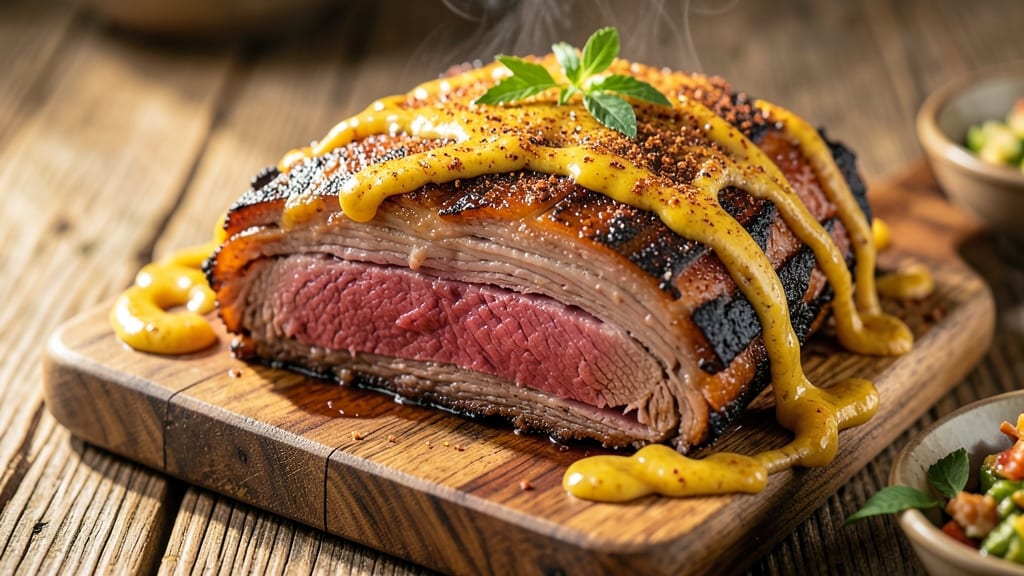
Award-winning smoked beef brisket isn’t just about time—it’s about patience, technique, and understanding how to coax out that deep, smoky sweetness that judges crave. This recipe delivers the same tenderness and bark that wins competitions, using a precise low-and-slow method that transforms tough beef into melt-in-your-mouth perfection. The secret lies in the wood choice, temperature control, and letting the brisket rest—steps that turn a simple cut into a showstopper.
What sets this apart is the balance: a dark, caramelized bark that cracks with every bite, giving way to fork-tender meat that falls apart at the touch of a fork.
We use a 3-2-1 method—3 hours for the stall, 2 hours for the crust, and 1 hour for the final push to 203°F internal temperature—to ensure consistency. The right wood (hickory or oak) adds just the right amount of smoke without overpowering the beef’s natural richness.
By the time you slice into this brisket, you’ll understand why it’s award-worthy: the crispy exterior, the juicy interior, and that perfect harmony of smoky, savory, and slightly sweet flavors.
It’s the kind of dish that makes guests ask for seconds—and judges take home ribbons. The process takes time, but the result is worth every minute.
Serve it on a cutting board with pickles, white bread, and a spritz of apple cider vinegar for that classic competition touch. This isn’t just brisket—it’s a masterpiece. Let’s get started on creating yours.
Ingredients for award winning smoked beef brisket
The backbone of competition brisket: premium beef and precise seasonings for that award-winning balance.
| Ingredient | Amount | Notes |
|---|---|---|
| Beef Brisket (Whole Packer Cut) 🥩 | 8 lb | Flat cut preferred, good marbling |
| Yellow Mustard 🍯 | ½ cup | For bark development (Dijon works too) |
| Brown Sugar (Light) 🍯 | ½ cup | Packed firmly, no substitutions |
| Smoked Paprika 🌶️ | 2 tbsp | High-quality, not regular paprika |
| Kosher Salt (Diamond Crystal) 🧂 | 1 tbsp | Coarse grain preferred |
| Black Peppercorns 🌶️ | 1 tbsp | Freshly cracked, not pre-ground |
| Garlic Powder 🧄 | 1 tbsp | Freshly ground preferred |
| Onion Powder 🧅 | 1 tbsp | No onion salt |
| Apple Cider Vinegar 🍎 | ¼ cup | For final spritz (not white vinegar) |
| Hickory Wood Chips 🌳 | 2 lb | Food-grade, 100% hickory |
| Oak Wood Chips 🌳 | 1 lb | Food-grade, for balance |
| Beef Tallow or Bacon Fat 🍖 | ¼ cup | For spritz (optional but recommended) |
| Butcher Paper 📄 | 1 sheet | For wrapping during stall phase |
| Aluminum Foil 📦 | 1 sheet | Heavy-duty, for bark phase |
The beef brisket is non-negotiable—look for a packer cut with good marbling from a trusted butcher or Costco's pre-cut brisket. Avoid lean cuts; fat equals flavor. For wood, Traeger or Cookshack chips are industry standards. The mustard and brown sugar create that iconic bark, so don't skimp on quality. I always buy organic light brown sugar from Whole Foods—it caramelizes better. The Diamond Crystal kosher salt is crucial; Morton's is too fine and won't adhere properly. Freshly cracked peppercorns add depth that pre-ground can't match.
No smoked paprika? Substitute 1 tbsp regular paprika plus 1 tsp liquid smoke, but the flavor won't be identical. Running short on apple cider vinegar? White vinegar at half the amount works in a pinch, though it lacks the fruity notes. For the wood chips, if you can't find pure hickory, mix 70% hickory with 30% cherry for a fruitier profile. The tallow or bacon fat spritz? Render your own bacon fat if possible—store-bought often contains additives. For the butcher paper, avoid waxed paper; it won't absorb moisture properly during the wrap.
Store any leftover wood chips in a sealed metal container for up to 6 months. Pre-mix your dry rub and store it in an airtight jar for 3 months—just add the wet ingredients when ready. The brisket itself reheats beautifully: 325°F for 1.5 hours wrapped in foil. For serving, slice against the grain and keep it warm in a chafing dish—this maintains that competition-level tenderness. Leftovers keep for 5 days in the fridge or 3 months frozen, though I rarely have any.
Why You'll Love This Recipe
- No-Fuss Rub Game: I swear by that simple mix of smoked paprika, brown sugar, and kosher salt—just pat it on, no fancy techniques. The brisket practically smokes itself while you handle the rest of dinner.
- Sweet-Smoky Magic: That yellow mustard base with just a touch of brown sugar? It’s the secret—tender, slightly sweet, with a deep smoky edge that sticks with you. Honestly, my first bite always makes me pause mid-conversation.
- Leftovers That Shine: Smoked brisket keeps perfectly for days—slice it thin for sandwiches, toss it into tacos, or reheat with a splash of beef broth. I’ve fed a houseful with one cook, and no one ever complains about seconds.
- Budget Crowd-Pleaser: A whole packer cut feeds eight for under $20, and the rub costs pennies. Between us, this is how I feed my extended family without breaking the bank—plus, everyone begs for the recipe.
Step-by-step instructions for award-winning smoked beef brisket
Mastering this brisket transforms tough cuts into melt-in-your-mouth perfection through precise technique and patience.
Prepare the Brisket and Rub
Begin by trimming the fat cap of the 8 lb beef brisket down to about ¼-inch thickness using a sharp boning knife. This ensures even cooking while preserving moisture. Pat the entire surface dry with paper towels—moisture is the enemy of that coveted bark we're chasing.
In a medium bowl, combine the 0.5 cup yellow mustard, 0.5 cup light brown sugar, 2 tbsp smoked paprika, 1 tbsp kosher salt, 1 tbsp freshly cracked black peppercorns, 1 tbsp garlic powder, and 1 tbsp onion powder. Mix thoroughly until the rub forms a coarse paste. Generously coat every inch of the brisket, pressing the mixture firmly into the meat. The mustard acts as a binder while creating that signature dark bark.
Set Up the Smoker
Fill your smoker's wood chip tray with the 2 lb hickory wood chips and 1 lb oak wood chips. Add water to the water pan if your smoker has one—this helps maintain moisture during the long cook. Preheat the smoker to 225°F, using only the wood chips for fuel. You'll know you're ready when you see steady, thin blue smoke (not thick white vapor) billowing from the chimney.
Place the rubbed brisket fat-side up on the smoker grates. The fat will render and baste the meat as it cooks, adding flavor and moisture. Close the lid immediately and resist the urge to peek—every time you open it, you lose 15-20 minutes of cook time and disrupt the delicate smoke circulation.
Smoke Until the Stall
Smoke the brisket undisturbed for 6-8 hours, maintaining the 225°F temperature. You'll know you're approaching the stall when the internal temperature hits 165-170°F but stops rising. This is completely normal—the meat releases moisture that must evaporate before temperatures climb again.
Real talk: This is where most home smokers give up. But here's the thing—pushing through the stall is what separates good brisket from award-winning. When you hit this stage, remove the brisket from the smoker and wrap it tightly in the butcher paper. This "Texas crutch" technique preserves the bark while powering through the stall.
Finish and Rest
Return the wrapped brisket to the smoker and continue cooking until the internal temperature reaches 200-205°F. A probe should slide in like butter with no resistance—this is your indicator of probe-tender perfection. Total cook time will be 12-16 hours depending on your smoker's efficiency.
Remove the brisket from the smoker and transfer it to a cutting board. Tent loosely with aluminum foil and let it rest for at least 1 hour (2 hours is ideal). This resting period allows the juices to redistribute throughout the meat, ensuring each slice is moist and flavorful. The brisket will continue cooking slightly during this time due to carryover heat.
Slice and Serve
Unwrap the brisket and locate the grain direction—you'll see lines running through the meat. Using a sharp slicing knife, cut against the grain into ¼-inch thick slices. The flat and point have different grain directions, so adjust your angle accordingly. For presentation, fan the slices slightly on a warm platter.
Before serving, brush the slices with a mixture of the 0.25 cup apple cider vinegar and 0.25 cup beef tallow or bacon fat. This final spritz enhances the bark and adds a subtle tangy finish. Serve immediately with your choice of sides—classic options include creamy mac and cheese or buttery mashed potatoes.
Pro Tips For Making Award Winning Smoked Beef Brisket
- Trim the Fat First: Slice off that thick fat cap before smoking—it’s the difference between a brisket that renders perfectly and one that turns greasy. Use a sharp knife and leave about ¼-inch; it’ll baste the meat as it cooks, but too much just steams the surface.
- Salt the Night Before: I used to salt briskets right before cooking, but that’s a rookie move. Apply the Diamond Crystal salt (generously—think 1.5 tablespoons per pound) 12–24 hours ahead. The grainy texture breaks down, creating a crust that actually sticks, and the meat stays juicier.
- Spritz with Mustard Mix: Skip the dry rub for the first hour—just slather on a mix of yellow mustard, brown sugar, and smoked paprika (2 parts mustard to 1 part each sugar and paprika). The mustard clings to the meat, locks in moisture, and gives that signature sticky bark without choking the smoke flavor.
- Probe Like a Pro: Use a meat thermometer to check the flat and the point—yes, both. The flat hits 195°F first, but the point (that thick end) can lag by 20°F. Pull it when the point reads 203°F, then tent with foil for 10 minutes before slicing. Trust the thermometer, not the guesswork.
Serving suggestions for this award winning smoked beef brisket
Classic BBQ Spread
Serve your award-winning brisket on a large wooden cutting board with classic competition sides. I always include pickled jalapeños (about 1 cup sliced) for heat and tang, alongside white bread or Texas toast for soaking up juices.
Add crispy onion strings (sauté 2 large onions in ¼ cup bacon fat> until caramelized, then slice into strips) for crunch. The acidity from the pickles cuts through the richness, while the toast adds a satisfying crunch. 🌶️
Comfort Food Classics
For a heartier spread, pair your brisket with creamy mac and cheese (use 4 cups shredded sharp cheddar and 1 cup heavy cream) and buttery mashed potatoes> (made with 4 lbs Yukon Gold potatoes and ½ cup unsalted butter).
I like to add a sprinkle of smoked paprika to both sides to tie into the brisket's flavors. The mac and cheese should be ultra-creamy—no lumps—while the potatoes should be fluffy and rich. Serve in shallow bowls for easy scooping.
Fresh Contrasts
Balance the smoky richness with lighter sides like a cucumber and radish salad> (toss 2 cups thinly sliced cucumbers and 1 cup sliced radishes with 2 tbsp rice vinegar and 1 tsp honey).
For a protein boost, add shredded cabbage> (massage 4 cups green cabbage> with 1 tbsp lime juice> and 1 tsp salt). These sides add freshness and texture, preventing the meal from feeling too heavy. The acidity in the dressing also helps cleanse your palate between bites.
Presentation Tips
For a showstopping presentation, arrange brisket slices on a large platter with the fat cap side up> (this adds visual appeal). Garnish with fresh cilantro sprigs> and a drizzle of bacon fat>. Serve sides family-style in bowls or on platters around the brisket.
I like to use warm corn bread> (made with 1 cup cornmeal> and ½ cup honey) as a centerpiece—it's rustic and pairs perfectly with the smoky flavors. The key is to keep everything warm until serving.
Dessert Pairings
End the meal with a sweet contrast like peach cobbler> (use 4 ripe peaches> sliced and baked with a ½ cup brown sugar> crust). The natural sweetness of the peaches complements the smoky brisket without overpowering it.
For a lighter option, serve vanilla bean ice cream> with a sprinkle of crushed pecans>. The coolness helps reset your palate after the rich, smoky flavors of the brisket. 🍑
Make-Ahead Serving
If serving a crowd, prep sides ahead of time. The brisket can be reheated in a 325°F oven> for 1.5 hours> wrapped in foil to maintain moisture. Keep it warm in a chafing dish> or slow cooker on warm setting>.
For the mac and cheese, make it 1 day ahead> and reheat with a splash of milk to restore creaminess. The mashed potatoes can be reheated in a double boiler>—never microwave, as it makes them gummy. Plan to serve within 2 hours> of reheating for best texture.
Nutrition facts
Frequently asked questions
Why does the recipe call for wrapping the brisket in butcher paper during the stall?
The butcher paper wrap is called the "Texas crutch" for a reason—it preserves that perfect bark while helping the brisket power through the stall phase. When the meat hits 165-170°F, it releases moisture that creates a steam barrier. The paper lets moisture escape just enough to develop that dark crust while keeping the meat tender. Without it, you risk losing both bark and moisture simultaneously.
Can I use a different wood than hickory and oak?
While hickory and oak are the classic choices, you can experiment with 100% pecan for a sweeter profile or 70% hickory + 30% cherry for fruitier notes. Avoid mesquite—it's too strong and can overpower the beef. Always use food-grade wood chips, and never substitute with unseasoned hardwood. The key is balance: hickory for depth, oak for structure, and small amounts of fruitwood for complexity.
What's the deal with the 3-2-1 method mentioned in the intro?
The 3-2-1 method is a simplified way to think about brisket timing: 3 hours to reach the stall, 2 hours to develop the bark after wrapping, and 1 hour for the final push to 203°F. This isn't rigid—it's a guideline. Your actual cook time depends on your smoker's efficiency, meat size, and ambient temperature. Use a meat probe to track internal temp rather than clock-watching.
My brisket turned out tough—what went wrong?
Tough brisket usually means one of three things: not enough time (it needs to reach 203°F), overcooking after the stall (don't rush the wrap phase), or cutting against the grain incorrectly. Always rest for 2 hours before slicing, and verify your grain direction—it should look like tree rings. The fat cap should be ¼-inch thick max, not too thick or too thin.
Can I make this in an oven instead of a smoker?
You can adapt this for an oven using the 3-2-1 method with indirect heat: place the brisket on a rack in a 275°F oven with a water pan below. Use a smoker box with wood chips for smoke flavor. The challenge is maintaining even heat—oven brisket takes 12-16 hours total. For bark, wrap tightly in foil during the stall phase, then uncover for the final hour. The texture won't be identical, but it's doable in a pinch.