
Main Courses
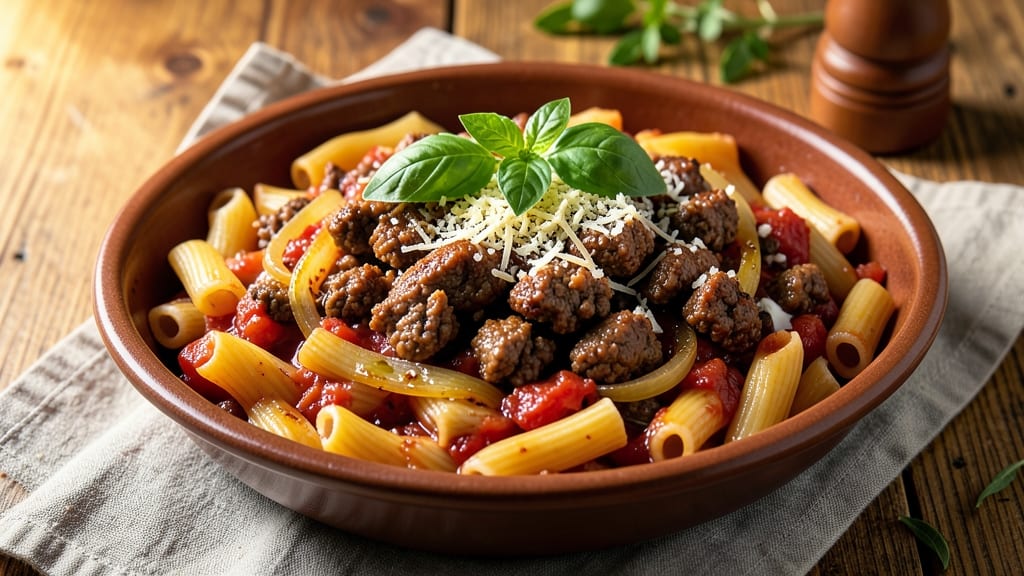
This baked beef rigatoni recipe delivers restaurant-quality comfort in one dish—tender beef, al dente pasta, and a velvety tomato-basil sauce all baked together until bubbling and golden.
The secret lies in searing the beef first to develop deep flavor, then layering it with rigatoni and sauce for a hands-off bake that requires just 45 minutes of active prep and 30 minutes in the oven.
What sets this recipe apart is the balance of textures: fork-tender beef, perfectly al dente pasta, and a sauce that’s rich yet bright from fresh basil and a touch of cream.
The dish comes together in a single baking dish, making cleanup effortless while delivering a meal that feels like a weeknight shortcut to Italian trattoria dining. The key technique? Cooking the pasta just slightly underdone before baking, so it finishes perfectly while absorbing the sauce’s flavors.
By the time it emerges from the oven, you’ll have a dish that’s impossible to resist—crispy edges on the cheese topping, tender beef that shreds easily, and a sauce so creamy it clings to every strand of pasta.
This is the kind of meal that transforms a simple weeknight into a memorable dinner, whether you’re feeding a family or impressing guests with minimal effort.
Serve with a simple arugula salad or garlic bread to round out the plate, or let the rigatoni stand alone as the star. The leftovers reheat beautifully, making this an ideal make-ahead option for busy schedules. Let’s get started on this foolproof baked pasta masterpiece.
Ingredients for baked beef rigatoni
Here's what you need for this creamy, restaurant-style baked beef rigatoni with al dente pasta and velvety tomato-basil sauce.
| Ingredient | Amount | Notes |
|---|---|---|
| Ground Beef (Chuck) 🥩 | 1 ½ lb | 80% lean, finely ground |
| Rigatoni Pasta 🍝 | 12 oz | Dry, al dente preferred |
| Yellow Onion 🧅 | 1 whole | Medium, finely diced |
| Garlic Cloves 🧄 | 4 cloves | Fresh, minced |
| Canned San Marzano Tomatoes 🍅 | 28 oz | Crushed, no salt added |
| Heavy Cream 🥛 | ½ cup | Full-fat for richness |
| Fresh Basil Leaves 🌿 | ½ cup | Packed, chopped |
| Parmesan Cheese 🧀 | 1 cup | Freshly grated |
| Extra-Virgin Olive Oil 🫒 | ¼ cup | For searing beef |
| Dried Oregano 🍃 | 1 tsp | Italian preferred |
| Salt 🧂 | 1 ½ tsp | Kosher or sea salt |
| Black Pepper 🌶️ | ½ tsp | Freshly ground |
| Mozzarella Cheese 🧀 | 2 oz | Fresh, sliced |
The beef is non-negotiable here—chuck roast ground fine gives that melt-in-your-mouth texture. Look for 80% lean at your local butcher or grocery store's meat counter, where they'll often grind it fresh for you. Whole Foods or Costco carry pre-ground chuck that works perfectly. For the tomatoes, San Marzano cans are worth the splurge—they're sweeter and less acidic, making the sauce sing. Fresh basil is ideal, but if you're using dried, reduce to one-third the amount and add it at the end.
No fresh basil? Dried oregano at half the amount works in a pinch, but you'll lose that bright, fresh flavor. Running low on mozzarella? Fontina or provolone melts beautifully too. The rigatoni should be al dente when raw—it'll finish cooking in the oven. For extra richness, swap half the heavy cream for whole milk. If you're prepping ahead, cook the pasta just 1 minute less than package instructions say, so it finishes perfectly in the oven.
This dish reheats beautifully—3-4 minutes at 350°F until bubbly. Store leftovers covered in the fridge for 4-5 days or freeze portions for 3 months. The sauce thickens as it cools, so add a splash of milk or water when reheating. For a crispy cheese topping, broil for 1-2 minutes at the end—watch it like a hawk to avoid burning. Portion into individual containers for easy lunches all week.
Why You'll Love This Recipe
- No Chopping Chaos: I swear by this recipe because it only asks for one onion to dice—and I’m not a knife enthusiast. Brown the chuck beef with that onion, toss in a few garlic cloves, and suddenly you’ve got a flavor base that feels like it simmered for hours.
- San Marzano Magic: That canned tomato? It’s the secret weapon. The sweet, meaty depth of San Marzano tomatoes turns this into something restaurant-worthy with zero effort. Add a splash of red wine (or skip it—no judgment), and you’ve got a sauce that clings to every rigatoni ridge like it’s been there forever.
- Leftovers That Beg: Between us, this dish tastes better the next day. The rigatoni softens just enough, the beef gets even more tender, and suddenly you’ve got a lunch that feels like a reward. I meal prep this all the time—just reheat, add a sprinkle of parm, and boom.
- Budget Dinner Hero: Chuck beef is cheap, rigatoni fills everyone up, and a single can of tomatoes stretches into two meals. Honestly, I make this when I’m pinching pennies, and my family never complains. It’s the kind of dish that makes grocery day feel like a win.
Step-by-step instructions for baked beef rigatoni
Here's how to create a rich, creamy tomato-basil sauce that perfectly coats al dente rigatoni.
Brown the Ground Beef for Maximum Flavor
Heat the 0.25 cup extra-virgin olive oil in a large Dutch oven over medium-high heat. Add the 1.5 lb ground beef (chuck) and break it apart with a wooden spoon, ensuring even browning. Cook for 8-10 minutes until the beef loses its raw color and develops a deep brown crust—this is where all the rich beef flavor develops.
Once browned, drain most of the fat but leave about 1 tablespoon in the pot. This remaining fat will help build the sauce's depth. Add the 1 whole yellow onion (finely diced) and cook for 5 minutes until softened. Stir in the 4 cloves garlic (minced) and cook for 30 seconds until fragrant—don't let it burn, or it'll turn bitter.
Build the Tomato-Basil Sauce Foundation
Pour in the 28 oz canned San Marzano tomatoes (crushed) and stir to combine with the beef mixture. Add the 1 tsp dried oregano, 1.5 tsp salt, and 0.5 tsp black pepper, then bring to a gentle simmer. Let it cook uncovered for 15 minutes, stirring occasionally, until the sauce thickens slightly and the flavors meld together.
Real talk: This is where the sauce's depth comes from. Don't rush this step—simmering allows the tomatoes to break down and develop their natural sweetness. If the sauce gets too thick, add a splash of water to maintain consistency.
Cook the Rigatoni to Al Dente Perfection
While the sauce simmers, bring a large pot of well-salted water to a rolling boil. Add the 12 oz rigatoni pasta and cook for 1 minute less than the package instructions suggest—you want it al dente with a slight bite. Reserve 1 cup of pasta water before draining, as it contains starch that will help emulsify the sauce later.
Drain the pasta and immediately add it to the Dutch oven with the beef sauce. Toss gently to coat the pasta evenly with the sauce. If the sauce seems too thick, add 2-3 tablespoons of reserved pasta water to loosen it to a creamy consistency.
Finish with Cream and Cheese for Richness
Reduce the heat to low and stir in the 0.5 cup heavy cream and 0.5 cup fresh basil leaves (chopped). Let the mixture simmer gently for 3-4 minutes—this allows the cream to infuse the sauce with velvety richness without curdling. The basil will release its aromatic oils, adding freshness to balance the richness.
Finally, fold in the 1 cup freshly grated Parmesan cheese and 2 oz fresh mozzarella cheese (sliced). The mozzarella will melt slightly, creating pockets of creamy goodness throughout the dish. Taste and adjust seasoning if needed—this is your final chance to perfect the balance of flavors.
Bake Until Bubbly and Golden
Transfer the entire dish to a 9x13-inch baking dish and spread it evenly. Cover with foil and bake at 375°F for 20 minutes. Then, remove the foil and bake for an additional 5-10 minutes until the top develops a golden-brown crust and the sauce bubbles around the edges.
This final baking step ensures the cheese melts completely and creates that irresistible golden finish. The bubbly sauce indicates it's reached the perfect creamy consistency. Remove from the oven and let it rest for 5 minutes before serving—this allows the sauce to thicken slightly and the flavors to settle.
Pro Tips For Making Baked Beef Rigatoni
- CRUSH THE ONIONS FIRST: I learned this the hard way—chopping onions after browning the beef means soggy, watery sauce. Dice them fine (1/4-inch pieces) and let them sit in a bowl while you brown the meat. They’ll release moisture, and you’ll avoid that sad, mushy texture when they hit the pan.
- BROWN THE BEEF IN BATCHES: Chuck ground beef releases a lot of fat, and crowding the pan turns your sauce into grease. Work in 1-pound increments, breaking it up with a spoon to keep it loose. High heat, but don’t rush—let it sizzle, not steam. (Yes, even if you’re impatient like me.)
- SALT THE PASTA WATER LIKE THE SEA: Rigatoni needs aggressive seasoning to stand up to the tomatoes. Toss in 2 tablespoons of salt per 4 quarts of water—more than you think, especially if you’re using San Marzano (which is naturally sweeter). Under-seasoned pasta ruins the whole dish.
- REST THE SAUCE UNDER FOIL: After simmering the tomatoes and beef, cover the pot with foil and let it sit off the heat for 10 minutes. This lets flavors meld without reducing too much, and it’s the reason your sauce won’t taste like separate ingredients. (Your future self will notice the difference.)
Common mistakes when making this dish
Overcooking the Pasta
This is my biggest rookie mistake when making baked pasta—cooking the rigatoni to perfection before baking. The key is to undercook it by 1 minute (so 1 minute less than package instructions) since it finishes in the oven.
Overcooked pasta turns mushy when baked, absorbing too much sauce and losing its al dente bite. I've ruined more than one batch by ignoring this rule. 🍝
Skipping the Beef Fat
After browning the beef, many people drain ALL the fat, but leaving 1 tablespoon makes a huge difference. That residual fat carries deep umami flavors that build the sauce's richness.
I learned this the hard way when my first attempt tasted flat and one-dimensional. Trust me, that little bit of fat is flavor gold.
Rushing the Sauce Simmer
The 15-minute simmer for the tomato sauce isn't optional—it's where the magic happens. I've seen people skip this step to save time, but you'll miss the breakdown of tomatoes into natural sweetness and the melding of flavors.
If you're impatient, at least simmer for 10 minutes minimum—any less and the sauce will taste raw and acidic.
Adding Cream Too Early
Introducing heavy cream before the sauce has properly developed means it'll curdle from the acidity. Always add it after the tomatoes have simmered and thickened slightly.
I once ruined a batch by adding cream too soon—now I wait until the very end when the sauce is stable and ready for richness. The 3-4 minute gentle simmer after adding cream is crucial for that velvety texture.
Underestimating Rest Time
That 5-minute rest after baking might seem trivial, but it's what transforms good baked pasta into restaurant-quality perfection. Without it, the sauce runs everywhere when you serve it.
I used to skip this step out of excitement, only to have a messy plate. Let the dish rest—it's the secret to that perfect sauce consistency.
Using Pre-Grated Cheese
Pre-shredded cheese contains anti-caking agents that prevent proper melting and create a grainy texture. Freshly grated Parmesan and mozzarella make all the difference. I now buy blocks of cheese and grate them myself—it's worth the extra effort for that authentic, creamy result.
For mozzarella, fresh is non-negotiable; low-moisture versions won't melt as beautifully. 🧀
Nutrition facts
Frequently asked questions
Can I substitute rigatoni with another pasta shape?
While rigatoni's tubes hold sauce beautifully, penne, farfalle, or even fusilli work well. Just ensure the pasta cooks evenly—avoid delicate shapes like angel hair that might break during baking. For best results, use a shape with ridges or hollows to trap the creamy sauce.
How do I adjust this recipe for a vegetarian version?
Replace the beef with 1.5 lb mushrooms (cremini or portobello) or 1 lb lentils for heartiness. Sauté mushrooms with olive oil until golden, then proceed with the same tomato-basil sauce. For lentils, use canned or pre-cooked varieties and add them after simmering the sauce. Boost umami with 1 tsp soy sauce or 1 tbsp balsamic vinegar.
Why does my sauce separate when baking?
This happens when the sauce cools too quickly or the cream breaks from acidity. Prevent it by ensuring the sauce reaches a gentle simmer before adding cream, and never let it boil after incorporating the dairy. If separation occurs, whisk in 1 tbsp cold water or pasta water to re-emulsify while reheating.
Can I make this dish ahead of time?
Yes! Assemble the dish up to 24 hours ahead and refrigerate uncovered. Bake from cold at 375°F for 45-50 minutes, covered with foil for the first 30 minutes, then uncovered to crisp the top. Add 1-2 tbsp water before baking if the sauce looks too thick from chilling.
What's the best way to reheat leftovers?
Transfer portions to a microwave-safe dish, cover loosely, and heat at 50% power for 2-3 minutes, stirring halfway. For oven reheating, cover with foil and bake at 350°F for 15-20 minutes until bubbly. Add a splash of milk or water if the sauce thickens too much during reheating.