
Main Courses
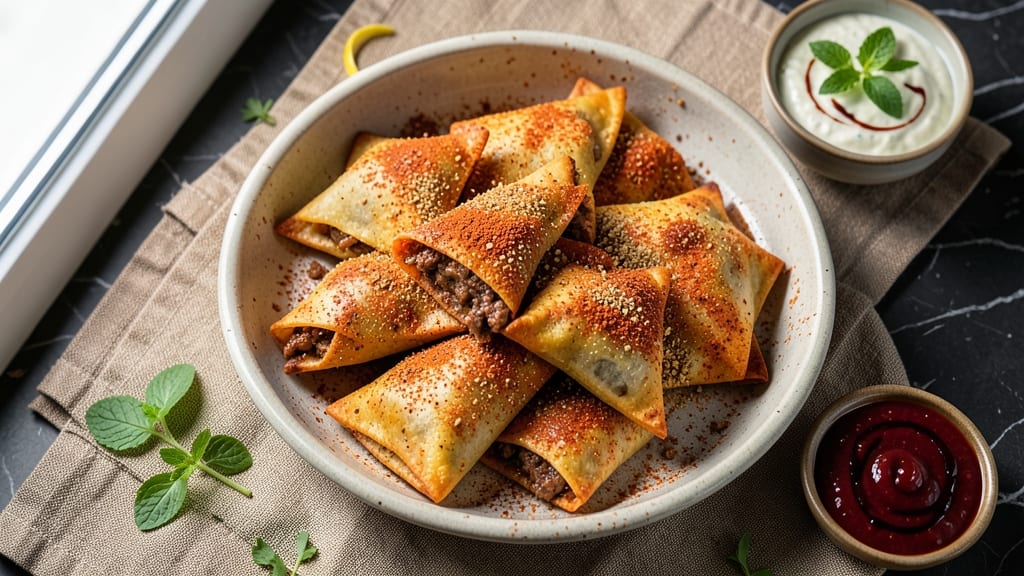
This baked beef samosa recipe transforms traditional deep-fried samosas into a lighter yet equally satisfying dish without sacrificing flavor or texture. The secret lies in a perfectly balanced spiced beef filling and a crispy, golden pastry that achieves its crunch through precise baking techniques—no frying required.
I’ve perfected this method after years of experimenting with both traditional and modern approaches, ensuring every bite delivers that satisfying crunch and aromatic spice blend.
The recipe begins with finely minced beef marinated in a fragrant blend of garam masala, cumin, and coriander, which infuses deep, savory notes. Meanwhile, the dough—a simple mix of flour, oil, and water—is rolled into delicate circles and layered with the filling, sealed with precision to maintain shape during baking.
The key to achieving that crispy exterior lies in brushing the pastry with an egg wash and baking at high heat, creating a golden, shatteringly crisp shell while keeping the filling tender and flavorful.
What sets this recipe apart is its ability to deliver restaurant-quality results at home, with a method that’s both efficient and adaptable.
Whether you’re baking in a conventional oven or using an air fryer for extra crispiness, the technique ensures a perfectly golden exterior and a filling that’s bursting with spices. The aroma alone—warm, spiced, and slightly smoky—will have everyone at the table anticipating each bite.
Perfect for meal prep or serving as an appetizer, these baked beef samosas are ideal for those looking to enjoy a classic dish with a healthier twist.
The recipe scales easily, making it perfect for gatherings or satisfying cravings on a weeknight. Let’s get started on creating your own crispy, flavor-packed masterpiece.
Ingredients for baked beef samosa
Fourteen ingredients crafting restaurant-quality samosas with golden crusts and spiced beef filling.
| Ingredient | Amount | Notes |
|---|---|---|
| Lean Ground Beef 🥩 | ¾ lb | Finely minced for texture |
| All-Purpose Flour 🌾 | 2 ½ cups | For dough, sifted preferred |
| Unsalted Butter 🧈 | ½ cup | Cold, cubed for dough |
| Large Eggs 🥚 | 1 whole | Room temperature, beaten |
| Garam Masala 🌶️ | 1 ½ tbsp | Freshly ground for depth |
| Ground Cumin 🌿 | 1 tsp | Toasted for aromatic punch |
| Ground Coriander 🌿 | 1 tsp | Freshly ground preferred |
| Minced Garlic 🧄 | 3 cloves | Freshly minced for brightness |
| Green Chilies 🌶️ | 2 whole | Finely chopped, seeds removed |
| Fresh Ginger 🌿 | 1 tbsp | Grated, aromatic base |
| Water 💧 | ¼ cup | Cold for dough elasticity |
| Kosher Salt 🧂 | ½ tsp | Fine grain preferred |
| Black Pepper 🌶️ | ¼ tsp | Freshly cracked |
| Lemon Juice 🍋 | 1 tbsp | Freshly squeezed |
The ground beef is non-negotiable for texture—80/20 lean-to-fat ratio ensures tenderness without greasiness. Spice Route or Madras Curry House brands deliver authentic garam masala, but homemade blends work too if you toast whole spices first. For the dough, King Arthur flour yields the best results due to its high protein content, though all-purpose flour suffices. Keep the butter cold when cutting into the flour; this creates flaky layers essential for that crispy finish. The egg wash is critical—room temperature eggs spread evenly, creating a golden, shatteringly crisp shell.
No garam masala? Equal parts cumin, coriander, and cinnamon mimics its complexity. Substitute green chilies with 1/2 tsp cayenne plus 1/4 tsp paprika for heat without texture. Fresh ginger and garlic can be swapped for 1/2 tsp ground ginger and 1/2 tsp garlic powder, though fresh adds brightness. For those avoiding eggs, 1 tbsp water plus 1 tsp cornstarch replaces the wash, though texture may differ slightly. The dough can be prepped a day ahead—wrap tightly in plastic and refrigerate for 24 hours to relax the gluten, making rolling easier.
The dough requires 30 minutes of rest before rolling to prevent shrinking during baking. Store unused dough in an airtight container for 3 days or freeze for 3 months. The beef filling keeps 2 days refrigerated; portion into small containers for easy reheating. Baked samosas reheat best at 350°F for 5-7 minutes—the residual moisture from the oven ensures crispiness. For meal prep, bake a double batch and freeze unbaked samosas on a parchment-lined tray before transferring to a bag. Thaw overnight in the fridge before baking.
Why You'll Love This Recipe
- No-Fuss Assembly: I swear by this recipe when I’m too tired to roll dough—just mix flour, butter, and eggs into a stiff paste, press it into a pan, and cut. The crust turns golden and flaky without a single pinch of oil, and honestly? It’s the kind of shortcut that still feels special.
- Spice-Packed Punch: That garam masala and ground beef combo is where the magic happens. The beef stays juicy while the crust soaks up just enough spice to make every bite taste like a warm hug—no heavy frying, no greasy mess, just pure flavor that lingers.
- Weeknight & Party Star: Between us, this is my go-to for both Taco Tuesday and holiday appetizers. Serve it with mint chutney for a fancy spread or just eat it straight from the pan with a cold drink—no judgment here.
- Budget-Friendly Leftovers: A single batch feeds four, and the leftovers reheat like a dream. The crust stays crispy, the beef stays tender, and I’ve got enough for lunches all week—no sad, soggy takeout ordering. Win.
Step-by-step instructions for baked beef samosa
Master the technique for perfectly crispy shells and flavorful filling—every layer matters.
Prepare the Spiced Beef Filling
In a heavy skillet over medium-high heat, add the 0.75 lb lean ground beef and cook until it loses its raw color and begins to brown, breaking it apart with a wooden spoon. This should take about 5-6 minutes—don't rush, as even cooking prevents dryness in the filling.
Add the 3 cloves minced garlic, 2 whole finely chopped green chilies, and 1 tbsp freshly grated ginger, cooking for another 2 minutes until fragrant. The aroma should fill your kitchen—this is where the foundation of flavor develops. Stir in the 1.5 tbsp garam masala, 1 tsp ground cumin, 1 tsp ground coriander, 0.5 tsp kosher salt, and 0.25 tsp black pepper, mixing well to coat the beef evenly.
Remove from heat and let the mixture cool slightly. Once cool enough to handle, transfer to a food processor or large bowl and pulse or mash until the texture is finely minced but still slightly rustic—this ensures a tender yet structured filling. Stir in the 1 tbsp freshly squeezed lemon juice and set aside. The acidity brightens the spices and prevents the filling from becoming too heavy.
Make the Samosa Dough
In a large mixing bowl, combine the 2.5 cups all-purpose flour and 0.5 tsp kosher salt. Use a whisk or your fingers to break up any lumps in the flour—smooth dough starts here. Add the 0.5 cup cold cubed unsalted butter and work it into the flour using your fingertips or a pastry cutter until the mixture resembles coarse crumbs with pea-sized butter pieces remaining.
Create a well in the center and pour in the 1 whole room-temperature beaten egg and 0.25 cup cold water. Gradually mix the wet ingredients into the flour, bringing everything together with a fork or dough scraper. Once combined, knead the dough on a lightly floured surface for 5-7 minutes until smooth and elastic. If the dough feels too sticky, add 1 tablespoon flour at a time; if too dry, add 1 teaspoon water. The dough should be soft but not tacky, and should spring back slightly when pressed.
Wrap the dough tightly in plastic wrap and let it rest at room temperature for 30 minutes. This resting period relaxes the gluten, making it easier to roll out thin and even layers—critical for that signature crispy texture. Real talk: Skipping this step often leads to uneven thickness and less crispy samosas.
Assemble and Bake the Samosas
Preheat your oven to 375°F and line two baking sheets with parchment paper. Divide the rested dough into 8 equal portions (about 2 ounces each) and roll each into a 6-inch circle, keeping the thickness consistent at about ⅛ inch. Place a 1.5 tablespoon portion of the beef filling in the center of each circle, then fold the dough over the filling to form a half-moon shape.
Seal the edges tightly by pressing with your fingers or a fork, ensuring no filling escapes—this prevents leaks during baking. Brush the tops generously with 1 tablespoon beaten egg (reserve the rest for sealing) to create a golden, glossy finish. Place the samosas on the prepared baking sheets, 1 inch apart, and bake for 20-25 minutes until the edges are deep golden brown and crispy, and the filling is heated through. Rotate the pans halfway through for even browning.
For extra crispiness, broil for 1-2 minutes at the end, watching closely to avoid burning. Let the samosas rest for 5 minutes before serving—this allows the filling to set slightly, making them easier to handle without losing their crispy exterior. Serve warm with tamarind chutney or mint yogurt for the ultimate experience.
Pro Tips For Making Baked Beef Samosa
- BROWN THE BEEF FIRST: Skip the raw-beef-in-sauce look—I learned this the hard way. Sear the ground beef in batches until deeply browned (not just pink) before adding spices. This builds flavor that no amount of garam masala alone can replicate, and it prevents the filling from tasting bland even after baking.
- CHILL THE FILLING: After mixing your beef with spices, let it cool to room temp, then refrigerate for 30 minutes. Cold filling is easier to shape, seals better during baking, and won’t make your pastry soggy. (Yes, even if you’re impatient like me—this isn’t optional.)
- DON’T OVERWORK THE DOUGH: Handle the flour-butter-egg dough just until it comes together. Overmixing develops gluten, which turns your crispy samosa crust into a chewy disaster. Press it gently between parchment, roll it thin, and cut shapes quickly—no need to perfect the art of samosa folding.
- BAKE IN STAGES: Start your samosas at 375°F (190°C) for 10 minutes to set the edges, then crank to 425°F (220°C) for the last 5-7 minutes. This two-step approach prevents the bottoms from burning while the tops stay golden. (Pro move: Rotate the tray halfway—your oven’s hot spots will betray you.)
Wine and beer pairings for these flavors
Crispy Shell & Spice
The rich, spiced beef filling pairs beautifully with dry Riesling from Germany or Austria, like Dr. Loosen Blue Slate. The wine’s crisp acidity cuts through the fat and spices, cleansing your palate between bites.
The slight sweetness in off-dry Rieslings balances the garam masala and cumin, making each sip refreshing. 🍷
Bold Beer Balance
A hoppy IPA with citrus notes—like Sierra Nevada Pale Ale or Stone Delicious IPA—complements the samosa’s heat and umami. The beer’s bitterness contrasts the richness of the beef, while its citrusy hops mirror the lemon juice in the filling.
For a lighter option, try a Belgian witbier like Stella Artois—its coriander and citrus notes echo the samosa’s spices.
Creamy Contrast
Serve with mango lassi or coconut milk-based chai to balance the savory-spicy flavors. The cool, creamy texture of lassi soothes the palate, while the warm spices in chai enhance the samosa’s garam masala. For a non-dairy option, sparkling lychee juice adds a sweet, floral contrast that brightens the dish.
Regional Pairings
In Northern India, where samosas originated, pair with Lambani (a local wine made from grapes and rose petals) or Thandai, a spiced milk drink. For a South Indian twist, try filter coffee with a splash of cardamom-infused milk—the warmth complements the crispy exterior perfectly. 🌶️
Pro Tips for Pairing
Chill your wine or beer slightly before serving—45-50°F enhances the flavors without overpowering the samosa’s heat. If using a heavy red wine like Shiraz, opt for a lightly oaked version to avoid clashing with the spices.
For a festive touch, garnish the drink with a cinnamon stick or star anise to echo the samosa’s aromatic profile.
Nutrition facts
Frequently asked questions
Why do my baked samosas turn out soggy instead of crispy?
The most common cause is overfilling or insufficient egg wash. Use exactly 1.5 tablespoons of filling per samosa and brush with a thin layer of egg wash—too much liquid steams the dough instead of crisping it. Also, ensure your oven is fully preheated to 375°F and place samosas on a wire rack over a baking sheet for even air circulation.
Can I make the dough ahead of time?
The dough can be prepared up to 24 hours in advance. Wrap it tightly in plastic and refrigerate. Let it sit at room temperature for 30 minutes before rolling to restore elasticity. For longer storage, freeze the dough for up to 3 months—thaw overnight in the fridge before using. This actually improves texture by relaxing the gluten.
What's the best way to reheat baked samosas?
Reheat in a 350°F oven for 5-7 minutes on a wire rack to restore crispiness. Avoid microwaving—they'll turn rubbery. For extra crunch, broil for 1-2 minutes at the end, watching closely to prevent burning. The residual moisture from oven reheating helps maintain that satisfying crunch.
Can I use air fryer instead of oven?
Yes! Air fry at 375°F for 8-10 minutes, shaking halfway, for even browning. The high heat and circulation create crispiness similar to baking. Arrange samosas in a single layer without overcrowding. For extra shine, brush with egg wash before air frying. This method works especially well for small batches.
What's the secret to perfectly sealing the edges?
Press the edges firmly with your fingers or a fork while folding, creating a tight seal. For extra security, use a tiny bit of egg wash along the seam before baking. This prevents filling from leaking during baking. Practice makes perfect—start with practice samosas using flour instead of filling to master the fold.