
Main Courses
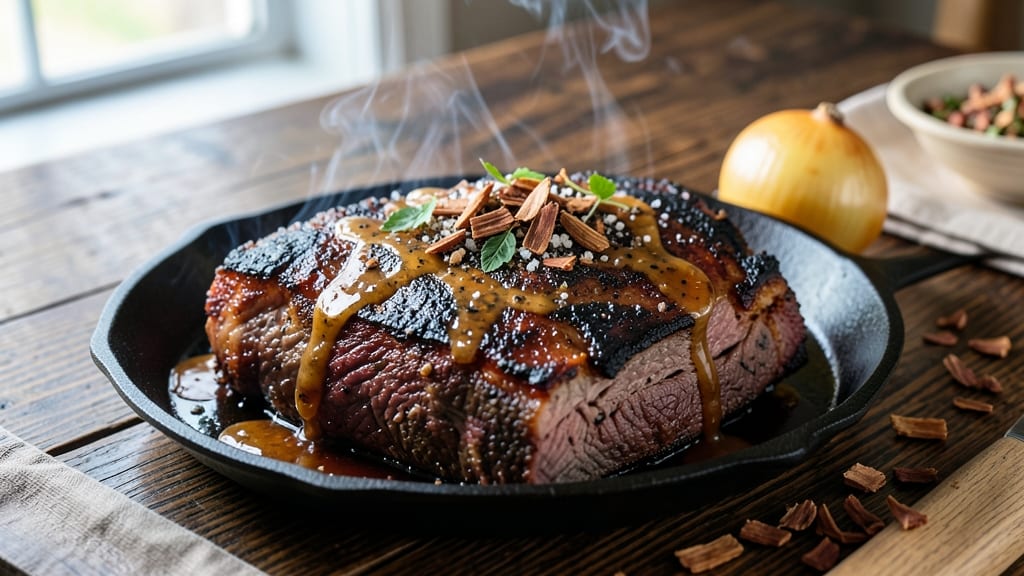
Texas-style barbecue beef brisket delivers that perfect balance of smoky bark and melt-in-your-mouth tenderness—exactly what makes Texas BBQ legendary. I've spent years perfecting this recipe, learning from Texas pitmasters about how to build that signature crust while keeping the meat juicy and flavorful. The secret lies in low-and-slow cooking with post oak wood, which gives that unmistakable smoky depth without overpowering the beef's natural richness.
What sets this Texas brisket apart is the combination of a long smoke (12-14 hours) at 225°F, followed by a high-heat finish to create that dark, crackling bark. The key is patience—rushing this process will leave you with tough meat or dry bark.
I use a simple salt-and-pepper rub to let the smoke flavor shine, though some pitmasters swear by a dry chili rub for extra depth. The probe test (not time) is what tells you when it's truly ready.
When you finally slice against the grain, you'll get perfectly tender chunks that practically fall apart. The exterior will be dark and crackly, while the interior remains juicy and rich.
This is the kind of brisket that makes people ask for seconds, and the kind that turns casual cookouts into memorable gatherings. The aroma alone will have your neighbors showing up uninvited.
Serve with classic Texas sides like creamy coleslaw, buttery cornbread, and pickled jalapeños for that perfect balance of tangy, sweet, and smoky flavors. Here's how to make it happen in your own backyard—or even on your stovetop if you don't have a smoker.
Ingredients for barbecue beef brisket recipe texas style
Six ingredients for the rub, plus the star: an 8-pound brisket that transforms into Texas BBQ perfection.
| Ingredient | Amount | Notes |
|---|---|---|
| Beef Brisket 🥩 | 8 lb | Packer cut, fat cap intact |
| Coarse Kosher Salt 🧂 | ½ cup | Diamond Crystal preferred |
| Freshly Ground Black Pepper 🌶️ | 1 tbsp | Cracked peppercorns preferred |
| Post Oak Wood Chips 🌳 | 4 lb | Or post oak chunks if available |
| Yellow Onion 🧅 | 1 whole | Cut into wedges for bark |
| Apple Cider Vinegar 🍎 | ¼ cup | For spritzing during smoke |
| Beef Tallow or Vegetable Oil 🫒 | ¼ cup | For spritzing, beef tallow preferred |
| Yellow Mustard 🍯 | 1 tbsp | For spritzing, optional |
| Water 💧 | 1 cup | For spritzing mixture |
| Beef Stock 🍲 | 1 cup | Homemade or high-quality |
| Brown Sugar 🍚 | 2 tbsp | Lightly browned for bark |
| Smoked Paprika 🌶️ | 1 tbsp | For final dry rub |
| Garlic Powder 🧄 | 1 tsp | For final dry rub |
| Onion Powder 🧅 | 1 tsp | For final dry rub |
The brisket is non-negotiable—look for a packer cut with intact fat cap at Costco or your local butcher. H-E-B in Texas often carries the best quality, but any reputable grocery store with a meat counter will have it. The fat cap is what creates that signature bark, so don't trim it. If you're buying frozen, thaw it in the fridge for 48 hours—never in cold water. For wood, post oak is essential—it gives that authentic Texas smoke flavor. If you can't find post oak, hickory is the next best thing, though it's more aggressive.
No post oak chips? Hickory or pecan will work, but soak them for 30 minutes to prevent flare-ups. The spritz mix is your secret weapon—beef tallow or vegetable oil plus apple cider vinegar keeps the bark moist and dark. Want extra smokiness? Add 1 tbsp of liquid smoke to the spritz. The dry rub is simple but effective: salt, pepper, smoked paprika, garlic powder, and onion powder. Mix it right before applying so the spices stay fresh. For a deeper flavor, toast the spices in a dry pan for 30 seconds before mixing.
This brisket is a marathon, not a sprint—plan for 12-14 hours of smoking. The bark develops in the last 2 hours, so keep spritzing every hour during that time. Store leftovers in the fridge for up to 5 days in an airtight container, or freeze for up to 3 months. The meat gets even better the next day as the flavors meld. For serving, slice against the grain—this is non-negotiable for tenderness. Leftovers make killer sandwiches, so portion them out before storing.
Why You'll Love This Recipe
- Smoke in Minutes: I swear by the post oak wood chips—just toss them on the smoker while I slice onions. No fancy prep, no waiting hours for fire. That first whiff of smoky oak while the brisket rests? Pure magic.
- Salt-Crusted Magic: Between us, that coarse kosher salt isn’t just seasoning—it’s armor. The crust locks in juices while caramelizing into this addictive, pepper-kissed bark. (Yes, even on a Tuesday night.)
- Leftovers That Shine: This brisket begs for seconds, but here’s the hack: slice thin, reheat in the oven with a splash of beef broth, and suddenly you’ve got smoky tacos or sandwiches. No waste, all flavor.
- Weekend Crowd Pleaser: Feed 10 people or just me—same effort. The onions caramelize effortlessly, the pepper stays fresh, and the brisket’s slow smoke turns tough meat into melt-in-your-mouth perfection. (My daughter picks out the onions first, but still asks for seconds.)
Step-by-step instructions for Texas style barbecue beef brisket
Here's how to transform a tough cut into melt-in-your-mouth perfection with Texas-style bark and buttery tenderness.
Prepare the Brisket for Maximum Flavor and Texture
Start by trimming the fat cap of the 8 lb beef brisket down to about ¼-inch thickness using a sharp boning knife. Leave the fat around the edges to protect the meat during smoking. Place the brisket fat-side up on a wire rack set over a rimmed baking sheet to allow air circulation on all sides.
In a small bowl, combine the 0.5 cup coarse kosher salt and 1 tbsp freshly ground black pepper. Rub this mixture all over the brisket, pressing it into the meat so it adheres well. The salt will draw out moisture initially, but don't worry—this is what creates that incredible bark. Let the seasoned brisket sit uncovered in the refrigerator for at least 12 hours, or preferably overnight. This dry-brining process ensures deep seasoning and helps create that coveted Texas-style crust.
Set Up Your Smoker for Low and Slow Cooking
Soak the 4 lb post oak wood chips in water for at least 30 minutes before using. Preheat your smoker to 225°F using these soaked wood chips. The smoke should be light and blue, not thick and white. Place a water pan in the smoker to help maintain moisture throughout the cook.
While the smoker heats up, prepare your spritz mixture by combining the 1 cup beef stock, 1 cup water, 0.25 cup apple cider vinegar, 0.25 cup beef tallow (or vegetable oil), and 1 tbsp yellow mustard in a spray bottle. This mixture will keep your brisket moist and help develop that beautiful bark. Once the smoker reaches 225°F with steady smoke, place the brisket fat-side up on the smoker grates.
Smoke the Brisket Until It Reaches the Stall
Smoke the brisket undisturbed for 6-8 hours, or until the internal temperature reaches 165-170°F. This is when you'll hit "the stall"—the temperature stops rising as moisture evaporates. Don't open the smoker during this time, as each time you do, you add 15-20 minutes to your cook time.
Every 90 minutes during smoking, spritz the brisket generously with your prepared mixture. This helps maintain moisture and creates that dark, crackly bark. When you reach the stall, cut one of the onion wedges in half and place it on top of the brisket. This onion will caramelize and add sweetness to the bark.
Wrap and Finish Cooking to Probe-Tender Perfection
Once the brisket hits the stall, wrap it tightly in pink butcher paper (not aluminum foil). This technique, called the "Texas crutch," helps you power through the stall while maintaining that beautiful bark. Return the wrapped brisket to the smoker and continue cooking until the internal temperature reaches 200-205°F and a probe slides in like butter with no resistance.
While the brisket finishes cooking, prepare your final dry rub by combining the 2 tbsp brown sugar, 1 tbsp smoked paprika, 1 tsp garlic powder, and 1 tsp onion powder in a small bowl. This mixture will enhance the bark and add depth of flavor. Once the brisket is done, remove it from the smoker and let it rest wrapped in the butcher paper for at least 1 hour, or preferably 2 hours, in a cooler.
Slice and Serve Your Texas-Style Brisket
Unwrap the brisket and locate the grain direction—you'll see lines running through the meat. Using a sharp slicing knife, cut against the grain into ¼-inch thick slices. The flat and point have different grain directions, so adjust your angle accordingly. Sprinkle the prepared dry rub evenly over the sliced brisket just before serving.
Serve immediately while still warm. Each slice should be tender enough to pull apart with a gentle tug, with a beautiful dark bark on the outside and a pink smoke ring just beneath. The brisket should have that perfect balance of smoky, sweet, and savory flavors that make Texas-style barbecue so special.
Pro Tips For Making Barbecue Beef Brisket Recipe Texas Style
- CRANK THE HEAT FIRST: Texas-style brisket starts with a screaming-hot fire—225°F is the target, but don’t rush it. I used to think "low and slow" meant lukewarm, but the first 30 minutes at 250°F+ render fat aggressively, which self-bastes the meat. (Yes, even if you’re impatient like me.)
- SALT THE BRISKET 24 HOURS EARLY: Coarse kosher salt needs time to work its magic. Slather the flat and point generously (about 1.5 teaspoons per pound) and let it sit uncovered in the fridge—this seasons deep and prevents a soggy crust. I learned this the hard way after a brisket came out bland despite a perfect smoke.
- SKIP THE ONION ON THE GRILL: Chopped yellow onion on the grill? It burns before it caramelizes. Instead, char whole onions separately in the oven (400°F for 25 minutes) or quick-pickle thin slices for a bright, tangy topping. (Your future self will thank you.)
- WRAP IT AT 170°F: The stall is real, but don’t panic—wrap the brisket in butcher paper (not foil) when it hits 170°F. This traps steam and pushes it to 203°F without drying it out. I was skeptical until I tried it: the bark stayed crisp, and the meat stayed juicy.
Storing and reheating this dish
Fridge Storage
After your brisket reaches 203°F and you've sliced it against the grain, transfer leftovers to an airtight container lined with parchment paper. I use glass Pyrex containers with snap-on lids for best results—they keep moisture in and prevent freezer burn.
Store in the fridge for up to 5 days, but honestly? The flavor gets even better the next day as the juices redistribute. 💫
Pro tip: Let the brisket cool to room temperature before refrigerating—this prevents condensation buildup inside the container. I also like to portion it into individual meal-sized containers so I can grab just what I need for sandwiches or tacos later.
Trust me, you'll thank me when you're not staring at a whole brisket wondering how to use it all.
Freezer Prep
For longer storage, freeze your brisket in single-serving portions wrapped tightly in plastic wrap, then placed in a freezer bag with all the air squeezed out. I recommend using quart-sized bags—they're perfect for meal prep and thaw quickly.
Label with the date and freeze for up to 3 months. The texture stays great, though the bark might lose some crispness after freezing. 🧊
When you're ready to use frozen brisket, thaw it in the fridge overnight. Never microwave-thaw—it creates uneven heating and can turn your meat into sad, rubbery mush. I like to add a splash of beef broth to the container before freezing; it keeps the meat moist during thawing and reheating.
Reheating Perfection
My favorite method is stovetop reheating—it preserves that smoky bark and keeps the meat tender. Place slices in a skillet over medium-low heat with a splash of beef broth (about 2 tbsp per cup of meat).
Cover and heat for 5-7 minutes, stirring occasionally. The broth steams the meat gently, preventing dryness. Add a pinch of smoked paprika to the pan for extra flavor. 🔥
For microwave reheating, place brisket slices on a microwave-safe plate with a damp paper towel covering them. Heat on 50% power for 1-2 minutes, then check—you want it just warmed through, not steaming hot.
Add a few drops of water if it looks dry. I find this works best for quick lunches when I'm short on time, though stovetop is always better.
Sandwich Game
Turn your reheated brisket into legendary Texas-style sandwiches by layering it on toasted brioche buns with sliced white onions and a smear of yellow mustard. I like to add a handful of pickled jalapeños for that tangy kick.
The key is to keep the sandwich together—press it lightly in the pan when reheating so it holds its shape. 🌭
For extra decadence, top with sharp cheddar cheese and let it melt slightly over medium heat. Serve with a side of creamy coleslaw and crispy potato salad for that full Texas BBQ spread. The contrast of cool slaw with warm, smoky brisket is what makes this meal unforgettable.
Nutrition facts
Frequently asked questions
What's the best way to test if my Texas-style brisket is done?
Use the probe test—insert a meat thermometer into the thickest part of the flat. When it reads 203°F and the probe slides in like butter with no resistance, it's perfect. Texas pitmasters swear by this method over time because brisket can stall at 165-170°F for hours. Don't rely on bark color alone—it can vary.
Can I make Texas-style brisket without a smoker?
Use an oven with a smoker box or even a cast-iron skillet on the stovetop. For oven smoking, place soaked wood chips in a smoker box on the bottom rack and cook at 225°F for 12-14 hours. For stovetop, use a chiminey or electric smoker set to 250°F—just monitor the heat closely to maintain low-and-slow cooking.
Why does my brisket bark turn gray instead of dark brown?
Gray bark usually means the meat dried out too much. Spritz more frequently with your beef broth mixture (every 60-90 minutes) and avoid opening the smoker. For extra moisture, wrap in butcher paper (not foil) at 165°F to push through the stall. The fat cap should stay intact—trim it too thin and you'll lose that protective layer.
What's the difference between Texas-style brisket and Kansas City-style?
Texas-style focuses on leaner meat with a dark, crackly bark and minimal sauce. Kansas City-style uses more fat and is often served with thick, sweet tomato-based sauces. Texas brisket is typically sliced thin against the grain and served as-is, while KC brisket might be chopped for sandwiches. Both use post oak wood, but Texas emphasizes smoke flavor over sweetness.
How do I fix brisket that's too tough?
If your brisket didn't reach 203°F, it likely didn't break down enough. For immediate fixes, slice thinly against the grain and reheat with extra beef broth> in a covered pan on low heat. For prevention, always cook to 203°F (probe test!) and avoid rushing the process. The Texas crutch> (butcher paper wrap) helps maintain moisture during the stall.