
Soups & Stews
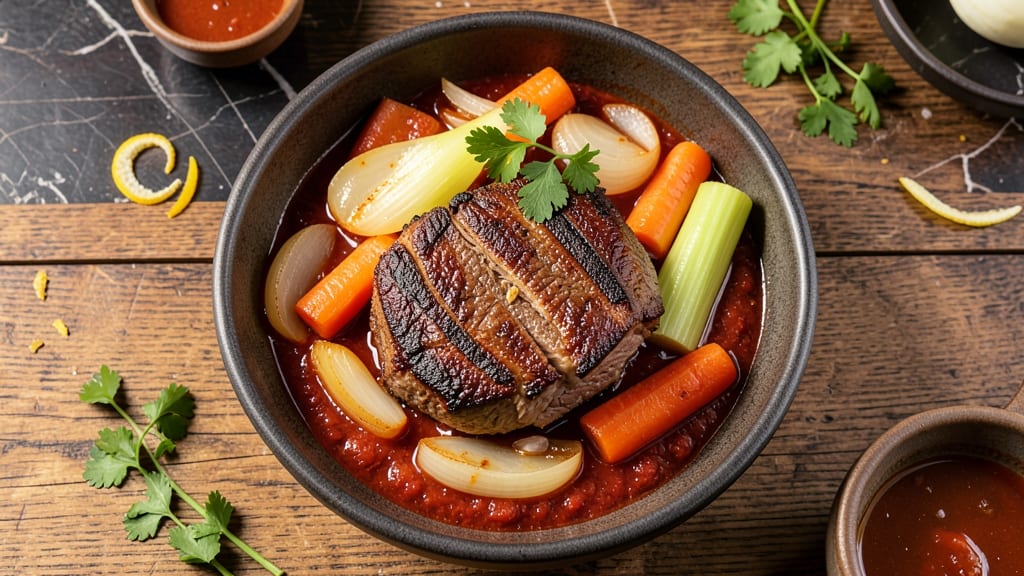
This basic beef stew recipe without wine delivers deep, savory flavor through traditional techniques that don't require alcohol. The secret lies in properly browning the beef and building layers of richness with tomato paste, aromatic herbs, and slow simmering—no wine needed to create that restaurant-quality depth.
What starts as tough chuck roast transforms into fork-tender meat swimming in a velvety broth infused with caramelized vegetables and earthy spices.
What makes this stew truly special is the foolproof method that works every time: browning the meat in batches creates a flavorful crust that dissolves into the broth, while the vegetables cook down to perfect tenderness.
The recipe relies on beef stock, tomato paste, and fresh herbs to develop complexity, ensuring the stew tastes as rich as traditional versions without relying on wine. This approach makes it equally suitable for cooks who avoid alcohol for dietary or personal reasons.
By the time it's done simmering, you'll have a hearty stew with caramelized edges on the vegetables, tender beef that practically melts in your mouth, and a broth so flavorful it coats every spoonful.
The aroma alone transforms your kitchen into a comforting home, and the texture—crisp vegetables alongside tender meat—makes each bite satisfying. This is the kind of stew that tastes even better the next day, perfect for feeding a crowd or meal prepping for the week.
The beauty of this recipe lies in its versatility—it serves as a complete meal on its own or pairs beautifully with crusty bread for soaking up every last drop. The technique is simple enough for beginners but delivers professional results, proving that traditional flavors don't require complicated ingredients.
Let's get started on creating this comforting classic that brings warmth to any table.
Ingredients for basic beef stew recipe without wine
Sixteen ingredients transform tough chuck roast into velvety stew using time-honored techniques without wine.
| Ingredient | Amount | Notes |
|---|---|---|
| Chuck Roast 🥩 | 2 ½ lb | Tough cut for maximum tenderness |
| Yellow Onion 🧅 | 1 whole | Diced into 1/4-inch pieces |
| Carrots 🥕 | 4 medium | Cut into 1-inch chunks |
| Celery Stalks 🌿 | 4 whole | Diced into 1/4-inch pieces |
| Garlic Cloves 🧄 | 4 cloves | Minced for aromatic depth |
| Tomato Paste 🍅 | ½ cup | High-quality canned preferred |
| Beef Stock 💧 | 3 cups | Homemade or quality store-bought |
| Red Wine Vinegar 🍶 | 1 tbsp | For acidity balance |
| Fresh Thyme 🌿 | 1 tbsp | Leaves only, stems removed |
| Fresh Rosemary 🌿 | 1 tbsp | Chopped, woody stems discarded |
| Fresh Parsley 🌿 | ¼ cup | Chopped for garnish |
| All-Purpose Flour 🌾 | 1 tbsp | For thickening if needed |
| Kosher Salt 🧂 | 1 ½ tsp | Diamond Crystal preferred |
| Ground Black Pepper 🌶️ | ½ tsp | Freshly ground for best flavor |
| Olive Oil 🫒 | 2 tbsp | Extra-virgin for browning |
The chuck roast is non-negotiable—its connective tissue melts into the broth for that signature richness. Look for well-marbled cuts at your local butcher or grocery store's meat counter. If buying pre-cut, ensure it's still in its original packaging to maintain freshness. Costco or Whole Foods often carry excellent chuck roasts, but don't overlook your regular supermarket's meat department. For the vegetables, organic carrots and celery from the store's produce section will have better flavor than pre-cut mixes, and the onions should be firm with no sprouting. Fresh herbs are ideal, but if you're using dried, reduce to one-third the amount—Penzeys bulk bins are perfect for this.
No fresh thyme or rosemary? Dried works at one-third the quantity, but the flavor won't be as vibrant. The tomato paste can be substituted with crushed tomatoes at double the amount, though it won't develop the same depth of flavor. For the beef stock, homemade is ideal, but quality store-bought brands like Kirkland Signature or Pacific Foods work beautifully. If you're avoiding vinegar entirely, lemon juice at half the amount provides a similar brightening effect. The flour is simply for thickening if the stew needs it—most batches won't require it, but it's wise to have it on hand just in case. For the olive oil, extra-virgin is essential for proper browning—the cheaper varieties won't develop the same rich crust.
This stew tastes even better the next day as flavors meld together. Store in an airtight container in the refrigerator for up to 5 days, or freeze for 3 months for meal prep convenience. The vegetables will soften further when reheated, so consider keeping them slightly firmer if you plan to serve immediately. For freezing, portion into individual containers so you can thaw just what you need. The meat will be even more tender after reheating, making it perfect for quick lunches during busy weeks.
Why You'll Love This Recipe
- No Wine? No Problem: The rich, deep flavor comes from slow-cooked chuck roast and caramelized onions—no fancy ingredients needed. Honestly, the garlic and thyme do all the heavy lifting here.
- One-Pot Magic: Throw everything in a pot—onion, carrots, celery, garlic, beef—and walk away. Twenty minutes of chopping, then hands-off time while it simmers into something hearty.
- Leftovers That Beg for More: This stew actually gets better the next day, when the beef turns tender and the broth thickens. I’ll be real: my family fights over the last bowl.
- Budget-Friendly Comfort: Chuck roast stretches across meals, and the veggies (onion, carrots, celery) are pantry staples. It’s the kind of dish that makes grocery day feel like a win.
Step-by-step instructions for savory herb-infused beef stew
This method delivers rich, tender beef with vibrant herb notes—no wine required.
Sear the Chuck Roast for Deep Flavor
Pat the 2.5 lb chuck roast completely dry with paper towels—this ensures maximum browning. Heat 2 tablespoons olive oil in a 6-quart Dutch oven over medium-high heat until shimmering. Place the roast in the pot, turning to sear on all sides until deeply browned, about 8-10 minutes total. This step develops the Maillard reaction, creating complex flavors that form the stew's foundation.
Remove the roast and set aside. If the oil isn't hot enough, the meat will steam instead of sear. You'll know it's ready when the bottom develops a rich, golden crust. Don't rush this—proper searing makes all the difference in a great stew.
Build the Aromatic Vegetable Base
In the same Dutch oven, add the diced yellow onion, diced carrots, and diced celery stalks. Cook over medium heat for 8-10 minutes, stirring occasionally, until the vegetables soften and the onions become translucent. Add the minced garlic cloves and cook for an additional 30 seconds until fragrant.
This vegetable mix forms the flavor backbone of your stew. The onions should caramelize slightly, adding sweetness that balances the savory beef. If the vegetables stick, add a splash of water to deglaze the pan and scrape up any browned bits—they're packed with flavor.
Develop the Herb-Infused Sauce
Stir in the 0.5 cup tomato paste and cook for 2 minutes until it darkens slightly. Add 1 tablespoon all-purpose flour, whisking constantly for 1 minute to create a smooth roux. This helps thicken the stew naturally without wine.
Pour in the 3 cups beef stock and 1 tablespoon red wine vinegar, scraping the bottom of the pot to incorporate all the browned bits. Add 1 tablespoon fresh thyme, 1 tablespoon fresh rosemary, 1.5 teaspoons kosher salt, and 0.5 teaspoon ground black pepper. Return the seared roast to the pot, along with any accumulated juices.
Simmer Until Fork-Tender
Bring the stew to a gentle boil, then reduce heat to low and cover partially. Simmer for 2.5 to 3 hours, turning the roast occasionally, until it's fork-tender and easily pulls apart. The internal temperature should reach 203-210°F—this ensures melt-in-your-mouth texture.
During the last 30 minutes, check the stew occasionally. If it's too thin, mix 1 tablespoon cornstarch with 1 tablespoon cold water, stir it into the stew, and simmer for an additional 5 minutes to thicken. The vegetables should be tender but still hold their shape.
Finish with Fresh Herbs and Rest
Remove the roast and let it rest for 10 minutes before shredding it directly into the stew with two forks. Stir in the 0.25 cup fresh parsley and adjust seasoning if needed. The stew should be rich, aromatic, and perfectly balanced—no wine required to achieve depth.
Serve immediately with crusty bread or over buttered egg noodles. The herbs should be vibrant, the beef should be tender, and each spoonful should deliver layers of savory, herby goodness. This stew keeps well in the refrigerator for 3-4 days or freezes beautifully for up to 3 months.
Pro Tips For Making Basic Beef Stew Recipe Without Wine
- SEAR THE CHUCK FIRST: I learned this the hard way—skipping the sear means bland, gray meat. Pat the chuck roast very dry with paper towels, then hit it with high heat in a heavy pot until deep brown crusts form. That crust locks in flavor and keeps the meat tender. No need for oil—just let the beef’s natural fat render.
- CHOP VEGETABLES UNIFORM: Carrots and celery in random sizes mean uneven cooking. Cut them into ½-inch chunks—same size as each other—so they all soften at the same time. Onions should be diced small enough to disappear by the end, or they’ll turn to mush and taste bitter. (Yes, even if you’re impatient like me.)
- SIMMER LOW AND LONG: After browning the meat and adding liquids, resist the urge to crank the heat. A steady simmer at 180–200°F (tiny bubbles, occasional skimming) breaks down collagen into rich, tenderizing broth. Too high, and you’ll end up with tough, stringy beef. Cover it and walk away for at least 2.5 hours—set a timer if you’ll forget.
- SAVE TIME WITH A PRESSURE COOKER: Does it look weird? Yes. Does it work? Every single time. Dump all ingredients into an Instant Pot, sear the meat on high, then pressure cook on high for 60 minutes. The result is fork-tender beef with zero babysitting. Just remember to natural-release for 15 minutes afterward—rushing this step makes the meat dry.
Pro cooking tips for this dish
Batch Browning Magic
Never underestimate the power of browning your beef in batches! I swear by this technique—it creates layers of flavor that transform tough chuck into melt-in-your-mouth perfection.
Divide your 2.5 lb chuck roast into 2-3 portions and sear each side in 2 tablespoons olive oil over medium-high heat until deeply browned (about 3-4 minutes per side). This ensures every piece gets that crucial crust while keeping your kitchen from overheating. 🔥
Vegetable Caramelization
Don't rush the vegetable cooking step! After adding your onions, carrots, and celery, let them cook undisturbed for 5-7 minutes before stirring. This allows the onions to develop that sweet, caramelized depth that makes the difference between good stew and extraordinary stew.
If you notice the vegetables sticking, add 1-2 tablespoons water and scrape up those browned bits—they're packed with flavor. The goal is to build that rich, aromatic base that will carry through the entire simmering process.
Tomato Paste Secret
That ½ cup tomato paste isn't just for color—it's the flavor multiplier in this wine-free recipe! Cook it for 3-4 minutes until it darkens slightly and develops a slightly sticky texture. This concentrated flavor bridges the gap that wine would normally provide, adding depth and complexity without alcohol.
I like to use Muir Glen Organic tomato paste because it has a cleaner taste, but any quality canned paste will work. Don't skip this step—it's what makes this stew taste so rich and satisfying. 💫
Low-and-Slow Simmering
Resist the urge to speed up the cooking process! The key to tender beef is that 2.5-3 hour low simmer at 190-200°F. I use a meat thermometer to monitor the internal temperature, aiming for 203-210°F—this ensures the collagen breaks down completely for that melt-in-your-mouth texture.
The longer it simmers, the more the flavors meld together, creating that restaurant-quality depth. If you're short on time, you can speed it up slightly by using a pressure cooker (about 90 minutes on high pressure), but the flavor won't be quite as developed.
Herb Timing Matters
Add your fresh herbs (thyme, rosemary) early in the cooking process so they have time to infuse their flavors throughout the stew. However, save the parsley for the very end—it adds a bright, fresh note that cuts through the richness.
I like to add the parsley during the last 10 minutes of cooking so it retains its vibrant color and flavor. If you're using dried herbs, add them with the beef stock, but reduce the amount to ⅓ of what's called for in fresh herbs.
The difference in flavor is noticeable, so fresh is definitely worth it when possible.
Thickening Tricks
If your stew needs thickening, I've found that a cornstarch slurry works best—it thickens without altering the flavor like flour can. Mix 1 tablespoon cornstarch with 1 tablespoon cold water and stir it into the stew during the last 5 minutes of cooking.
For an even smoother texture, you can also mash up some of the cooked vegetables slightly with a potato masher. Another pro trick is to let the stew rest for 15-20 minutes after cooking—this allows the flavors to settle and the stew to naturally thicken as it cools. 💡
Nutrition facts
Frequently asked questions
Can I substitute beef stock with bouillon cubes?
Yes, but use 3 cubes dissolved in 3 cups hot water for equivalent depth. For best flavor, opt for quality beef bouillon like Knorr or Pacific Foods. Homemade stock always wins for richness, but bouillon works in a pinch. Just avoid low-sodium versions—they won't provide enough flavor impact.
How do I keep my stew from getting watery?
Start with a proper sear on the beef and use the flour roux step to thicken naturally. If needed, finish with a cornstarch slurry (1 tbsp cornstarch + 1 tbsp water) during the last 5 minutes of cooking. The stew will thicken as it cools too—let it rest 15 minutes before serving. For extra insurance, simmer uncovered for the last 10 minutes to reduce liquid.
What's the best cut of beef for this stew?
Chuck roast is ideal—its marbling and connective tissue create rich flavor and tender texture. Short ribs or stewing beef also work beautifully. Avoid lean cuts like sirloin—they'll dry out. If using short ribs, reduce simmering time to 2 hours as they cook faster. Always choose well-marbled meat for maximum flavor.
Can I make this stew in a slow cooker?
Sear the beef first, then transfer everything to your slow cooker. Cook on low for 8 hours or high for 4-5 hours. The slow cooker's gentle heat ensures tender meat without watching the pot. For best results, use a 6-quart model and add ½ cup water if it looks too thick. The flavors develop beautifully this way!
Why does my stew taste bland even after simmering?
Blandness usually comes from skipping the browning step or using low-quality stock. Always brown the beef thoroughly and deglaze the pan with vinegar. For extra depth, add 1 teaspoon soy sauce or ½ teaspoon smoked paprika with the herbs. Taste as you go—adjust salt gradually and finish with fresh herbs or a splash of vinegar for brightness.