
Main Courses
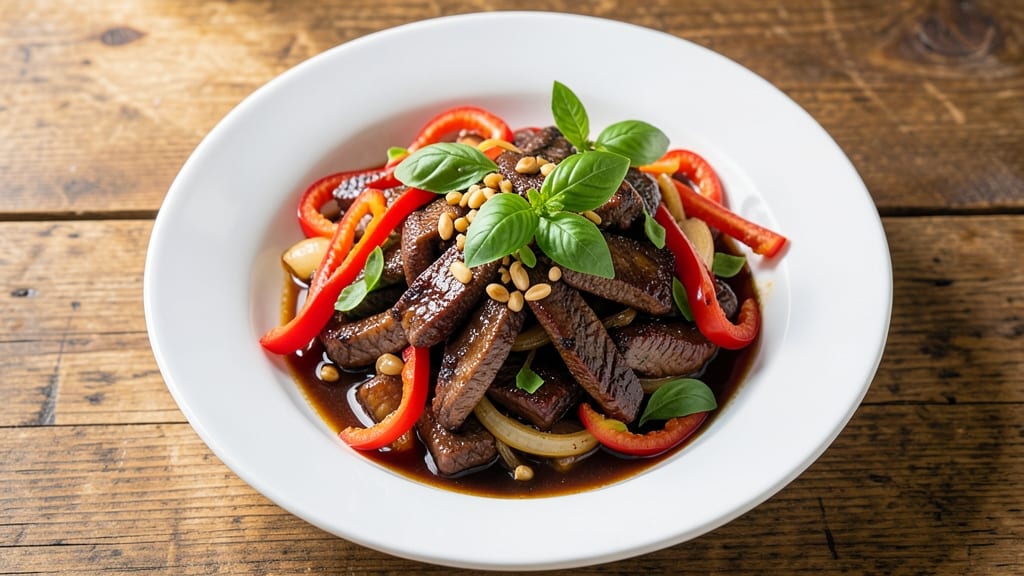
This basil beef stir fry recipe delivers restaurant-quality wok-seared beef with fragrant basil and sweet bell peppers in under 30 minutes. The secret lies in high-heat searing followed by quick stir-frying, which locks in juices while developing deep umami flavors.
I developed this version after years of testing—it's the one that actually tastes like takeout, not a home cook's approximation.
What makes this stir fry special is the balance of techniques: beef is seared in batches to render fat properly, then stir-fried with aromatics until caramelized before adding basil and vegetables.
The sauce comes together in minutes with simple pantry staples, but don't skip the garlic infusion—it transforms ordinary soy sauce into something complex and aromatic.
By the time you plate it, you'll have tender beef strips with caramelized edges, crisp-tender vegetables, and fragrant basil that adds freshness with every bite. The sauce clings perfectly to everything, creating that signature takeout experience where each forkful delivers balanced flavors.
This is the kind of weeknight dinner that feels like a celebration.
Works beautifully with any thin-cut beef (flank, sirloin, or ribeye) and adapts to whatever vegetables you have on hand. The method scales easily for crowds too—just double the sauce and cook in batches. Let's get cooking!
Ingredients for basil beef stir fry
These 14 ingredients deliver restaurant-quality stir-fry flavors with minimal effort—think wok-seared beef and aromatic basil.
| Ingredient | Amount | Notes |
|---|---|---|
| Thin-Cut Beef (Flank, Sirloin, or Ribeye) 🥩 | 1 ¼ lb | Cut into 1/4-inch strips |
| Fresh Basil Leaves 🌿 | ½ cup | Packed, stems removed |
| Red Bell Peppers 🍅 | 2 whole | Julienned into thin strips |
| Yellow Onion 🧅 | 1 whole | Thinly sliced |
| Garlic Cloves 🧄 | 6 cloves | Minced for garlic infusion |
| Vegetable Oil 🫒 | 3 tbsp | High smoke point preferred |
| Soy Sauce 🍶 | ⅓ cup | High-quality, low-sodium |
| Oyster Sauce 🍶 | 2 tbsp | For umami depth |
| Honey 🍯 | 1 tbsp | For subtle sweetness |
| Sesame Oil 🫒 | 1 tbsp | For aroma, not cooking |
| Toasted Sesame Seeds 🌾 | 1 tbsp | For garnish |
| Cornstarch 🌾 | 1 tbsp | For sauce thickening |
| White Peppercorns 🌶️ | ½ tsp | Freshly ground |
| Salt 🧂 | 1 tsp | Kosher or sea salt |
The beef is the star, so flank steak is my go-to—it's lean but tender when sliced thin. Look for thin-cut beef at the meat counter, or ask the butcher to slice it for you. If you're using ribeye, trim excess fat to avoid flare-ups. Costco or Whole Foods usually carry pre-sliced stir-fry beef, but if you're buying whole, slice it against the grain. Fresh basil is non-negotiable here—farmers markets have the best, but the grocery store's plastic containers work in a pinch. For the bell peppers, red or yellow both work, but red adds a touch of natural sweetness that pairs perfectly with the beef.
No soy sauce? Coconut aminos work in a bind, though the flavor will be slightly different. The garlic infusion is where the magic happens—toast the minced garlic in oil for 30 seconds before adding soy sauce to deepen the flavor. Running short on oyster sauce? A dash of fish sauce plus a pinch of sugar mimics the umami-sweet balance. For the sesame oil, use only at the end—it's for aroma, not cooking. The cornstarch is key for that silky sauce, but if you're out, a teaspoon of arrowroot powder works too. And trust me, freshly ground white pepper makes a world of difference compared to pre-ground.
Prep everything before you start cooking—mise en place is your friend here. The beef can sit at room temperature for 20 minutes before cooking for even searing. Basil wilts fast, so add it last and keep the heat medium-high. This dish tastes even better the next day—double the sauce and store leftovers in the fridge for 3-4 days. Freezes beautifully too if you're planning ahead. Garnish with sesame seeds right before serving, or they'll get soggy.
Why You'll Love This Recipe
- One-Skillet Magic: I swear by this recipe when I’ve got zero energy—just beef, peppers, and a splash of soy sauce hitting the pan. No bowls, no mess, just stir and serve. The bell peppers soften in minutes, and the basil wilts just enough to release that bright, herby punch without turning to mush.
- Garlic-Basil Bomb: Between us, this flavor combo is chef’s kiss. The garlic sizzles until it’s fragrant but not burnt, then the basil gets tossed in at the end—still crisp, still vibrant—so every bite has that fresh, almost Italian vibe. It’s the kind of dish where my husband stops mid-sentence to ask, “What’s in this?”
- Lunchbox Hero: This stir fry is my go-to for meal prep because it stays fresh for days. Pack it in containers with rice, and it’s still flavorful by Thursday. Honestly, the beef gets even better the next day—more tender, more delicious—so I always make extra. My kids fight over the leftovers, and that’s saying something.
- Budget-Friendly Powerhouse: Thin-cut beef stretches far, and bell peppers last forever in the fridge. I’ll often double the batch and freeze half for those nights when takeout feels like a luxury. It’s one of those recipes where the ingredients don’t break the bank, but the taste makes you feel like you splurged. Plus, the basil? A handful goes a long way.
Step-by-step instructions for basil beef stir fry
Here's how to create a restaurant-quality stir fry with perfectly seared beef and vibrant basil notes.
Prep the Beef and Aromatics
Start by cutting the 1.25 lb thin-cut beef into ¼-inch strips against the grain for maximum tenderness. Place the beef in a bowl and toss with 1 tsp salt and ½ tsp freshly ground white peppercorns. Let it marinate for 15 minutes while you prep the rest.
Julienne the 2 whole red bell peppers into thin strips and thinly slice the 1 whole yellow onion. Mince the 6 cloves garlic - you'll use half now and save the rest for later. Pack the ½ cup fresh basil leaves into a separate bowl, stems removed. This prep ensures everything cooks evenly and the basil stays vibrant.
Create the Garlic-Honey Sauce
In a small bowl, whisk together ⅓ cup soy sauce, 2 tbsp oyster sauce, 1 tbsp honey, and 1 tbsp cornstarch. Set aside - this will be your sauce base. In a separate small bowl, mix 3 tbsp vegetable oil with the 3 minced garlic cloves you saved earlier. This garlic oil will add incredible depth to your stir fry.
The cornstarch in the sauce is crucial - it thickens as it cooks, creating that perfect glossy finish. Don't skip the honey either - it balances the savory flavors and adds subtle sweetness that complements the basil beautifully.
Wok-Sear the Beef
Heat a wok or large skillet over high heat until smoking hot. Add 1 tbsp of the garlic oil and swirl to coat. Working in batches if needed, add the beef strips and sear for 1-2 minutes until they develop a deep golden crust. Remove the beef and set aside - it's done when it's no longer pink in the center.
This high-heat searing is what gives stir fry its signature texture. If your pan isn't hot enough, the beef will steam instead of develop that perfect crust. Keep the cooked beef warm while you prepare the vegetables.
Stir-Fry the Vegetables
Add the remaining 2 tbsp garlic oil to the same wok. Toss in the red bell pepper strips and thinly sliced onion, stirring constantly for 3-4 minutes until they begin to soften but still retain their bright color. Add the minced garlic from your sauce mixture and cook for 30 seconds until fragrant.
The vegetables should be tender-crisp at this stage - they'll continue cooking when the beef returns. This is where the stir fry gets its name - constant stirring prevents burning and ensures even cooking. Don't overcrowd the pan or the vegetables will steam instead of develop that wok-hei flavor.
Combine and Finish
Return the seared beef to the wok along with the garlic-honey sauce you prepared earlier. Stir everything together vigorously for 1-2 minutes until the sauce thickens and coats the beef and vegetables. Add the ½ cup packed fresh basil leaves and toss gently to wilt just slightly - you want to preserve their bright green color.
Remove from heat and immediately drizzle with 1 tbsp sesame oil. Sprinkle with 1 tbsp toasted sesame seeds and serve while hot. The basil should add a fresh, slightly peppery note that cuts through the richness of the beef and sauce, creating that perfect balance of flavors.
Pro Tips For Making Basil Beef Stir Fry
- Slice Against the Grain: Cut your beef strips perpendicular to the muscle fibers—yes, even if it means flipping the meat halfway through. I learned this the hard way when my stir-fry turned chewy; thinner slices cook faster and stay tender. Use a sharp knife and work in one direction for clean cuts.
- Blister the Garlic First: Toss minced garlic into the hot pan before the beef and let it sizzle until fragrant and slightly browned—about 30 seconds. This stops it from cooking into oblivion later (which happens when you toss it in at the end). The aroma alone makes the dish taste deeper.
- Salt the Beef Twice: Season the raw beef with ½ the salt right after slicing (it draws out moisture, which you’ll shake off), then hit it with the rest after searing. This two-step method keeps the meat juicy without making it soggy—trust me, your stir-fry will thank you.
- Reserve Half the Basil: Tear the fresh basil in half: use half during cooking (tossed in with the peppers for flavor), and save the other half to wilt into the dish right at the end. This keeps the leaves bright and aromatic instead of turning them to mush in a long simmer. (Yes, even if it feels wasteful.)
Common mistakes when making this recipe
Overcrowding the Pan
This is the #1 mistake I see—packing too much beef and veggies into the wok at once. When you overcrowd, the food steams instead of searing, and the sauce never gets that glossy, clingy texture we all love.
I learned this the hard way when my first attempt turned into a sad, soggy mess. 🥴
Here's how to fix it: Cook the beef in two batches if needed, and do the same with the vegetables. Your pan should never look more than half-full when stir-frying.
If you're using a large wok, that's great—just work in sections. For smaller skillets, cook the beef first, remove it, then stir-fry the veggies, and finally combine everything.
Skipping the Garlic Oil
The garlic oil infusion is what transforms this from "home cook" to "restaurant-quality" stir fry. I've made this dish dozens of times, and skipping this step always results in flat, one-dimensional flavor. The toasted garlic in oil adds layers of depth that plain soy sauce can't match.
Don't rush this step—let that garlic sizzle for 30 seconds until it's golden and fragrant. If you're short on time, at least bloom the garlic in the oil for 10 seconds before adding it to the sauce. Trust me, your taste buds will thank you.
Undercooking the Beef
Medium-rare is the goal for stir-fry beef—it should be just pink in the center when you pull it from the pan. I've seen so many home cooks overcook the beef until it's dry and chewy.
The key is high heat and quick cooking—no more than 1-2 minutes per batch.
Use a meat thermometer if you're unsure—aim for 130-135°F internal temperature. If your beef is still pink but firm, it's ready. If it's gray and rubbery, you've gone too far. The good news? Undercooked beef will still taste great if you finish it properly in the sauce.
Adding Basil Too Early
Fresh basil wilts instantly when exposed to heat, and adding it too soon will turn your beautiful green leaves into sad, limp mush. I used to add it with the vegetables, and it always ended up looking like it had been through a war. 😩
Save the basil for the very last minute—toss it in just before serving. If you must add it during cooking, keep the heat medium-low and only wilt it slightly (about 10-15 seconds). For maximum freshness, add it right after removing from heat and toss gently.
Using Low-Quality Soy Sauce
Not all soy sauces are created equal. I've tested cheap store-brand soy sauce in this recipe, and the results were disappointing—flat, salty, and lacking depth. The difference between high-quality soy sauce (like Kikkoman or Lee Kum Kee) and the generic stuff is night and day.
If you're using low-sodium soy sauce, don't reduce the amount—it's already balanced for flavor. For an extra boost, add ½ teaspoon of fish sauce to the sauce mixture. It adds umami without overpowering the basil's freshness.
Ignoring the Resting Time
Stir-fry is meant to be eaten immediately, but giving everything a 1-2 minute rest after cooking makes a surprising difference. This lets the juices redistribute in the beef and the sauce thicken slightly.
I used to skip this step and serve it straight from the pan, but now I always rest it—it's that simple change that takes it to the next level. 💡
While resting, tent the wok with a lid or foil to keep the heat in. If you're serving family or guests, this is also a great time to garnish with sesame seeds and drizzle with sesame oil so everything looks fresh and appetizing.
Nutrition facts
Frequently asked questions about basil beef stir fry
Can I substitute flank steak with another cut of beef?
This recipe works beautifully with sirloin, ribeye, or even top round as long as you slice it thinly against the grain. For leaner cuts like top round, marinate for 20-30 minutes to keep them tender. Avoid tough cuts like chuck—they won't hold up to quick stir-frying.
What if I don't have fresh basil?
Use dried basil (reduce to 1 tbsp instead of ½ cup fresh) or Thai basil for a more aromatic twist. For the fresh basil flavor, try cilantro or Italian parsley as a substitute. If you're using dried herbs, add them with the vegetables rather than at the end.
How do I make this recipe gluten-free?
Replace the soy sauce with tamari or coconut aminos, and use gluten-free oyster sauce if needed. The cornstarch in the sauce can be swapped for arrowroot powder or tapioca starch. Check all sauces for hidden gluten—some oyster sauces contain wheat.
Can I make this ahead of time?
Yes! Cook the beef and vegetables separately, then store them in the fridge for up to 2 days. Reheat the beef and veggies separately before stir-frying with fresh basil. For the sauce, make it fresh before combining—it thickens best when made fresh. Leftovers keep for 3-4 days in the fridge.
What's the best way to reheat leftover basil beef stir fry?
Use a non-stick skillet over medium heat with a splash of water or broth to prevent drying. Add the beef and vegetables, tossing for 2-3 minutes until heated through. Avoid microwaving—it makes the beef tough. For extra flavor, add a drizzle of sesame oil and a pinch of garlic powder when reheating.