
Main Courses
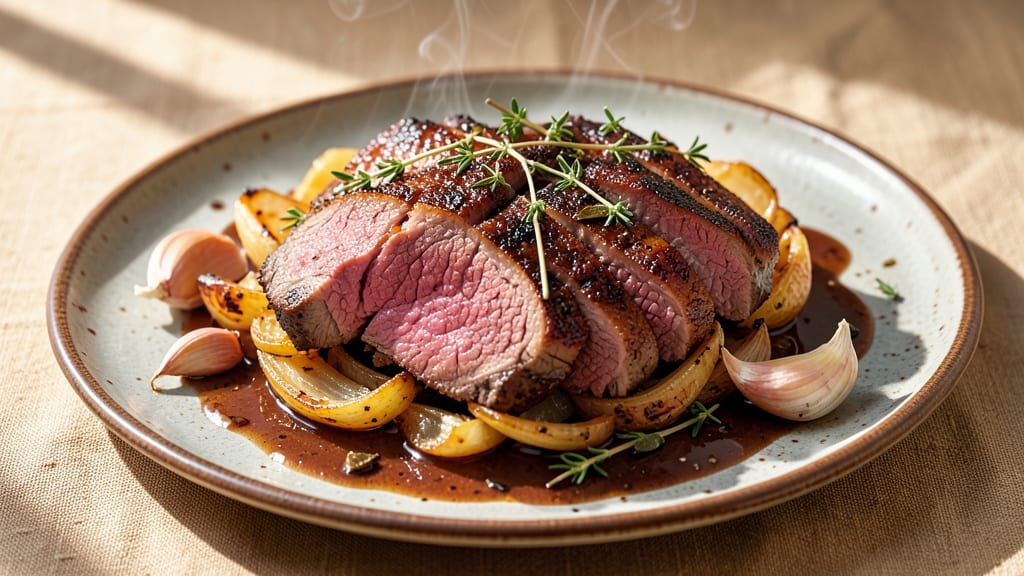
This Bavarian beef recipe delivers the deep, caramelized richness of traditional German Rindergulasch—tender beef slow-braised with onions, spices, and aromatic broth until it practically melts in your mouth. 🔥 The secret lies in patience: letting the beef develop layers of flavor over hours, while the onions transform into sweet, golden ribbons that coat every bite.
What starts as a simple pot of ingredients becomes a restaurant-worthy dish that smells like comfort food the moment you walk in the door.
The beauty of this recipe is its adaptability—whether you're using a heavy Dutch oven on the stovetop or a slow cooker for hands-off cooking, the result is the same: fork-tender beef swimming in a velvety gravy.
Bavarian cuisine thrives on hearty, satisfying flavors, and this dish captures that essence perfectly, with just the right balance of sweetness from the caramelized onions and warmth from the spices.
It's the kind of meal that feels like a hug on a plate, especially when paired with classic sides like spaetzle or buttery potato dumplings.
What sets this recipe apart is the depth of flavor achieved through slow braising—a technique that transforms tougher cuts of beef into something luxurious and tender. The onions, cooked until they're almost jam-like, add a natural sweetness that complements the savory beef and earthy spices.
The gravy, thickened just enough to coat the meat, ties everything together into a dish that's rich, satisfying, and impossible to resist.
Serve this Bavarian beef with a side of spaetzle or crusty bread to soak up every last drop of that luscious gravy. It's a dish that shines at family gatherings, holiday dinners, or even a cozy weeknight when you crave something hearty and full of flavor.
Let's get started on creating this timeless classic in your own kitchen.
Ingredients for bavarian beef
Sixteen ingredients, hours of flavor development—this Bavarian classic transforms humble beef into melt-in-your-mouth perfection.
| Ingredient | Amount | Notes |
|---|---|---|
| Chuck Roast 🥩 | 3 lb | Well-marbled for tenderness |
| Yellow Onions 🧅 | 3 whole | Thickly sliced, about 3 cups |
| Fresh Thyme 🌿 | 2 tbsp | Leaves only, chopped |
| Fresh Bay Leaves 🌿 | 2 whole | For aromatic depth |
| Garlic Cloves 🧄 | 6 cloves | Smashed, not minced |
| Beef Broth 💧 | 4 cups | Low-sodium preferred |
| Red Wine 🍷 | 1 cup | Dry, bold variety |
| Tomato Paste 🍅 | 2 tbsp | Smooth, not chunky |
| Allspice Berries 🌶️ | 1 tsp | Crushed lightly |
| Ground Black Pepper 🌶️ | 1 tsp | Freshly cracked |
| Salt 🧂 | 2 tsp | Kosher or sea salt |
| Olive Oil 🫒 | 2 tbsp | For searing |
| Flour 🌾 | 2 tbsp | All-purpose, for thickening |
| Butter 🧈 | 2 tbsp | Cold, for gravy |
The chuck roast is non-negotiable here—its marbling ensures fork-tender results. Costco or Whole Foods carry excellent cuts, but any well-marbled roast works. Look for beef with visible fat streaks. Onions are the flavor foundation: yellow onions caramelize best, but red or white will work in a pinch. The thyme and bay leaves are aromatic anchors—fresh is best, but dried works at half the amount. For the wine, any dry red like Cabernet Sauvignon or Merlot will do. Avoid sweet varieties—they’ll throw off the balance.
No red wine? Beef broth with 1 tbsp balsamic vinegar mimics the depth. Fresh thyme unavailable? Dried thyme at one-third the amount suffices. Allspice berries can be swapped for ½ tsp ground allspice. The tomato paste is crucial for richness—Trader Joe's squeeze tubes are perfect for single-use portions. For the gravy, flour and butter must be cold when added to prevent lumps. If you lack allspice, a pinch of cinnamon and cloves creates a similar warmth. The beef broth should be low-sodium to avoid over-salting the dish.
This dish rewards patience—plan for 3-4 hours of slow cooking. Store leftovers in an airtight container for up to 5 days or freeze for 3 months. The gravy thickens as it cools, so add a splash of broth if needed when reheating. For meal prep, portion into containers with a thin layer of gravy on top to keep everything moist. The onions can be pre-sliced and refrigerated for 3 days before cooking, saving time on the day of preparation.
Why You'll Love This Recipe
- One-Pot Magic: I swear by this—just toss the chuck roast, onions, and garlic into a Dutch oven with a splash of broth, throw in a few thyme sprigs and bay leaves, then let it slow-cook. No chopping, no fuss, no extra pans. The onions caramelize right in the pot, and honestly? That’s where the real flavor lives.
- Deep, Rich Bite: That chuck roast turns buttery when it’s done—tender enough to fall apart but with just enough chew to keep it satisfying. The thyme and bay leaves infuse the broth into something almost luxurious, like a fancy restaurant dish but with ingredients you already own.
- Feeds a Crowd (Or Me): Between us, this recipe stretches to feed four hungry people or lets me have leftovers for three days. I’ll take either. The flavor actually gets better the next day, and reheating it? Just a splash of water and a few minutes—no sad, dry meat here.
- Budget Hero: A chuck roast is cheap, and this method makes it taste like you spent hours. No fancy cuts, no last-minute grocery runs—just a well-seasoned, hearty meal that won’t break the bank. My wallet and my family thank me every time.
Step-by-step instructions for slow-braised Bavarian beef
Here's the method for tender, deeply flavorful Bavarian beef with caramelized onions—simple steps, big results.
🔥 Step 1: Sear the Chuck Roast to Lock in Juices
Pat the 3 lb chuck roast completely dry with paper towels—this ensures maximum browning. Heat a heavy Dutch oven over medium-high heat until hot. Add 2 tablespoons olive oil and swirl to coat the bottom evenly.
Place the roast in the pot, searing on all sides until deeply browned, about 8-10 minutes total. You're not cooking through yet—just developing that rich, caramelized crust. Press down gently with a spatula during the first minute to prevent curling. Once browned, remove the roast and set it aside on a plate.
🍳 Step 2: Caramelize Onions and Build the Flavor Base
In the same Dutch oven, reduce heat to medium and add 3 whole yellow onions, sliced into ¼-inch rounds. Cook undisturbed for 5 minutes to prevent burning, then stir and continue cooking for another 10-12 minutes until golden brown and sweet-smelling.
Here's where the magic happens: add 6 smashed garlic cloves, 2 tablespoons tomato paste, and 1 teaspoon crushed allspice berries. Stir for 1 minute until fragrant. Deglaze the pan with 1 cup red wine, scraping up all those browned bits—this captures all the flavor you just built. Simmer for 3-4 minutes until the wine reduces by half.
🥘 Step 3: Braise Until Fork-Tender
Return the roast to the Dutch oven. Add 4 cups beef broth, 2 whole fresh bay leaves, 2 tablespoons chopped fresh thyme, 1 teaspoon ground black pepper, and 2 teaspoons salt. Bring to a gentle simmer, then reduce heat to low, cover, and transfer to a 325°F oven.
Braise for 3 hours, checking occasionally to ensure liquid doesn't evaporate completely. The roast is done when it's fork-tender—pierce the thickest part and check for resistance. You'll see a deep mahogany sauce forming around the meat, and the onions should be completely tender.
🍽️ Step 4: Thicken the Sauce and Finish
Remove the roast and strain the braising liquid through a fine-mesh sieve into a clean saucepan. Return the liquid to medium heat and whisk in 2 tablespoons flour to thicken. Cook for 2-3 minutes until the sauce coats the back of a spoon.
Return the roast to the sauce and stir to coat. For extra richness, whisk in 2 tablespoons cold butter until melted and smooth. Taste and adjust seasoning—this is your chance to balance flavors before serving. The sauce should be velvety with just enough body to cling to the meat.
Pro Tips For Making Bavarian Beef
- Sear the Chuck First: I learned this the hard way—skipping the sear means bland, gray beef instead of rich, caramelized flavor. Heat your Dutch oven until it’s smoking hot, pat the roast bone-dry with paper towels, and sear it on all sides for 3-4 minutes per side. The crust locks in juices and builds depth that slow cooking alone can’t match.
- Char the Onions Low and Slow: After burning three batches of onions, I finally figured out: low heat is your friend. Slice the yellow onions thick (½-inch) and cook them uncovered on medium-low for 20-25 minutes, stirring occasionally. You’re aiming for deep golden-brown, not blackened—this adds sweetness that cuts through the richness of the beef.
- Don’t Crowd the Pot: Sounds weird, but it works: add the onions in batches. If you dump them all in at once, they’ll steam instead of caramelize, and the beef will simmer in sad, watery onion juice. Cook half the onions first, remove them to a plate, then sear the roast before adding the rest.
- Use Whole Garlic Cloves: My grandmother swore by this, and she was right: peeled, uncrushed cloves infuse better. Smash them lightly with the side of your knife (just enough to bruise), then tuck them under the beef or scatter them around the pot. They’ll soften and release flavor without turning bitter—no need to chop them into oblivion.
Creative variations of this dish
Classic Austrian Twist
For an Austrian-inspired variation, replace the red wine with 1 cup dry white wine like Grüner Veltliner and add ½ cup apple cider to the braising liquid. This creates a lighter, slightly sweet profile while keeping the dish rich.
I also recommend adding 1 small carrot, cut into chunks, to the braising liquid for subtle sweetness and texture. Serve with buttered spaetzle instead of potato dumplings for that authentic Austrian touch. 🍷
Spicy Hungarian Goulash
Transform this into a Hungarian-style goulash by adding 1-2 tablespoons paprika (I prefer Penzeys Hungarian Sweet Paprika) and 1 teaspoon caraway seeds to the braising liquid. For heat, stir in ½ teaspoon cayenne pepper when you add the spices.
Serve with crusty rye bread to soak up the bold, spiced sauce. This version is perfect for cooler evenings when you crave warmth and spice. 🌶️
Slow Cooker Shortcut
Make this dish hands-off by using a 6-quart slow cooker. After searing the beef and caramelizing the onions, transfer everything to the slow cooker, then add the remaining ingredients. Cook on low for 8 hours or high for 5-6 hours.
The slow cooker maintains even heat, ensuring tender beef without monitoring. Just thicken the sauce on the stovetop at the end using the same flour-butter method. This is my go-to for busy weeknights. ⏰
Vegetarian Adaptation
For a vegetarian version, replace the beef with 2 lbs extra-firm tofu or portobello mushrooms, sliced into thick steaks.
Press the tofu for 30 minutes to remove excess water, then marinate in 2 tbsp soy sauce, 1 tbsp balsamic vinegar, and 1 tbsp olive oil for 30 minutes before cooking. The mushrooms add a meaty texture, while the tofu absorbs the rich flavors beautifully.
Use vegetable broth instead of beef broth for the braising liquid. 🌱
Sweet and Sour Fusion
Add a sweet-and-sour twist by incorporating ½ cup pineapple juice and 2 tbsp brown sugar into the braising liquid. This balances the savory flavors with a subtle sweetness and tang. Garnish with fresh cilantro and serve over jasmine rice for a fusion dish that’s both familiar and exciting.
This version works especially well with flank steak instead of chuck roast for a quicker cook time. 🍍
Nutrition facts
Frequently asked questions
Can I use a different cut of beef instead of chuck roast?
Yes, but with adjustments! For best results, use well-marbled cuts like brisket or short ribs, which braise beautifully. Avoid lean cuts like sirloin—they won't become tender. If using short ribs, reduce cooking time by 30 minutes since they're smaller and cook faster.
How do I prevent the onions from burning?
Cook them slowly and patiently! Start on medium heat and let them sit undisturbed for 5 minutes to develop color. Stir gently every 5-10 minutes after that. If they brown too quickly, reduce heat to low-medium. The goal is golden caramelization, not charring.
Can I make this in an Instant Pot instead of a Dutch oven?
Sear the beef first, then sauté onions as usual. Add all remaining ingredients (including wine and broth) to the Instant Pot and cook on high pressure for 60 minutes. Natural release for 15 minutes, then thicken the sauce on the stovetop. The Instant Pot cuts cooking time to about 1.5 hours!
What's the best way to reheat leftovers?
Low and slow is key! Transfer to a skillet with a splash of broth and warm on low heat for 10-15 minutes, stirring occasionally. Avoid microwaving—it makes the sauce watery. For extra richness, add 1 tbsp butter when reheating. Leftovers keep well for 5 days in the fridge.
Why does my Bavarian beef taste bland?
Check your seasoning balance! The most common issues are:
- Under-seasoned broth (use 2 tsp salt minimum and taste as you go)
- Skipping the wine (it adds depth—substitute with broth + vinegar if needed)
- Overcooking the onions (they should be sweet, not bitter)