
Soups & Stews
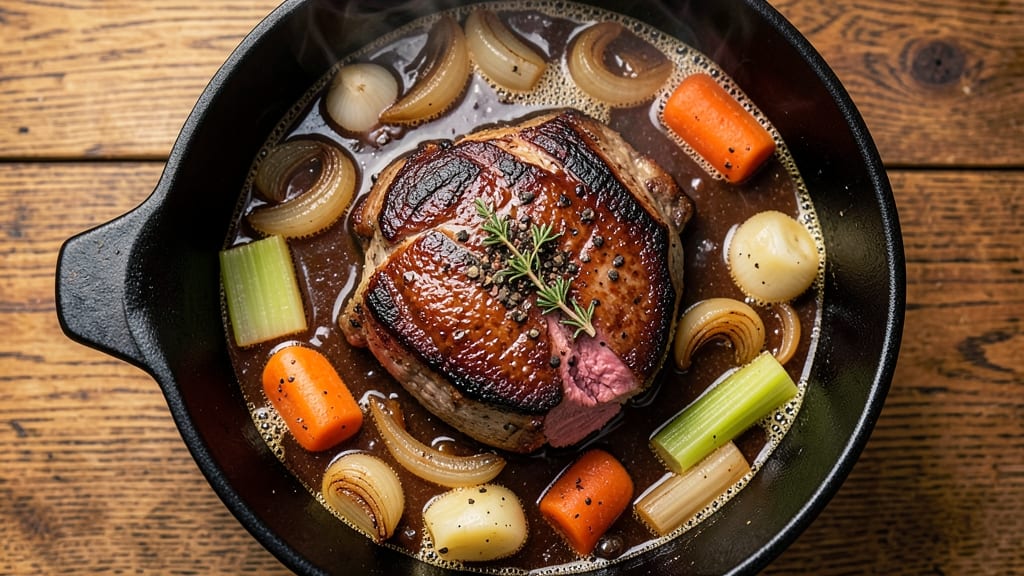
This Bavarian beef stew recipe transforms tough chuck roast into melt-in-your-mouth perfection through slow simmering and deep, caramelized flavors. The secret lies in layers of onions cooked until golden, releasing sweetness that forms the stew's rich foundation.
Traditional German techniques—like using dark beer or red wine—create a depth of flavor that's impossible to replicate with shortcuts.
What sets this recipe apart is the balance of textures: tender beef, crisp vegetables, and a sauce reduced to velvety richness. The slow braising process (3-4 hours) breaks down connective tissue, while aromatic spices like thyme and peppercorns infuse every bite.
No pressure cooker? No problem—the oven does the work while you prepare the rest of your meal.
The result is a hearty stew with a caramelized onion base that adds natural sweetness, tender beef that falls apart at the touch of a fork, and a sauce thickened by natural reduction.
Serve it with fluffy dumplings or crusty bread to soak up every last drop of that flavorful broth. This is comfort food at its finest, perfect for chilly evenings or family gatherings.
Once you taste the difference between this homemade version and store-bought, you'll never settle for less. The technique is straightforward, but the reward—deep, complex flavor developed over hours—is what makes this stew worth the wait. Let's get started on creating a dish that tastes like home.
Ingredients for bavarian beef stew
The foundation of Bavarian beef stew starts with caramelized onions and slow-simmered beef.
| Ingredient | Amount | Notes |
|---|---|---|
| Chuck Roast 🥩 | 3 lb | With good marbling for tenderness |
| Yellow Onions 🧅 | 3 whole | Yellow or red, sliced thin |
| Carrots 🥕 | 4 whole | Medium size, peeled and cut |
| Celery Stems 🌿 | 4 whole | Trimmed and cut into chunks |
| Garlic Cloves 🧄 | 6 cloves | Peeled and lightly crushed |
| Dark Beer 🍺 | 2 cups | Dortmunder or Munich Dunkel preferred |
| Red Wine 🍷 | 1 cup | Bold dry red like Cabernet Sauvignon |
| Beef Broth 🥄 | 2 cups | Homemade or high-quality store-bought |
| Tomato Paste 🍅 | 2 tbsp | Smooth, not chunky |
| Fresh Thyme 🌿 | 2 tbsp | Leaves only, chopped fine |
| Bay Leaves 🌿 | 2 whole | Dried, standard size |
| Black Peppercorns 🌶️ | 1 tsp | Freshly cracked preferred |
| Allspice Berries 🌶️ | 4 whole | Lightly crushed |
| Olive Oil 🫒 | 2 tbsp | Extra-virgin for caramelizing onions |
| Salt 🧂 | 1 ½ tsp | Kosher or sea salt |
The chuck roast is the heart of this stew—look for cuts with visible marbling at Costco or your local butcher. Trader Joe's often carries pre-cut chuck that's perfect for this. For the onions, yellow or red both work, but yellow has a slightly sweeter flavor. If you're buying whole onions, grab 3 large—they caramelize better than smaller ones. The beer should be dark—Dortmunder or Munich Dunkel if you can find them, but any bold dark beer works. For wine, Cabernet Sauvignon or Merlot adds depth without overpowering.
No dark beer? Substitute with beef broth plus a splash of balsamic vinegar—it mimics the malty sweetness. Fresh thyme is ideal, but dried works at one-third the amount. The tomato paste can be skipped entirely if you prefer no tomato flavor, but it adds a subtle richness. For the allspice, whole berries are best—crush them lightly with a mortar and pestle or the flat side of your knife. If you're short on time, ground allspice at half the amount will work. The carrots and celery can be swapped for potatoes or parsnips if you prefer.
This stew tastes even better the next day—plan ahead. Store leftovers in an airtight container for up to 5 days in the fridge, or freeze for 3 months. The onions can be caramelized ahead and stored in the fridge for 3 days before adding to the stew. For a quicker version, use a slow cooker on low for 6-8 hours, but the oven method develops deeper flavors. Serve with fresh bread to soak up every last bit of that rich sauce.
Why You'll Love This Recipe
- One-Pot Magic: I swear by this recipe because it’s literally one pot—no chopping boards, no extra pans, just dump-and-simmer. That chuck roast turns fork-tender while the onions caramelize right in the pot, and honestly? I’ve burned easier meals trying to multitask.
- Deep, Rich Payoff: The garlic and slow-cooked onions build layers of flavor that feel indulgent, but it’s all from humble ingredients. That crispy edge on the beef? Pure satisfaction after a long day. (Yes, even on a Tuesday night.)
- Leftovers That Beg for More: This stew tastes better the next day—like, actually better. I’ll make a double batch on Sundays, freeze half, and still have my kids fighting over the second helping. The carrots stay sweet, the beef stays juicy, and no one complains.
- Budget-Friendly Crowd-Pleaser: Chuck roast is cheap, but it feels fancy when it’s braised with garlic and celery until it’s falling apart. I’ve served this to picky eaters, date nights, and game-day groups—no one ever asks what’s in it, they just ask for seconds.
Step-by-step instructions for Bavarian beef stew
Here's how to build rich, slow-simmered layers of flavor that make this stew unforgettable.
Sear the Chuck Roast for Deep Flavor
Pat the 3 lb chuck roast completely dry with paper towels—this ensures maximum browning. Heat 2 tbsp olive oil in a heavy Dutch oven over medium-high heat until shimmering. Place the roast in the pot, fat-side down, and sear undisturbed for 5 minutes until a deep golden crust forms. Flip and sear the other side for another 5 minutes.
Remove the roast and set it aside. The goal here is to develop that fundamental Maillard reaction—the chemical process that creates complex, savory flavors. Don't rush this step; patience now means depth of flavor later. The roast will continue cooking in the stew, so it doesn't need to be fully cooked through yet.
Build the Flavor Base with Caramelized Vegetables
In the same Dutch oven, add 3 whole yellow onions sliced thin, 4 whole carrots cut into chunks, and 4 whole celery stems chopped. Cook over medium heat for 10 minutes, stirring occasionally, until the vegetables begin to soften and the onions turn translucent. Add 6 cloves garlic cloves that have been peeled and lightly crushed, and cook for another 2 minutes until fragrant.
This is where the magic happens—the slow caramelization of onions creates sweet, complex flavors that form the backbone of the stew. If the vegetables stick, add a splash of beef broth to deglaze. The goal is to develop a rich, browned fond at the bottom of the pot that will dissolve into the stew later.
Deglaze and Simmer the Stew
Pour in 2 cups dark beer and scrape up any browned bits from the bottom of the pot with a wooden spoon. Let it simmer for 5 minutes until the beer reduces by half. Add 1 cup red wine, 2 cups beef broth, 2 tbsp tomato paste, 2 tbsp fresh thyme, 2 whole bay leaves, 1 tsp black peppercorns, 4 whole allspice berries, and 1.5 tsp salt. Stir well to combine all ingredients.
Return the chuck roast to the pot, along with any accumulated juices. Bring the stew to a gentle simmer over low heat, then reduce to a bare simmer. Cover partially and cook for 2.5 to 3 hours, until the beef is fork-tender and easily pulls apart. The stew should be thick and rich, with the vegetables breaking down into the sauce. Here's the thing—don't lift the lid during cooking. Every time you do, you lose heat and extend the cooking time.
Finish and Adjust the Seasoning
Once the beef is tender, remove it from the stew and set it aside. Skim off any excess fat that has risen to the surface. Return the beef to the pot and simmer uncovered for another 10 minutes to allow the sauce to thicken slightly. Taste and adjust the seasoning with additional salt or black peppercorns if needed. The stew should be rich, balanced, and full of depth.
This is the moment that matters: the stew should have a velvety texture with layers of flavor from the caramelized onions, the deep notes of the dark beer, and the complexity of the red wine. The beef should be fall-apart tender, and the vegetables should be soft but still hold their shape. If the stew is too thin, simmer it uncovered for another 5-10 minutes to reduce it to your desired consistency.
Pro Tips For Making Bavarian Beef Stew
- SEAR THE CHUCK ROAST: Brown that meat in batches if needed—don’t crowd the pan or you’ll steam it instead of sear. I learned this the hard way when my first batch turned out gray and sad; now I use a 12-inch skillet and take my time, even if it means two rounds.
- CUT VEGETABLES UNIFORM: Slice onions, carrots, and celery into even ½-inch chunks—they’ll cook at the same rate and stay intact. My grandmother swore by this, and she was right: jagged edges turn to mush, and you end up with a stew that looks like a vegetable smoothie.
- DEGLAZE WITH BEER FIRST: After searing, splash in the dark beer first—it cuts through the fond better than broth. I was skeptical until I tried it; the stew develops deeper flavor early, and you won’t waste time scraping later.
- SIMMER LOW AND LONG: Keep the heat at a bare simmer (180–190°F) for 3–4 hours—any hotter and the meat dries out. Sounds weird, but it works: I used to rush it, and the beef turned out tough; now it melts like butter. (Yes, even if you’re impatient like me.)
Troubleshooting your bavarian beef stew
Overly Thin Sauce
If your stew turns out too watery, don’t panic—this is easily fixed. After the beef is tender, remove it and skim off any excess fat. Return the beef to the pot and simmer the sauce uncovered over medium-low heat for 10-15 minutes, stirring occasionally.
The liquid will reduce naturally, thickening the sauce. If it’s still too thin, mash 1-2 cooked potatoes or ½ cup cornstarch mixed with 2 tbsp cold water into the sauce and simmer for another 5 minutes. 💡
Tough Beef Instead of Tender
The key to tender beef is low and slow cooking—never rush this step. If your chuck roast isn’t fork-tender after 3 hours, check the internal temperature with a meat thermometer. It should reach 203°F for perfect tenderness.
If it’s still tough, return it to the pot with the lid on and cook for another 30-60 minutes on low heat. Avoid high heat, as it can dry out the meat. A meat mallet can also help break down tough fibers before cooking.
Vegetables Too Mushy
To keep your carrots, celery, and onions from turning to mush, add them after the beef has been seared and the initial liquid (beer, wine, broth) has reduced by half. This ensures they cook gently in the simmering liquid rather than boiling.
If they’re already too soft, remove them and set aside. You can always add fresh, lightly blanched vegetables (like green beans or zucchini) at the very end to brighten the dish. 🥕
Bitter or Off-Flavored Beer/Wine
If your stew tastes bitter or overly alcoholic, the beer or wine likely didn’t reduce enough. After adding the liquid, simmer it uncovered for 5-10 minutes to let the alcohol cook off.
For a deeper flavor without bitterness, use 1 cup beef broth instead of wine and 1 tbsp balsamic vinegar to mimic the richness. If using beer, opt for a maltier, less hoppy variety like Dortmunder or Munich Dunkel to avoid harsh flavors.
Lid Lifting Too Often
Every time you lift the lid, you release steam and drop the temperature, extending cooking time. To avoid this, plan ahead: Prep all ingredients before starting, and resist the urge to peek. If you must check, do it quickly and reseal tightly.
For a foolproof method, use an oven-safe Dutch oven and cook the stew in a preheated 300°F oven for 3-4 hours—this maintains steady heat without lid interference. 🔥
Spices Overpowering
If your stew tastes too spicy or herbal, balance it with sweetness or acidity. A splash of apple cider vinegar (1 tbsp) or a pinch of sugar (½ tsp) can mellow harsh flavors.
For allspice or thyme dominance, add a grated apple or pear (½ cup) to the pot during the last 30 minutes of cooking—its natural sweetness will harmonize the spices. Taste as you go, and adjust gradually.
Nutrition facts
Frequently asked questions
Can I substitute dark beer with something else?
Yes! If you don’t have dark beer, use 2 cups beef broth plus 1 tbsp balsamic vinegar for depth. For a non-alcoholic version, try 1 cup beef broth + 1 cup apple cider. The key is balancing sweetness and acidity to mimic the beer’s malty notes.
How do I know when the beef is tender enough?
Use a meat thermometer for accuracy—the beef should reach 203°F internally. If you don’t have one, check for tenderness by inserting a fork: the meat should pull apart easily with minimal resistance. For chuck roast, this typically takes 2.5-3 hours of simmering.
Can I make this stew in a slow cooker?
Brown the beef first, then transfer everything to a slow cooker and cook on low for 6-8 hours or high for 4-5 hours. The slow cooker method works well, but the oven version develops deeper caramelization. For best results, use the slow cooker’s "keep warm" setting after cooking to thicken the sauce.
What’s the best way to reheat leftovers?
Reheat gently in a pot over low heat with a splash of beef broth to prevent drying. Avoid microwaving—it can make the sauce watery. For oven reheating, cover with foil and bake at 300°F for 20-30 minutes. Leftovers taste even better the next day!
Why does my stew taste bitter?
Bitterness usually comes from over-reduced wine or beer. Simmer liquids uncovered for 5-10 minutes to cook off alcohol. For a richer flavor without bitterness, replace wine with 1 cup beef broth + 1 tbsp balsamic vinegar. Use maltier beers like Dortmunder to avoid harsh hop flavors.