
Main Courses
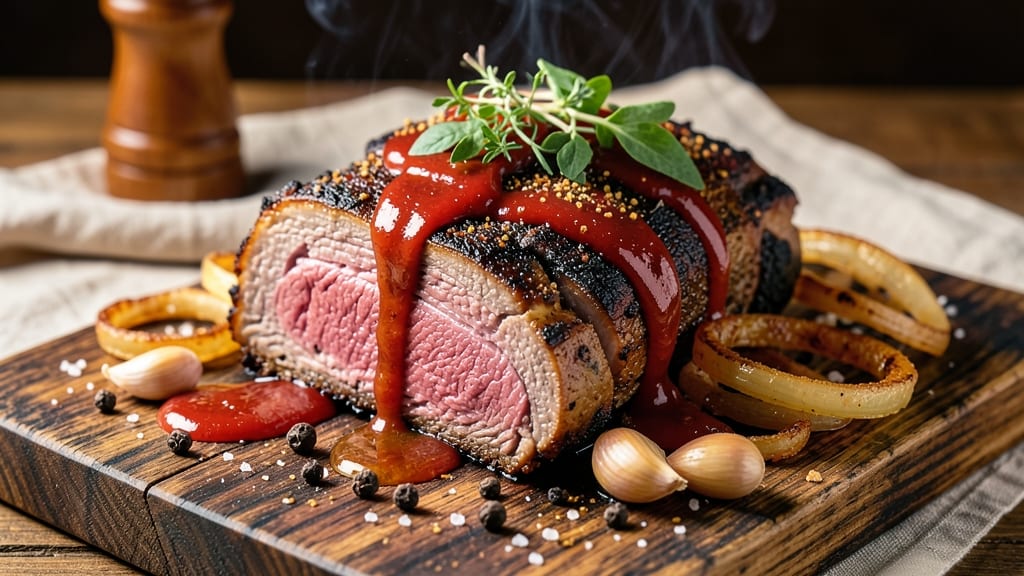
This BBQ beef brisket recipe grill transforms tough cuts into melt-in-your-mouth perfection through low-and-slow magic. I perfected this after years of experimenting with regional styles—Texas-style smokiness meets Pacific Northwest freshness, all achieved on your grill.
The key lies in patience, precise temperature control, and a rub that develops deep, caramelized flavors over hours.
What sets this recipe apart is the balance between tradition and approachability. You'll create a dry rub with simple pantry staples that builds a flavorful bark, then let the grill work its magic while you tend to other dishes.
The brisket cooks at 225°F until it reaches 203°F internally, where fat renders perfectly and collagen turns to gelatin for that signature tender pull. No smoker? No problem—your grill can deliver the same results.
By the time you're ready to slice, you'll have a brisket so tender it practically falls apart, with a crust that's crispy yet yielding. The aroma alone will have everyone gathering around the table.
Serve with classic sides like tangy coleslaw or buttery cornbread to complete the meal. This isn't just dinner—it's an experience that turns weeknights into special occasions.
Whether you're hosting a backyard BBQ or treating yourself to a Sunday feast, this recipe delivers restaurant-quality results without the fuss. The beauty of grilling brisket is its versatility—use it for sandwiches, tacos, or simply sliced over rice. Let's get started on creating your masterpiece.
Ingredients for bbq beef brisket recipe grill
Six ingredients for the rub alone—simple pantry staples that create restaurant-quality bark and tenderness.
| Ingredient | Amount | Notes |
|---|---|---|
| Beef Brisket 🥩 | 4 lb | Packaged flat cut, 1.5-inch thickness |
| Yellow Onion 🧅 | 1 whole | Yellow or red, sliced into wedges |
| Fresh Garlic Cloves 🧄 | 8 cloves | Peeled, smashed for rub |
| Brown Sugar 🍯 | ½ cup | Packed, light brown preferred |
| Smoked Paprika 🌶️ | 2 tbsp | High-quality, not sweet |
| Ground Black Pepper 🌶️ | 1 ½ tbsp | Freshly cracked, coarse grind |
| Kosher Salt 🧂 | 2 tbsp | Diamond Crystal preferred |
| Ground Cumin 🌿 | 1 tbsp | Toasted for depth |
| Chili Powder 🌶️ | 1 ½ tbsp | Medium heat, not cayenne |
| Apple Cider Vinegar 🍎 | 2 tbsp | For spritzing during cook |
| Yellow Mustard 🟡 | 2 tbsp | For final glaze |
| Wood Chips 🌳 | 2 cups | Hickory or oak, soaked 1 hour |
| Beef Broth 🍲 | 1 cup | Low-sodium, for spritzing |
| Unsalted Butter 🧈 | ¼ cup | Cold, for final basting |
The brisket is non-negotiable here—packaged flat cuts from Costco or local butchers work best, with that 1.5-inch thickness for even cooking. Look for good marbling; Texas-style brisket from Whole Foods or H-E-B delivers consistent results. If you're buying whole, trim excess fat to 1/4-inch thickness for better bark development. The rub ingredients should be fresh: Penzeys for spices, Domino for sugar, and Diamond Crystal for salt—these brands deliver reliable flavor. Toast your cumin seeds in a dry pan for 30 seconds before grinding for that nutty depth.
No smoked paprika? Substitute 1 tbsp regular paprika plus 1 tsp liquid smoke, but it won't be the same. Running out of apple cider vinegar? White vinegar or lemon juice works in a pinch, though the flavor profile shifts slightly. For the wood chips, hickory gives classic BBQ smoke, while oak adds fruitiness—mix both if you're feeling adventurous. The mustard glaze can be swapped for honey or maple syrup (reduce other sugars by 1 tbsp), but traditionalists will notice the difference. If your brisket is lean, add 1 tbsp molasses to the rub for moisture. And for the love of brisket, measure that salt accurately—too much ruins the bark.
Store raw brisket in the coldest part of your fridge, wrapped in parchment and foil, for up to 5 days. Once cooked, slice against the grain and serve immediately, but leftovers reheat beautifully—wrap tightly in foil and warm in a 275°F oven for 20 minutes. The rub keeps in an airtight container for 3 months; I double it every time and give half away. For next-level prep, trim and season the brisket 12 hours ahead—the flavors meld overnight. And if you're grilling in cold weather, preheat your grill to 300°F for 15 minutes to maintain that critical low-and-slow temperature.
Why You'll Love This Recipe
- No-Fuss Prep: I swear by this recipe because it’s actually simple—just a few big chunks of onion, garlic smashed into the brisket, and a sprinkle of brown sugar and smoked paprika. No fancy marinating, no peeling layers of onions like some recipes demand. Honestly, I’ve made it while watching a movie twice.
- Smoky-Sweet Magic: That brown sugar and smoked paprika combo? It’s where the real magic happens. The brisket gets this sticky, caramelized crust that’s dangerously good—crispy edges, tender inside, and a deep smoky-sweet flavor that makes it hard to stop eating. My husband always asks for seconds, and I don’t blame him.
- Weekend Feast or Weeknight Win: Between us, this is my go-to for game day, potlucks, or even a lazy Sunday when I don’t feel like cooking. It feeds a crowd without looking like I slaved over it, and the leftovers? Even better the next day. I’ll be real: I’ve reheated slices straight from the fridge and still gotten compliments.
- Budget Hero: A whole packer of brisket goes a long way, and the ingredients? Basic stuff you already have. No specialty rubs or pricey spices here—just onion, garlic, and a little sugar to make it shine. Plus, it’s one of those meals where the more you make, the happier everyone is. My wallet and my family thank me.
Step-by-step instructions for grilled BBQ beef brisket
Here's how to transform a tough cut into melt-in-your-mouth perfection using just your grill.
Prepare the Brisket and Seasoning Rub
Begin by trimming the fat cap of the 4 lb beef brisket down to about ¼-inch thickness using a sharp boning knife. This ensures even cooking while preserving flavor. Place the brisket fat-side up on a cutting board and pat it completely dry with paper towels—this is crucial for developing that coveted bark.
In a small bowl, combine the 0.5 cup packed brown sugar, 2 tbsp smoked paprika, 1.5 tbsp ground black pepper, 2 tbsp kosher salt, 1 tbsp ground cumin, and 1.5 tbsp chili powder. Mix thoroughly with your fingers until you have a cohesive, slightly oily paste. Press this rub firmly onto all sides of the brisket, including the fat cap, so it adheres well. Let the seasoned brisket sit at room temperature for 1 hour before grilling.
Set Up Your Grill for Low-and-Slow Cooking
Prepare your grill for indirect heat by placing a drip pan filled with the 1 cup beef broth in the center of the grill grate. This creates a moisture-rich environment that prevents the brisket from drying out. Soak the 2 cups wood chips (hickory or oak) for 1 hour, then add them to a smoker box or directly on the coals. Light the chips and let them smolder until you see clean, blue smoke—this is when you're ready to start cooking.
Set your grill to maintain a temperature of 225°F. You'll want to monitor this closely, as temperature fluctuations can affect cooking time. Place the brisket on the grill grate away from direct heat, fat-side up. Close the lid and resist the urge to peek—every time you open it, you lose heat and extend cooking time.
Spritz and Monitor for the Stall
Grill the brisket for 6-8 hours, or until the internal temperature reaches 165-170°F. During this time, you'll hit "the stall"—a point where the temperature stops rising as moisture evaporates. This is normal and expected. To combat the stall, mix 2 tbsp apple cider vinegar with 2 tbsp yellow mustard in a small bowl. Every 90 minutes, remove the brisket and generously spritz all sides with this mixture. Return it to the grill and continue cooking.
Keep the wood chips replenished as needed to maintain steady smoke. The brisket is ready when it reaches 200-205°F internally and a probe slides in like butter with no resistance. This typically takes an additional 4-6 hours after hitting the stall. The bark should be dark mahogany and crispy, while the meat should be fork-tender.
Rest and Slice for Maximum Tenderness
Once the brisket reaches the desired temperature, remove it from the grill and transfer it to a cutting board. Tent loosely with foil and let it rest for at least 1 hour, or preferably 2 hours. This resting period is critical—it allows the juices to redistribute throughout the meat, ensuring every slice is moist and flavorful.
While the brisket rests, prepare the final basting step. In a small saucepan, melt the 0.25 cup unsalted butter over low heat until it's fully liquid. Brush this butter generously over the brisket just before slicing. Use a sharp slicing knife to cut against the grain into ¼-inch thick slices. The flat and point cuts have different grain directions, so adjust your angle accordingly for maximum tenderness.
Pro Tips For Making Bbq Beef Brisket Recipe Grill
- Trim the Fat First: Slice off that thick fat cap before grilling—it’s not just for flavor, it’s for even cooking. I learned this after my first brisket turned greasy and uneven; now I use a sharp knife to shave it down to about ¼-inch for a cleaner sear and better bark.
- Sear with Garlic Onions: Caramelize those onions and garlic until they’re deep brown, almost jammy, before tossing them in the rub. Sounds weird, but it works: the concentrated sweetness clings to the meat like glue, and you’ll taste it in every bite.
- Wrap at 170°F: Don’t wait until the brisket is falling apart—wrap it in foil at 170°F to lock in moisture without overcooking. I used to let it go past 190°F, and the meat turned dry; now I check the probe every 30 minutes after the initial crust forms.
- Spritz with Apple Cider: Skip the water—use a mix of apple cider vinegar and brown sugar (1:1) to spritz the brisket every hour. The acid tenderizes, and the sugar caramelizes into a sticky glaze that cuts through the richness. (Yes, even if you’re impatient like me.)
Regional styles of this bbq beef brisket recipe grill
Texas Style
This is the classic approach you'll find at places like Franklin Barbecue—smoky, sweet, and slow-cooked until it falls apart. Texas pitmasters focus on hickory smoke and a rub that balances salt, pepper, and brown sugar for that signature dark bark.
The key is patience: cook at 225°F for 12-16 hours until the internal temp hits 203°F. I love adding 1 tsp of mustard powder to the rub for a subtle tang that cuts through the richness.
Serve with white bread for soaking up those juices—it's a must in Texas. 🌶️
Carolina Style
North Carolina takes a different approach with vinegar-based sauces and a leaner rub. Instead of sweet brown sugar, they use black pepper and cayenne for heat, plus apple cider vinegar spritzes every hour to keep the meat moist.
The brisket cooks at 250°F for 8-10 hours, then gets a final glaze of vinegar and hot sauce. I add 1 tbsp of smoked salt to the rub for that Carolina touch. This style is perfect for sandwiches—just pile it high on a toasted bun with coleslaw. 🍖
Kansas City Style
KC brisket is all about bold flavors and a sweet-savory sauce. The rub includes molasses and cinnamon for depth, while the sauce is thick and sticky with tomato paste, brown sugar, and Worcestershire.
Cook it at 225°F until tender, then brush with sauce during the last 30 minutes of cooking. I like to add 1 tsp of garlic powder to the rub for extra punch. Serve with baked beans and crusty bread—this is comfort food at its finest. 🌟
Pacific Northwest Twist
Here in Portland, we love to blend traditional BBQ with local ingredients. I swap brown sugar for maple syrup and add cedar wood chips for a lighter, fruitier smoke. The rub includes local honey and a pinch of rosemary for a fresh twist.
Cook it at 225°F until tender, then finish with a glaze of local apple cider and balsamic vinegar. It's sweet, smoky, and just a little tangy—perfect for our cool, rainy climate. 🌲
Korean BBQ Fusion
For a bold twist, try a Korean-inspired brisket. Marinate the meat overnight in gochujang, soy sauce, and sesame oil, then grill at 250°F until tender. The rub includes gochugaru (Korean chili flakes) and toasted sesame seeds for a nutty crunch.
Serve with kimchi and steamed rice for a fusion feast. I add 1 tsp of grated ginger to the rub for extra zing. This version is spicy, savory, and packed with umami—great for adventurous eaters. 🌶️
Nutrition facts
Frequently asked questions
Can I grill brisket on a gas grill instead of charcoal?
Gas grills work perfectly for brisket when you set up indirect heat properly. Use only one burner (or half the burners) to maintain 225°F temperature, and place a drip pan with beef broth between the brisket and heat source. The key is temperature consistency—gas grills can fluctuate more than charcoal, so monitor closely with a meat thermometer.
How do I know when the brisket is done without a meat thermometer?
If you don't have a thermometer, look for these signs: the bark should be deep mahogany and crispy, and a knife should slide in easily with no resistance. The meat should pull apart cleanly when tested with tongs. For extra accuracy, press your finger gently against the meat—if it feels like soft butter, it's ready. Remember, brisket continues cooking slightly after removal from heat.
What's the best way to reheat leftover brisket?
Slice leftover brisket against the grain and reheat in a skillet with a splash of beef broth over medium-low heat until warmed through (10-15 minutes). For sandwiches, toast the bread first, then layer with brisket and sauce. Never microwave—it makes the meat tough. Wrap slices tightly in foil and warm in a 275°F oven for 20 minutes for the best texture.
Why did my brisket turn out dry?
Dry brisket usually happens from overcooking, opening the grill too often, or cooking too hot. The stall (when temperature plateaus) is normal, but if you push past 205°F internal temp, the meat will dry out. Keep the grill closed, spritz regularly with vinegar/mustard mix, and cook at a consistent 225°F. A thicker fat cap (1/4-inch) also helps retain moisture during cooking.
How long can I keep cooked brisket in the fridge?
Store cooked brisket in an airtight container in the fridge for up to 4 days. For longer storage, vacuum-seal slices and freeze for 3 months. Thaw overnight in the fridge before reheating. The texture stays best when reheated gently—never defrost at room temperature. Slice against the grain before storing to maintain tenderness when reheated.