
Main Courses
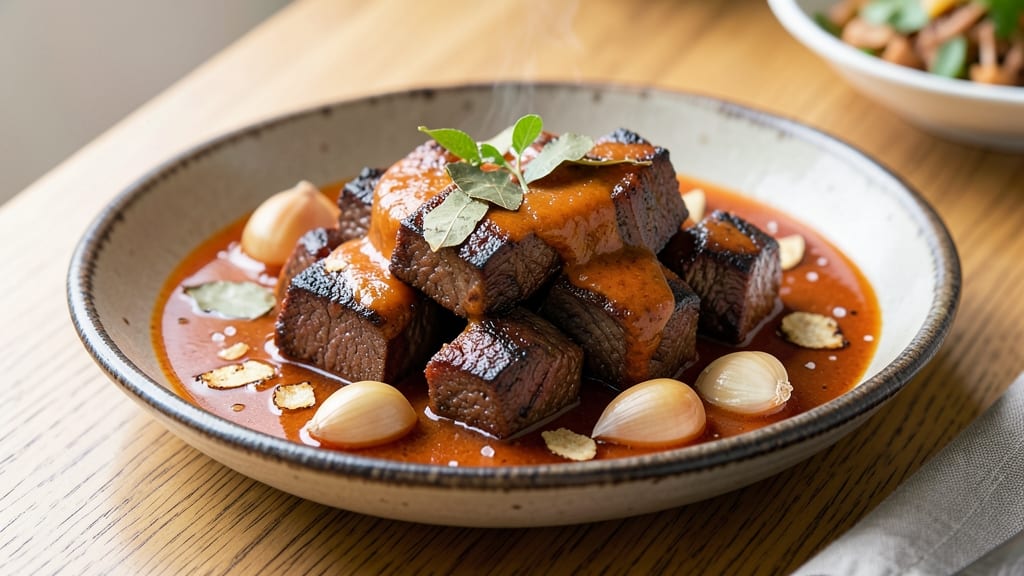
This Filipino-style beef adobo delivers tender, vinegar-braised beef with a perfect balance of tangy, sweet, and savory flavors that define Filipino home cooking.
The secret lies in marinating the beef overnight, allowing the soy sauce and vinegar to penetrate deeply, while the slow braising transforms tough cuts into melt-in-your-mouth perfection. What sets this recipe apart is the crispy edges from the initial searing, which add texture without overpowering the dish's signature depth.
The process begins with a simple yet transformative marinade of soy sauce, vinegar, garlic, and bay leaves—ingredients that work together to create a sauce that's both complex and approachable.
Unlike many braised dishes, this recipe avoids excess oiliness by carefully controlling the cooking time and using just enough oil to sear the beef properly. The result is a dish that's rich in flavor but never greasy, making it a staple in Filipino households and a favorite at gatherings.
By the time you're done, you'll have fork-tender beef pieces swimming in a glossy, slightly thickened sauce that clings to every bite. The aroma alone—warm, tangy, and slightly sweet—will fill your kitchen, while the taste delivers the perfect harmony of flavors that make adobo irresistible.
This recipe isn't just about the beef; it's about the experience of slow-cooked comfort food that brings a taste of the Philippines to your table.
Serve it with steamed white rice to soak up every last drop of that flavorful sauce, and you'll understand why this dish is a cornerstone of Filipino cuisine.
The beauty of adobo lies in its versatility—it's hearty enough for a weeknight dinner but impressive enough for guests. Let's get started on this timeless classic.
Ingredients for beef adobo recipe filipino style
Filipino pantry staples plus a few key ingredients for that signature tangy-sweet balance.
| Ingredient | Amount | Notes |
|---|---|---|
| Beef Chuck Roast 🥩 | 2 lb | Cut into 2-inch cubes (chuck preferred) |
| Cane Vinegar 💧 | 1 cup | White vinegar substitute (ensure cane-based) |
| Soy Sauce 🍶 | ½ cup | Light or dark, Filipino brands preferred |
| Garlic Cloves 🧄 | 8 cloves | Minced, not pre-minced jarred |
| Bay Leaves 🍃 | 2 whole | Dried, standard variety |
| Sugar 🍚 | ¼ cup | Granulated, white preferred |
| Olive Oil 🫒 | 2 tbsp | Extra-virgin for searing |
| Black Peppercorns 🌶️ | 1 tsp | Coarsely crushed, not powdered |
| Salt 🧂 | 1 ½ tsp | Kosher or sea salt |
| Water 💧 | 1 cup | For deglazing pan |
| Green Onions 🧅 | 3 whole | Sliced, for garnish (optional) |
| White Rice 🍚 | 2 cups | Uncooked, long-grain preferred |
The beef is everything here—chuck roast is ideal (it stays tender), but round steak works too. Cut it into even 2-inch cubes so they cook uniformly. For vinegar, Filipino brands like Silver Swan have that perfect tang, but cane vinegar or even apple cider vinegar in a pinch will do. Garlic is non-negotiable—freshly minced (no jarred shortcuts). Bay leaves add depth, but don't skip them—they're what gives adobo its authentic aroma. Sugar might seem odd, but it balances the acidity beautifully.
No cane vinegar? White vinegar or apple cider vinegar works, but add 1/4 tsp cream of tartar to mimic the depth. Short on soy sauce? Coconut aminos at half the amount gives a similar umami kick. The sugar can be swapped for brown sugar or honey (though honey's flavor won't be as neutral). For a quicker version, marinate the beef for just 2 hours instead of overnight—it'll still be delicious, just slightly less tender. And if you're feeling fancy, add a splash of coconut milk at the end for richness.
This sauce gets better the next day—plan ahead. Store the beef and sauce separately in the fridge for up to 4 days, or freeze for 3 months. The rice? Cook it fresh when serving to avoid sogginess. Garnish with those sliced green onions right before eating—they add a fresh pop of color and crunch. Leftovers reheat beautifully—just warm the sauce separately and toss the beef back in to soak up all that flavor.
Why You'll Love This Recipe
- One-Pot Magic: I swear by this—just dump everything in one pot and let it simmer. No chopping, no fuss, and honestly? The beef practically falls apart on its own. That rich vinegar-soy sauce clings to every bite like it’s been marinating for days, but we’re talking 30 minutes here.
- Umami Bomb: The garlic and bay leaves work their flavor magic while the vinegar tenderizes the beef into melt-in-your-mouth perfection. Between us, that first bite of crispy-edged, saucy beef? It’s the kind of thing that makes you reach for seconds before the plate’s even empty.
- Leftovers That Shine: This dish tastes better the next day—yes, really. I make a double batch on Sundays, and by Wednesday, it’s still the star of my lunch. Reheat it, toss it in rice, or just eat it straight from the fridge. The sauce thickens up just enough to make it feel like a whole new meal.
- Budget Hero: A chuck roast goes a long way, and the rest of the ingredients? Pantry staples. I’ll be real: this is how I feed my family for under $10 without sacrificing flavor. Plus, the leftovers stretch across lunches, so it’s basically free money in my book.
Step-by-step instructions for vinegar-braised beef adobo
This Filipino classic delivers melt-in-your-mouth beef with a perfect balance of tangy, sweet, and savory flavors.
Sear the Beef Until Deeply Browned
Heat a large Dutch oven over medium-high heat and add the 2 tablespoons olive oil. Once shimmering, add the 2 lb beef chuck roast cut into 2-inch cubes in a single layer. Let them sear undisturbed for 3-4 minutes until a deep golden crust forms—this builds incredible flavor. You'll hear sizzling, and the beef will release easily from the pan when ready.
Transfer the browned beef to a plate and set aside. Here's the thing—don't rush this step. The caramelized crust locks in juices and creates that signature adobo depth. If your pan gets crowded, work in batches to avoid steaming instead of searing.
Build the Flavor Base with Aromatics
In the same Dutch oven, add the 8 cloves minced garlic cloves and cook for 30 seconds until fragrant. Immediately add the 1 cup cane vinegar and scrape up all those browned bits from the bottom—this is where the magic happens. The vinegar will bubble vigorously and smell sharp, but don't worry, it mellows as it cooks.
Add the 2 whole bay leaves, 1.5 teaspoons salt, and 1 teaspoon coarsely crushed black peppercorns. Pour in the 1 cup water and bring to a simmer. Let it reduce by half (3-4 minutes) until the liquid is syrupy and coats the back of a spoon.
Braise Until Fork-Tender
Return the beef to the pot along with any accumulated juices. Add the 0.5 cup soy sauce and 0.25 cup sugar, stirring to combine. Bring to a gentle boil, then reduce heat to low and cover partially. Here's where patience pays off—braise for 1.5-2 hours until the beef is fork-tender and nearly falls apart.
Check occasionally and add 1-2 tablespoons water if the liquid reduces too much. The sauce should coat the beef and have a glossy sheen. You'll know it's done when the beef separates easily at the thickest part. The longer it cooks, the more intense the flavors become.
Finish with Green Onions and Rest
Remove the 2 bay leaves and stir in the 3 whole sliced green onions. Let the adobo simmer uncovered for 5 minutes to thicken slightly and develop a glossy finish. Taste and adjust seasoning—you might want to add a splash more vinegar for tang or a pinch of sugar for sweetness.
Let the adobo rest for 10 minutes before serving. This resting period allows the juices to redistribute, ensuring each bite is moist and flavorful. Serve over 2 cups cooked white rice and watch as everyone digs in for seconds.
Pro Tips For Making Beef Adobo Recipe Filipino Style
- Sear the Beef First: After browning the chuck roast in small batches—don’t skip this—you’ll get a deeper, richer flavor that cuts through the vinegar’s sharpness. I used to rush it, and the final dish always tasted flat; now I take my time with a hot pan and a few minutes per side.
- Use Cane Vinegar Sparingly: Start with half the amount listed (or less) and taste as you go—Filipino cane vinegar is strong, and you can always add more later. I learned this the hard way when my first batch tasted like a science experiment gone wrong.
- Simmer Low and Slow: Once the liquid reduces, drop the heat to a bare simmer—too much bubbling turns the sauce thin and watery. Cover the pot and let it work quietly; this is where the beef becomes fork-tender, not where you’re impatiently stirring.
- Toast the Garlic: Bloom the minced garlic in the pot for 30 seconds before adding vinegar—it mellows the raw bite and adds a nutty depth. Sounds weird, but it works: the difference between good adobo and great adobo is in those few seconds.
Dietary considerations for this beef adobo recipe filipino style
Gluten-Free Adaptations
Traditional adobo uses soy sauce, which contains gluten, but you can easily adapt this recipe with tamari or coconut aminos. Use the same ½ cup measurement, but note that coconut aminos have a slightly sweeter profile.
I’ve tested this substitution and found that San-J brand tamari delivers the closest umami punch to traditional soy sauce. 🥄
Lower Sodium Options
If you're watching sodium intake, reduce the soy sauce to ¼ cup and add ½ cup low-sodium chicken broth to maintain moisture. For extra flavor without extra salt, add 1 teaspoon fish sauce (Filipino cooking staple) or a pinch of MSG (just ¼ teaspoon) for depth.
The broth helps balance the tangy vinegar while keeping the dish rich.
Vegetarian Swaps
For a meatless version, replace the beef with extra-firm tofu or mushrooms. Press tofu to remove excess water, then cube and sear until golden. Mushrooms like shiitake or portobello work best—sauté them first to develop umami.
The marinade will still penetrate, but reduce cooking time to 45-60 minutes to avoid mushiness. 🌱
Dairy-Free Considerations
This recipe is naturally dairy-free, but if you're adding garnishes, skip butter-based options. Instead, finish with toasted sesame seeds or a drizzle of chili oil for heat and texture.
The sauce’s tangy-sweet balance remains intact without dairy, making it a great option for lactose-intolerant diets. Always check labels on soy sauce or coconut aminos for hidden dairy traces.
Sugar-Free Adjustments
To eliminate sugar, replace the ¼ cup granulated sugar with ¼ cup erythritol or monk fruit sweetener. These alternatives won’t alter the sauce’s texture or depth. If you prefer a more natural option, use date paste (2 tablespoons), though it adds a subtle caramel note.
The vinegar’s acidity will still shine, but the sweetness will be slightly different—adjust to taste with extra vinegar if needed.
Allergen-Friendly Tips
For nut allergies, avoid garnishes like crushed peanuts. For soy allergies, use gluten-free tamari and ensure all ingredients (like broth) are soy-free. If you’re allergic to garlic, substitute with 1 teaspoon garlic powder (though fresh garlic’s aroma is irreplaceable). Always double-check labels, as cross-contamination can occur in shared facilities. 🚨
Nutrition facts
Frequently asked questions
Can I use a different cut of beef for adobo?
Yes! While chuck roast is ideal for its tenderness, you can also use round steak, flank steak, or even pork shoulder (for a pork adobo). Cut the meat into 2-inch cubes for even cooking. Tougher cuts like round steak will need the full 2-hour braising time to become fork-tender.
Why does my adobo sauce get too thin?
This usually happens if the beef releases too much liquid during cooking. To fix it, simmer uncovered for 5-10 minutes to reduce the sauce naturally. If it's still too thin, mix 1 tablespoon cornstarch with 1 tablespoon water, stir into the sauce, and cook for 2 minutes until thickened.
Can I make adobo in a slow cooker? Sear the beef first in a skillet, then transfer it to the slow cooker with the marinade. Cook on low for 6-8 hours or high for 3-4 hours. The slow cooker's gentle heat keeps the beef tender without drying it out. Just
How do I store and reheat leftovers?
Store the beef and sauce separately in airtight containers for up to 4 days in the fridge. To reheat, warm the sauce first, then add the beef and let it soak up the flavors for 5 minutes. For best results, reheat in a skillet over medium heat to maintain texture. Frozen adobo keeps for 3 months—thaw overnight in the fridge before reheating.
What’s the secret to extra-tender beef?
The key is marinating overnight and low-and-slow braising. The vinegar and soy sauce break down the muscle fibers, while the long cooking time renders fat and collagen for tenderness. Don’t skip the 10-minute rest before serving—this lets the juices redistribute for the most melt-in-your-mouth result.