
Soups & Stews
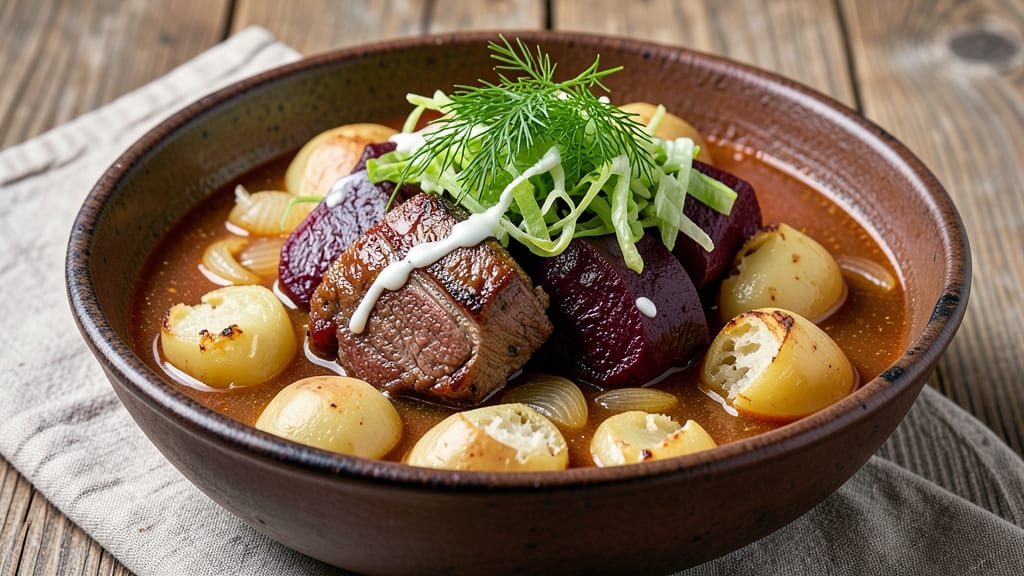
This beef and beet borscht recipe delivers a rich, ruby-red broth that captures the essence of Eastern European comfort food. The slow simmering of beef and root vegetables creates layers of flavor that transform simple ingredients into something extraordinary.
What sets this version apart is the balance between traditional techniques and modern twists—like optional blending for creaminess or fresh dill for brightness.
The foundation begins with tender beef and earthy beets, simmered until the broth develops deep, savory notes. Potatoes and cabbage add heartiness, while a touch of vinegar brightens the richness. The result is a soup that's both comforting and sophisticated—perfect for chilly evenings or family gatherings.
By the time you serve it, you'll have a steaming bowl of borscht with a vibrant hue and complex flavors. The beef remains tender, the beets melt into the broth, and the vegetables hold their shape just enough to add satisfying texture.
Garnish with a dollop of sour cream and fresh chives for that final touch of elegance.
This recipe scales beautifully, making it ideal for feeding a crowd or meal prepping for the week. The slow cooking process ensures maximum flavor extraction, while the optional blending step allows you to adjust the consistency to your preference.
Whether you're a seasoned cook or new to borscht, this method delivers restaurant-quality results at home.
Ingredients for beef and beet borscht
Nine essential ingredients transform into a vibrant, hearty beef and beet borscht.
| Ingredient | Amount | Notes |
|---|---|---|
| Beef Chuck Roast 🥩 | 2 lb | Cut into 1-inch cubes |
| Medium Beets 🍠 | 3 whole | Peeled and chopped |
| Yellow Onions 🧅 | 2 whole | Chopped into wedges |
| Russet Potatoes 🥔 | 4 medium | Peeled and cubed |
| Green Cabbage 🥬 | 1 small head | Shredded, core removed |
| Fresh Dill 🌿 | ½ cup | Chopped, stems removed |
| Carrots 🥕 | 3 medium | Peeled and sliced |
| Tomato Paste 🍅 | ½ cup | Smooth variety preferred |
| Apple Cider Vinegar 🍏 | 2 tbsp | For brightness |
| Bay Leaves 🌿 | 2 whole | For depth of flavor |
| Salt 🧂 | 1 ½ tbsp | Kosher or sea salt |
| Black Peppercorns 🌶️ | 1 tsp | Freshly ground |
| Sour Cream 🧀 | ½ cup | For garnish |
| Fresh Chives 🌱 | ¼ cup | Chopped for garnish |
| Vegetable Broth 💧 | 6 cups | Low-sodium preferred |
The beef is everything here. Chuck roast stays tender while it simmers, and you'll find it pre-cubed at most grocery stores—Costco or Walmart have great prices. Look for vibrant red beets at the store; the deeper the color, the sweeter they'll be. Trader Joe's often has pre-peeled beets if you're short on time. Fresh dill is a must for that bright, herbaceous finish—freeze any extras in oil to preserve them. For the cabbage, green or purple both work, but green holds its shape better during cooking.
No fresh dill? Dried dill at one-third the amount works in a pinch, but it won't have the same punch. Subbing beets? Try sweet potatoes or butternut squash for a different twist, though the color won't be as striking. Vinegar out of stock? Lemon juice at half the amount gives a similar tang. The tomato paste can be the squeeze tube kind—Trader Joe's has great options that last forever. For extra richness, add 1/4 cup of beef broth to the vegetable broth (just don't tell anyone it's not all-vegetable).
This soup tastes even better the next day—3-4 days in the fridge, no problem. Freeze portions for up to 3 months by storing in airtight containers. The sour cream and chives are just for serving, but if you want to prep ahead, store them separately in small containers. Garnish with a sprinkle of black pepper right before serving—it adds a nice kick without overpowering the earthy flavors.
Why You'll Love This Recipe
- One-Pot Magic: I swear by this recipe when I’m too tired to wash extra bowls—just brown the chuck roast, toss in the beets and onions, then let everything simmer together. The beets soften perfectly in the broth, and the potatoes absorb all that rich flavor without falling apart.
- Rich Yet Refreshing: That deep, earthy sweetness from the roasted beets pairs insanely well with the tender beef and tangy sour cream finish. Honestly, it’s the kind of dish that feels hearty but still light enough for a summer afternoon.
- Leftovers That Beg for More: Between us, this soup only gets better the next day. The flavors meld into something even deeper, and I’ve reheated it for lunch three times without getting sick of it. (Yes, even on a Tuesday night.)
- Budget-Friendly Feast: A chuck roast stretches for days, and beets last weeks in the fridge—this is my go-to when I need to feed a crowd without breaking the bank. Plus, cabbage and potatoes are practically free at the grocery store.
Step-by-step instructions for beef and beet borscht
Here's how to build a rich, hearty borscht with tender beef and vibrant beets.
Brown the Beef and Build the Base
Heat a large Dutch oven over medium-high heat and add the 2 lb Beef Chuck Roast cut into 1-inch cubes. Brown the beef thoroughly on all sides—this creates deep flavor through the Maillard reaction. You want each piece to develop a rich, caramelized crust before removing it to a plate.
Once the beef is browned, reduce heat to medium and add 2 whole Yellow Onions chopped into wedges. Sauté for 5 minutes until softened but not browned. Stir in 3 medium Carrots peeled and sliced, and cook for another 3 minutes until they begin to soften. This aromatic base will form the flavor foundation for your borscht.
Develop the Beet and Tomato Base
Add the 3 whole Medium Beets peeled and chopped to the pot. Stir well to combine with the onions and carrots. Pour in the 6 cups Vegetable Broth and bring to a gentle boil. Reduce heat to medium-low and let it simmer uncovered for 20 minutes to allow the beets to soften and infuse the broth with their deep ruby color.
After 20 minutes, stir in the 0.5 cup Tomato Paste and 2 tbsp Apple Cider Vinegar. Add the 2 whole Bay Leaves, 1.5 tbsp Salt, and 1 tsp Black Peppercorns. Return the browned beef to the pot, along with any accumulated juices. The acidity from the vinegar will brighten the flavors while the tomato paste adds depth and richness.
Cook the Vegetables and Potatoes
Add the 4 medium Russet Potatoes peeled and cubed to the pot. Stir gently to combine with the other ingredients. Increase heat to medium-high and bring the mixture to a boil. Once boiling, reduce heat to medium-low and let it simmer uncovered for 20-25 minutes until the potatoes are fork-tender and the broth has thickened slightly.
About 10 minutes before the potatoes are done, add the 1 small head Green Cabbage shredded and core removed. Stir gently to distribute the cabbage evenly throughout the broth. The cabbage should soften but still retain some texture—it should be tender enough to pierce with a fork but not mushy.
Finish with Fresh Herbs and Rest
Remove the pot from heat and discard the 2 whole Bay Leaves. Stir in the 0.5 cup Fresh Dill chopped and stems removed. Let the borscht rest for 10 minutes off the heat. This resting period allows the flavors to meld together and the broth to thicken slightly as it cools.
Before serving, taste and adjust seasoning if needed. The broth should be rich and slightly tangy with a deep, earthy beet flavor. The beef should be fork-tender, and all vegetables should be cooked through but still hold their shape. Ladle the borscht into bowls and garnish each serving with a dollop of 0.5 cup Sour Cream and a sprinkle of 0.25 cup Fresh Chives chopped for garnish.
Pro Tips For Making Beef And Beet Borscht
- Brown the Beef: DESCRIPTION: Don’t just sear—get that Chuck Roast deep brown on all sides before adding liquid. I used to rush this, and the broth stayed cloudy and weak. Take your time; high heat and a few minutes per side build flavor that’ll make your borscht sing.
- Peel Beets Cold: DESCRIPTION: Raw beets are stubborn. Run them under cold water while peeling, or they’ll bleed everywhere. I learned this the hard way—my counter looked like a crime scene. A quick ice bath after boiling also stops them from turning grayish.
- Potatoes First, Then Cabbage: DESCRIPTION: Add sliced potatoes to the pot before the cabbage, but pull them out early when tender. If you let them cook too long, they’ll turn to mush while the cabbage stays tough. A fork test works—pierce one; if it’s soft, it’s ready.
- Acid Balance Matters: DESCRIPTION: Skip the vinegar shortcut. Use a splash of lemon juice after cooking to brighten the broth, not before. Too much upfront kills the beets’ natural sweetness. Taste as you go—you’re aiming for tangy, not sour. (Yes, even if you’re impatient like me.)
Common mistakes when making your beef and beet borscht
Skipping the Brown Step
Never skip browning the beef—this is where the deep, savory flavor comes from through the Maillard reaction. I’ve seen beginners rush this step, and the result is a broth that tastes flat and one-dimensional.
Take your time and get a good sear on each piece of beef. If your pan gets too crowded, work in batches. 🔥
Overcrowding the Pot
Adding all your vegetables at once can cause the broth to dilute and the beef to steam instead of simmer. I recommend adding potatoes first, then cabbage later when they’re nearly done.
Overcrowding also makes it harder to maintain a steady simmer, which is crucial for even cooking. Keep the pot at medium-low heat and stir occasionally.
Ignoring the Resting Time
Letting the borscht rest for 10 minutes after cooking allows the flavors to meld together and the broth to thicken naturally. Skipping this step often results in a watery soup that lacks depth.
I’ve made this mistake too—don’t let it happen to you! Cover the pot loosely and let it sit off the heat before serving.
Using Too Much Vinegar
The 2 tbsp of apple cider vinegar adds brightness, but too much can make the soup taste harsh. Start with the full amount and adjust to taste—you can always add more later.
If you’re unsure, err on the side of caution and add it gradually. The goal is a subtle tang, not a sour punch.
Not Adjusting Seasoning at the End
Taste your borscht before serving and adjust the salt and pepper as needed. The flavors develop differently as the soup cools, so what tasted perfect at 200°F might need a pinch more salt at room temperature.
I always keep a small bowl of salt nearby for this final touch—it makes a huge difference!
Choosing the Wrong Beef Cut
While chuck roast is ideal for its tenderness, some cuts like flank steak can turn tough when simmered. Stick to chuck roast or short ribs for the best results.
If you’re using a different cut, plan for a longer cooking time to ensure tenderness. I’ve tried using sirloin once, and it was a disaster—don’t make that mistake!
Nutrition facts
Frequently asked questions
Can I make this beef and beet borscht vegetarian?
Swap the beef for 2 cups of hearty mushrooms or 1 lb of smoked tofu for a meaty texture. Use vegetable broth instead of beef broth and add 1 tbsp soy sauce for depth. The earthy flavors of beets and mushrooms will shine together.
How do I make the broth thicker or thinner?
For a thicker broth, simmer uncovered for 10-15 extra minutes to reduce naturally. If it's too thick, stir in 1/2 cup hot water at a time until it reaches your desired consistency. Pro tip: A splash of cornstarch slurry (1 tbsp cornstarch + 2 tbsp cold water) can thicken it quickly without altering flavors.
What's the best way to store leftovers?
Store in an airtight container in the fridge for up to 4 days. For longer storage, freeze portions in single-serving containers for up to 3 months. Reheat gently on the stove over medium-low heat until steaming—never microwave directly from frozen. Add a splash of water if it seems too thick after reheating.
Can I use canned beets instead of fresh?
Yes, but drain and rinse them well to remove excess liquid. Canned beets work in a pinch, though fresh ones develop deeper flavor and color. If using canned, reduce the broth by 1/2 cup to compensate for the extra moisture. For best results, stick with fresh beets when possible—they're worth the effort!
What's the secret to getting that perfect ruby-red color?
The color comes from simmering beets until fully tender, then blending 1/2 cup of the broth with the beets and straining it back in. For an even deeper hue, add 1 tsp beet juice powder (found in baking sections) to the broth at the end. Avoid overcooking the beets—they should melt into the broth rather than stay chunky.