
Soups & Stews
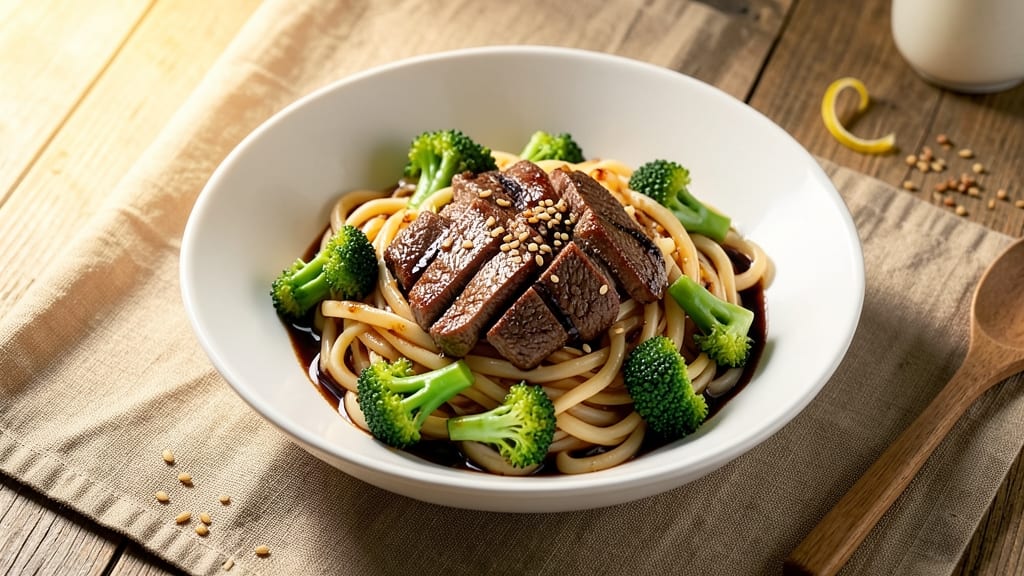
This beef and broccoli udon stir fry delivers restaurant-quality flavors with tender beef, crisp-tender broccoli, and perfectly chewy noodles—all achieved in 30 minutes.
The secret lies in a quick sear for the beef followed by a sweet soy glaze that caramelizes beautifully, while the broccoli gets just enough time to stay vibrant. I developed this recipe after craving that perfect balance of savory, slightly sweet, and umami-rich flavors without complicated techniques.
The beef starts with a simple marinade of soy sauce, garlic, and ginger, which tenderizes the meat and infuses it with flavor before searing. Meanwhile, the broccoli gets a quick blanch to soften slightly before the final stir-fry, ensuring it stays bright and crisp.
The udon noodles cook separately to maintain their signature chewiness, then get tossed together in one pan for a cohesive, flavorful dish.
What you’ll end up with is a dish that’s rich yet balanced—sweet soy glaze clinging to tender beef strips, crisp broccoli adding freshness, and chewy udon noodles soaking up every bit of flavor.
The aroma alone will have everyone gathering around the table, and the first bite delivers that perfect harmony of textures and tastes.
This stir fry is versatile enough for weeknight dinners or meal prep, and the sauce can be adjusted to suit your preference—more sweet, more savory, or even spicy. Let’s get cooking!
Ingredients for beef and broccoli udon stir fry
Sweet soy glaze, tender beef, and chewy noodles—just 15 ingredients for restaurant-style flavor.
| Ingredient | Amount | Notes |
|---|---|---|
| Flank Steak 🥩 | 1 lb | Thinly sliced against grain |
| Udon Noodles 🍜 | 8 oz | Fresh or dried, chewy variety |
| Broccoli Florets 🥦 | 3 cups | Cut into bite-sized pieces |
| Soy Sauce 🥄 | ½ cup | High-quality, light or dark |
| Garlic Cloves 🧄 | 4 cloves | Minced for marinade |
| Fresh Ginger 🌿 | 1 tbsp | Grated, for marinade |
| Sesame Oil 🫒 | 1 tbsp | Toasted, for aroma |
| Honey 🍯 | 2 tbsp | For sweet glaze |
| Vegetable Oil 🫒 | 2 tbsp | High smoke point |
| Green Onions 🧅 | 3 whole | Sliced, for garnish |
| Sesame Seeds 🌾 | 1 tbsp | Toasted, for garnish |
| Salt 🧂 | 1 tsp | Kosher or sea salt |
| Black Pepper 🌶️ | ½ tsp | Freshly ground |
| Rice Vinegar 🍶 | 1 tbsp | For balance |
| Red Pepper Flakes 🔥 | ½ tsp | Optional for heat |
The beef is everything here. Flank steak is my go-to—it slices thin and stays tender. Grab it from the butcher section if you can, or look for pre-sliced Asian-style beef at Trader Joe's or Costco. Slice it against the grain for that perfect chewy texture. Fresh ginger and garlic are non-negotiable for the marinade—nothing beats the fresh stuff, but if you're in a pinch, jarred minced ginger works. For the udon noodles, fresh is ideal, but dried holds up fine if you soak them properly. Broccoli should be bright green—avoid those sad, yellowing florets at the back of the produce section.
No sesame oil? Toasted peanut oil works in a pinch, though it’ll have a different flavor. Short on honey? Maple syrup or agave gets you close, though honey’s floral notes are perfect here. The soy sauce can be swapped for coconut aminos if you're avoiding gluten, but the flavor will be slightly different. Fresh ginger too spicy? Reduce it to 1/2 tbsp or use ground ginger at half the amount. Red pepper flakes giving you pause? Skip them entirely—this dish is already packed with flavor. If you’re prepping ahead, marinate the beef for up to 2 hours (no longer, or it’ll turn mushy).
This stir fry tastes even better the next day—leftovers keep for 3-4 days in the fridge. Store the sauce separately if you want to reheat it without getting soggy noodles. For meal prep, portion into containers with a splash of water to keep everything from sticking. Freezing isn’t ideal for udon (they get mushy), but you can freeze the beef and sauce separately for up to 3 months. Garnish with extra green onions and sesame seeds right before serving—they add freshness and crunch that disappears fast.
Why You'll Love This Recipe
- One-Pan Magic: I swear by this trick—just toss everything in one skillet. The steak sears right alongside the garlic and broccoli, so you’re not juggling three pans while dinner burns. That caramelized soy glaze? Happens while you’re chopping the last of the florets.
- Umami Bomb: The moment the garlic hits the hot pan, your kitchen smells like a Tokyo street stall. Thinly sliced flank steak stays tender but chewy in that just-right way, while the broccoli gets crisp-tender edges. Honestly, the first bite makes me forget I’m not at a ramen shop.
- Leftover Hero: This dish actually tastes better the next day—yes, really. The noodles soften just enough to soak up all that salty-sweet sauce, and the beef gets even more flavorful. I portion it into containers before it cools, so lunches are ready in seconds. (My coworkers think I’m a saint.)
- Budget Flex: Flank steak stretches further than you’d think when sliced thin, and udon noodles are cheaper than rice. Broccoli’s a cheap veggie that still feels fancy, and a single jar of soy sauce covers multiple meals. Here’s what sold me—it’s the kind of dish where I can feed four people for less than takeout.
Step-by-step instructions for sweet soy-glazed beef with chewy noodles
Here's how to create a perfectly balanced stir fry with tender beef, al dente udon, and vibrant broccoli.
Prepare the Beef Marinade and Slice the Steak
In a small bowl, combine the 0.5 cup soy sauce, 2 tbsp honey, 1 tbsp rice vinegar, 1 tbsp grated fresh ginger, and 4 minced garlic cloves. Mix well until the honey dissolves completely. Place the 1 lb flank steak in a resealable plastic bag, pour the marinade over it, and massage it into every inch of the meat. Seal the bag and refrigerate for at least 30 minutes—this ensures maximum flavor penetration.
While the beef marinates, slice it thinly against the grain into ¼-inch thick strips. The grain runs lengthwise along the steak, so look for the muscle fibers and cut perpendicular to them. This technique guarantees tender bites that won't be chewy. Keep the sliced beef in the marinade until ready to cook.
Cook the Udon Noodles to Perfect Al Dente
Bring a large pot of water to a rolling boil and add 1 tsp salt. Add the 8 oz udon noodles and cook according to package instructions—typically 3-4 minutes for dried udon—until they're al dente but still slightly firm to the bite. They'll finish cooking in the hot stir fry, so don't overcook them.
Drain the noodles and immediately rinse them under cold water for 10 seconds to stop the cooking process. Toss the noodles with 1 tbsp toasted sesame oil to prevent sticking and keep them moist. Set aside while you prepare the vegetables and beef.
Stir Fry the Broccoli Until Bright Green and Crisp-Tender
Heat 2 tbsp vegetable oil in a large wok or skillet over high heat until shimmering. Add the 3 cups broccoli florets in a single layer and stir fry for 2-3 minutes until they're bright green and just beginning to soften at the edges. You want them to retain some bite—overcooking will make them mushy.
Remove the broccoli to a plate and set aside. Keep the wok hot for the beef—this residual heat will help create that signature caramelized glaze. If the oil starts to cool down, add another ½ tablespoon vegetable oil to maintain high heat.
Sear the Beef and Create the Sweet Soy Glaze
Working quickly, remove the beef from the marinade (discard any excess marinade) and add it to the hot wok in a single layer. Let it sear undisturbed for 1-2 minutes until it develops a deep golden crust on one side. This initial sear locks in juices and creates flavor. Flip the beef and cook for another 1-2 minutes until it reaches 145°F internal temperature—it should still be slightly pink in the center.
Return the broccoli to the wok along with the beef. Pour in the remaining 0.5 cup soy sauce and add 0.5 tsp black pepper and 0.5 tsp red pepper flakes if using. Stir everything together for 1-2 minutes until the sauce begins to coat the beef and broccoli. The heat will reduce the sauce slightly, creating a glossy, sticky glaze.
Combine Noodles and Garnish for Serving
Add the cooked udon noodles to the wok and toss everything together vigorously for 1-2 minutes until the noodles are fully coated with the sauce and heated through. The residual heat from the wok will finish cooking the noodles to perfect al dente texture.
Divide the beef and broccoli udon stir fry among 4 serving bowls. Garnish each serving with 1 tbsp toasted sesame seeds and 3 sliced green onions. Serve immediately while hot—this dish tastes best straight from the wok when all the components are at their peak texture and temperature. The combination of sweet glaze, savory beef, chewy noodles, and crisp broccoli creates a perfect balance of flavors and textures in every bite.
Pro Tips For Making Beef And Broccoli Udon Stir Fry
- Slice Steak Against the Grain: I learned this the hard way—thinly slicing flank steak with the grain makes it chewy. Instead, angle your knife at 45 degrees and cut perpendicular to the muscle fibers. You’ll end up with tender strips that dissolve in your mouth, not fight you every bite.
- Blanch Broccoli First: Broccoli florets take forever to crisp up in a stir-fry. Give them a quick 30-second blanch in boiling water, then shock in ice water. They’ll hold their color and texture while the beef cooks—no more sad, limp florets at the end.
- Salt the Udon Noodles: Fresh or dried udon noodles taste bland straight from the package. Soak them in lightly salted water (about 1 tsp salt per 4 cups water) while they cook. The flavor penetrates the noodles, and you’ll skip adding extra soy sauce later.
- Rest the Beef Before Stir-Frying: Flank steak releases juices when sliced, but if you toss it straight into the pan, it’ll steam instead of sear. Pat it dry, let it sit uncovered on the counter for 10 minutes, then season. The crust will form instantly, and the meat won’t turn to mush.
Flavor customization for this recipe
Sweet vs. Savory
The sweet soy glaze in this recipe is what makes it shine, but you can easily adjust the balance to suit your taste.
For a more savory version, reduce the honey to 1 tbsp and add 1 tbsp extra soy sauce—this deepens the umami without losing the caramelized crust on the beef.
If you prefer sweetness, increase the honey to 3 tbsp and add a splash of 1 tsp mirin for extra brightness. 🍯
Spicy Kick
For heat lovers, crank up the spice by adding 1 tbsp gochujang (Korean chili paste) to the marinade and tossing in 1 tsp extra red pepper flakes during the final stir-fry.
If you want a smoky-spicy twist, swap the red pepper flakes for ½ tsp smoked paprika and ½ tsp cayenne. For a milder kick, use ½ tsp chili crisp (like Sriracha) instead of flakes—it adds heat with fruity depth.
Umami Boost
To intensify the savory depth, stir in 1 tbsp fish sauce or 1 tsp mushroom powder when combining the beef and broccoli. For a vegetarian-friendly umami boost, add 1 tbsp nutritional yeast or 1 tsp dried porcini mushrooms (soaked and chopped) to the sauce.
These ingredients add complexity without overpowering the dish’s natural flavors.
Herb Infusions
Fresh herbs can elevate this stir fry instantly. Toss in 2 tbsp chopped cilantro or 1 tbsp Thai basil during the final toss for a bright, citrusy note. For a more aromatic profile, add 1 tsp grated lemon zest to the marinade and garnish with thin lemon slices before serving.
If you love garlic, minced 2 extra cloves into the sauce for an extra punch.
Nutty Crunch
For texture contrast, finish the dish with 1 tbsp crushed peanuts or 1 tbsp toasted cashews—they add a satisfying crunch that balances the chewy udon. For a more substantial topping, sprinkle 2 tbsp fried shallots (available at Asian markets) over the top.
Both options work best when added right before serving to keep them crisp.
Global Twists
Give this dish a fusion flair by adding 1 tbsp hoisin sauce for a Chinese-inspired twist or 1 tsp sriracha for a Thai-inspired heat. For a Japanese-inspired version, swap the honey for 1 tbsp mirin and add ½ tsp furikake (Japanese seasoning) to the garnish.
Each variation keeps the core flavors intact while offering a new cultural dimension. 🌏
Nutrition facts
Frequently asked questions
Can I use regular spaghetti instead of udon noodles?
While you can substitute spaghetti, it won't give you the same chewy texture that makes udon special. If you must use spaghetti, cook it 1 minute less than package instructions and toss it with 1 tsp toasted sesame oil to prevent sticking. The flavor will still be delicious, but the texture will be softer and less satisfying.
How do I prevent the beef from getting chewy?
Slice the beef thinly against the grain and marinate for only 30-60 minutes—longer marinating can make it mushy. Also, sear the beef at high heat until it develops a crust, then remove it from the pan briefly to let the internal temperature rise to 145°F without overcooking. This ensures tender, juicy bites every time.
Can I make this recipe ahead of time?
Yes, but with a few adjustments. Cook the beef and broccoli separately, then store them in the fridge for up to 2 days. Reheat the beef and veggies separately, then toss with fresh udon noodles when ready to serve. The sauce can be made ahead and reheated separately to prevent soggy noodles. Garnish with fresh green onions and sesame seeds just before serving for the best flavor.
What if I don't have fresh ginger?
Use ½ tbsp ground ginger as a substitute, but expect a slightly less vibrant flavor. For a closer match, mix ½ tbsp ground ginger with ½ tsp lemon juice to mimic fresh ginger's brightness. If you're using jarred minced ginger, reduce the amount by half since it's more concentrated.
How can I make this dish spicier?
Add 1 tbsp gochujang (Korean chili paste) to the marinade for deep, spicy-savory flavor, or toss in 1 tsp extra red pepper flakes during the final stir-fry. For a smoky kick, swap the red pepper flakes for ½ tsp smoked paprika and ½ tsp cayenne. Always taste as you go—you can adjust the heat to your preference!