
Main Courses
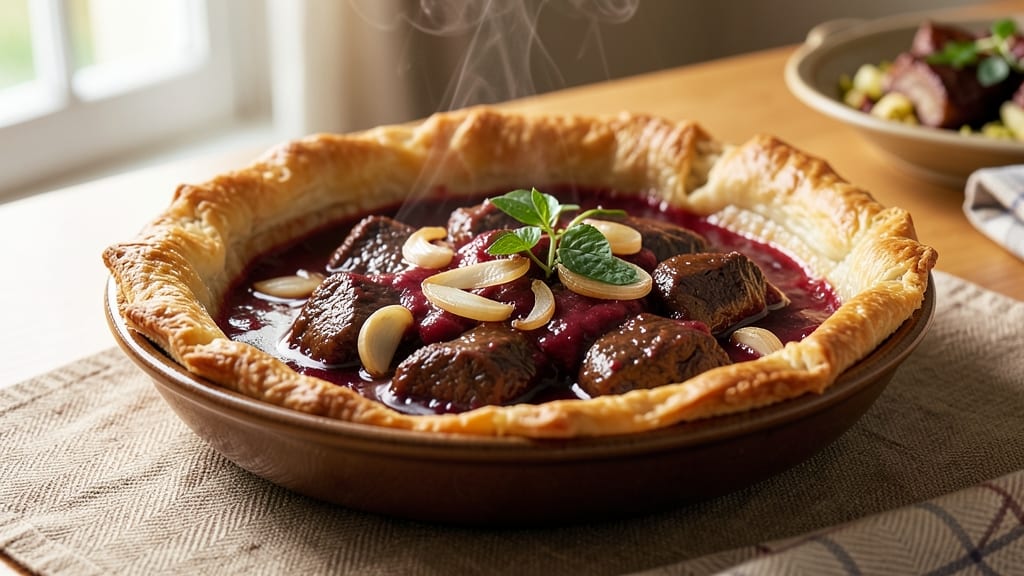
This beef and Burgundy pie delivers the kind of rich, wine-braised depth that makes it perfect for special occasions—where tender beef simmers in a velvety red wine sauce beneath a golden, crispy crust. The technique blends classic French comfort with home cooking simplicity, transforming tough cuts into melt-in-your-mouth perfection.
What sets this apart is the balance: a filling so flavorful it stands alone, yet elevated by the buttery, flaky pastry that encases it like a warm hug.
The secret lies in the braising process, where beef slow-cooks in Burgundy wine until fork-tender, absorbing the deep umami notes of mushrooms, shallots, and thyme. A touch of tomato paste adds complexity, while a splash of cream at the end rounds out the sauce into something luxurious yet approachable.
The crust, whether traditional or gluten-free, must be rolled out with confidence—it’s the final touch that turns this dish from impressive to unforgettable.
By the time it emerges from the oven, you’ll have a pie that looks as elegant as it tastes: a crispy top glistening with golden bubbles, a filling so rich it could be mistaken for a restaurant centerpiece, and layers of flavor that linger long after the last bite.
The aroma alone—wine, herbs, and caramelized beef—will have everyone at the table anticipating the first forkful.
Serve with a simple green salad or crusty bread to soak up every drop of that decadent sauce. This isn’t just dinner; it’s a centerpiece. Let’s get started on creating it.
Ingredients for beef and burgundy pie
Six ingredients for the filling, six for the crust—simple but spectacular for a showstopper pie.
| Ingredient | Amount | Notes |
|---|---|---|
| Chuck Roast 🥩 | 3 lb | Trimmed of excess fat |
| Dry Red Wine 🍷 | 1 ½ cups | Burgundy or similar bold |
| Beef Stock 🥫 | 1 cup | Homemade preferred |
| Shallots 🧅 | 3 whole | Minced, about 0.25 cup |
| Garlic Cloves 🧄 | 4 cloves | Minced, not pressed |
| Tomato Paste 🍅 | 2 tbsp | Squeeze tube preferred |
| Heavy Cream 🥛 | ½ cup | Full-fat for richness |
| Fresh Thyme 🌿 | 2 tbsp | Leaves only, chopped |
| Fresh Parsley 🌿 | ¼ cup | Chopped, for garnish |
| Mushrooms 🍄 | 8 oz | Cremini or button, sliced |
| All-Purpose Flour 🌾 | 2 ½ cups | Plus 1 tbsp for dusting |
| Cold Unsalted Butter 🧈 | ¾ cup | Cubed, for crust |
| Ice Water 💧 | ½ cup | For dough elasticity |
| Salt 🧂 | 1 ½ tsp | Kosher or sea salt |
| Black Pepper 🌶️ | 1 tsp | Freshly ground |
The beef is the star, so don't skimp on quality. Chuck roast is your best bet—it's tough enough to braise beautifully, but not so lean it dries out. Look for good marbling at Whole Foods or your local butcher shop; the extra fat keeps the meat juicy. If you're buying pre-cut, check for even-sized pieces. The wine? Burgundy is ideal, but any bold, dry red will work—Cabernet Sauvignon or Merlot in a pinch. Just avoid anything too sweet or fruity. For the mushrooms, cremini or button add great texture, but shiitake would be a luxurious upgrade if you're feeling fancy.
No red wine? Dry rosé or even beef broth with a splash of balsamic can work in a pinch, though the flavor won't be identical. Fresh thyme is ideal, but dried at one-third the amount is fine if that's all you've got. The tomato paste can be skipped entirely if you're worried about it being too heavy, but trust me—it adds depth that balances the wine. For the crust, King Arthur flour is my go-to for a flaky result, but any all-purpose will do. And if you're gluten-free, there are great 1:1 blends out there—just make sure to chill the dough longer since GF flours behave differently.
This filling keeps beautifully for 3 days in the fridge, so make extra if you can. The crust can be prepped ahead and frozen for up to 3 months—just let it thaw in the fridge overnight before rolling. The pie itself reheats well; just cover it with foil and warm at 350°F for 15 minutes. Leftovers taste even better the next day as the flavors meld. I always make this for company—it's the kind of dish that makes you look like a pro, even if it's your first time.
Why You'll Love This Recipe
- One-Pot Magic: I swear by this recipe when I’m too tired to deal with multiple dishes. Chuck roast practically cooks itself in the oven while the wine and stock simmer down—no stove babysitting required. The shallots and garlic caramelize into sweet, jammy bits without me having to stand there stirring.
- Rich Without Effort: Between us, I’ve never met a wine reduction that didn’t make everything taste fancier. The burgundy here melts into the beef stock, creating this deep, velvety sauce that clings to every bite—like a hug in pie form. (Yes, even on a Tuesday night.)
- Leftovers That Shine: This pie actually improves the next day. The flavors meld even more, and reheating it is just about dumping it back in the oven for 10 minutes. I’ve taken it to potlucks, packed it for lunch, and even frozen portions—no one ever guesses it’s from a week ago.
- Budget-Friendly Luxury: Chuck roast is the unsung hero of affordable meat, and a bottle of dry red wine doesn’t have to break the bank. You’re basically turning grocery-store staples into something that tastes like you slaved over it. Honestly, my wallet and my taste buds both thank me every time.
Step-by-step instructions for beef and Burgundy pie
Here's how to build layers of rich, wine-braised beef topped with a golden crust.
Sear and Braise the Chuck Roast
Pat the 3 lb chuck roast dry with paper towels and season generously with 1.5 tsp salt and 1 tsp black pepper on all sides. Heat a Dutch oven over medium-high heat and add the roast. Sear for 4-5 minutes per side until deeply browned—this creates the foundation for rich flavor. Remove the roast and set aside.
In the same pot, add 3 whole shallots (minced) and 4 cloves garlic (minced). Cook for 2 minutes until fragrant. Stir in 2 tbsp tomato paste and cook for 1 minute until darkened. Deglaze with 1.5 cups dry red wine, scraping up browned bits. Return the roast to the pot, add 1 cup beef stock, and bring to a simmer. Cover and braise in a 350°F oven for 2 hours until fork-tender. The meat should pull apart easily when tested with a fork.
Prepare the Mushroom-Thyme Filling
While the roast braises, slice the 8 oz mushrooms and cook in the same Dutch oven over medium heat for 5-6 minutes until golden. Stir in 2 tbsp fresh thyme and remove from heat. Let cool slightly, then shred the braised beef into 1-inch pieces and combine with the mushrooms in a bowl. Stir in 0.5 cup heavy cream and set aside.
This step builds the pie's signature depth—mushrooms absorb the wine's richness while thyme adds earthy warmth. Keep the filling warm until ready to assemble, as cold ingredients can make the pie filling watery.
Assemble the Pie Layers
Transfer the beef-mushroom mixture to the Dutch oven and spread evenly. In a separate bowl, combine 2.5 cups all-purpose flour, 0.75 cup cold unsalted butter (cubed), 0.5 cup ice water, 0.5 tsp salt, and 0.5 tsp black pepper. Mix with a fork until clumpy—don't overwork the dough. Sprinkle half the dough over the filling, then fold in gently with a spatula.
Here's the thing—the crust should be thick enough to hold but not so dense it turns soggy. Press the remaining dough on top, tucking edges under to seal. The ice water keeps the dough firm while the butter ensures a crisp finish.
Bake Until Golden and Crisp
Transfer the pie to a 400°F oven and bake for 30-35 minutes until the crust is deep golden brown and the filling bubbles at the edges. For extra crispiness, broil for 2-3 minutes at the end, watching closely to avoid burning. The crust should be firm to the touch with no soft spots.
Let the pie rest for 10 minutes before serving—this lets the filling set slightly and prevents a runny center. Garnish with 0.25 cup chopped fresh parsley for color and freshness. Each slice should reveal layers of tender beef, rich wine sauce, and a shatteringly crisp crust.
Pro Tips For Making Beef And Burgundy Pie
- BROWN THE ROAST FIRST: I learned this the hard way—skipping the sear means flavorless gravy later. Get that chuck roast screaming hot in a dry pan for 5-6 minutes per side until it’s deep brown, not just pink. The crust locks in juices and builds the base for that rich burgundy sauce.
- DEGLAZE WITH WINE IMMEDIATELY: Don’t let those browned bits go to waste—they’re the soul of the dish. As soon as you remove the roast, pour in that dry red wine right away while the pan’s still hot. Let it bubble for 2-3 minutes before adding anything else. This step turns "meh" sauce into something velvety and complex.
- SWEAT SHALLOTS LOW AND SLOW: I used to rush this, and my shallots would turn bitter. Instead, cook them on low heat for 8-10 minutes until they’re translucent and caramelized at the edges—no color needed. This softens their sharpness and lets the garlic cloves (added last) sing without burning.
- THICKEN WITH STOCK GRADUALLY: Adding all the beef stock at once dilutes the wine’s depth. Start with half, simmer until reduced by a third, then add the rest. Stir in a cornstarch slurry (1 tbsp cornstarch + 2 tbsp cold water) off the heat last—this keeps the sauce glossy, not gluey.
Troubleshooting this recipe
Crust Too Soggy
If your crust turns out soggy, it’s usually from steam or insufficient baking. First, ensure your filling is completely drained of excess liquid before assembling—press a paper towel against the beef and mushrooms to absorb any moisture.
For extra insurance, blind-bake the bottom crust for 10 minutes at 400°F before adding the filling. This creates a barrier that prevents sogginess. Also, avoid overfilling the pie—leave ½-inch headspace at the top to allow steam to escape. 💫
Filling Too Watery
A watery filling often happens when the beef releases too much liquid during braising. To fix this, reduce the braising liquid by simmering it uncovered for 5-10 minutes after removing the roast.
If the filling still seems thin, stir in 1 tbsp cornstarch mixed with 1 tbsp cold water and simmer until thickened. For future pies, use a thicker-cut roast (like chuck) and trim excess fat, which renders down and adds moisture.
Browning Uneven
Uneven browning on the crust usually means the oven isn’t hot enough or the pie isn’t positioned correctly. Preheat your oven to 400°F and place the pie on the middle rack for even heat distribution.
For extra crispiness, rotate the pie halfway through baking and brush the top with 1 tbsp melted butter before the final 5 minutes of baking. A light spray of water on the crust before broiling can also create a beautiful, golden finish. 🔥
Meat Too Tough
If your beef turns out tough, it likely wasn’t braised long enough or the heat was too high. Chuck roast needs at least 2 hours at 350°F to become tender. For next time, check the internal temperature—it should reach 203°F before removing from the oven.
If the meat is still firm, extend the braising time by 30 minutes and add ½ cup more liquid (wine or stock) to keep it moist. A meat thermometer is your best friend here!
Wine Flavor Too Strong
If the wine flavor overpowers the dish, it’s likely because the liquid wasn’t reduced enough. After braising, simmer the liquid uncovered for 10-15 minutes to concentrate the flavors.
You can also balance the acidity by adding 1 tsp sugar or ½ tsp baking soda (just a pinch!) to mellow the taste. For future pies, use a drier wine like Cabernet Sauvignon or reduce the amount to 1 cup instead of 1.5 cups. 🍷
Crust Shrinking
A shrinking crust usually means the dough was too warm or overworked. Chill your dough for at least 30 minutes before rolling it out—this prevents gluten from developing too much.
If the crust still shrinks during baking, undersize your pie dish by 1 inch to give the dough room to expand. For extra stability, press the edges firmly against the dish and dock the top crust (poke holes with a fork) to prevent puffing. 💡
Nutrition facts
Frequently asked questions
Can I substitute Burgundy wine with another type of red wine?
While Burgundy wine is ideal for its depth and acidity, any bold, dry red wine like Cabernet Sauvignon, Merlot, or Pinot Noir will work. Avoid sweet or fruity wines—they can overpower the dish. If you're in a pinch, use 1 cup dry rosé or beef stock with 1 tbsp balsamic vinegar for a similar depth of flavor.
How do I make this recipe gluten-free?
Replace the all-purpose flour crust with a 1:1 gluten-free flour blend (like Bob's Red Mill or King Arthur). Use the same measurements, but chill the dough for 45 minutes longer since gluten-free flours behave differently. For extra crispiness, brush the crust with melted butter or olive oil before baking. The filling stays the same—just ensure all ingredients are certified gluten-free.
Can I prepare the filling ahead of time?
Yes! The filling keeps well for 3 days in the fridge or 3 months in the freezer. Store it in an airtight container and reheat gently on the stove before assembling the pie. For the crust, you can also prep it ahead: roll it out, wrap tightly in plastic, and freeze for up to 3 months. Thaw overnight in the fridge before using.
What’s the best way to reheat leftovers?
Cover the pie with foil and warm at 350°F for 15 minutes to restore crispiness. For individual slices, reheat in a 375°F oven for 8-10 minutes or microwave for 30-45 seconds (though the crust won’t be as crisp). Leftovers taste even better the next day as flavors meld—this dish is perfect for meal prep!
Why does my crust turn out puffy instead of flat?
Puffiness happens when the dough isn’t chilled enough or the oven isn’t hot enough. Press the edges firmly against the dish and dock the top crust (poke holes with a fork) to prevent air pockets. Preheat your oven to 400°F and place the pie on the middle rack for even heat. If it still puffs, try a slightly smaller dish to give the dough room to expand evenly.