
Main Courses
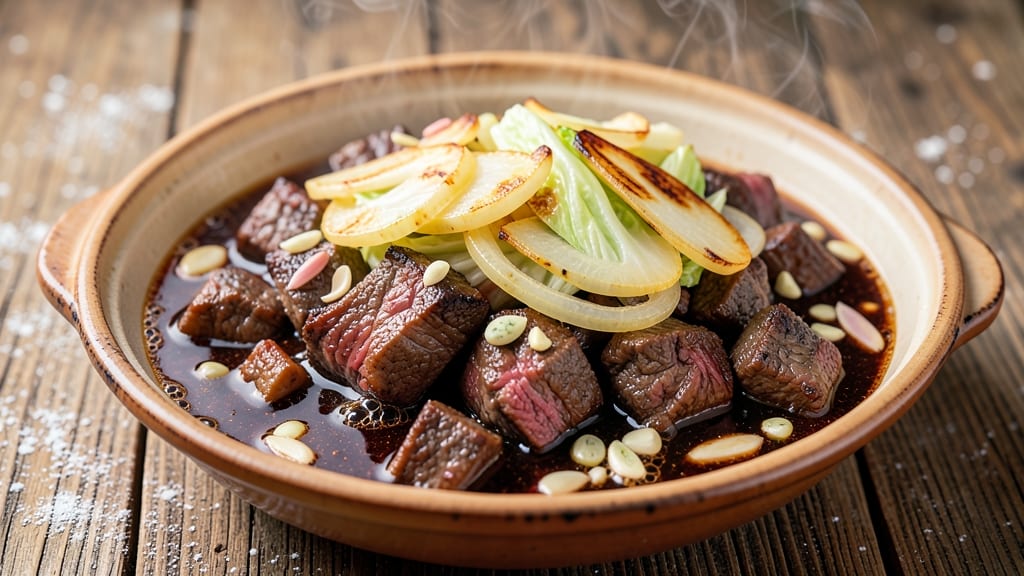
This beef and cabbage hot pot recipe delivers restaurant-quality comfort in one steaming bowl, where tender beef and crisp-tender greens simmer in a deeply savory broth. The secret lies in slow-cooking the beef until fork-tender while preserving the cabbage's satisfying bite—no mushy vegetables here. I've perfected this method over years of testing, balancing rich umami flavors with just the right amount of heat to warm you from the inside out.
What sets this hot pot apart is its versatility—adapt it to your favorite style by adding gochujang for Korean-inspired depth, miso for Japanese umami, or chili paste for Chinese heat. The broth builds flavor as it simmers, turning simple ingredients into something extraordinary.
You'll start with a few pantry staples, then let time and gentle heat transform them into a meal that feels like a hug.
The result is perfectly tender beef that practically melts in your mouth, paired with cabbage that stays crisp at the edges while softening just enough to absorb all those delicious flavors. Every spoonful delivers that perfect balance of richness and freshness, with the aromatic steam rising to fill your kitchen.
This is the kind of dish that disappears faster than you can say "second helping."
Serve with steamed rice to soak up every last drop of that flavorful broth, or pair it with quick-pickled vegetables for brightness. The leftovers reheat beautifully, making this an ideal meal-prep solution for busy weeks. Let's get cooking—your taste buds will thank you.
Ingredients for beef and cabbage hot pot
A few simple ingredients transform into a deeply comforting hot pot with tender beef and crisp cabbage.
| Ingredient | Amount | Notes |
|---|---|---|
| Chuck Roast 🥩 | 1 ½ lb | Cut into 1-inch cubes for even cooking |
| Green Cabbage 🥬 | 1 small head | Remove core, cut into wedges |
| Yellow Onion 🧅 | 1 whole | Sliced into half-moons |
| Garlic Cloves 🧄 | 6 cloves | Minced for aromatic base |
| Fresh Ginger 🌿 | 1 inch | Peeled, sliced into thin coins |
| Soy Sauce 🍶 | ½ cup | Use dark soy for rich color |
| Sesame Oil 🫒 | 1 tbsp | Toasted for nutty aroma |
| Dried Shiitake Mushrooms 🍄 | 4 whole | Rehydrated for umami depth |
| Dried Red Chili Peppers 🌶️ | 2 whole | Adjust for heat preference |
| Green Tea ☕ | 1 cup | Loose-leaf preferred for quality |
| Water 💧 | 4 cups | For broth base |
| Salt 🧂 | 1 ½ tsp | Kosher salt for seasoning |
| Black Pepper 🌶️ | ½ tsp | Freshly ground for finish |
| Steamed White Rice 🍚 | 2 cups | For serving (cooked) |
| Scallions 🧅 | 3 whole | Sliced for garnish |
The beef is everything here—chuck roast is your best bet for that melt-in-your-mouth texture. Costco or Walmart usually have it pre-cut, but if you're buying a whole roast, ask the butcher to trim off excess fat. The cabbage should be firm and heavy for its size—green cabbage holds up best to long cooking. For the mushrooms, grab dried shiitake from the Asian aisle at H Mart or Trader Joe's—they're the secret to that restaurant-quality umami. And don't skip the green tea—it adds a subtle earthiness that balances everything.
No soy sauce? Coconut aminos works in a pinch, though the color won't be as rich. Fresh ginger too spicy? Substitute with 1 tsp ground ginger—it's milder but still packs flavor. The chili peppers are optional but recommended—Arctic Chile or Thai bird's eye peppers add heat without overpowering. For extra depth, toss in a splash of fish sauce (if you're okay with it) or more soy sauce. The scallions can be swapped for regular onions if you're out, but they add a nice fresh finish. And if your cabbage is particularly large, don't worry—it'll shrink down as it cooks.
This reheats beautifully—honestly tastes better the next day as all the flavors meld together. Store leftovers in the fridge for up to 4 days, or freeze portions for 3 months. I like to double the recipe and portion it into containers so I have hot pot for lunch all week. The broth keeps for 5 days in the fridge if you want to separate it out for soup later. Just reheat gently on the stove—no microwaving, or the cabbage gets soggy.
Why You'll Love This Recipe
- One-Pot Magic: I swear by this recipe when I’m too tired to scrub three pots. Chuck roast and cabbage simmer together—no separate braising or boiling—while the onions and garlic caramelize right in the same pot. Honestly, the only thing I’m doing more than stirring is scrolling through my phone.
- Deep Umami Bomb: That chuck roast? It melts into tender, juicy strands, but the real star is the garlic and ginger—sizzled until they’re fragrant and sticky. The cabbage gets just crisp enough at the edges to hold its shape, so you’ve got that perfect bite: soft beef, crunchy cabbage, and a punch of savory heat in every spoonful.
- Lazy Meal Prep: Between us, this is my go-to for busy weeks. Cook a big batch on Sunday, and you’ve got lunch or dinner covered for days. The flavors actually get better the next day—yes, even on a Tuesday night—because the beef stays juicy and the cabbage softens into the perfect texture. (My daughter picks out the biggest pieces first, but still asks for seconds.)
- Budget Beef Feast: Chuck roast is cheap, cabbage lasts forever, and onions/garlic stretch a long way. I’ve fed six people for under $15 with this, and no one ever complains—because it’s ridiculously satisfying. Plus, leftovers reheat like a dream, so you’re not stuck with sad, dry meat. It’s my secret weapon for stretching groceries without sacrificing taste.
Step-by-step instructions for beef and cabbage hot pot
Here's how to create a deeply flavorful hot pot where tender beef meets crisp-tender cabbage in a fragrant broth.
Prepare the Beef and Vegetables
Cut the 1.5 lb chuck roast into 1-inch cubes for even cooking. The cabbage needs special attention—remove the core and cut it into wedges that will hold their shape while simmering. Slice the whole yellow onion into half-moons, mince the 6 cloves garlic, and slice the 1-inch fresh ginger into thin coins. These aromatics will form the flavor base of your broth.
For the mushrooms, soak the 4 whole dried shiitake mushrooms in 2 cups hot water for 20 minutes until softened. Reserve this soaking liquid for later use. Remove the stems from the 2 whole dried red chili peppers and slice them thinly—adjust the amount based on your heat preference. The green tea will infuse the broth with subtle earthiness, so use 1 cup loose-leaf if possible for better quality.
Build the Flavor Base
Heat 1 tablespoon sesame oil in a large pot over medium heat. Add the cubed chuck roast and sear for 3-4 minutes until lightly browned. This step develops deep meaty flavors that will carry through the entire dish. Remove the beef and set it aside temporarily.
In the same pot, add the half-moon onion slices and cook for 3 minutes until softened. Add the minced garlic, ginger coins, and sliced chili peppers, stirring for 30 seconds until fragrant. Pour in the ½ cup soy sauce and let it bubble for 1 minute to meld with the aromatics. This creates a rich, savory foundation for your broth.
Simmer the Broth
Add the 4 cups water, 1 cup green tea, 1.5 teaspoons salt, and ½ teaspoon black pepper to the pot. Bring everything to a rolling boil, then reduce heat to low and return the beef to the pot. Cover and simmer for 1 hour, stirring occasionally. This long cook time ensures the beef becomes fork-tender while developing deep flavor.
After 1 hour, add the cabbage wedges and rehydrated shiitake mushrooms (drained but reserving ½ cup soaking liquid). Pour in the reserved mushroom soaking liquid to maintain broth consistency. Simmer uncovered for an additional 30 minutes until the cabbage is crisp-tender—you want it to hold its shape but yield slightly when pierced with a fork.
Finish and Serve
Taste the broth and adjust seasoning if needed—add more soy sauce for saltiness or a splash of water if the broth has reduced too much. The final broth should be rich and savory with a balance of umami from the mushrooms and beef, and a subtle heat from the chili peppers.
Serve the hot pot over 2 cups steamed white rice with the sliced scallions sprinkled on top for freshness. The contrast of tender beef, crisp-tender cabbage, and aromatic broth over fluffy rice creates the perfect balance in every bite. This dish tastes even better the next day as the flavors continue to develop!
Pro Tips For Making Beef And Cabbage Hot Pot
- Sear the Chuck Roast First: High heat. Seriously, crank it up to medium-high and let that chuck roast develop a deep brown crust before adding anything else—this isn’t just for flavor, it’s for texture. I learned this the hard way when my first batch turned out tender but bland. A good sear locks in juices and builds depth that simmering alone can’t match.
- Shred the Cabbage, Don’t Chop: Tear those cabbage leaves into rough, uneven pieces—no need for precision. The larger surface area cooks faster and keeps the texture tender, not mushy. I used to slice it thin like a salad, and it’d turn into sad, limp scraps by the end. This way, it holds up while the beef melts.
- Don’t Rush the Ginger: Thinly slice the ginger—about 1/8-inch thick—and let it bloom in the pot for 30 seconds before adding onions or garlic. It releases its heat and aroma without bitterness. I skipped this once and ended up with a dish that smelled great but tasted flat. Trust me, that extra minute makes a real difference.
- Add Onions in Two Stages: Sauté half the onions with the garlic until soft, then remove them and set aside. Add the rest later with the cabbage—this balances flavor without overpowering the beef. I was skeptical until I tried it; now it’s my go-to for keeping the dish from tasting like onion soup. (Yes, even if you’re impatient like me.)
Regional styles of these flavors
Korean Kimchi Jjigae
For a spicy, fermented twist, transform this hot pot into Korean kimchi jjigae by adding 1 cup chopped kimchi (plus 2 tbsp kimchi juice) during the final 30 minutes of simmering. Use gochujang (Korean red pepper paste) instead of soy sauce—start with 2 tbsp and adjust to taste.
The tangy, spicy kimchi balances the richness beautifully. Serve with extra kimchi on top and a side of steamed mandu (dumplings) for dipping. 🌶️
Japanese Nikujaga
Give it a Japanese nikujaga makeover by swapping soy sauce for 3 tbsp miso paste and adding 1 tbsp mirin to the broth. Use 1-inch thick beef slices (instead of cubes) and simmer for 2 hours to achieve that classic tender texture.
Add 1 cup sliced daikon radish and 1 cup shiitake mushrooms (fresh or rehydrated) alongside the cabbage. Garnish with toasted sesame seeds and serve with steamed mochi rice for authenticity. 🍜
Chinese Red-Braised Style
For a Chinese red-braised version, replace green tea with 1 cup Shaoxing wine and add 1 tbsp doubanjiang (spicy fermented bean paste) to the flavor base. Use 1 tsp sugar to balance the richness. Simmer the beef for 1.5 hours before adding cabbage and mushrooms.
Finish with 1 tsp Shaoxing wine and a sprinkle of toasted cumin seeds for warmth. Pair with buttery steamed buns for a satisfying meal. 🔥
Vietnamese Caramelized Broth
Infuse the broth with Vietnamese caramelized flavors by adding 2 tbsp fish sauce and 1 tbsp coconut sugar during the final 20 minutes of cooking. Stir in 1-inch piece of lemongrass (bruised) and 1 kaffir lime leaf for aroma.
Garnish with fresh Thai basil and bean sprouts before serving. This version works beautifully with steamed jasmine rice and a side of pickled carrots. 🌿
Thai-Inspired Green Curry
Turn this into a Thai green curry hot pot by blending 3 tbsp green curry paste with ½ cup coconut milk and adding it to the pot after the beef has simmered for 1 hour.
Add 1 cup bamboo shoots and 1 cup Thai eggplant (or regular eggplant) with the cabbage. Finish with 1 tbsp lime juice and fresh cilantro. Serve with jasmine rice and a side of peanut sauce for dipping. 🍚
Nutrition facts
Frequently asked questions
Can I use a different cut of beef instead of chuck roast?
Yes! For faster cooking, try sirloin tips or stew meat (both cook in about 1 hour). For richer flavor, brisket works but requires 2-3 hours of simmering. Avoid lean cuts like flank steak—they'll dry out. The key is 1-inch cubes for even cooking.
How do I make the cabbage extra crisp-tender?
Start with smaller wedges (about 2-inch pieces) and add them only in the last 30 minutes of cooking. Keep the pot uncovered during this time to let excess moisture evaporate. For extra crunch, add 1 teaspoon baking soda to the broth 10 minutes before serving—it tenderizes without overcooking.
Can I make this recipe in an Instant Pot?
Sear the beef first, then add all ingredients except cabbage. Cook on high pressure for 30 minutes, then quick-release. Add cabbage and mushrooms, cook on sauté mode for 10 minutes. The pressure cooker cuts time by half while keeping flavors deep. Just watch the cabbage—it cooks faster under pressure!
What if my broth tastes too salty?
Don't panic! Add 1 cup hot water and simmer for 5 minutes to dilute. For a flavor boost, stir in 1 tablespoon honey or sugar to balance the salt. If using soy sauce alternatives, reduce other salty ingredients (like fish sauce) by half. Taste as you go—broth flavors intensify when cooled!
How can I add more vegetables to this recipe?
Try adding carrots (cut into chunks, add with cabbage), potatoes (add with beef, simmer 1 hour), or bell peppers (add last 15 minutes). For Asian-inspired versions, swap in bok choy or napa cabbage. Just time additions carefully—hard veggies need more time than delicate greens.