
Soups & Stews
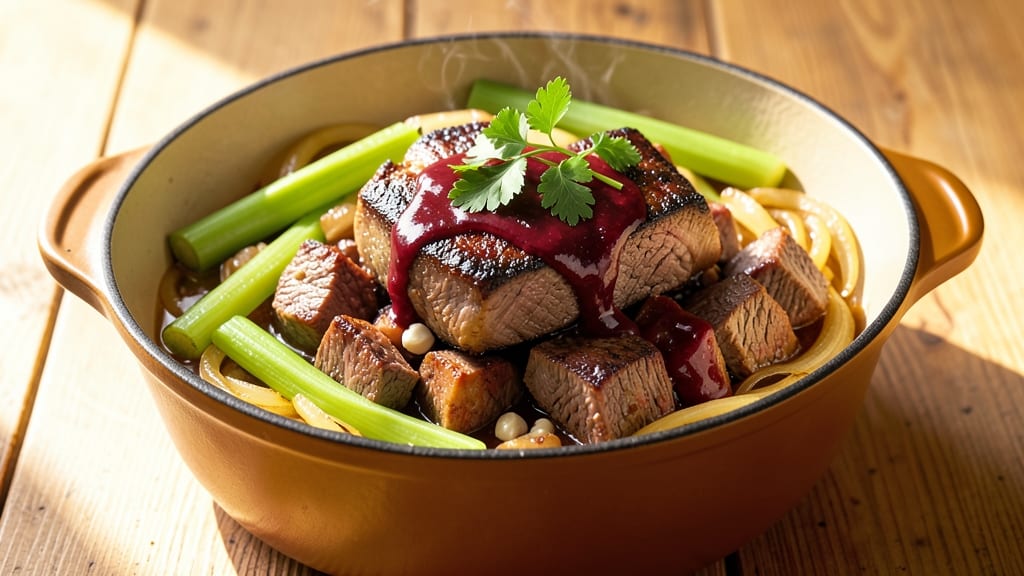
This beef and celery recipe transforms humble ingredients into a deeply satisfying dish where crisp-tender beef meets aromatic celery in a rich, velvety broth.
The secret lies in slow cooking the beef until it practically melts, while the celery infuses the broth with its natural sweetness and subtle bitterness—balancing the dish perfectly.
I developed this recipe after years of perfecting the art of tenderizing tough cuts, ensuring every bite delivers both texture and flavor without compromise.
The magic happens in the fragrant broth, where onions, garlic, and celery form the classic mirepoix foundation. Adding a splash of beef stock and a touch of tomato paste creates depth, while red wine introduces complexity that elevates the dish from simple to extraordinary.
What you'll end up with is a hearty stew where beef falls apart at the touch of a fork, celery adds freshness, and the broth clings to every spoonful with irresistible richness.
This recipe is ideal for chilly evenings when you crave something comforting yet refined. The beef's tenderness contrasts beautifully with the celery's slight crunch, while the broth's depth makes it a meal worth savoring.
Serve it with crusty bread to soak up every last drop, or pair it with roasted potatoes for a complete, satisfying dinner.
Perfect for meal prep, this dish only gets better as flavors meld over time. The beef stays moist and flavorful, while the celery maintains its bright character—proving that simple ingredients, when treated with care, can create something truly memorable. Let's get cooking!
Ingredients for beef and celery
Fourteen ingredients transform into a velvety beef and celery masterpiece with tender beef and aromatic broth.
| Ingredient | Amount | Notes |
|---|---|---|
| Chuck Roast 🥩 | 2 lb | Cut into 1.5-inch cubes for even cooking |
| Fresh Celery Stems 🧅 | 3 whole | Trimmed, cut into 1-inch pieces |
| Yellow Onions 🧅 | 1 whole | Medium, diced into 0.5-inch pieces |
| Garlic Cloves 🧄 | 4 cloves | Peeled, smashed for aromatic release |
| Dry Red Wine 🍷 | 1 cup | Bold variety like Cabernet Sauvignon |
| Beef Stock 💧 | 2 cups | Homemade or high-quality store-bought |
| Tomato Paste 🍅 | 1 tbsp | Smooth, not chunky |
| Olive Oil 🫒 | ¼ cup | Extra-virgin for richness |
| Fresh Thyme 🌿 | 2 sprigs | Leaves only, stems discarded |
| Fresh Bay Leaves 🌿 | 2 whole | For subtle aromatic depth |
| Salt 🧂 | 1 ½ tsp | Diamond Crystal kosher salt |
| Ground Black Pepper 🌶️ | 1 tsp | Freshly ground for optimal flavor |
| All-Purpose Flour 🌾 | 1 tbsp | For thickening if needed |
| Fresh Parsley 🌿 | ¼ cup | Chopped, for garnish |
The chuck roast is non-negotiable here—its marbling ensures melt-in-your-mouth tenderness. Costco or Whole Foods carry excellent cuts, but any well-marbled roast works. For celery, select stalks with crisp, vibrant green tops and firm white ribs—Trader Joe's organic selection is ideal. Fresh thyme and bay leaves elevate the broth's complexity, while the red wine should be bold enough to stand up to the beef's richness. I prefer Caymus or Louis M. Martini for their consistent quality.
No red wine? Dry sherry or beef broth with 1 tbsp balsamic vinegar delivers similar depth. Substitute dried thyme at one-third the amount, but fresh is preferable for its bright aroma. If tomato paste is unavailable, 1 tbsp tomato sauce works in a pinch. For the celery, any variety suffices, though green celery adds a subtle sweetness. The beef stock can be homemade or a high-quality brand like Kitchen Basics—never the powdered kind. Fresh parsley brightens the dish, but dried oregano at half the amount suffices if needed.
Store the cooked beef and broth separately in airtight containers for up to 5 days in the fridge, or freeze for 3 months. The celery can be prepped ahead and refrigerated for 4 days. For meal prep, portion the beef into individual servings and freeze with broth for easy reheating. The dish reheats beautifully—simmer gently on low heat to preserve the beef's tenderness and the broth's velvety texture. Garnish with fresh parsley just before serving to maintain its vibrant color.
Why You'll Love This Recipe
- One-Pot Magic: I swear by this for nights when I’d rather not wash another pan. Chuck roast and celery simmer together—no separate braising required—while the wine reduces into a glossy, savory sauce that clings to every bite. Honestly, it’s the kind of recipe that makes me want to cook more often.
- Wine-Infused Depth: That splash of dry red wine isn’t just for show—it cuts through the richness of the beef and lifts the earthy celery into something sophisticated. The slow cook transforms tough chuck into melt-in-your-mouth tenderness, and the garlic? Oh, it’s the quiet hero here, adding layers without overpowering.
- Leftover Luxury: Between us, this dish only gets better the next day. The flavors meld into something even richer, and reheating a portion is a breeze—just a quick warm on the stove or microwave. I’ve turned it into sandwiches, tossed it into pasta, even served it cold with crusty bread. It’s my go-to for busy mornings.
- Budget-Friendly Feast: A chuck roast stretches farther than you’d think, and celery and onions are practically pennies at the market. This recipe feeds four for under $15, and the wine adds a restaurant-worthy touch without breaking the bank. Not the prettiest, but the taste makes up for it every time.
Step-by-step instructions for crisp-tender beef and celery bites
This method delivers melt-in-your-mouth beef with perfectly tender celery—rich, aromatic, and balanced every time.
Sear the Beef for Maximum Flavor
Heat the 0.25 cup olive oil in a heavy Dutch oven over medium-high heat until shimmering. Working in batches to avoid crowding, add the 2 lb chuck roast cut into 1.5-inch cubes and sear for 3-4 minutes per side until deeply browned. The beef should develop a rich crust—this is where all the flavor begins.
Don't rush this step. You're building layers of flavor through the Maillard reaction. If the pan gets too crowded, the temperature will drop and you'll steam instead of sear. Transfer the browned beef to a plate and set aside. Real talk: if you see pink centers after searing, return the beef to the pan and cook another 30 seconds per side.
Build the Aromatic Base
In the same Dutch oven, add the 1 whole yellow onions diced into 0.5-inch pieces and the 3 whole fresh celery stems cut into 1-inch pieces. Cook for 5-6 minutes until softened and slightly caramelized. Add the 4 cloves garlic cloves (peeled and smashed) and cook for another 30 seconds until fragrant.
Here's the thing—don't skip the caramelization. That golden color means developed sweetness and depth. If the vegetables start to stick before browning, add 1-2 tablespoons of the reserved beef drippings. Stir in the 1 tbsp tomato paste and cook for 1 minute to deepen the color and flavor.
Deglaze and Simmer the Broth
Pour in the 1 cup dry red wine and scrape up all the browned bits from the bottom of the pan with a wooden spoon. This deglazing captures all the flavor you worked so hard to develop. Let the wine simmer for 3-4 minutes until reduced by half, then add the 2 cups beef stock, 2 sprigs fresh thyme leaves, 2 whole fresh bay leaves, 1.5 tsp salt, and 1 tsp ground black pepper.
Bring to a gentle simmer and return the beef to the pot. The liquid should come about halfway up the beef cubes. If it's too shallow, add ¼ cup water. This is where patience pays off—simmer uncovered for 1 hour 15 minutes until the beef is fork-tender. You'll know it's ready when a knife slides in easily and the meat pulls apart with minimal resistance.
Thicken and Finish
Once the beef is tender, remove the thyme sprigs and bay leaves. In a small bowl, whisk together the 1 tbsp all-purpose flour with 2 tablespoons of the cooking liquid to create a slurry. Slowly stir this into the pot and simmer for 3-4 minutes until the sauce thickens slightly. The consistency should coat the back of a spoon but still be light enough to drizzle.
Taste and adjust seasoning if needed. The sauce should be rich but not overpowering, with the beef's natural flavor shining through. If it's too acidic, add a pinch more salt. If it's too thin, whisk in another ½ tbsp flour mixed with 1 tbsp liquid and simmer for another 2 minutes.
Garnish and Serve
Remove from heat and stir in the 0.25 cup chopped fresh parsley. Let the dish rest for 5 minutes to allow the flavors to meld. Serve immediately over crusty bread or with roasted potatoes to soak up every last bit of that fragrant broth.
The beef should be fork-tender with just a slight resistance, and the celery should be soft enough to pierce with a fork but still hold its shape. Each bite should deliver rich, beefy flavor balanced by the bright acidity of the wine and the subtle earthiness of the thyme. This is comfort food at its finest—simple ingredients elevated through technique.
Pro Tips For Making Beef And Celery
- SEAR THE ROAST IN BATCHES: Chuck roast is greasy—don’t drown your pan. Cut it into chunks first, then brown them in two rounds (yes, it’s messy). The first batch will release most of the fat, and your second round will actually get that golden crust instead of steaming in rendered beef grease.
- SLICE CELERY LENGTHWISE FIRST: I used to chop celery into tiny cubes, and it turned to mush. Instead, halve the stalks lengthwise, then slice thinly—this keeps the texture crisp even after hours of simmering. (Bonus: It looks prettier in the dish.)
- DEGLAZE WITH WINE IMMEDIATELY: As soon as you pull the roast out, pour that dry red wine into the hot pan while the meat juices are still sizzling. Scrape up the browned bits—this is where all the flavor hides. Let it reduce by half before adding anything else, or you’ll dilute the sauce.
- SALT THE CELERY LIKE FRIES: Toss chopped celery with ½ teaspoon salt before cooking. It softens the fibers and draws out moisture, so it absorbs the wine and onion flavors better. (I know it sounds weird, but it works—trust me.)
Troubleshooting this recipe
Overcooked Celery
Celery turns mushy when overcooked, losing its crisp texture and bright flavor. To prevent this, add the celery to the pot after searing the beef and onions. Cook it for just 5-6 minutes until tender but still holding its shape.
If your celery is already too soft, remove it and set aside—it still adds flavor to the broth, even if not perfect for texture. 🧅
Tough Beef
Tough beef usually means it didn’t cook long enough or the cut wasn’t tenderized properly. Chuck roast needs at least 1 hour 15 minutes of simmering to break down.
If your beef is still chewy, return it to the pot with ½ cup additional beef stock and simmer uncovered for another 30-45 minutes. The slow cooker is your friend here—it’s hard to overcook beef in one.
Broth Too Thin
A thin broth often means the liquid wasn’t reduced enough or the beef didn’t release enough collagen. If your broth is watery, remove the beef and reduce the liquid over medium-high heat for 10-15 minutes until it thickens slightly.
For extra richness, whisk in 1 tbsp cornstarch mixed with 2 tbsp cold water and simmer for 2 minutes until thickened. 💧
Beef Too Salty
If your stew tastes overly salty, balance it with acidity. A splash of lemon juice or red wine vinegar (about 1 tbsp) brightens the flavors. For a richer fix, add ½ cup heavy cream or a dollop of sour cream to mellow the saltiness.
Taste as you go—small adjustments make all the difference.
Celery Too Bitter
Bitter celery happens when it’s overcooked or the dish lacks acidity to balance its natural bitterness. If your celery tastes harsh, add a pinch of sugar (½ tsp) or a squeeze of lemon juice to round out the flavors.
Fresh thyme and bay leaves also help mask bitterness—don’t skip them in the broth. 🌿
Burnt Onions
Burnt onions mean you cooked them too long at high heat. To avoid this, keep the heat at medium while building the base and stir frequently. If your onions are already browned too dark, remove them and set aside—just don’t let them char.
For a smoother flavor, blend the burnt onions into the broth (strain if needed) to mellow their intensity. The key is patience and consistent stirring.
Nutrition facts
Frequently asked questions
Can I use a different cut of beef instead of chuck roast?
For similar tenderness, try brisket or short ribs, which both benefit from slow cooking. Avoid lean cuts like sirloin—they'll dry out. If using brisket, trim excess fat first and cook for 2-3 hours until fork-tender. Short ribs need 1 hour 30 minutes to become melt-in-your-mouth perfect.
How do I make this recipe without red wine?
No problem! Replace the 1 cup red wine with 1 cup beef broth plus 1 tbsp balsamic vinegar for acidity, or use 1 cup dry sherry for similar depth. For a non-alcoholic option, try 1 cup apple cider vinegar mixed with ½ cup beef broth. The key is balancing acidity to brighten the dish.
Can I prepare this ahead of time?
This recipe actually tastes better the next day! Store the cooked beef and broth separately in airtight containers for up to 5 days in the fridge. Reheat gently on low heat, adding a splash of water if needed. For freezing, portion into individual servings with broth and freeze for 3 months. Thaw overnight in the fridge before reheating.
What's the best way to serve this beef and celery dish?
Pair it with crusty sourdough bread for ultimate broth-soaking, or serve alongside creamy mashed potatoes and steamed green beans for a complete meal. For extra richness, top with a dollop of sour cream or sprinkle with grated Parmesan. The contrast of textures makes every bite satisfying.
Why does my celery turn bitter in stews?
Celery develops bitterness when overcooked or when the dish lacks acidity to balance its natural flavors. To prevent this, cook celery for only 5-6 minutes and add a splash of lemon juice or 1 tsp sugar at the end. Fresh herbs like thyme and bay leaves also help mask bitterness. For extra freshness, stir in chopped parsley just before serving.